Lower Saxony Hidden Gems 2026: 11 Real Places Off the Tourist Trail
Absolute favourite spots and hidden gems in Lower Saxony — from Lüneburg Heath and Goslar to Celle and Lake Steinhude, Wendland, Hamelin and Papenburg. With directions, photo tips and regional cuisine.
Author
Martin Kleinheinz
Photographer · Lower Saxony
Updated
July 7, 2026
Lower Saxony is Germany's second-largest state — and yet many people only know Hannover, Cuxhaven and maybe the heath. But there is much more here: Harz half-timbered towns, moorland in the Ammerland, canals in Papenburg, UNESCO architecture in Alfeld and a whole culture between kale and East Frisian tea.
We are genuine Lower Saxony insiders — I live and work here as a photographer — and we also asked locals for their favourite spots and hidden gems. Here are the best tips to discover Lower Saxony from a different angle.
◆Here we share absolute favourite spots and hidden gems in Lower Saxony — from the Harz to the Ems.
◆Don't want to read everything? No problem — our top 3: Lüneburg Heath, Goslar, Wendland.
◆When does the heath bloom? Where do you find half-timbered towns without mass tourism? Which photo spots are really worth it? It's all below.
01
Introduction
Hidden gems off the tourist trail
Lower Saxony has fewer Instagram hotspots than Bavaria — but more space, more quiet and surprising contrasts. Heath and Harz lie in one state. Wadden Sea and Weser Uplands too. Anyone who only drives through misses the best of it.
What follows: 11 real Lower Saxony hidden gems — each with directions, photo notes and the one sentence on why the place is worth it. No trade fair guide, no recycled Sylt content — but places locals actually drive to themselves.
02
Purple carpet in August
Lüneburg Heath
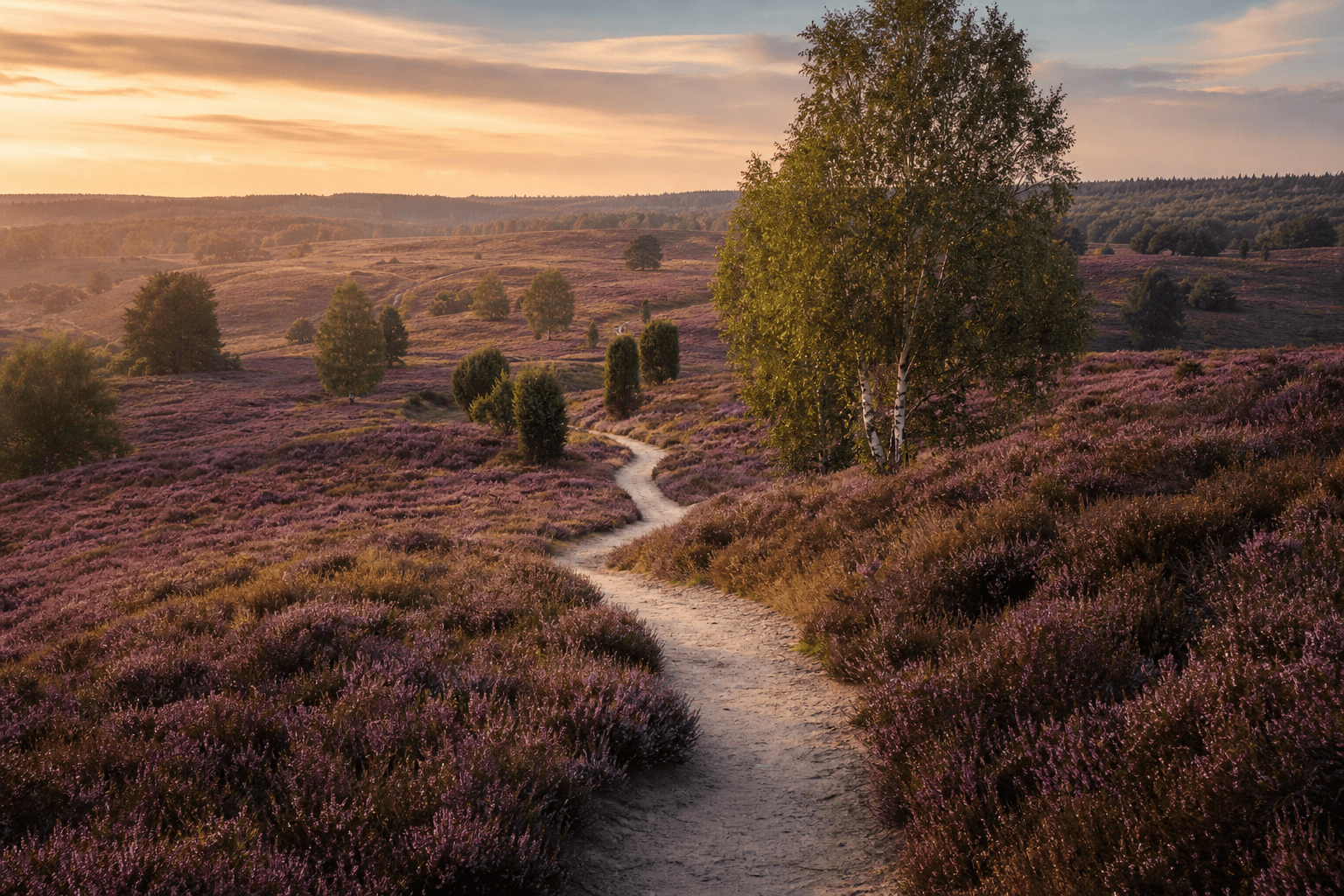
From mid-August to early September the hills turn into purple carpets — Lower Saxony's best-known natural spectacle.
When we Lower Saxons are asked about the most beautiful natural moment in the state, the Lüneburg Heath almost always comes up. Not the overcrowded main entrance at Bispingen — but the quiet hills near Undeloh, Niederhaverbeck or the Totengrund: birch trees, heather herbs, endless wide open space.
The heath blooms from mid-August to early September — then it is unbeatable for photography. Buses arrive during the day; early morning or evening you have the landscape almost to yourself. Autumn fog is the insider tip for minimalist photos.
03
UNESCO in the Harz
Goslar & Upper Harz
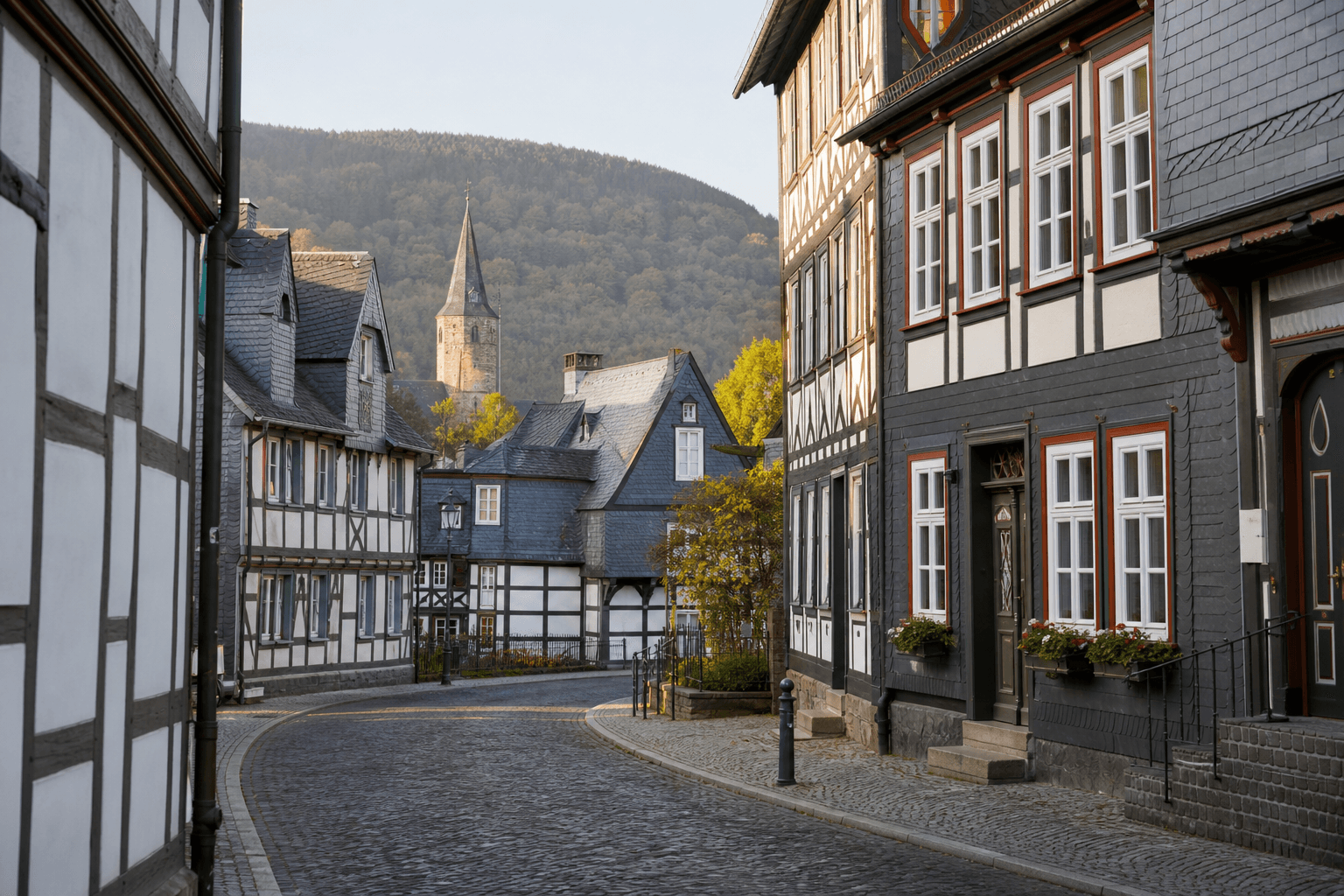
Goslar is a UNESCO World Heritage Site — and yet less crowded than Quedlinburg.
Goslar is Lower Saxony's answer to Rothenburg — only more authentic and less bus-tour-heavy. Half-timbered lanes, the Imperial Palace, Rammelsberg (mine and museum). Locals head to the Liebfrauenkirchhof corner in the evening — it's quiet and photogenic there.
The Upper Harz around it (Clausthal, Altenau, Torfhaus) is worth it for hikers and landscape photographers: moors, stunted trees, reliable snow in winter. Anyone who wants to avoid the Brocken still finds Harz atmosphere in the Upper Harz without the crowds.
04
Half-timbered without mass tourism
Celle
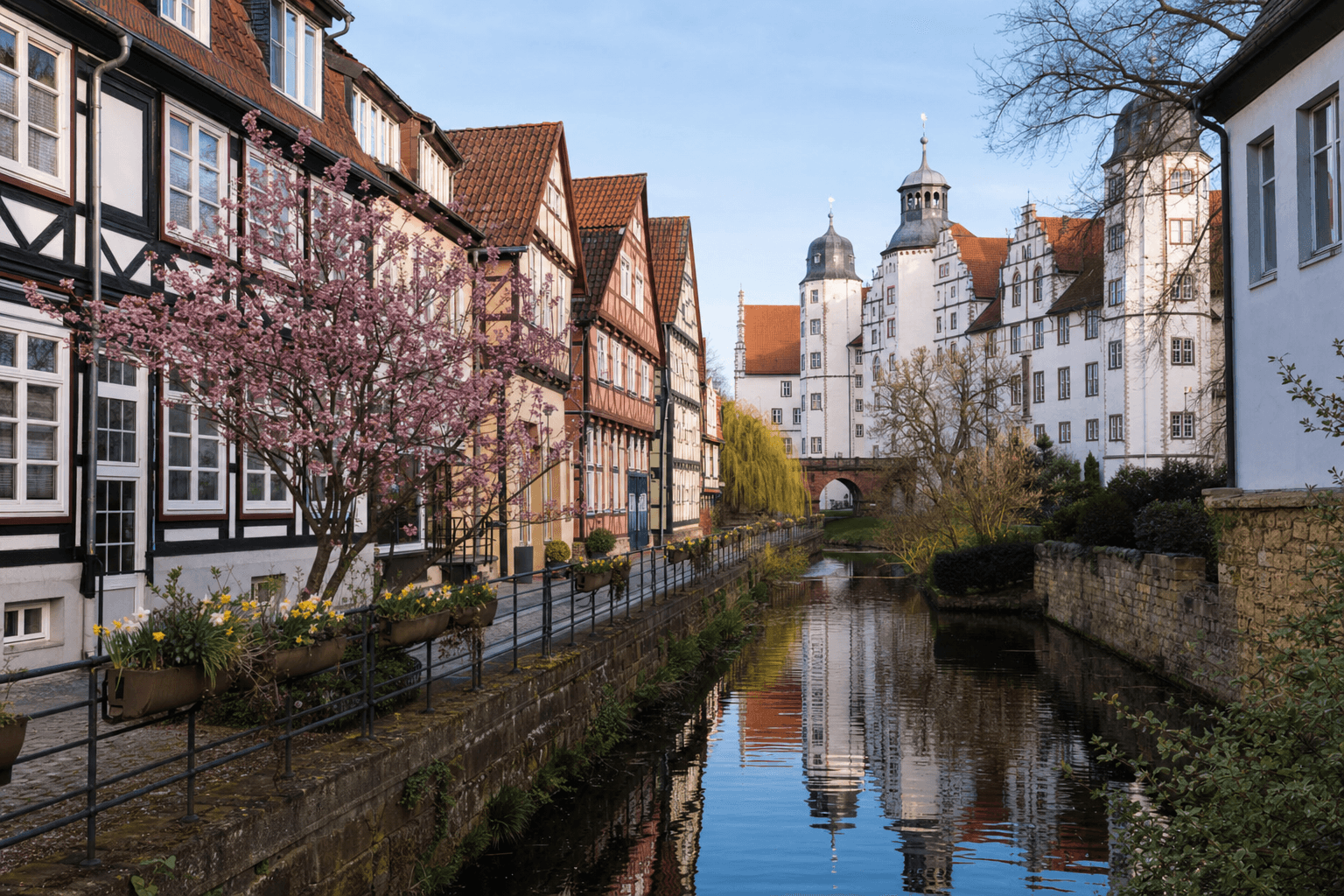
Celle has over 400 half-timbered houses — and feels smaller and more personal than many "pretty" towns.
Celle is the hidden gem for anyone who loves half-timbered architecture but finds Hamelin too well known. Over 400 half-timbered houses, a palace with a baroque theatre, small lanes — and noticeably less bustle than Goslar on summer weekends.
Locals recommend the walk from Schlossplatz, then towards the old town and French Garden. Inside the palace: the Residence Museum — compact, worth it. For photographers: reflections in the palace moat canals.
05
The state's largest lake
Lake Steinhude
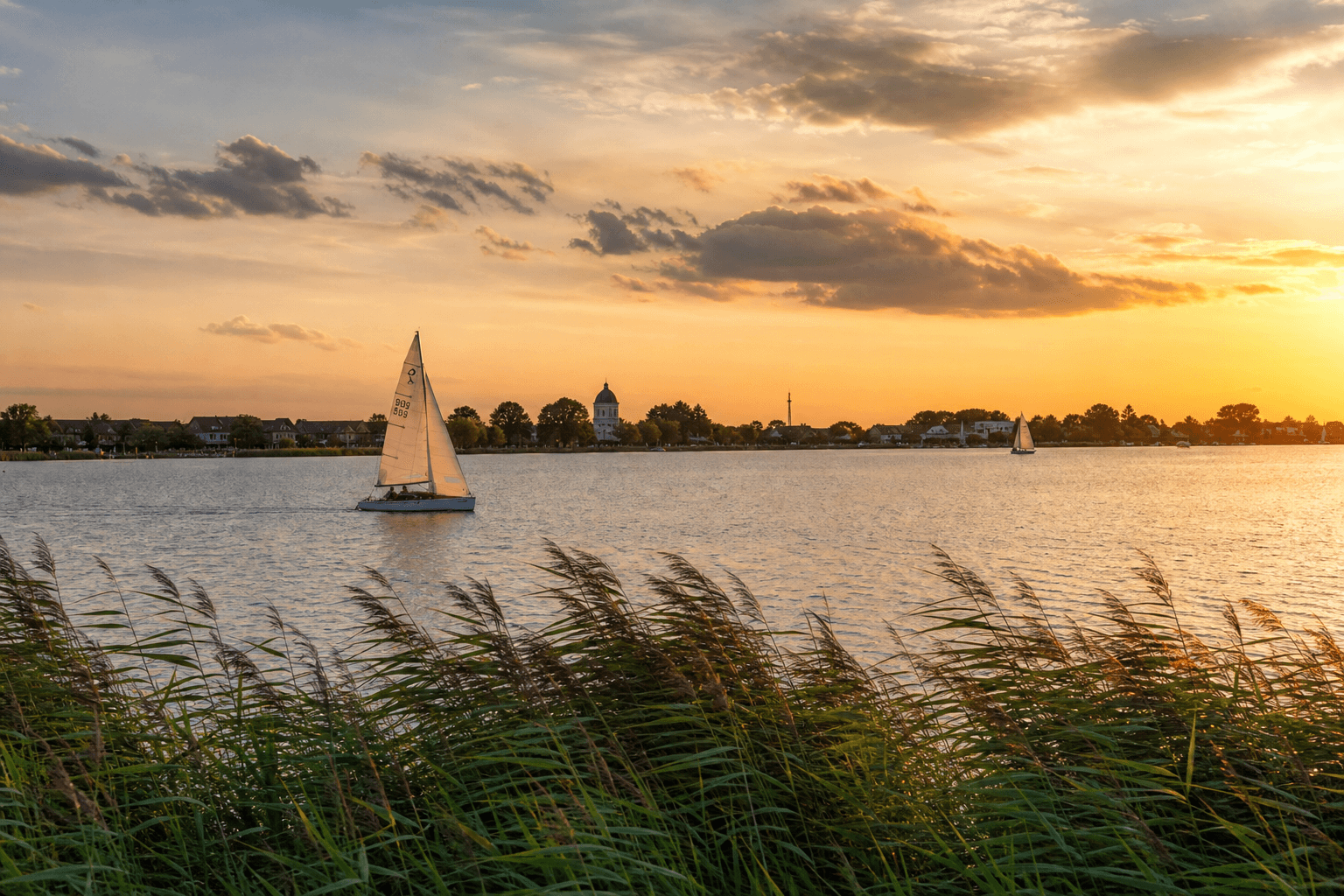
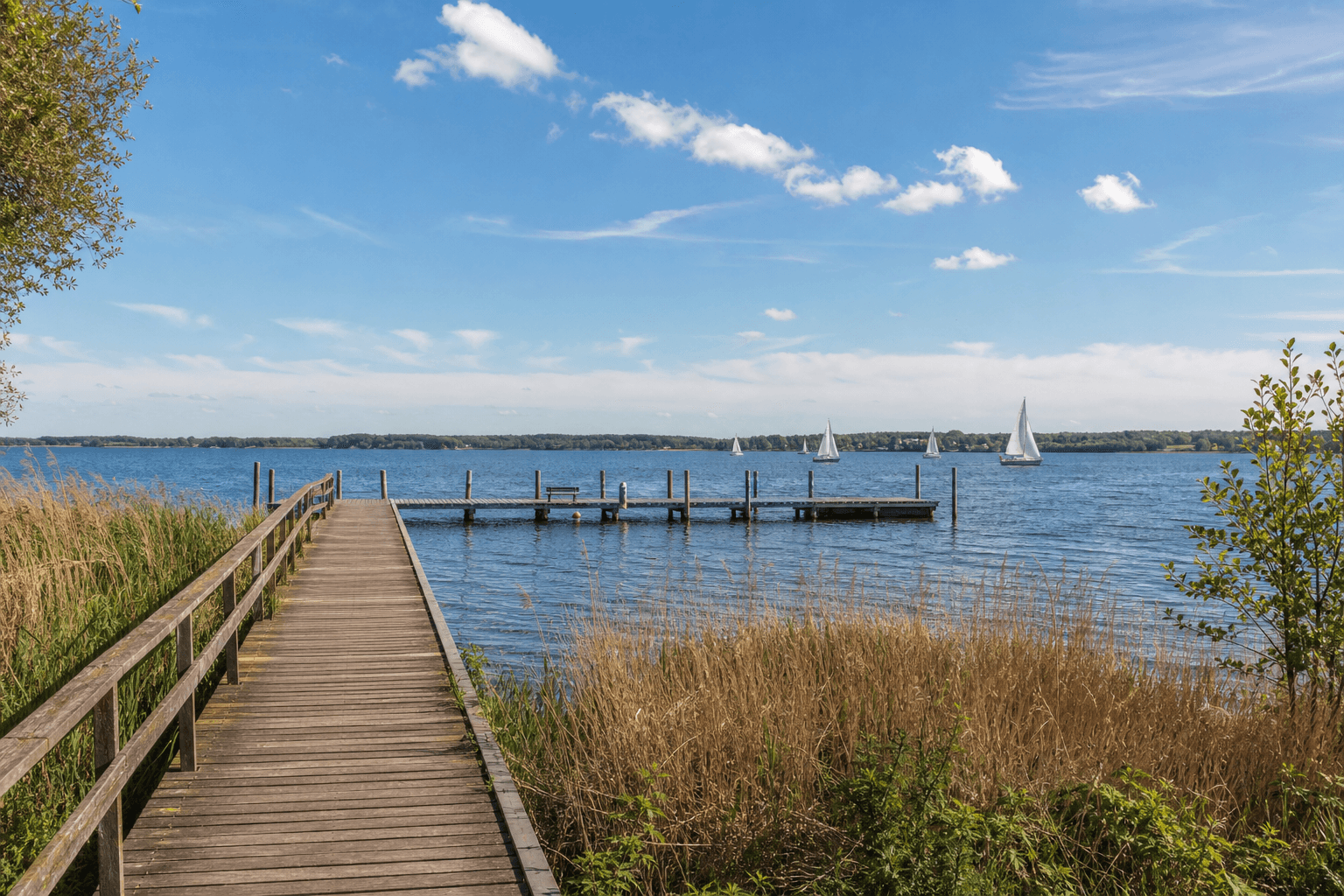
Lake Steinhude is Lower Saxony's largest lake — quieter than Chiemsee, closer than the Mecklenburg Lakes.
Lake Steinhude lies just 40 minutes west of Hannover — and many Hannover locals know it, while holidaymakers from southern Germany rarely do. The fishing village of Steinhude on the north shore is picturesque: thatched roofs, inns, cycle paths along the shore.
For photographers: sunset from the west shore, sailboats as silhouettes, reeds in the foreground. In summer a ferry to Wilhelmstein Island is worth it — a small fortress in the middle of the lake, an unusual angle.
06
Fairytale castle near Hannover
Marienburg Castle
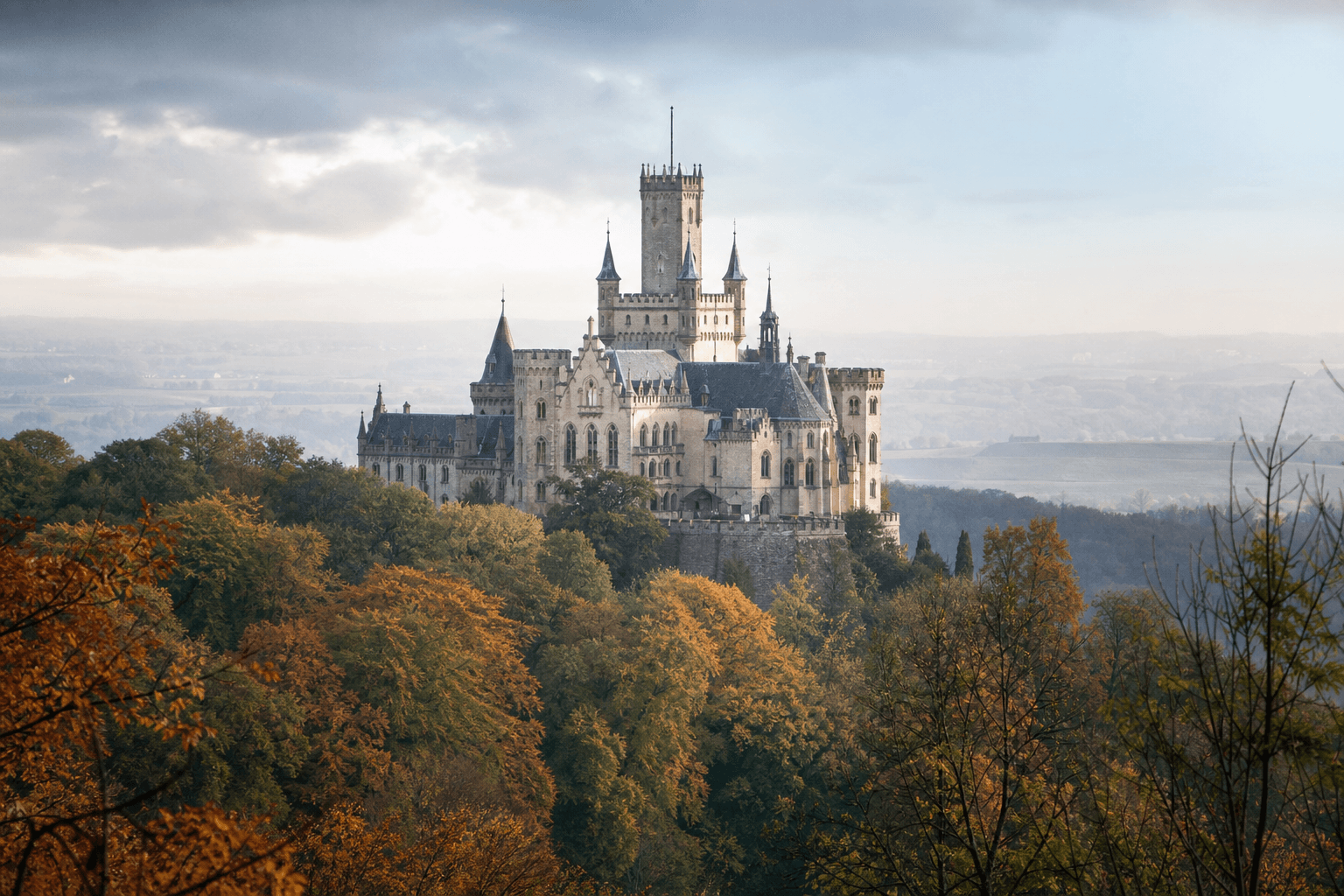
Marienburg looks like something from a storybook — and is only 20 minutes south of Hannover.
Marienburg Castle near Pattensen is not a hidden backyard — but many Germany travellers overlook it in favour of Neuschwanstein. The neo-Gothic castle of the House of Welf stands on a hill, surrounded by forest — photogenic from the approach road and from the park.
Local tip: come early in the morning before bus groups arrive. Autumn foliage + white façade = strong contrast. Guided tours inside are worth it; outside the park is often enough.
Partner · Booking.com
Ready for your trip?
Accommodation and flights in one place — I use Booking.com for my own planning.
Partner link: I earn a commission via these Booking.com links — at no extra cost to you. Check prices and availability on Booking.
07
Forest & rocks in the Weser Uplands
Solling & Ilsestein
The Solling is Lower Saxony's green heart — less famous than the Harz, at least as beautiful.
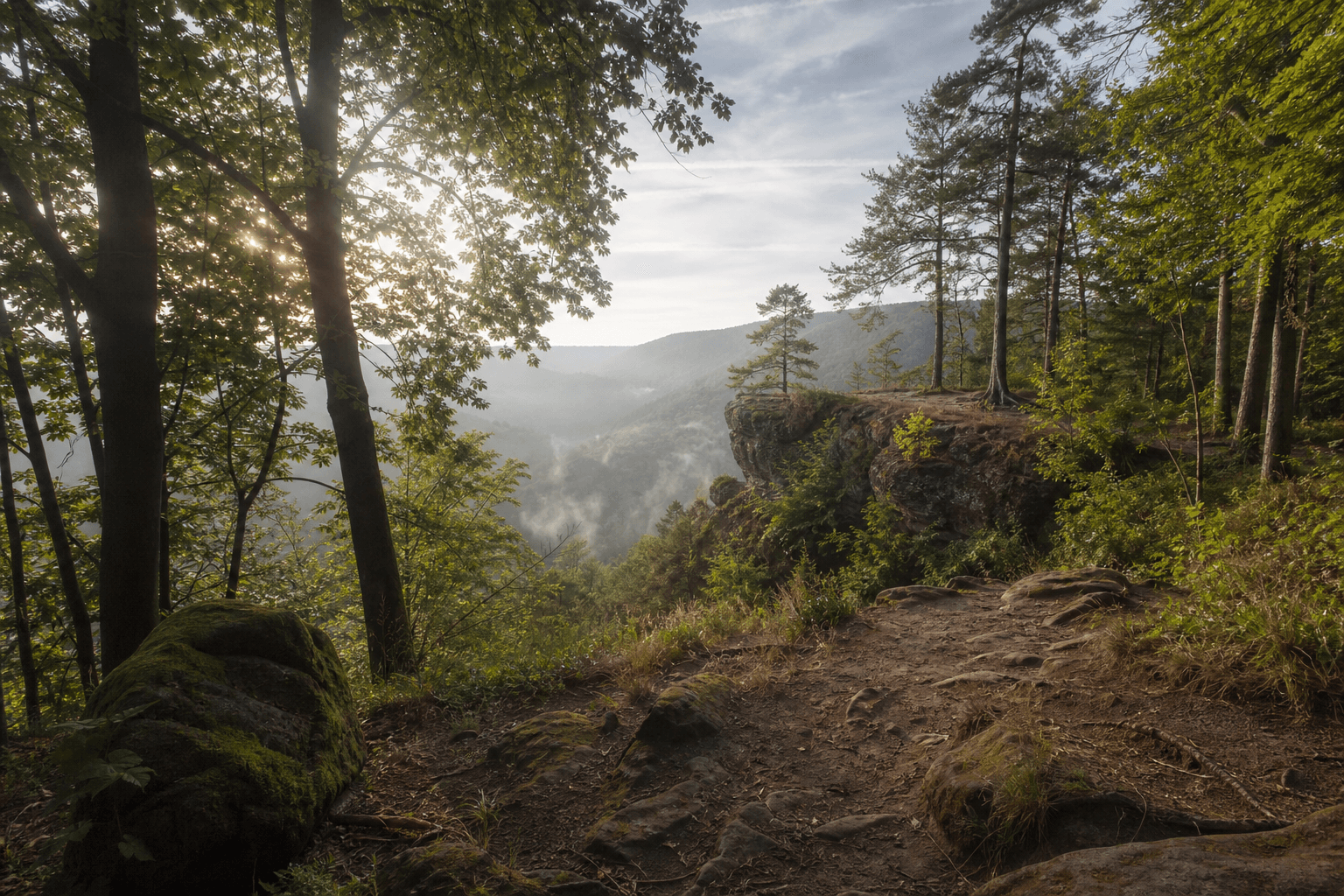
The Solling-Vogler Nature Park between the Weser and Leine rivers is the hidden gem for forest photography in Lower Saxony. Hiking trails through beech woods, moors, the Ilsestein as a lookout rock — quiet on weekdays.
Locals hike from Dassel or Holzminden. The Ilse Valley trail follows the river — ideal for autumn mood and fog images. No entrance fee, no ticket — just nature.
08
UNESCO biosphere on the Elbe
Wendland & Elbe Valley
The Wendland is Lower Saxony's quiet corner — Rundling villages, the Elbe, artists and organic farming.
The Wendland on the Elbe is Lower Saxony's most underrated region: UNESCO Biosphere Reserve Elbe Valley, Rundling villages (circular village layouts — unique in Germany), artist colonies in Gartow and Lüchow.
Anyone looking for quiet, wide landscapes and slow travel is in the right place. Local tip: Hitzacker on the Elbe — ferry, old town, riverbank. Gorleben and surroundings for stillness and light over the meadows.
09
Weser Uplands & half-timbered
Hamelin & Weser Uplands
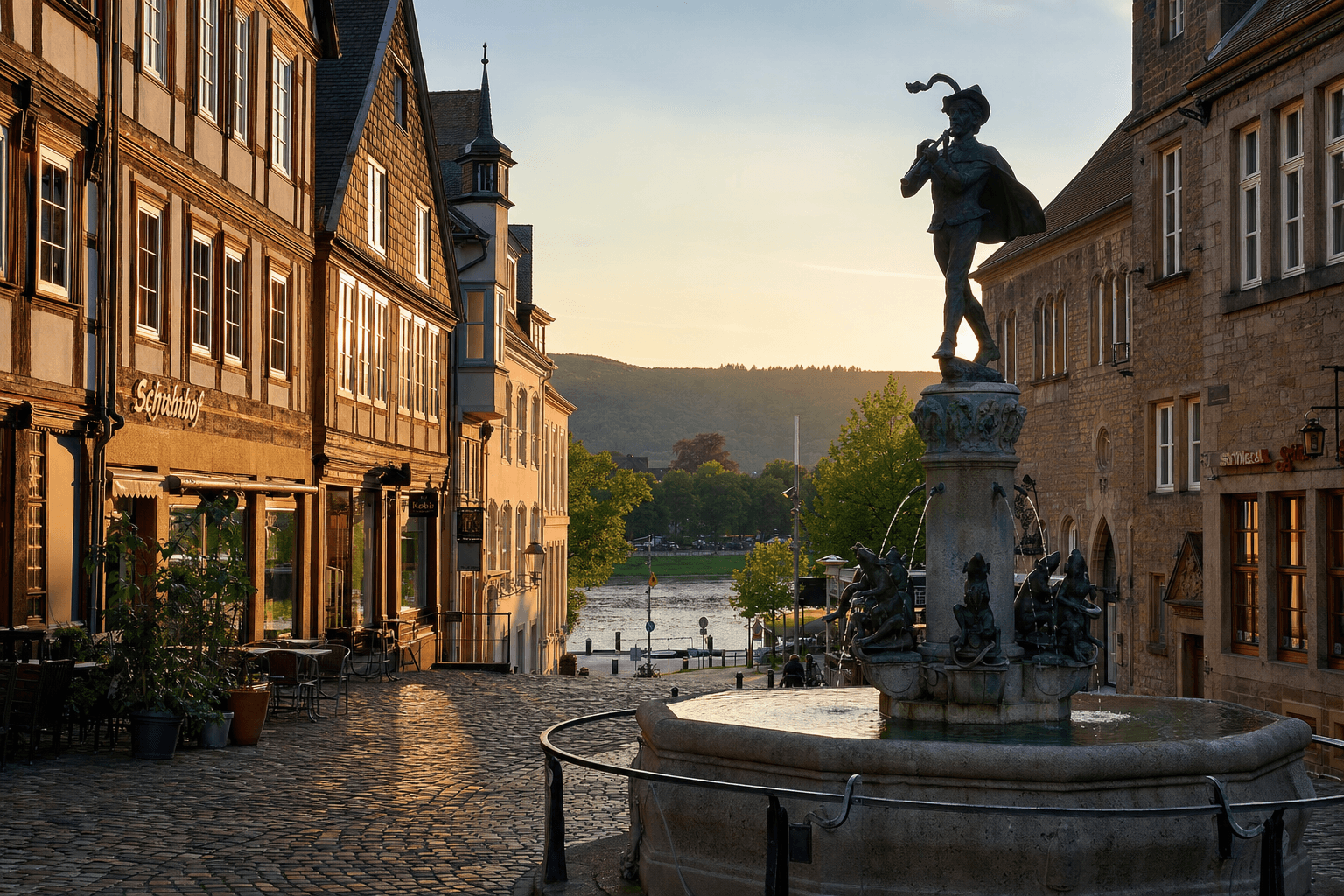
Hamelin is more than the Pied Piper — the old town on the Weser is one of Lower Saxony's most beautiful hidden gems.
Everyone knows Hamelin from the Pied Piper — less well known is how beautiful the old town really is. Half-timbered houses, Weser promenade, Wedding House with its carillon. Locals head to the Weser in the evening, not the souvenir shops.
The Weser Uplands around it (Bodenwerder, Polle, Corvey Abbey) are worth day trips: river, castles, gentle hills — Lower Saxony straight from a picture book.
10
UNESCO modernism
Fagus Factory Alfeld
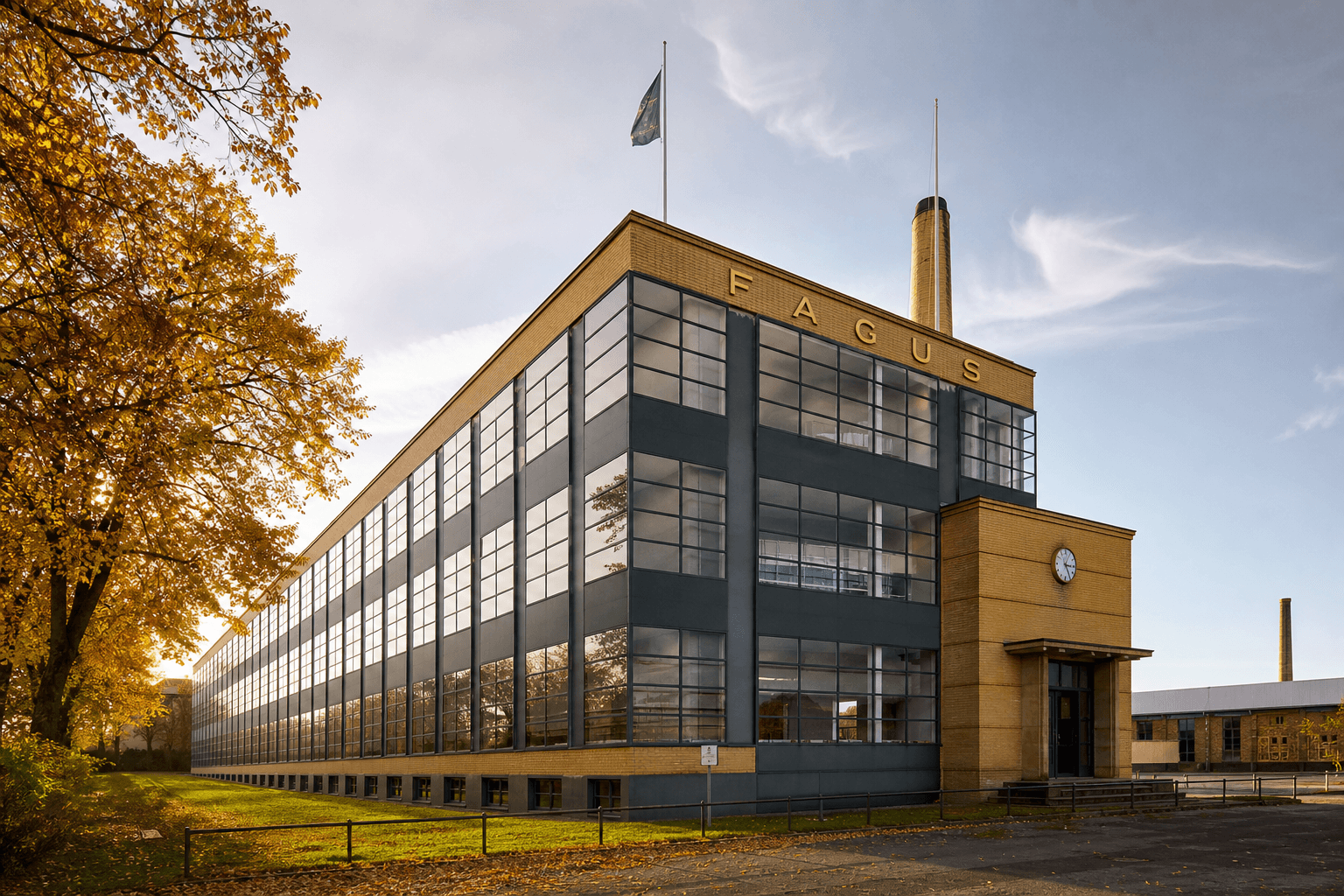
The Fagus Factory is architectural history — and one of Lower Saxony's most unusual photo spots.
The Fagus Factory in Alfeld is a UNESCO World Heritage Site and one of the most important buildings of modernism — Walter Gropius started here in 1911, before the Bauhaus officially existed. Glass, steel, clean lines — a must for architecture and industrial photography.
Tourists often drive past Alfeld towards the Harz. Locals from the region know: book a guided tour, exterior façade in clear sky, reflections in the glass surfaces — that's the insider tip for photographers.
11
Moors & wellness in the Ammerland
Bad Zwischenahn
Bad Zwischenahn is the Ammerland in a nutshell — lake, moor, cycle paths, relaxed.
Bad Zwischenahn in the Ammerland is the hidden gem for water and moorland — without North Sea wind. Lake Zwischenahn is Lower Saxony's third-largest lake, surrounded by cycle paths, a spa park and small islands.
Locals come here to relax, cycle and enjoy coffee by the lake. Less spectacular than the heath, but beautiful year-round — especially in spring when cherry blossoms bloom in the spa park.
12
Canals & shipbuilding
Papenburg & Emsland
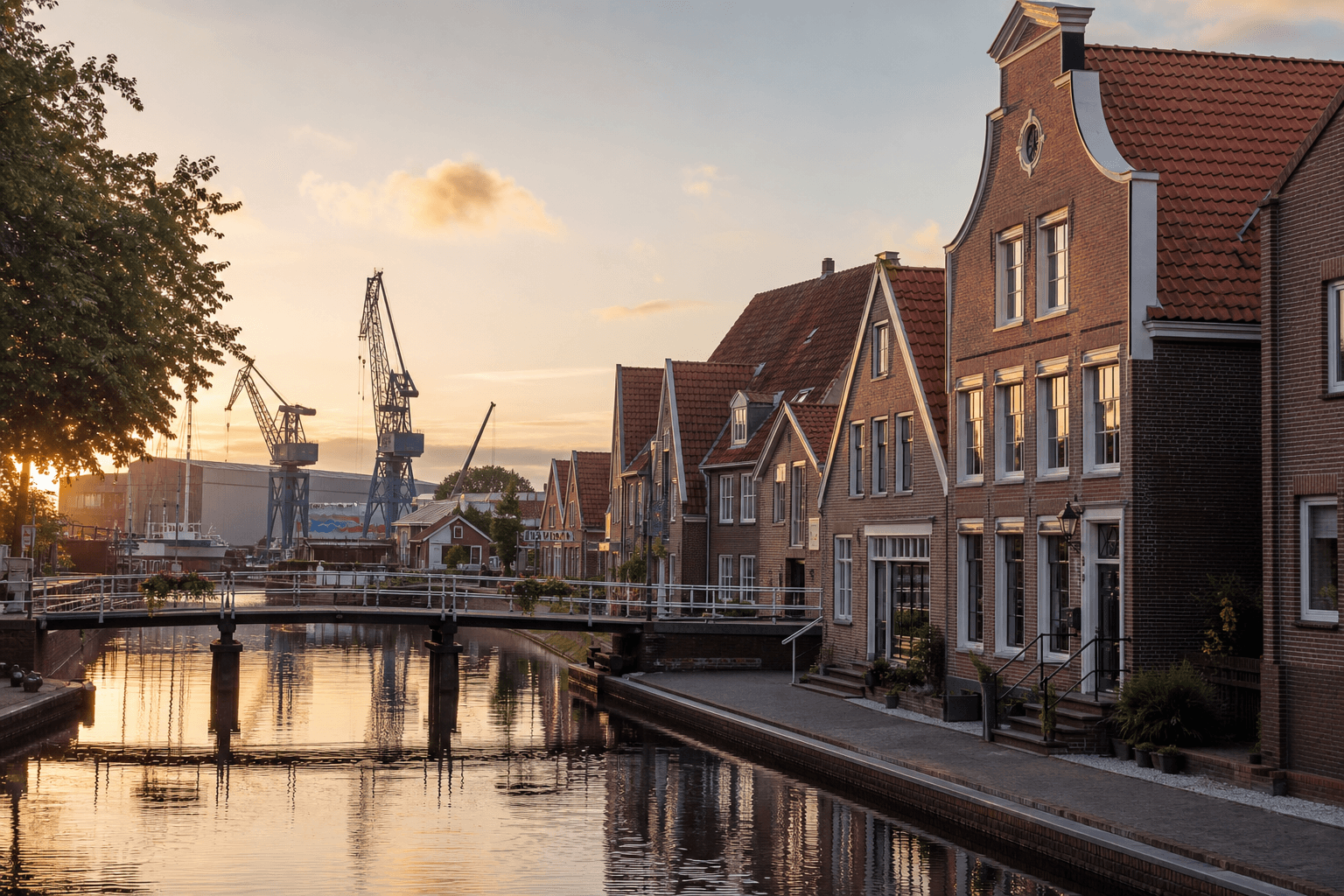
Papenburg is the Venice of the North — canals, bridges, Meyer Werft shipyard in the background.
Papenburg in the Emsland is Lower Saxony's canal city: waterways, bridges, brick houses — and the Meyer Werft shipyard within reach. Tourists come for cruise ships; locals value the historic ring canal boat tour.
For photographers: reflections in the canals, evening light on the bridges, industrial silhouette of the shipyard — an unusual contrast between idyll and mega shipbuilding.
13
Lower Saxony on the plate
Regional cuisine & local spots
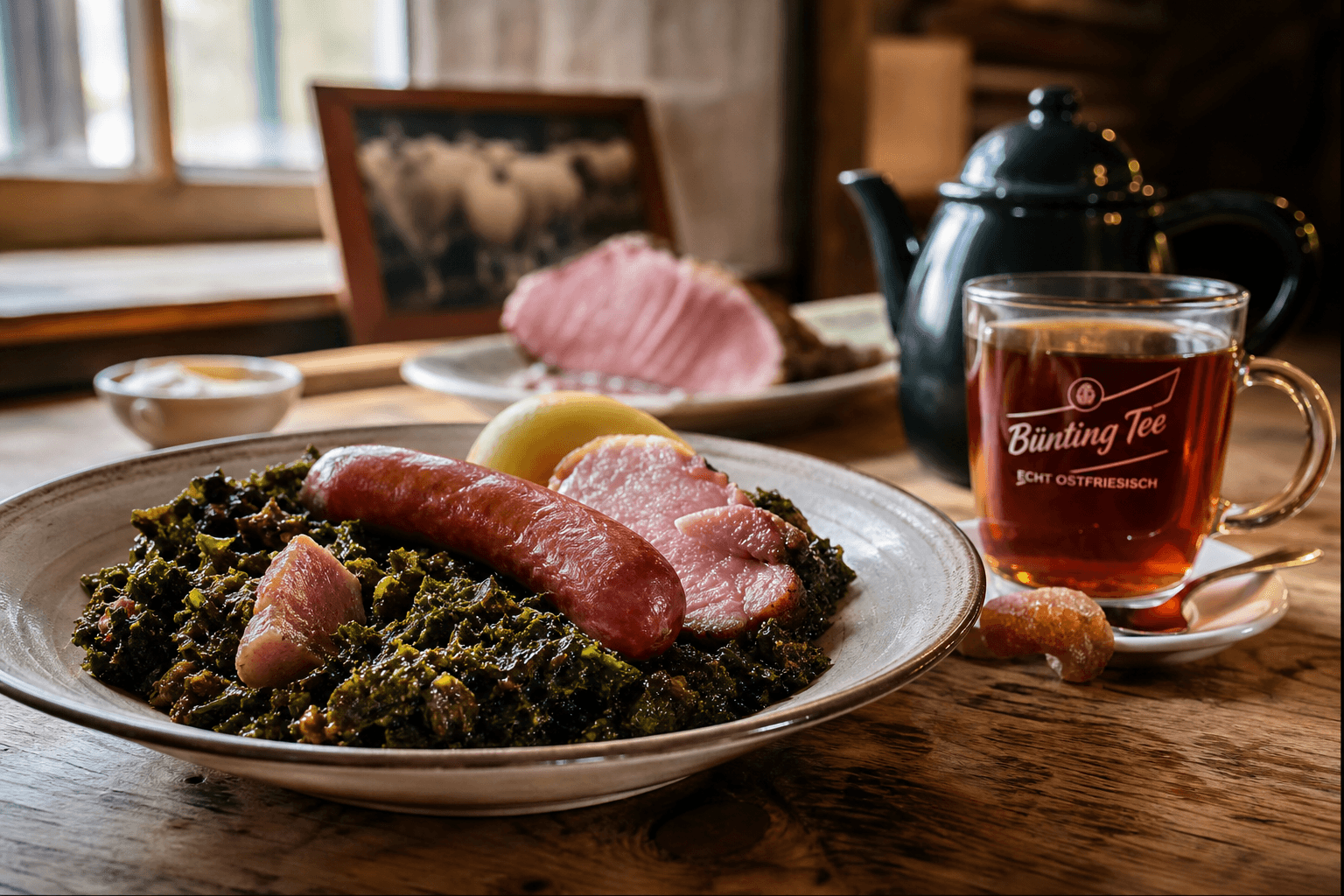
Kale, Heidschnucke lamb, East Frisian tea — Lower Saxony tastes regional and honest.
Lower Saxony doesn't have a single unified "state cuisine" like Bavaria — but regions with character. The question: where do you eat and drink most authentically?
#1 Kale & Kohlfahrt
November to February: kale with Bregenwurst and Kassler — in inns between Hannover, Oldenburg and Bremen. Kohlfahrt (bus, music, lots of kale) is a cultural institution. Reserve in winter.
#2 Heidschnucke in the Lüneburg Heath
The Heidschnucke (grey sheep) is the symbol of the heath — and on the plate an insider tip. Local inns in Undeloh and Bispingen serve lamb from the region.
#3 East Frisian tea in the north-west
In the Ammerland and East Frisia: tea with Kluntje (rock sugar) and a cold meat platter — a ritual, not a snack. In Bad Zwischenahn and Oldenburg you'll find authentic tea houses.
◆ Stay & flightsPartner · Booking.com
Planning your trip?
Compare hotels and flights — no extra cost to you.
Partner link: I earn a commission via these Booking.com links — at no extra cost to you. Check prices and availability on Booking.
14
FAQ
Frequently asked questions about Lower Saxony
What are the best hidden gems in Lower Saxony?+
Lüneburg Heath (August/September), Goslar, Celle, Lake Steinhude and the Wendland. For architecture: Fagus Factory in Alfeld. For water: Bad Zwischenahn and Papenburg.
When does the Lüneburg Heath bloom?+
Typically from mid-August to early September. Early morning or evening is the quietest and most photogenic.
Is Lower Saxony worth a road trip?+
Yes — heath, Harz, Weser Uplands and coast can be combined in a week. Base: Hannover (by train) or a car for flexibility.
Do I need a car?+
For Goslar, Celle, Hamelin and Hannover the train is enough. Heath, Wendland, Solling and Lake Steinhude are much more flexible with a car.
This article may contain affiliate links. There are no extra costs for you.
◆ Newsletter
Stay in the loop.
Camera and photography news, honest gear tests and new articles — in your inbox. Infrequent but relevant. No spam, unsubscribe anytime.