Sony ZV-E10 II, DJI Osmo Pocket 3 or Canon PowerShot V10? Buying criteria, camera-type comparison, accessories and legal basics — so your first YouTube channel doesn't fail on the wrong gear.
Author
Martin Kleinheinz
Photographer · Content Creator · Hannover
Updated
May 26, 2026
The world of content creators keeps growing. Starting a YouTube channel in 2026 is more than a hobby — it's a serious creative endeavor. But getting started can be overwhelming, especially when it comes to picking the right gear.
The truth: production quality often decides whether a vlog gets visibility in the algorithm or fades away. And that quality starts with choosing the right camera. This guide is your compass through the camera jungle — with straight talk, comparisons and concrete recommendations.
To cut to the chase: here are the three top vlog cameras for 2026. Details, criteria and accessories follow in the sections below.
Top 3
Sony · DJI · Canon at a glance
**#1 Sony ZV-E10 II** for maximum quality and lens flexibility. **#2 DJI Osmo Pocket 3** for buttery-smooth walk-and-talk. **#3 Canon PowerShot V10** for an uncomplicated start.
Vergleich
Sony
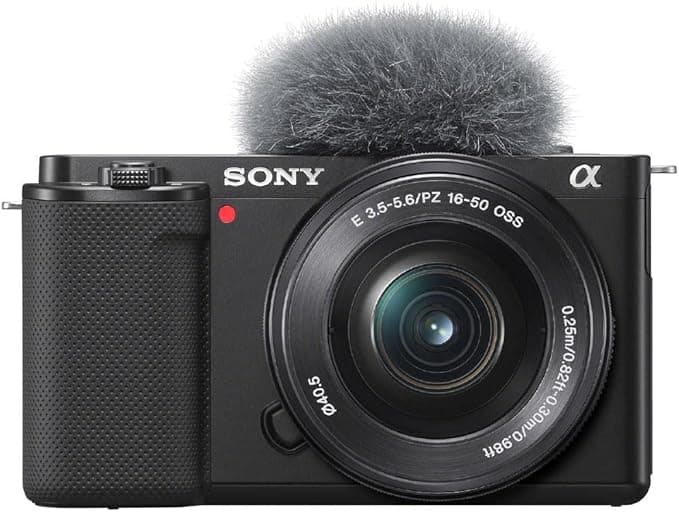
Sony ZV-E10 II
DJI
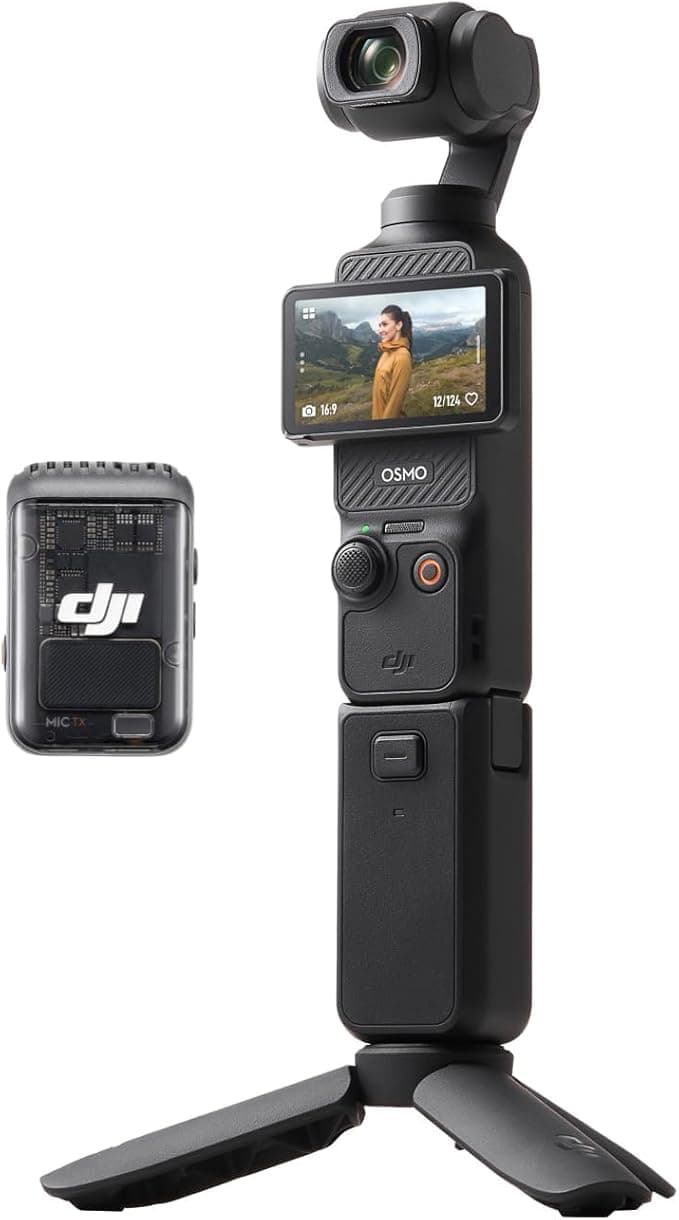
DJI Osmo Pocket 3
Canon
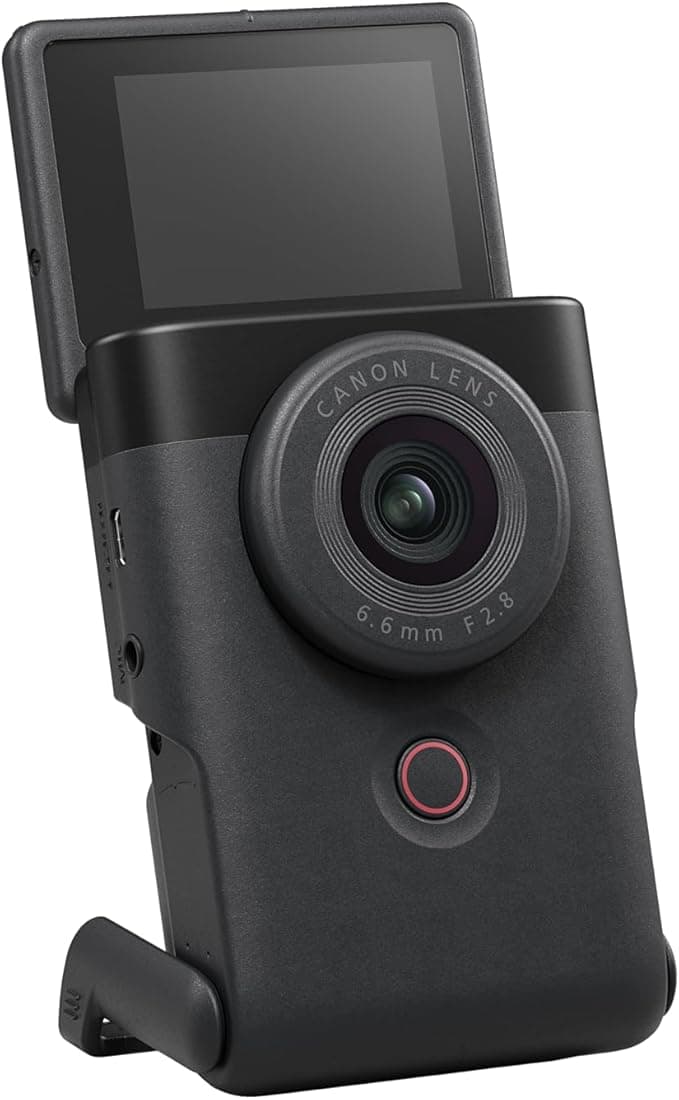
Canon PowerShot V10
Bild
Empfehlung
Top Pick
Travel Pick
Beginner
Sensor
APS-C · 26 MP
1-inch · 4K/120p
1-inch
ISO-Bereich
4K/60p · 10-bit · S-Log3
3-axis gimbal (mechanical)
4K/30p · 8-bit
Autofokus
Real-time eye-AF · Product Showcase
Rotating · touch
Vertical · integrated stand
Detail
3.5 mm mic + headphones
DJI Mic 2 compatible
3.5 mm mic · no headphones
Stärken
+Interchangeable lenses for every vlog style
+Excellent low-light performance
+Pro features without the full-frame price
+Buttery-smooth stabilization while walking
+Extremely compact and quick to deploy
+Strong image quality for the size
+Ready to go without lens questions
+Compact and light
+Affordable entry
Schwächen
−No built-in gimbal
−Digital stabilization is limited
−Fixed lens — less flexibility
−Mic input often via adapter
−Less creative control
−Weaker in low light than APS-C
Geeignet für
Ambitious creators who want to grow long term.
Travel vloggers and dynamic walk-and-talk shooting.
Beginners who want a dedicated camera without tech stress.
In a world where millions of videos are uploaded every day, quality isn't optional anymore — it's a necessity. It's the currency you spend to earn your viewers' attention and trust. Poor video or audio quality is an instant reason to leave for many viewers — fuzzy images or scratchy audio signal that the creator doesn't value their time.
The YouTube algorithm also tracks user behavior closely. High-quality videos lead to longer watch times and more interactions. Those signals reward you with better placement in search and recommendations. Good content is essential, but production quality is the carriage that carries it.
An often-overlooked aspect: the audiovisual contract with your viewer. Most people tolerate mediocre images paired with crystal-clear audio — the reverse, a video with perfect optics but bad sound, gets clicked away almost immediately. Good audio is often the deciding factor in whether your message lands.
02
Must-haves
What makes a camera vlog-friendly
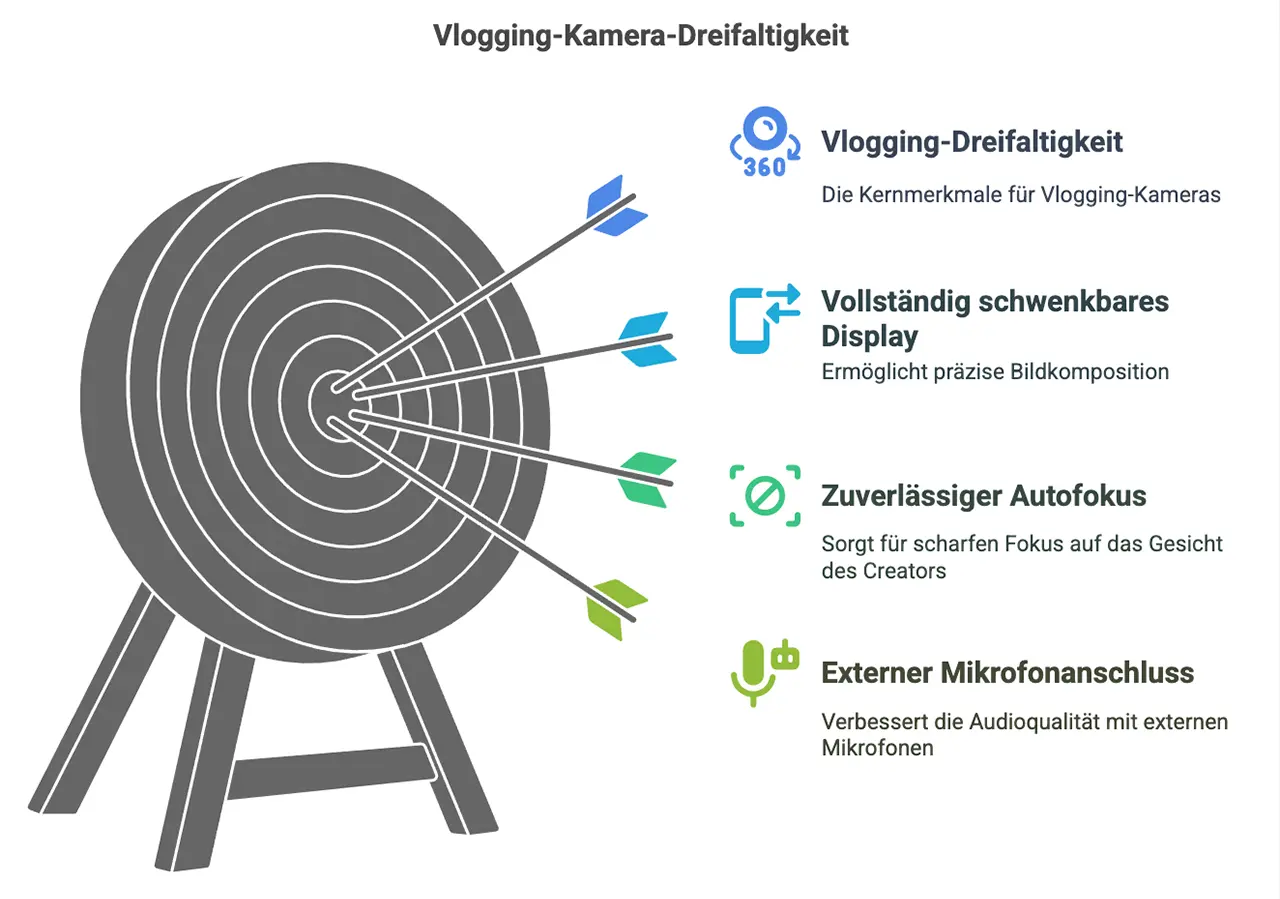
Not every camera that records great video is automatically a good vlogging camera. For content creators who often work alone in front of the lens, three features have proven indispensable — the "vlogging trinity".
Fully articulating display (flip screen)
Essential for solo creators: you have to see yourself during the take. A side-flip, rotating display allows precise framing. Fixed or merely tilting screens are unsuitable for classic selfie vlogging.
Reliable autofocus
Focus must lock onto your face — even while moving. Modern eye-AF systems are a must. Nothing is more frustrating than focus jumping back and forth between you and the background.
External mic input
Built-in camera microphones are a stopgap at best. A 3.5 mm mic input (or USB-C with audio) is the minimum for professional sound.
Beyond that, image stabilization, sensor size, portability and battery life all matter — covered in detail in the next section.
03
Tech
Key buying criteria in detail
After the must-haves we dive into the technical details. These criteria determine the visual aesthetics, creative flexibility and practical usability of your vlogging camera.
Image quality and resolution
Image quality is shaped mainly by sensor size, resolution and advanced video features like color depth and Log profiles.
Sensor size: think of the sensor like a bucket that catches light. The bigger it is, the more light it captures in a short time — less noise in low light and easier bokeh (out-of-focus background). Common sizes: full frame, APS-C, Micro Four Thirds, 1-inch.
Better low-light performance
Larger sensors deliver cleaner images indoors and at dusk with less visible grain.
Shallower depth of field (bokeh)
The "cinematic look" with a sharp subject and soft background is easier to achieve with larger sensors and bright lenses.
4K vs. 1080p — it's not just about pixels: 4K is standard for ambitious vloggers in 2026. The often-overlooked benefit: YouTube uses the more efficient VP9 codec for uploads at 1440p/4K, while pure 1080p uploads use AVC1. A 4K video played back at 1080p often looks sharper with fewer compression artifacts than a native 1080p upload.
◆Future-proof — content stays relevant in quality
◆Editing flexibility — zoom in and pan digitally in 1080p without quality loss
Advanced features:10-bit color depth enables clean color grading without banding. Log profiles (e.g., Sony S-Log, Canon C-Log) capture maximum dynamic range as a base for professional color correction.
Autofocus and image stabilization
A sharp, stable image is the foundation for professional-looking vlogs. The AF system has to be fast, precise and "sticky" — face and eyes in focus, even with motion. Sony's Product Showcase mode transitions smoothly between your face and a product you're holding.
Level 1: EIS (electronic)
Software-based, common in smartphones and action cams. Crops the edges and sometimes adds unnatural warping — okay for light corrections.
Level 2: OIS & IBIS (optical/sensor)
Physical stabilization in the lens or body. Excellent against hand shake on static shots — when walking, you often still see "step bumps".
Level 3: Mechanical gimbal
The gold standard for walk-and-talk and travel vlogs. The DJI Osmo Pocket 3 has an integrated gimbal; system cameras benefit from external gimbals.
For talking-head at a desk, IBIS/OIS is enough. For dynamic vlogs on the move, a gimbal pays off — internal or external.
Audio quality and mic input
Built-in camera mics prominently record wind, handling noise and ambient sound. External mics are mandatory — a shotgun for natural room sound, a lavalier for consistent voice proximity in noisy environments.
Size and weight
Larger system cameras with interchangeable lenses offer more quality and flexibility but weigh more. Compact cameras and smartphones encourage spontaneous shots. Travel vloggers need different portability than studio creators.
Battery life
4K uses far more power than 1080p. Manufacturer numbers usually assume ideal conditions.
04
Overview
Camera types compared
The market splits into four categories relevant for vloggers. This overview helps you pick the right category before settling on a specific model.
Camera type
Main advantages
Main drawbacks
Ideal for…
Compact cameras
Small, light, vlogging-specific features
Fixed lens, usually smaller sensor
Beginners, travel vloggers
System cameras (mirrorless)
Best image quality, interchangeable lenses
Bigger, heavier, pricier
Ambitious creators
Action cams
Rugged, strong EIS, ultra-wide
Weak in low light, audio often mediocre
Sport and adventure vlogs
Smartphones (+ accessories)
Always with you, social integration
Need gimbal/mic for top quality
Shorts, spontaneous creators
05
Recommendations
Top picks for 2026
Four standout options — here are the three most important in detail. Each is tailored to different needs.
The all-rounder: Sony ZV-E10 II
For many the best all-round vlogging camera. APS-C sensor, interchangeable lenses, Sony's eye-AF, 4K/60p in 10-bit, mic and headphone jacks — a workhorse you can grow with over the years.
Top Pick
Sony
Sony ZV-E10 II
Best all-round vlogging camera 2026
APS-C system camera with interchangeable lenses, industry-leading eye-AF, 4K/60p in 10-bit and connectors for mic and headphones — the workhorse for ambitious creators.
The ultimate walk-and-talk solution. Integrated 3-axis gimbal, 1-inch sensor, rotating display for YouTube and Shorts — professional look without external stabilization gear.
Travel Pick
DJI
DJI Osmo Pocket 3
Stability master for walk-and-talk
Compact gimbal camera with a 1-inch sensor, integrated 3-axis gimbal and rotating display for YouTube (horizontal) and Shorts (vertical).
Built for beginners: vertical design, integrated stand, 4K video, decent built-in mics — the ideal first step away from the smartphone without tech overload.
Beginner
Canon
Canon PowerShot V10
Easiest entry into vlogging
Vertical vlog design with an integrated stand, 4K video and uncomplicated operation — the first step away from the smartphone.
As of May 2026 — verify current prices at the shop
07
Accessories
Accessories for vloggers
A great camera is only the beginning. The right accessories turn your setup into a production system.
Microphones
Shotgun (directional)
Mounted on the camera shoe, picking up primarily from the front. Natural room sound, ready to go quickly — audio quality drops when you turn away from the camera. Beginner pick: Rode VideoMicro II.
Lavalier (wireless)
Constant proximity to the voice, ideal in noisy environments or when you're far from the camera. DJI Mic 2 and Rode Wireless Pro are popular systems in 2026.
Tripods and gimbals
Tripod for talking-head and tutorials — gimbal for walk-and-talk. Smartphone: DJI Osmo Mobile 7P. System camera: FeiyuTech Scorp 2 (entry) or DJI RS series (pro).
Lighting
LED panels (bi-color) for flexible control, ring lights for soft face light, softboxes for studio quality. Window light remains free and beautiful — but inconsistent.
08
Practice
Tips for a successful start
The best gear is only half the battle. Execution and storytelling decide your success.
Camera settings for YouTube
The exposure triangle for video: frame rate (fps) — 24/25 fps for the cinematic look, 30 fps standard, 60/120 fps for slow motion. Shutter speed — the 180-degree rule: at 25 fps → 1/50 s, at 30 fps → 1/60 s, at 60 fps → 1/120 s. Aperture controls light and depth of field. ISO as low as possible.
Storytelling and editing
A good vlog is a story — not just a chain of events. A simple three-act structure: setup/conflict → journey/obstacles → resolution. A-roll (you talking to camera) plus B-roll (details, atmosphere) make vlogs dynamic and hide jump cuts.
Legal notes (filming in public)
Right to one's own image (§ 22 KUG, Germany): images may generally only be published with consent. Exceptions under § 23 KUG: people as accessory subjects, gatherings/processions, persons of contemporary history — without violating the depicted person's legitimate interests (no embarrassing/intimate situations).
Freedom of panorama (§ 59 UrhG, Germany): you may film buildings and artworks in public places from publicly accessible viewpoints — limits apply on private property and typically not from drone perspectives (German Federal Court of Justice).
09
FAQ
Frequent questions
Is my smartphone enough for YouTube vlogs?+
For Shorts and getting started, yes — with an external mic and optional gimbal. For long-term professional quality, bokeh and lens flexibility, a dedicated vlog camera like the Sony ZV-E10 II or DJI Osmo Pocket 3 pays off.
Which vlog camera is best for beginners?+
Canon PowerShot V10 for maximum simplicity. If you want to learn a bit more: Sony ZV-E10 II with a kit lens. If you walk and travel a lot: DJI Osmo Pocket 3.
Do I need 4K for YouTube?+
Recommended in 2026: shooting and uploading 4K often improves playback quality even at 1080p (VP9 codec). Plus: future-proofing and editing flexibility.
What matters more — video or audio?+
Audio is often the deciding factor. Invest in an external mic first (shotgun or lavalier), then the camera.
Sony ZV-E10 II or DJI Osmo Pocket 3?+
ZV-E10 II for maximum image quality, lenses and talking-head. Osmo Pocket 3 for movement, travel and built-in gimbal stabilization without extra gear.
Transparency notice: This article contains affiliate links. If you buy through them I earn a small commission at no extra cost to you. Editorial content is unaffected.
◆ Newsletter
Stay in the loop.
Camera and photography news, honest gear tests and new articles — in your inbox. Infrequent but relevant. No spam, unsubscribe anytime.