Canon, Sony, Nikon, Fujifilm & Co. in an honest comparison — market share, lens ecosystems, service in Germany and concrete recommendations by budget.
Author
Martin Kleinheinz
Photographer · Hannover
Updated
May 25, 2026
You're facing one of the most important decisions of your photography career: which camera brand should it be? This decision will be with you for years, sometimes decades. Because you don't just buy a camera — you invest in a complete ecosystem of lenses, accessories and service.
After 15 years as a professional photographer with over 300 different camera models in my hands — from corporate events for TÜV Nord AG to intimate weddings in the Lüneburg Heath — I can share one fundamental truth: the "best" camera brand does not exist. What does exist is the right brand for your specific needs and the way you work.
Whether you're a beginner with a €500 budget or a pro with €15,000 of gear — by the end of this guide you'll know exactly which brand fits you and what actually matters when buying.
01
Market
Camera brand market share 2026
The camera market has changed dramatically in recent years — and I've experienced this shift firsthand as a pro. While in 2015 I still shot 80% of my jobs with Canon DSLRs, today I work exclusively mirrorless. The DSLR era is over for good; mirrorless system cameras dominate with 77% of revenue. Mirrorless vs. DSLR? In depth: Mirrorless vs. DSLR. At the same time, the market is consolidating ruthlessly — small makers are fighting for survival.
Brand
Market share 2024
Trend
Focus
Canon
46.5%
Stable
Full frame & APS-C
Sony
27.9%
+1.7%
Mirrorless pioneer
Nikon
11.3%
−0.4%
DSLR legacy & Z-mount
Fujifilm
~6%
Growing
APS-C premium
OM System
~3%
Shrinking
Micro Four Thirds
Panasonic
~2%
Video-focused
L-mount & MFT
Camera market shares 2024 (source: Nikkei Industry Map 2026)
What do these numbers mean for your purchase? Canon remains the unchallenged market leader — nearly every second camera sold carries the Canon logo. Based on my experience across 150+ wedding and event shoots in the last three years, that means in practice: the world's largest lens lineup, the best service in Germany (my R5 repair took only 4 days), the highest investment security and the strongest resale value.
Sony has firmly established itself as #2 and drives innovation in the mirrorless segment — often to the chagrin of the competition. Nikon continues to wrestle painfully with the transition from F-mount to Z-mount (started too late), while specialized makers like Fujifilm cleverly defend their profitable APS-C niche with crop-sensor advantages.
02
Leaders
Canon, Sony & Nikon in detail
Canon: the safe harbor
Why Canon leads the market — from 8 years of Canon experience: they've perfected the recipe of a reliable work tool. Across 250+ professional shoots with Canon gear I had exactly zero technical failures. The world's largest lens lineup with 300+ available optics and a service network that actually works — my last repair in Krefeld was exemplary. Canon deliberately makes few spectacular innovations and introduces features only when they're fully mature.
As a professional photographer whose income depends on working tech, you can count on it: when Canon introduces a feature, it's ready for the field. My Canon R5 works at −5 °C on winter weddings as reliably as at 35 °C summer heat at corporate events. This "boring but reliable" philosophy makes Canon the first choice for pros worldwide. Particularly for professional event photography, this reliability is indispensable.
◆Strengths: market leader in nearly every segment, outstanding service, huge lens ecosystem (EF + RF), excellent color out of the box, professional cameras for every field
◆Weaknesses: often pricier than competitors, sometimes slower innovation, RF lenses still relatively expensive
◆Ideal for: pros with no margin for failure, portrait and wedding photographers, beginners stepping into a future-proof system, anyone who prefers proven tech over the latest innovation — also useful if you later want to work professionally as an event photographer
Sony: the innovation engine
Sony led the mirrorless revolution and continues to define the technical standards. While Canon bets on proven, reliable solutions, Sony is the industry's innovation engine. Eye-AF, silent shooting, in-body stabilization — features I first experienced with Sony and that the competition copied (often less elegantly) only years later.
That makes Sony the ideal choice for photographers who enjoy experimenting and want to use the latest tech to the fullest. You pay for that innovation, though, with noticeably higher complexity — Sony's menus are legendary — and the occasional teething trouble. My Sony A7 IV had AF issues in low light on its first firmware that weren't fixed for six months. If you're not yet comfortable with exposure compensation, the complex menus can confuse on top.
◆Strengths: technology pioneer (eye-AF, silent shooting), best low-light performance, compact bodies, excellent video features, strong third-party lens support
◆Weaknesses: complex menus, short battery life, service network in Germany still maturing, colors often need post-processing
◆Ideal for: tech enthusiasts, low-light and astro specialists, content creators with compact kits
Nikon: between tradition and reboot
Nikon is going through the biggest transformation in its 105-year company history — and as a long-time Nikon user (2010–2018) I'm following it with mixed feelings. The late switch from F-mount to Z-mount was painful but unavoidable. The Z system finally shows what Nikon can do optically again — the 50 mm f/1.2 S even beats my beloved Canon 50 mm f/1.2L.
◆Strengths: Z-mount lenses are optically excellent, outstanding ergonomics, traditionally strong service, good value retention, a fantastic DSLR legacy with F-mount
◆Weaknesses: the Z-mount lineup is still limited, sometimes confusing product strategy, autofocus not always at Sony's level, shrinking market share
◆Ideal for: committed Nikon DSLR upgraders, photographers who value traditional ergonomics, landscape shooters — not ideal for newcomers without Nikon history
03
Specialists
Fujifilm, OM System & Co.
Fujifilm: the APS-C kings
Fujifilm has impressively proven the industry that you can succeed without full frame. With their legendary X cameras they have elevated APS-C crop sensors into an art form and built one of photography's most passionate communities.
Fuji cameras simply feel different. They're built deliberately for photographers who appreciate the traditional craft: physical ISO, shutter and exposure compensation dials instead of endless menu diving, thoughtful ergonomics rather than feature overload. You shoot with a Fuji more consciously, more slowly — often with better results.
◆Strengths: in-camera film simulations, top-tier lens quality, thoughtful controls, compact systems, high value retention
◆Weaknesses: no full-frame system, AF limited for sport/action, lenses relatively pricey, rolling shutter in video
◆Ideal for: street, travel, creative shooters — perfect as a second or creative system alongside full frame
OM System: Olympus heritage with an uncertain future
Since Olympus was taken over by OM Digital Solutions, Micro Four Thirds' future is uncertain. The technology is still impressive, but the market keeps shrinking.
◆Strengths: best image stabilization, the most compact full kit, excellent lenses (compatible with Panasonic), good value, perfect for macro and nature
◆Weaknesses: MFT sensor limited in low light, uncertain future, shrinking market share, less third-party support
◆Ideal for: travel photography, macro specialists, minimum weight — only as a second or specialty system
Panasonic: video pioneer
Panasonic runs a dual strategy: MFT for compactness and L-mount for full frame. Their video features lead the market; on the stills side they're fighting for relevance.
◆Strengths: market leader in video features, L-Mount Alliance with Sigma and Leica, no recording limits, excellent lenses, good value
◆Weaknesses: autofocus lags, split attention MFT/L-mount, small market share
◆Ideal for: hybrid shooters (photo + video), content creators, videographers who also shoot photos
Leica: the luxury segment
Leica has long since stopped being a pure camera brand and is now a luxury label like Rolex. The cameras are often not technically current, but the mystique and build quality justify the price for some.
Ideal for: collectors, lifestyle buyers, anyone who wants to stand out — not recommended for budget-conscious photographers.
04
Ecosystem
Lens ecosystems compared
You buy a camera every 3–5 years — lenses you keep for decades. I've used my oldest lens (Canon 85 mm f/1.8) for 12 years. That's why the lens ecosystem matters at least as much as the body — lenses shape the look of your images more than any camera body.
System
Native lenses
Third-party
Used market
Price level
Canon RF + EF
300+
Very good
Huge
High to very high
Sony E-mount
200+
Excellent
Very good
Medium to high
Nikon Z + F
150+
Limited
Very good (F-mount)
High
Fujifilm X
80+
Limited
Small but stable
High
MFT
150+ (Olympus + Panasonic)
Good
Medium
Low to medium
L-mount
60+ (Panasonic + Sigma + Leica)
Growing
Small
Medium to very high
Lens ecosystems comparison 2026
05
Investment
Future-proofness and value retention
A professional kit can quickly cost €5,000–€15,000. You want to be sure your system is still relevant, supported and resellable in 10 years. Nothing is more annoying than a dead system with worthless lenses.
Brand
Future-proof
Value retention
Support quality
Risk rating
Canon
Very high
High
Excellent
Very low
Sony
High
Medium-high
Good
Low
Nikon
Medium
Medium
Good
Medium
Fujifilm
Medium-high
High
Good
Low-medium
OM System
Low
Low
Uncertain
High
Panasonic
Medium
Low
Medium
Medium-high
Investment risk assessment of camera brands
06
Buying guide
Recommendations by budget & use
Now the concrete recommendations. Per budget and use class I name the model I'd buy or recommend today after 15 years of practice. A consolidated comparison matrix with the four most important models follows below — including direct shop links for current pricing.
Beginners (budget: €500–€1,500)
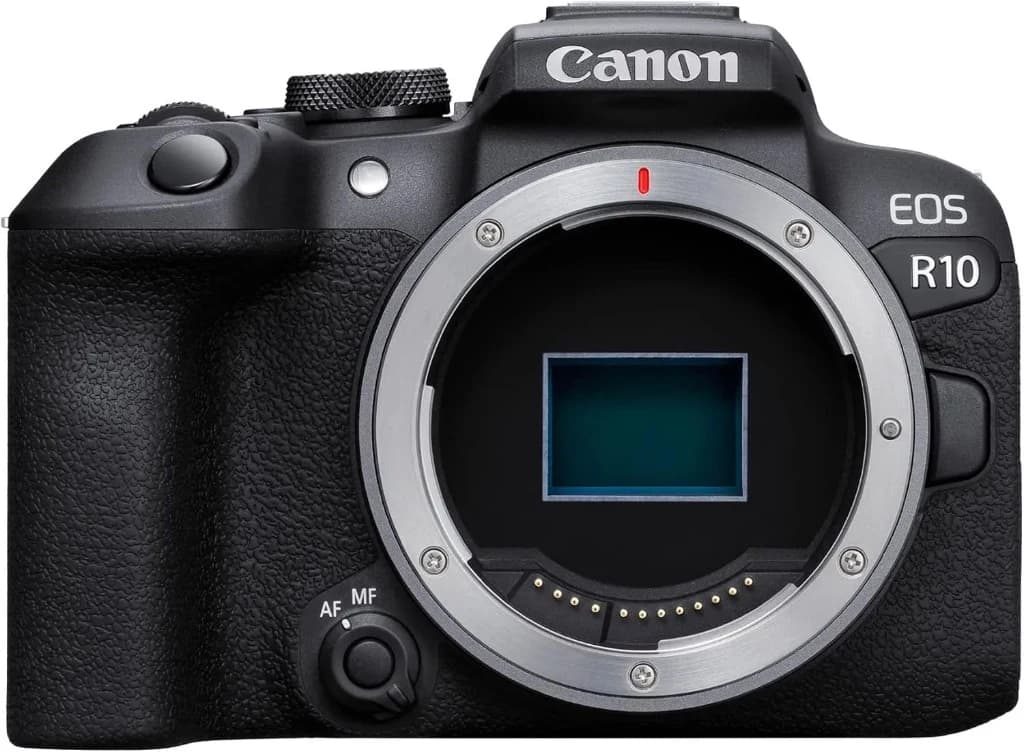
1st choice: Canon EOS R10 or R50
The largest learning system, the best tutorials online, a huge used market. Easy entry into post-processing thanks to excellent default colors. Also ideal with Lightroom.
If aesthetics and intuitive controls matter more than the size of the market.
Ambitious hobbyists (€1,500–€4,000)
All-rounder
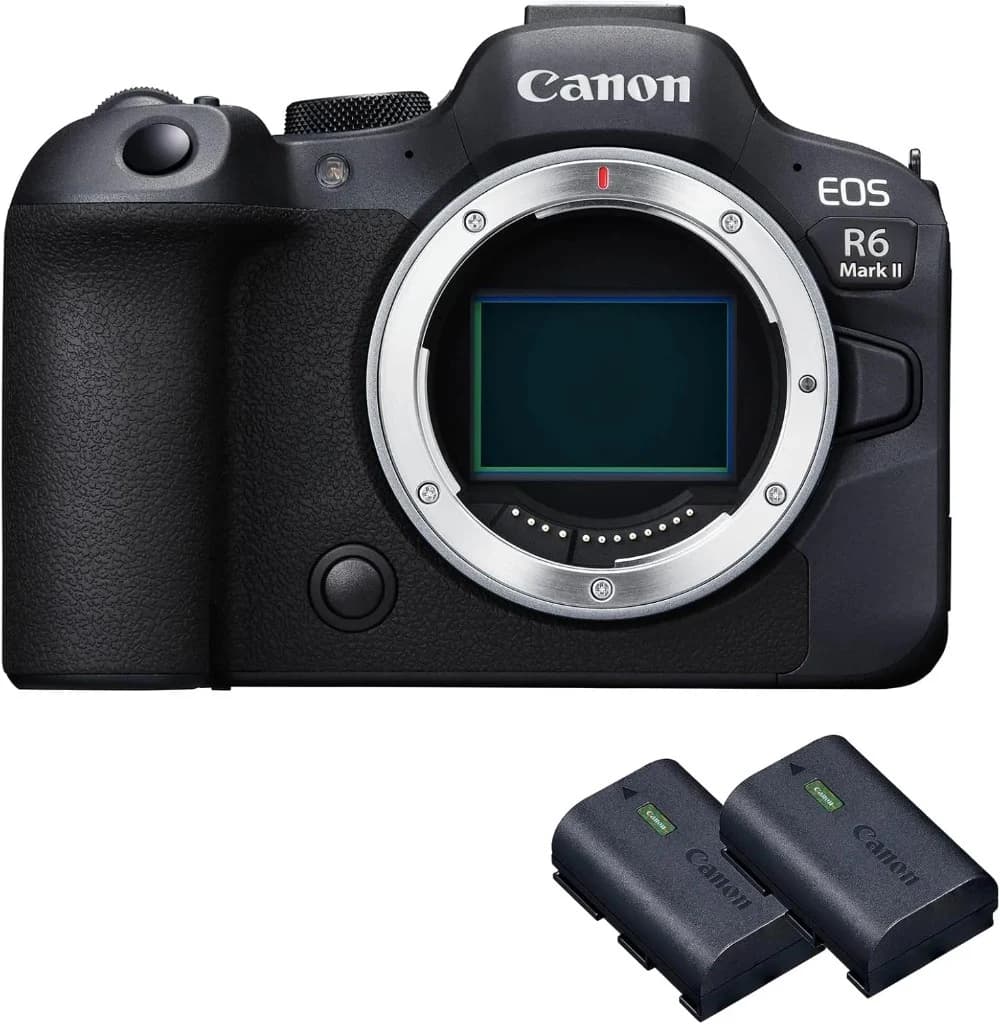
Canon R6 Mark II — the perfect balance of features, quality and reliability
Tech enthusiast
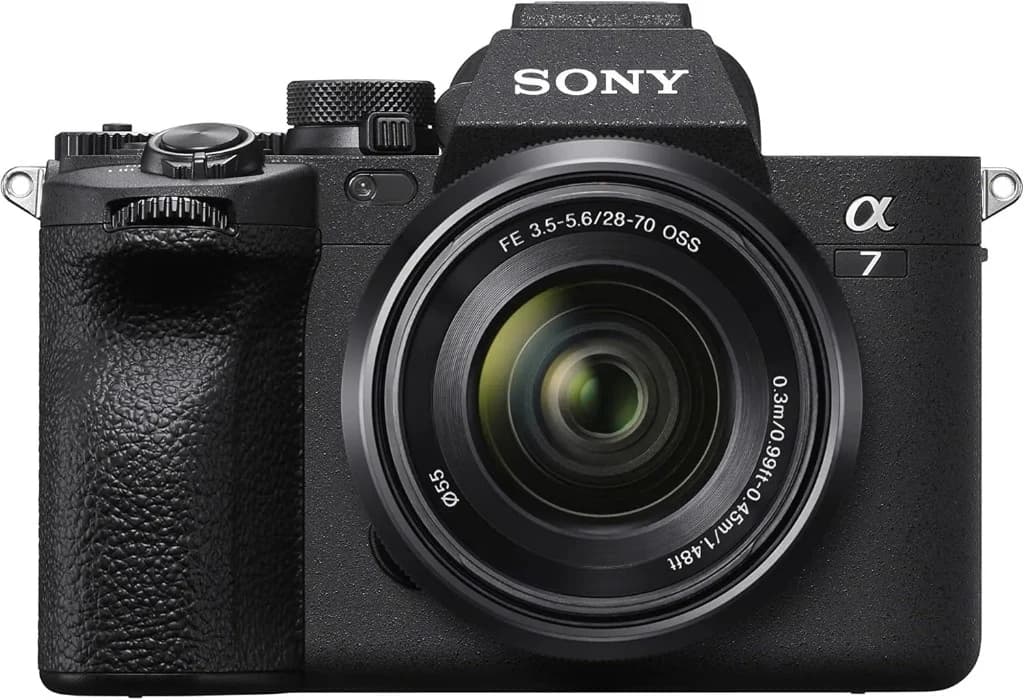
Sony A7 IV — best low-light performance, innovative features
APS-C premium
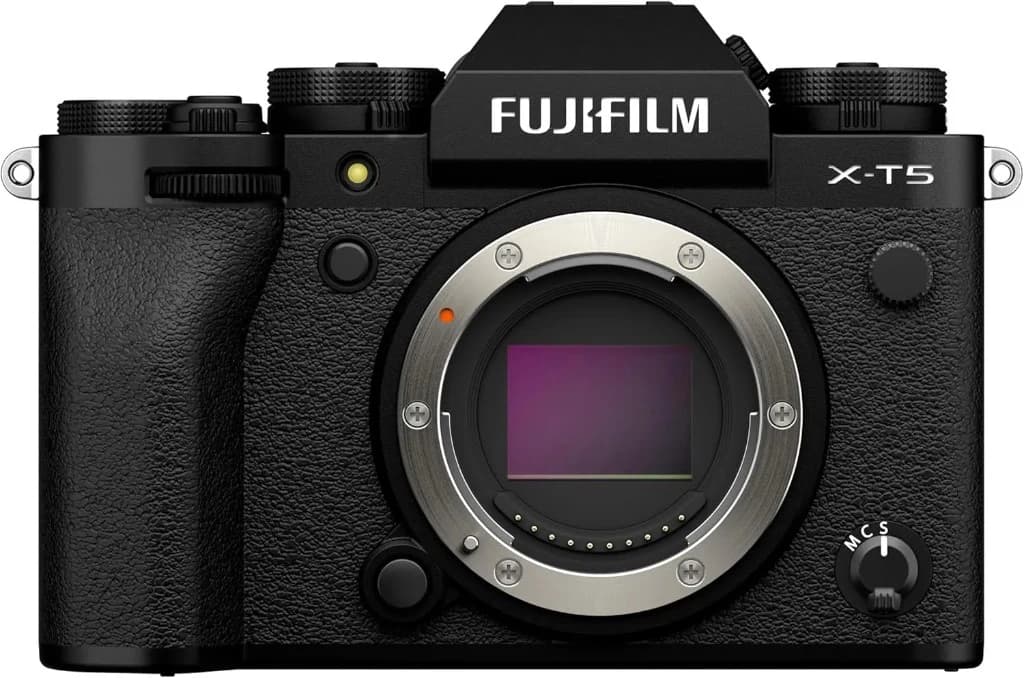
Fujifilm X-T5 — compact, high resolution, beautiful colors straight out of the camera
DSLR upgrader
Nikon Z6 III — if you're coming from a Nikon DSLR. Ideal with a calibrated monitor for color-critical work
Professional photographers
For pros, the brand choice is existential. What counts is not the newest feature but uncompromising reliability, fast service in emergencies and the certainty that your gear will still be fully supported in 5 years.
Four cameras I recommend wholeheartedly today — each for a different audience. Daily prices and availability live in each shop. The shop order is intentional: Amazon first, then German specialty retailers.
Vergleich
Canon
Canon EOS R10
Canon
Canon EOS R6 Mark II
Sony
Sony A7 IV
Fujifilm
Fujifilm X-T5
Bild
Empfehlung
Beginner Pick
Editor's Choice
Hybrid Pick
Creative Pick
Sensor
24.2 MP · APS-C CMOS
24.2 MP · full-frame BSI
33 MP · full-frame BSI
40 MP · APS-C X-Trans 5 HR
ISO-Bereich
100 – 32,000 (expanded to 51,200)
100 – 102,400 (expanded to 204,800)
100 – 51,200 (expanded to 204,800)
125 – 12,800 (expanded 64 – 51,200)
Autofokus
Dual Pixel CMOS AF II · Subject Detection
Dual Pixel CMOS AF II · Eye/Subject
759 phase-detect AF · Real-Time Tracking
425 phase-detect AF · Subject Detection
Detail
23 fps burst · 4K30 · 429 g
40 fps burst · 4K60 6K-oversampled · IBIS 8 EV
10 fps burst · 4K60 · S-Log3 · IBIS 5.5 EV
15 fps burst · 6.2K30 · IBIS 7 EV · 557 g
Stärken
+Largest lens ecosystem (RF + EF via adapter)
+Very good autofocus for the price class
+Best service in Germany (Krefeld)
+Best balance of speed, AF and image quality
+8-stop IBIS even with old EF lenses
+Skin tones practically straight out of the camera
An often-overlooked aspect: how good is service in Germany, really? When your camera needs repair, you quickly feel the difference between makers. Long repair times can paralyze your whole workflow — especially if you're running a powerful image-editing PC at full tilt.
Brand
Service centers DE
Repair time
Cost level
Spare parts
Canon
Krefeld (HQ)
5–7 business days
Medium
Excellent
Sony
Cologne, Berlin
7–14 business days
Medium-high
Good
Nikon
Düsseldorf
5–10 business days
High
Good
Fujifilm
Düsseldorf
7–14 business days
High
Medium
OM System
Hamburg
10–21 business days
Very high
Critical
Panasonic
Wiesbaden
14–28 business days
High
Medium
Service quality in Germany 2026
08
Decision
Which brand fits you?
After 15 years of pro experience, hundreds of tested cameras and thousands of shoots: the best camera is the one that fits your workflow and that you can operate intuitively. Megapixels and specs are secondary if the camera doesn't match how you work.
Choose Canon if…
◆You want maximum reliability and safety
◆A large lens lineup is important
◆You work professionally and depend on service
◆You don't need to be first on new tech
Choose Sony if…
◆You love the latest tech
◆Low-light photography matters to you
◆You prefer compact, lightweight systems
◆You're not afraid of more complex menus
Choose Fujifilm if…
◆APS-C is enough for you (and it usually is!)
◆You value great colors straight out of camera
◆Controls and feel matter more than raw specs
◆You want to be part of a passionate community
Choose another system only if…
◆Nikon Z: you come from Nikon DSLR and love the ergonomics
◆OM System: minimum weight is your top priority
◆Panasonic: video matters at least as much as photo
◆Leica: money's no object and you want to stand out
09
Switching
Common mistakes when changing brands
A brand switch costs not just money but time, nerves and often creativity. In 15 years I've accompanied countless photographers through brand switches — these mistakes keep showing up:
Choosing the right brand matters — but your eye, your timing and your image format workflow ultimately decide the quality of your photos.
Transparency notice: This article contains affiliate links. If you buy through them I earn a small commission at no extra cost to you. Editorial content is unaffected.
◆ Newsletter
Stay in the loop.
Camera and photography news, honest gear tests and new articles — in your inbox. Infrequent but relevant. No spam, unsubscribe anytime.