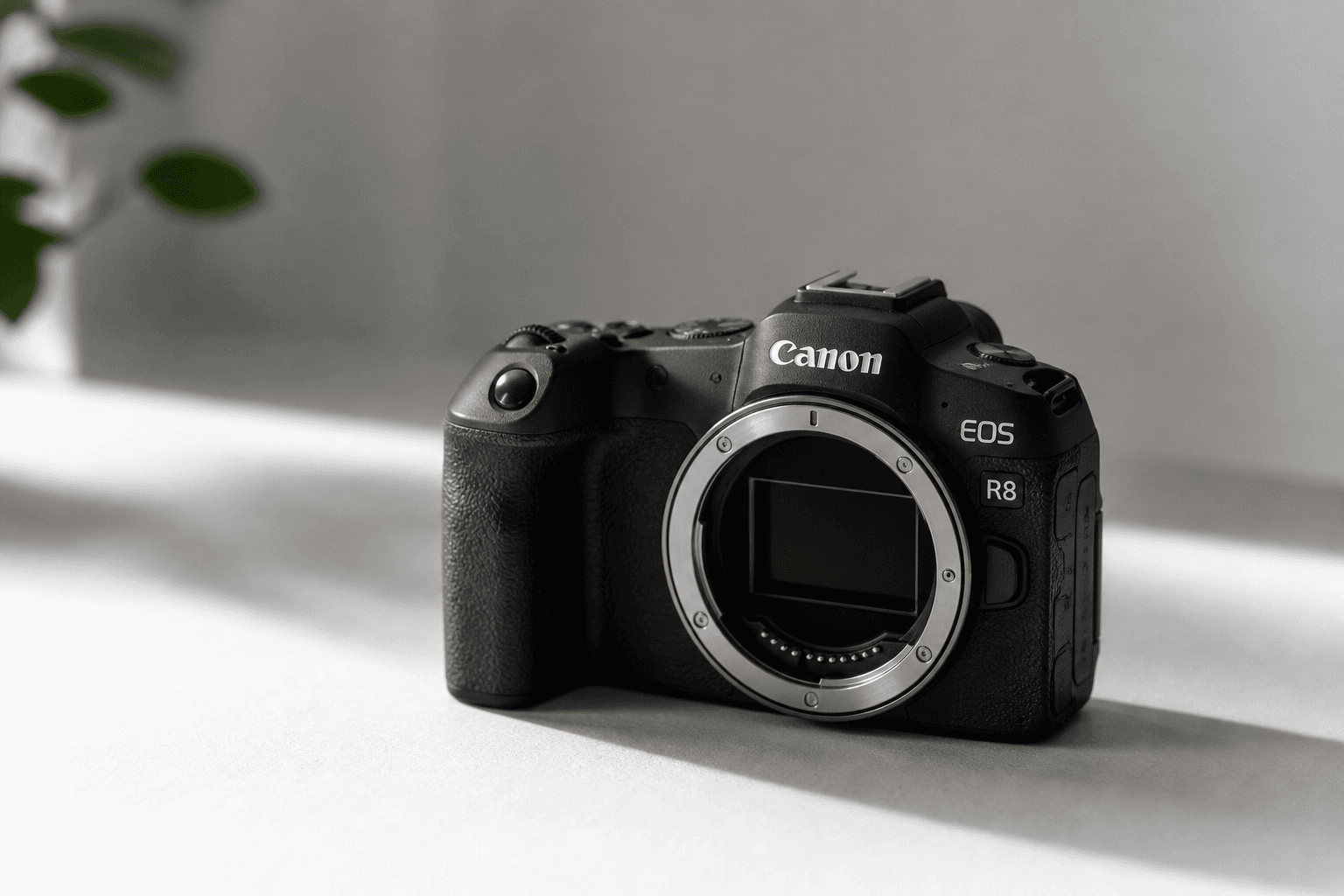
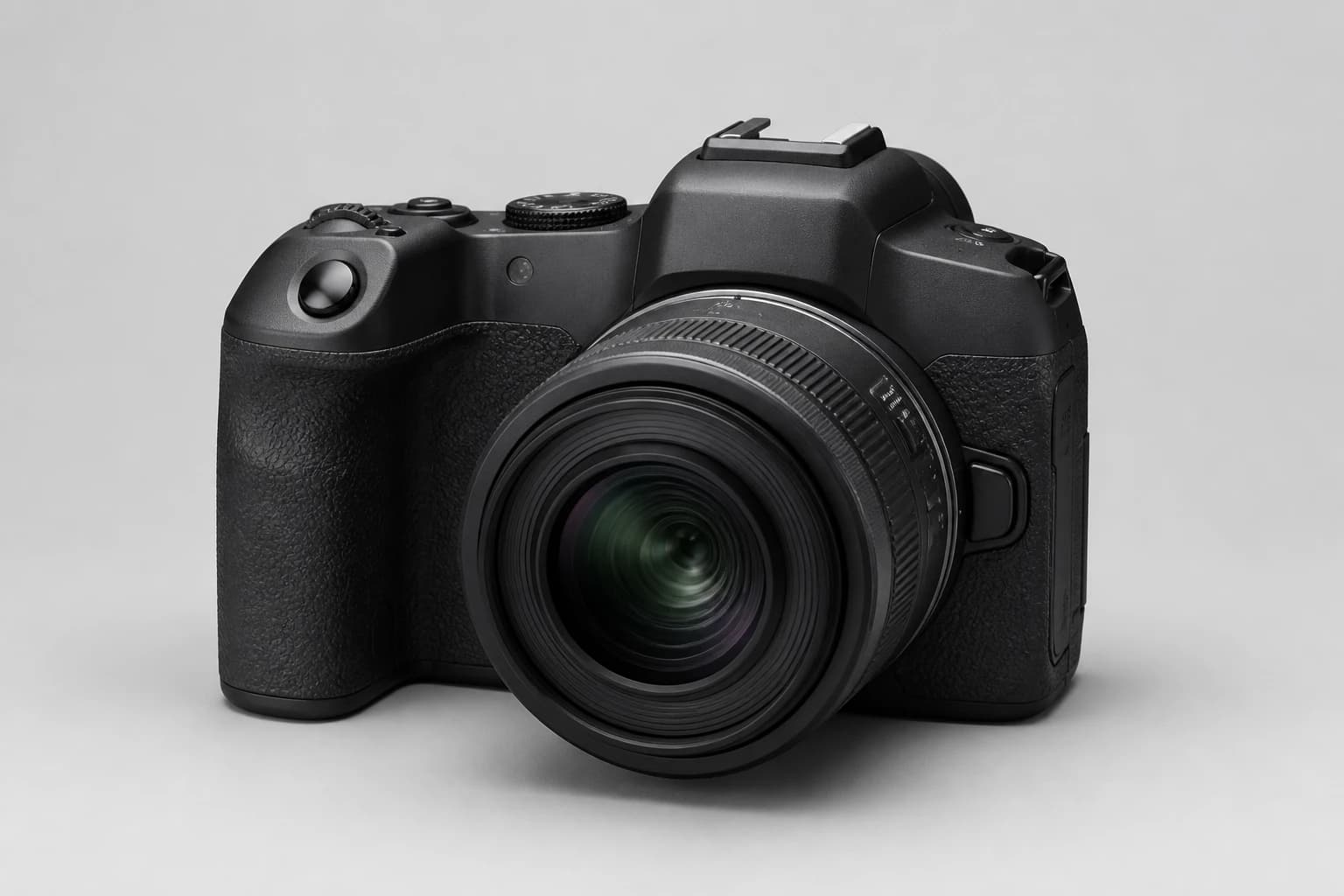
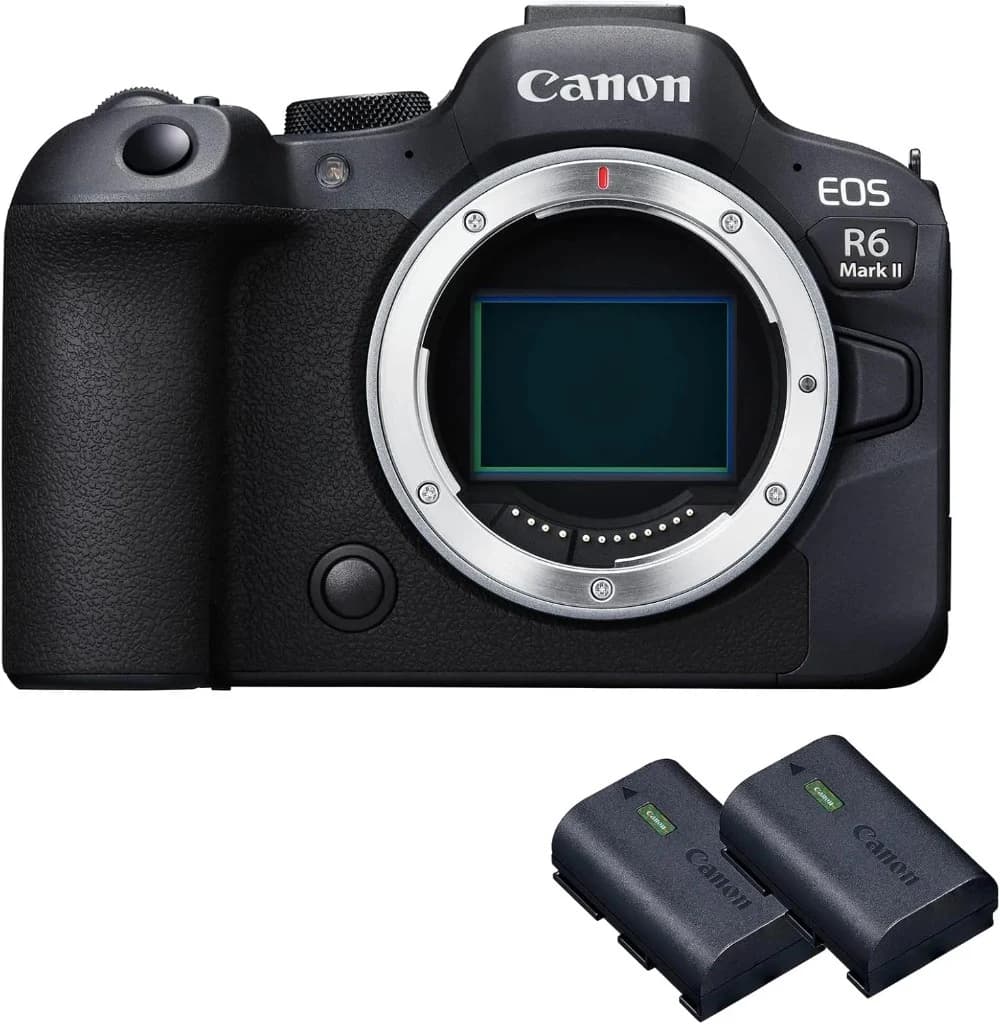
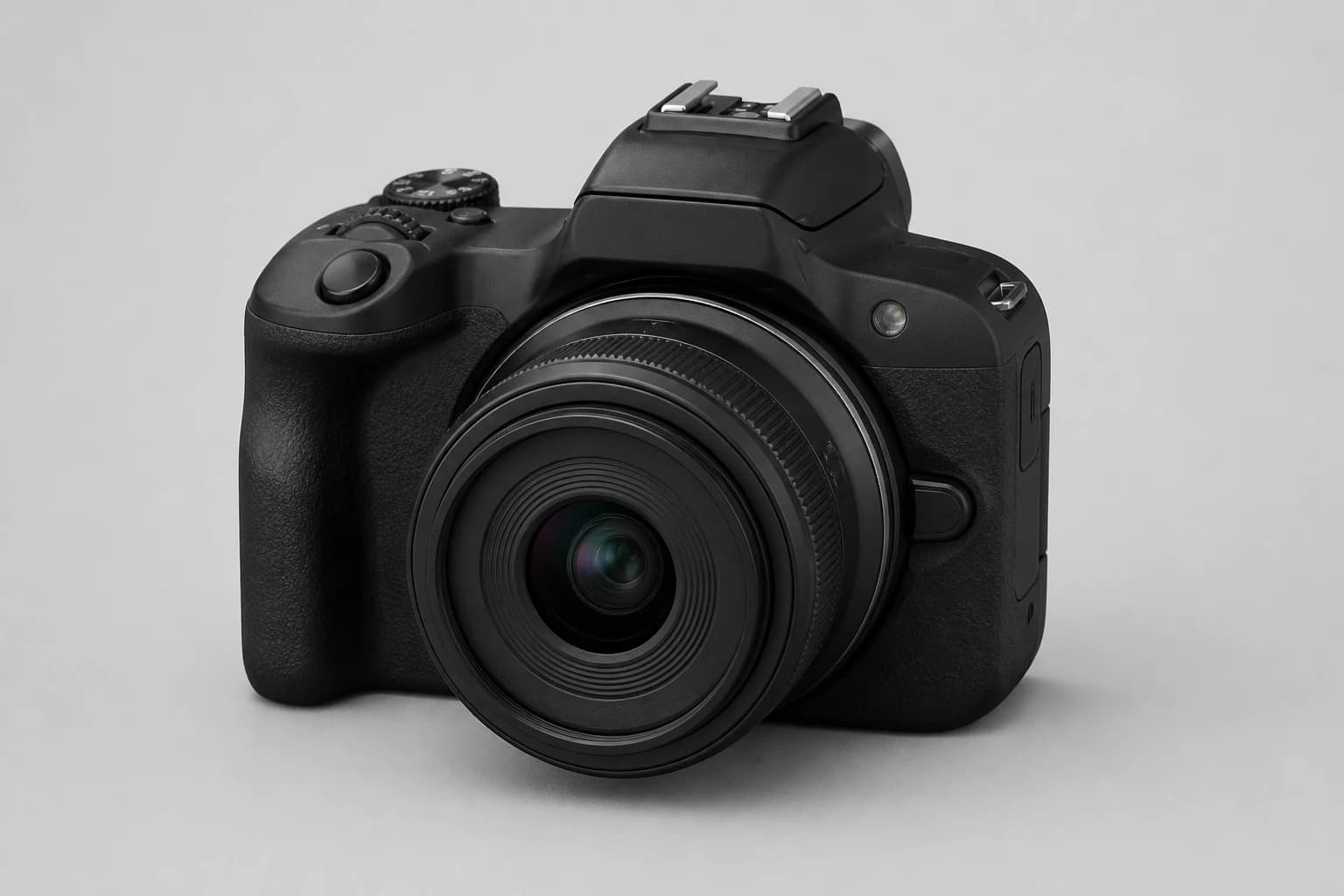
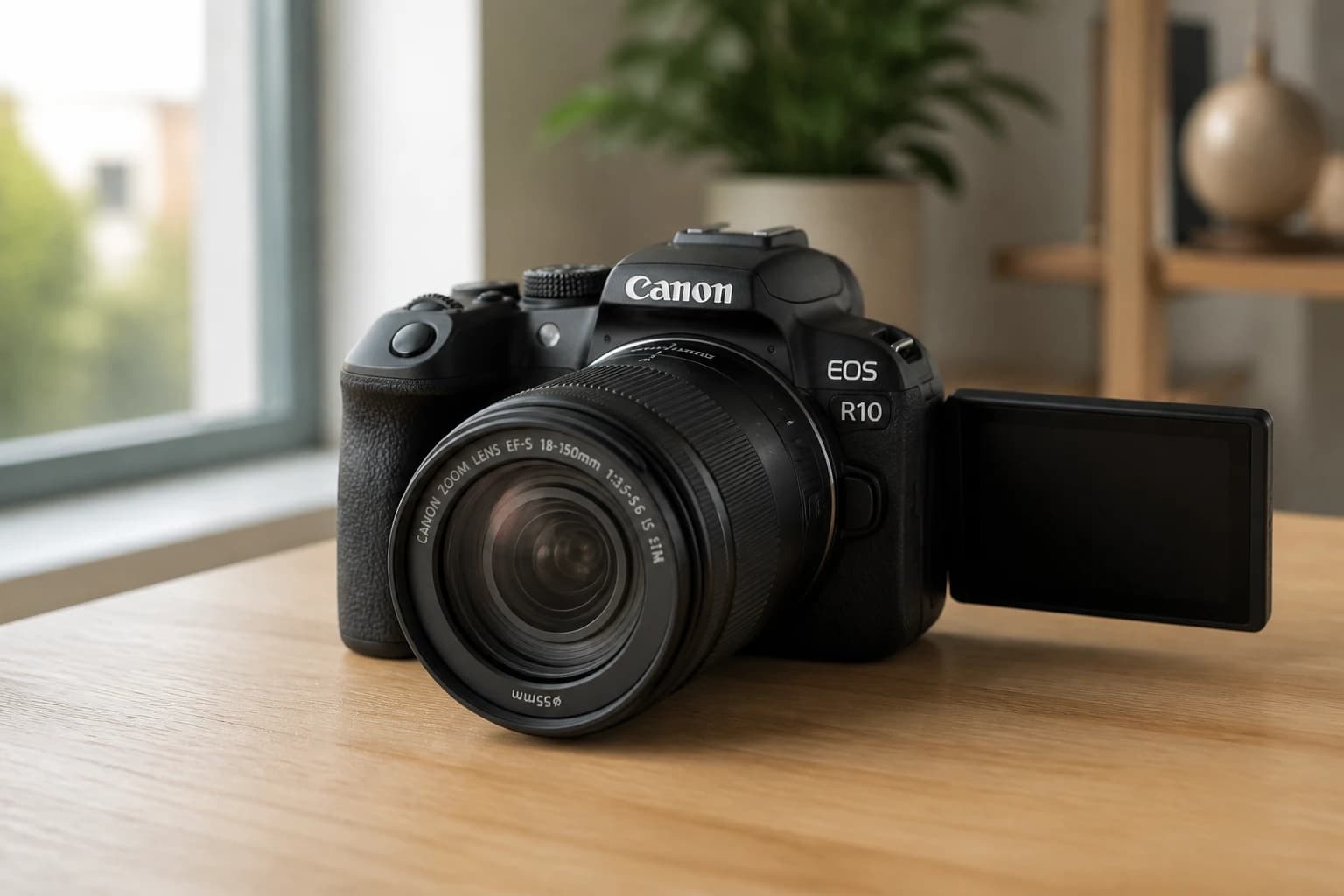
Canon EOS R8 Review: Canon EOS R8 for Light Full-Frame
Is the R8 worth it in 2026 — and when do the R6 Mark II or R50 fit better?
Author
Martin Kleinheinz
Photographer · Content Creator · Hannover
Updated
September 1, 2026
You’re googling “Canon EOS R8” because you want full-frame — without taking on the weight and price of an R6 Mark II right away. You want the larger sensor for light and depth of field, strong autofocus for people and portraits, and a body that feels light and stays in the RF system. At the same time you want to understand whether “affordable full-frame” is really your job — or whether missing IBIS (in-body stabilization against shake) will trip you up in everyday use.
Plain English: the Canon EOS R8 is Canon’s light full-frame entry with the same 24-megapixel character and strong Dual Pixel autofocus as the R6 Mark II. What you need to plan honestly: no IBIS, a smaller battery (LP-E17) and only one SD slot. If APS-C is smarter for learning: Canon R50 or Canon R10 review. Sensor-size topic: crop sensor vs. full-frame. Travel setup: best travel camera.
00
Short
Is the Canon EOS R8 worth it in 2026? The short verdict
Short version: the Canon EOS R8 is the camera I’d recommend in 2026 when you want light full-frame — 24 megapixels, strong autofocus, RF system, photo and video in one box — and you can live without stabilization in the body. New typically $1,200 to $1,450, anchor often around $1,350. On top come a lens, memory card and batteries. Plan that from day one — and plan especially honestly: no IBIS.
What you get: a full-frame sensor (larger than a smartphone and APS-C — more control over background blur and often more reserve in low light), 24 MP as an everyday-ready resolution, Dual Pixel CMOS AF II for eyes and subjects, a light body, and video that often stays strong for content and short to medium takes — as long as you solve stabilization with a lens, steady technique or a tripod. What you don’t get: IBIS, the larger LP-E6 battery of the R6 family, or a second card slot. And you don’t get a guarantee that “full-frame” improves your everyday if you mainly shoot events handheld in low light — then the R6 Mark II is often more honest.
If you need IBIS, a larger battery and two slots: [R6 Mark II](/en/canon-r6-mark-ii-review/). If full-frame is still overkill and you want budget free for glass and practice: R50 or R10. Used full-frame with IBIS and manageable files: often the Canon R6 Gen1. High-res with 45 MP: Canon R5.
Top 3
My three recommendations
The Canon EOS R8 is my recommendation when you want light full-frame: 24 megapixels, strong autofocus and RF entry — typically around $1,200 to $1,450 — and you know there’s no IBIS in the body. The Canon EOS R6 Mark II fits when you want the same 24 MP character, but IBIS, a larger battery and two SD slots are worth the jump to often $1,700 to $2,100 — full detail in the Canon R6 Mark II review. The Canon EOS R50 is the pick when APS-C budget is smarter: learn, film and shoot around often $600 to $750, without buying full-frame and the R8’s IBIS compromise yet.
Vergleich
Canon
Canon EOS R8
Canon
Canon EOS R6 Mark II
Canon
Canon EOS R50
Bild
Empfehlung
Editor’s pick
Upgrade
Alternative
Sensor
24 MP full-frame
24 MP full-frame
24 MP APS-C
ISO-Bereich
Dual Pixel CMOS AF II
Dual Pixel CMOS AF II
Dual Pixel CMOS AF
Autofokus
no in-body IBIS
in-body (IBIS)
no IBIS · lens / digital IS
Detail
4K strong — harder without IBIS
4K · hybrid everyday-ready
4K · creator-friendly
Stärken
+Affordable full-frame entry in the RF system
+Lighter and more compact than the R6 Mark II
+Same 24 MP character and strong AF
+RF path — upgrade later possible
+IBIS against handheld shake
+Larger battery (LP-E6 family)
+Two SD slots for backup / relay
+Work-camera feel for events
+Clearly cheaper than R8 and R6 II
+Light, compact, RF entry
+Strong AF for the money
+Budget left for glass and practice
Schwächen
−No IBIS — handheld events and video harder
−Smaller battery (LP-E17), only one card slot
−Less “work camera” feel than the R6 II
−Stabilized lenses or steady technique needed
−Clearly more expensive and heavier than the R8
−Less crop reserve than R5 / R6 III
−No CFexpress Type B
−Lenses extra — body alone isn’t enough
−No full-frame — less bokeh / light reserve
−No IBIS in the body
−Less “work camera” than the R6 II
−APS-C crop on tele and wide — plan for it
Geeignet für
Light full-frame to get started — when you can live without IBIS or often work with a tripod / IS glass.
Events, hybrid and content handheld — when you really need IBIS and use the premium.
Entry and learning in the RF system — when full-frame isn’t needed yet and you want budget for lenses and practice.
In the rest of this article I’ll explain the terms, everyday use and especially no IBIS, LP-E17, one SD slot and when APS-C is smarter — so you don’t just think “finally full-frame,” but know which job the R8 really covers.
01
Audience
Who the R8 really fits
Before we talk Dual Pixel and LP-E17: the most important question is whether you really need full-frame without IBIS. The R8 feels like a light full-frame camera with a viewfinder, flip screen and RF mount — not like the heavier work camera R6 Mark II, but also not like a pocket compact. You shoot and film through an EVF (electronic viewfinder at the eye) and the screen. For many people that’s the jump from a smartphone or entry APS-C into “real” full-frame — and for some it’s the step where they realize they actually needed stabilization and battery reserve more than the larger sensor.
It fits well when you shoot portraits, travel, street, business light or content with full-frame character and weight matters. You often work with stabilized lenses (IS), a tripod or steady technique. You want RF lenses and a body that can also do video — interviews, B-roll, 4K for social — without every shoot being an event marathon in church light. It fits poorly when your main job is events, weddings, dance floors, run-and-gun in low light — then missing IBIS hurts. Also a poor fit: when you’re still learning and should put money into glass and practice instead. Then you’re often happier with the R50 or the R10. And if you take hybrid handheld seriously: lean R6 Mark II.
Use case
Does the R8 fit?
Why
Portrait / business (controlled)
Excellent
Full-frame, AF, light — tripod/IS often fine
Travel / light setup
Excellent
Weight and size — see travel camera guide
Street / everyday
Good
Light and discreet — plan short shutter speeds
Content / YouTube (short takes)
Good
4K strong — without IBIS you need technique/IS/tripod
Events / wedding handheld
Conditional
AF strong — missing IBIS often hurts
Learning / first system
Often overkill
R50 / R10 often smarter — budget for glass
Cinema box / endless takes
Wrong job
Lean video-first — different camera type
Fit by practice and user consensus — as of September 2026
If you’re unsure whether you need full-frame at all: for many jobs APS-C is plenty — web, social, learning, many client deliveries. Full-frame pays off when you use the advantages: control over blur, reserve in low light, a “film look” through sensor and glass. Otherwise you pay for the body and, with the R8, also accept the IBIS compromise — without feeling the benefit. More: crop sensor vs. full-frame.
A typical scenario: you want portraits and travel with full-frame, carry the camera all day, work with a stabilized zoom or fast primes in daylight, and film short clips with a tripod or steady technique. Then the R8 is often exactly right — light, RF path, strong AF.
Another scenario: you shoot weddings and events, follow people onto the dance floor, film walk-and-talks in dark locations and want to think about shake as little as possible. Then the R8 is often the wrong savings. The R6 Mark II costs more — and saves you nerves and soft frames later. And a third scenario: you’re coming from a smartphone, want “finally full-frame,” but don’t have a good lens or a routine yet. Then don’t buy an R8 for image reasons. The R50 or R10 often makes you just as happy while learning — and leaves budget for glass that changes the image more than the sensor sticker.
02
Understand
What the tech means — without datasheet vibes
Here come the numbers — explained so you know what they mean for you. The three cameras in this review do related but different jobs. If you’re coming from a smartphone or an entry camera, some terms are new. So I’ll translate them once — after that the everyday consequences are enough.
Full-frame and 24 megapixels: Full-frame means the sensor is larger than on many APS-C and smartphone cameras. In practice you often get more control over the background (blur) and more room in low light — details in the guide crop sensor vs. full-frame. 24 megapixels means: enough pixels for most deliveries without every file punishing your computer. The R8 and the R6 Mark II sit in the same family here: related image character, strong Canon AF. The R50 stays APS-C — smaller sensor, different budget, different job.
Dual Pixel CMOS AF II: Canon’s autofocus system. Simply put: the camera finds faces, eyes, animals and keeps them sharp while you or the subject move. For portraits and events that’s gold — you don’t have to pull focus manually all the time. The R8 and the R6 Mark II sit in a very similar strong AF world. The difference is less about “is it sharp?” and more about IBIS, battery and body. The R50 is also AF-strong for the price — but APS-C.
No IBIS — the R8’s real trade-off:IBIS means In-Body Image Stabilization — stabilization in the body. The sensor moves against your shake. For you that means: sharper photos at longer handheld shutter speeds, steadier video shots without a gimbal for normal movement, and less dependence on every lens having its own stabilizer (IS). The R6 Mark II has IBIS. The R8 does not. That isn’t a small specs detail — it’s often the difference between “relaxed on the dance floor” and “every other frame soft,” especially with fast primes that have no IS.
What you can still do without IBIS: choose short shutter speeds (more light or higher ISO), use stabilized lenses, practice steady technique, use a tripod or monopod, and for video combine Movie Digital IS (digital stabilization — helps, but costs a little framing) with lens IS. That works. It just isn’t the same as sensor stabilization plus glass. Who knows that upfront buys the R8 on purpose. Who notices it first at a wedding gets expensive frustration.
LP-E17 and one SD slot: The R8’s battery is the smaller LP-E17 — familiar from many entry bodies, not the large LP-E6 family of the R6 Mark II. For you that means: plan more spare batteries, especially on event or travel days with viewfinder and video. Plus only one SD slot: no parallel backup on two cards, no relay to slot two. Card orientation: best SD card for camera. No drama for many creators — but an honest difference vs. the R6 II as a work camera.
Topic
R8
R6 Mark II
R50
Sensor (plain English)
24 MP full-frame
24 MP full-frame
24 MP APS-C
IBIS (stabilization)
No — lens / digital IS only
Yes — everyday helper
No — APS-C entry
Autofocus
Dual Pixel II — strong
Dual Pixel II — strong
Dual Pixel — strong for the money
Battery / cards
LP-E17 · 1× SD
LP-E6 · 2× SD
small · 1× SD
Job
Light FF entry
Value hybrid with IBIS
APS-C budget / learning
Price approx. (2026)
$1,200–1,450 (anchor ~$1,350)
$1,700–2,100 (anchor ~$1,900)
$600–750 (anchor ~$650)
Three philosophies at a glance — as of September 2026
If you remember the table, that’s almost enough for the buying decision: light full-frame, IBIS optional → R8. Hybrid with IBIS and work-camera feel → R6 Mark II. Learning and budget for glass → R50 / R10. Used FF with IBIS → often R6 Gen1.
03
Everyday
How the R8 really feels
Datasheets rarely tell you whether you’ll enjoy carrying the camera all day. That’s exactly what decides whether it makes pictures — or sits in a cupboard. The R8 feels like a light full-frame camera: smaller than the R6 Mark II, viewfinder at the eye, flip screen, controls you run by feel after a few days. With battery it sits noticeably lighter in the hand — exactly why many people want it for travel and everyday use. More on light setups: best travel camera.
You work through the EVF (electronic viewfinder) and the screen. In harsh sun the viewfinder saves you. Coming from a smartphone, you need a short adjustment: looking through instead of tapping glass. Coming from a DSLR, you often feel at home faster — just digital, with a live preview of exposure. The grip works well for small to medium hands; people with large hands and long event days often notice why the R6 Mark II feels “more solid.”
In everyday use you notice 24 megapixels less as a “wow in the viewfinder” and more in the workflow: files stay manageable — like on the R6 Mark II. Backup goes quickly. Cards last longer. What you do notice: the smaller battery and missing IBIS. After a few hours of viewfinder use and video you swap sooner. At longer handheld shutter speeds you need discipline. That isn’t a flaw in the camera — it’s the deal you take for lightness and price.
LP-E17 battery
Smaller than the LP-E6 family of the R6 Mark II. For travel days and events I plan spares and/or USB power where possible. One battery rarely covers a full content or event day with viewfinder and video — often even clearer on the R8 than on larger bodies.
One SD slot
Only one card — no parallel backup in the body. Take a strong card and a workflow backup (laptop, second device). Orientation: best SD card for camera. Fine for many creators — for critical jobs an argument toward the R6 II.
RF mount and adapters
Native RF lenses are the modern path. Many EF lenses keep working via adapter — good for switchers. Still plan at least one strong RF or adapted all-round lens from day one. On the R8: check IS glass especially carefully.
Weight vs. IBIS
That’s the tangible trade-off: you carry less — and stabilize less in the body. For travel and portraits often a win. For events in low light often why the R6 Mark II feels more relaxed in the end.
In reviews and user reports I hear the same things again and again: lightness, value and AF get praise — missing IBIS, small battery and one slot get criticism. That matches what I see. The R8 isn’t a compromise camera that somehow maximizes everything. It’s a clear choice for light full-frame — with an honest limit on stabilization and endurance.
Coming from a smartphone or light APS-C, plan handling honestly too: the R8 is a tool, not an impulse gadget. It rewards you when you carry it often and practice controls plus short shutter speeds — not when it waits “for later” in a cupboard while the phone keeps doing everything.
04
Image
Image and video: what you really notice
Many people buy the R8 not because of a specs line, but because the files stay calm and manageable: enough detail for deliveries, full-frame character, strong AF — and a body you actually take along. In decent light with good glass you notice full-frame and 24 megapixels as calm and reserve — not as a magic look button. The look still comes from light, lens and editing.
In video you mainly notice: the R8 can do serious hybrid video in 4K. For YouTube, client clips and short takes that’s enough in most cases. What you notice when you film handheld: missing IBIS. Lens IS and Movie Digital IS help. A tripod and steady technique help more. The R6 Mark II is often more relaxed here — exactly why it’s the upgrade in this matrix.
Versus the R6 Mark II you mainly lose IBIS, battery reserve and the second slot — the 24 MP look stays related. Versus the R50 you gain full-frame character and often more light/bokeh reserve — and you pay more without getting IBIS. Versus a cinema box you gain a viewfinder and stills seriousness — and you lose fan safety for endless takes.
◆Portrait / business: full-frame and AF — manageable files, look through glass and light
◆Travel / street: light and everyday-ready — plan short shutter speeds and IS glass
◆Content / YouTube: 4K usually enough — plan an external mic and stabilization
◆Handheld events: AF strong — IBIS missing; often lean R6 Mark II
One more word on files and computers: 24 MP RAWs and everyday 4K are relaxed for most setups. If your laptop already wheezes on smaller files, upgrading to high-res alone isn’t a lucky move. And if you’re coming from a smartphone: don’t expect full-frame alone to make your images “pro” — light and lens still decide with you.
In practice you notice the R8’s character less in a single specs line and more in the overall picture: calm portraits, light carry, AF confidence — and the honest question about stabilization as soon as light gets scarce. Coming from a smartphone, don’t get dazzled by “full-frame” — it’s an option for a job. What matters: you get enough sensor and hybrid for serious work, but no guarantee for event marathons without IBIS.
05
Sharp
Autofocus in everyday use: strong — and related to the R6 Mark II
Autofocus means: the camera keeps faces and eyes sharp while you move. On the R8 — Dual Pixel CMOS AF II — that’s one reason it’s recommended so often despite missing IBIS. You can run portraits, street and many hybrid jobs without constantly pulling focus manually. For someone coming from a smartphone: that’s the difference between “constantly tapping the screen” and “just walk with it and shoot.”
That doesn’t replace good timing and light. In extreme backlight, very frantic action or deliberate cinematic rack focus (manual focus pull as a style choice), manual focus can still help. But for many stills and hybrid everyday jobs, AF here is a real tool — not a gimmick. And yes: it sits in the same strong family as the R6 Mark II. The difference sits elsewhere.
Compared with the R6 Mark II you’re in a similar AF world — the difference is less about “is it sharp?” and more about IBIS, battery and body. Compared with the R50: the R50 is also AF-strong for the price. On the R8 you don’t mainly pay for “better AF,” but for full-frame and the RF path in the larger sensor class.
Practically that means for solo creators and portrait shooters: you can hold a conversation, move and still keep eyes sharp. For events that’s gold — if the frames stay sharp enough despite missing IBIS. That’s exactly where “AF strong” separates from “job fits.” AF doesn’t save you from shake at 1/30 second in a dark church.
06
Stills
Stills with 24 MP: here is the everyday benefit
Unlike pure cinema cameras, stills on the R8 are not a side job. 24 megapixels, full-frame, viewfinder and strong AF — that’s the core. You buy everyday reserve: enough detail for deliveries, control over depth of field, room in low light — as long as you keep shutter speed under control. Without IBIS, low light often means: raise ISO, shorten shutter, or use a tripod/flash.
Burst and buffer are strong enough for many jobs as long as you keep expectations realistic and use a fast card. Mechanical shutter and electronic options cover different situations — the real point is less “which specs line” and more whether you hit the moment and can still edit the files afterward.
If you want stills and light full-frame and can live without IBIS: R8 — often the most honest entry in this class. If you want handheld events and hybrid with stabilization: [R6 Mark II](/en/canon-r6-mark-ii-review/). If you want to learn and save first: R50. If you want used full-frame with IBIS: often R6 Gen1. High-res 45 MP: Canon R5.
Practically that means: a portrait series, travel gallery, business shoot in daylight, content with a tripod — yes. A camera only because “full-frame” sounds cool, while you post everything to social and risk soft frames at every event — better check whether APS-C plus good glass or going straight to the R6 Mark II is more honest. Then budget properly and hit the job.
07
Video
Video in hybrid everyday use: what the R8 really can do
This is the section where many specs pages either oversell or undersell. The R8 is not a cinema flagship — and it doesn’t have to be. It’s a hybrid body that takes video seriously: 4K for content and clients, Log options depending on setup, and handling you also use while shooting stills. What’s missing: stabilization in the body.
For you in plain English: short and medium takes in 4K — interviews on a tripod, B-roll with IS glass, social clips, calm creator shots — run reasonably in many users’ everyday work. Long walk-and-talks, handheld events, dark locations without a tripod — then missing IBIS becomes a topic fast. The R6 Mark II is often the more relaxed box here. The R8 stays strong as long as your video job solves stabilization another way.
Why mention IBIS again here? Because handheld video without in-body stabilization gets restless quickly — exactly where the R8, despite related 24 MP character, falls behind the R6 Mark II. Lens IS and Movie Digital IS help. IBIS plus glass is simply more relaxed in event and creator everyday use. Who knows that upfront doesn’t buy “cheap full-frame” and then wonder about soft clips.
◆Hybrid everyday: 4K, manageable takes — usually strong with planning
◆Creator / YouTube: good — plan mic and stabilization
◆Handheld events: AF strong — IBIS missing noticeably
◆Travel clips: light body helps — IS glass pays off
◆Pro video duration with a fan: wrong job — different camera type
Practical tips without drama: match resolution to the job (4K instead of max specs if you don’t need them), external mic from day one, plan pauses and batteries honestly, and check whether you even need to film handheld without a tripod or gimbal. Many people who google “full-frame video” later upload 4K from a tripod — and could have lived well with the R8.
If after this section you think “my clips are short to medium, I have IS glass or a tripod, weight matters” — stay calm with the R8. If you think “I film events handheld and don’t want to think about shake” — then this section is your pointer to the R6 Mark II. That’s exactly what the upgrade is for.
08
Honest
Honest limits — what the R8 isn’t
Every camera gets judged unfairly when you expect the wrong job. The R8 has clear limits — and you should know them before you buy, not after.
No IBIS: the biggest point. Events, low light, walk-and-talk — harder than with the R6 Mark II. Smaller battery (LP-E17): plan more spares. Only one SD slot: no parallel backup in the body. No “work camera” grip like the R6 II: long days can feel more tiring. Body alone doesn’t deliver pictures: RF glass, cards and batteries cost — and on the R8 often IS glass. Not the smartest learning camera: if you’re still starting out, APS-C can be cheaper and more honest.
Then comes the expectation trap of “full-frame at any cost”: once you can google “finally FF,” APS-C looks weaker on paper. In practice APS-C stays the more honest buy for many people — because the money saved goes into lenses and practice, and because on the R8 you still have to live without IBIS. Who confuses “full-frame” with “better pictures always” spends money that would work better in glass.
If you accept these limits and your everyday is portraits, travel, street and manageable video with planning: then you’re in the right film. If not: R6 Mark II, R50, R10 or used R6 Gen1 — more honest and often cheaper in the end, because you don’t buy wrong.
09
Decision
R8, R6 Mark II or R50 — which question are you asking?
Many people compare cameras as if there’s one objectively best. There are three different questions. The R8 answers: “I want light full-frame with 24 megapixels and strong AF — and I can live without IBIS.” The R6 Mark II answers: “I want the same image character, but IBIS, battery and two slots for events and run-and-gun.” The R50 answers: “I want RF entry and learning without a full-frame budget and the R8’s IBIS compromise yet.”
You need …
Lean R8
Lean R6 II
Lean R50
Light full-frame
Yes
Heavier
No (APS-C)
IBIS / handheld events
No
Yes
No
24 MP FF character
Yes
Yes
APS-C
Save / learn first
Medium
No
Yes
Two slots / large battery
No
Yes
No
Used FF + IBIS
No → R6 Gen1
New value
No
Cinema box / fan
Wrong job
Conditional
Wrong job
Which question are you really asking? — as of September 2026
If you google “R8” but actually need IBIS, you’re often better with the R6 Mark II — not because the R8 is bad, but because the job is different. If you’d never miss full-frame and you’re still learning, the more expensive body gives you nothing. And if you want used full-frame with IBIS: lean Canon R6 Gen1 — often the honest value answer beside this matrix.
Why APS-C is sometimes smarter than the R8: because on the R8 you pay for full-frame and still work without IBIS. With the R50 (or R10) you clearly save on the body, stay in the RF system and invest in glass and practice. Many pictures later “feel” better because of lens and light — not because of a sensor sticker. Sensor sizes honestly: crop sensor vs. full-frame.
Another honest check: a used R6 Gen1 with IBIS and manageable files can beat a new R8 when events and stabilization are your everyday. Newness isn’t a quality guarantee. And switching systems to Nikon or Sony only makes sense when the ecosystem and lenses truly fit — not because of one specs line.
If you’re still unsure: write down three real jobs for the next months. Stills or video? IBIS needed? Full-frame needed? The camera that covers two of three days calmly is usually the right one — not the one that sounds like “finally full-frame” on paper.
10
Comparison
Three cameras at a glance
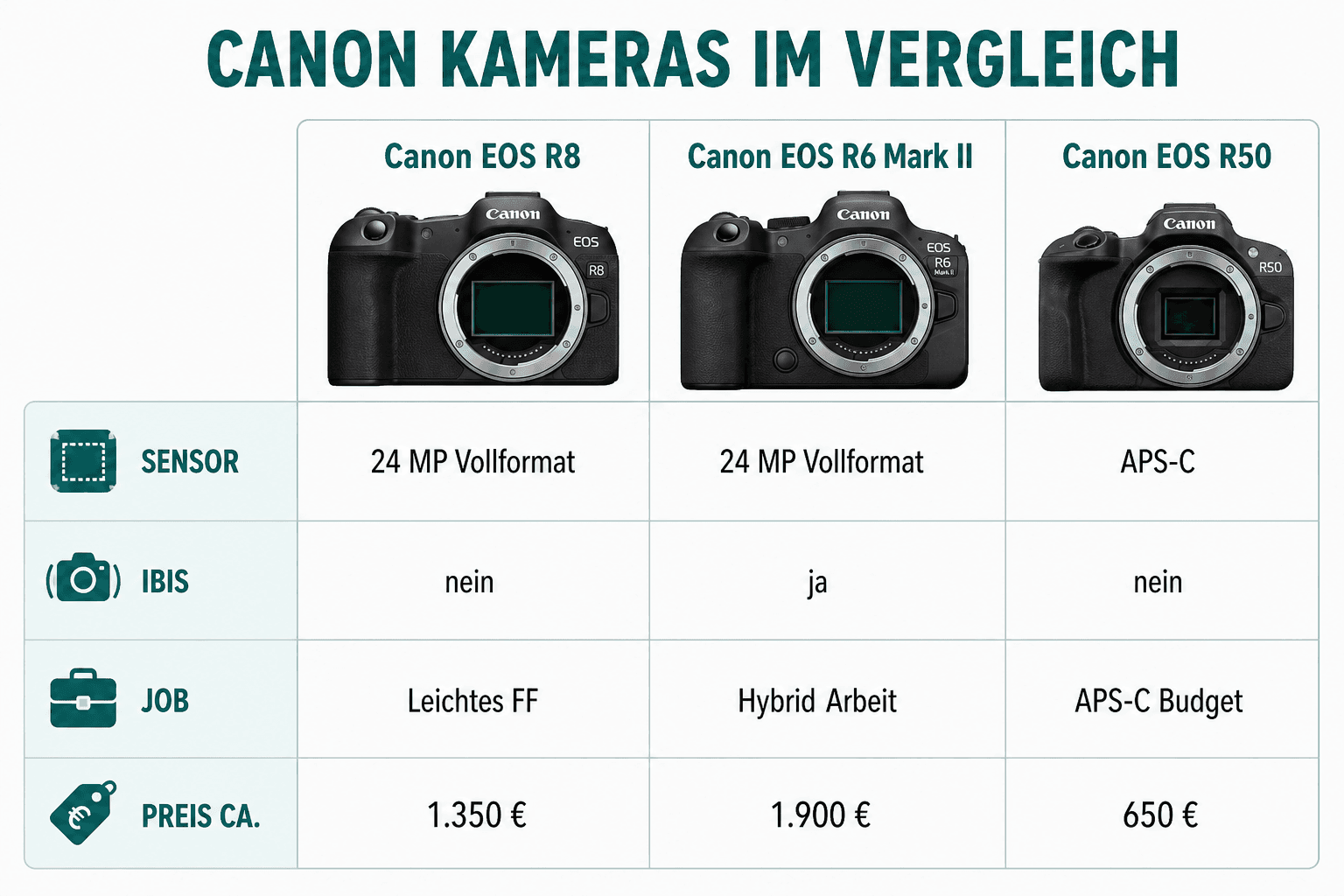
The graphic and the table summarize what you read above. Takeaway: the R8 delivers light full-frame without IBIS. The R6 Mark II pays for IBIS and work-camera reserve. The R50 delivers APS-C budget for learning.
R8 vs. R6 Mark II vs. R50 — as of September 2026
Criterion
R8
R6 Mark II
R50
Sensor
24 MP full-frame
24 MP full-frame
24 MP APS-C
IBIS
No
Yes
No
Battery / cards
LP-E17 · 1× SD
LP-E6 · 2× SD
small · 1× SD
Job
Light FF entry
Value hybrid + IBIS
APS-C budget
Price approx.
$1,200–1,450 · anchor ~$1,350
$1,700–2,100 · anchor ~$1,900
$600–750 · anchor ~$650
As of September 2026 — check prices in the shop
Versus the R6 Mark II you save on body and weight and accept no IBIS plus a smaller battery. Versus the R50 you pay for full-frame — and should honestly check whether you need that in everyday use. Learning with viewfinder and pace: often also R10. Used FF with IBIS: R6 Gen1.
11
Decision
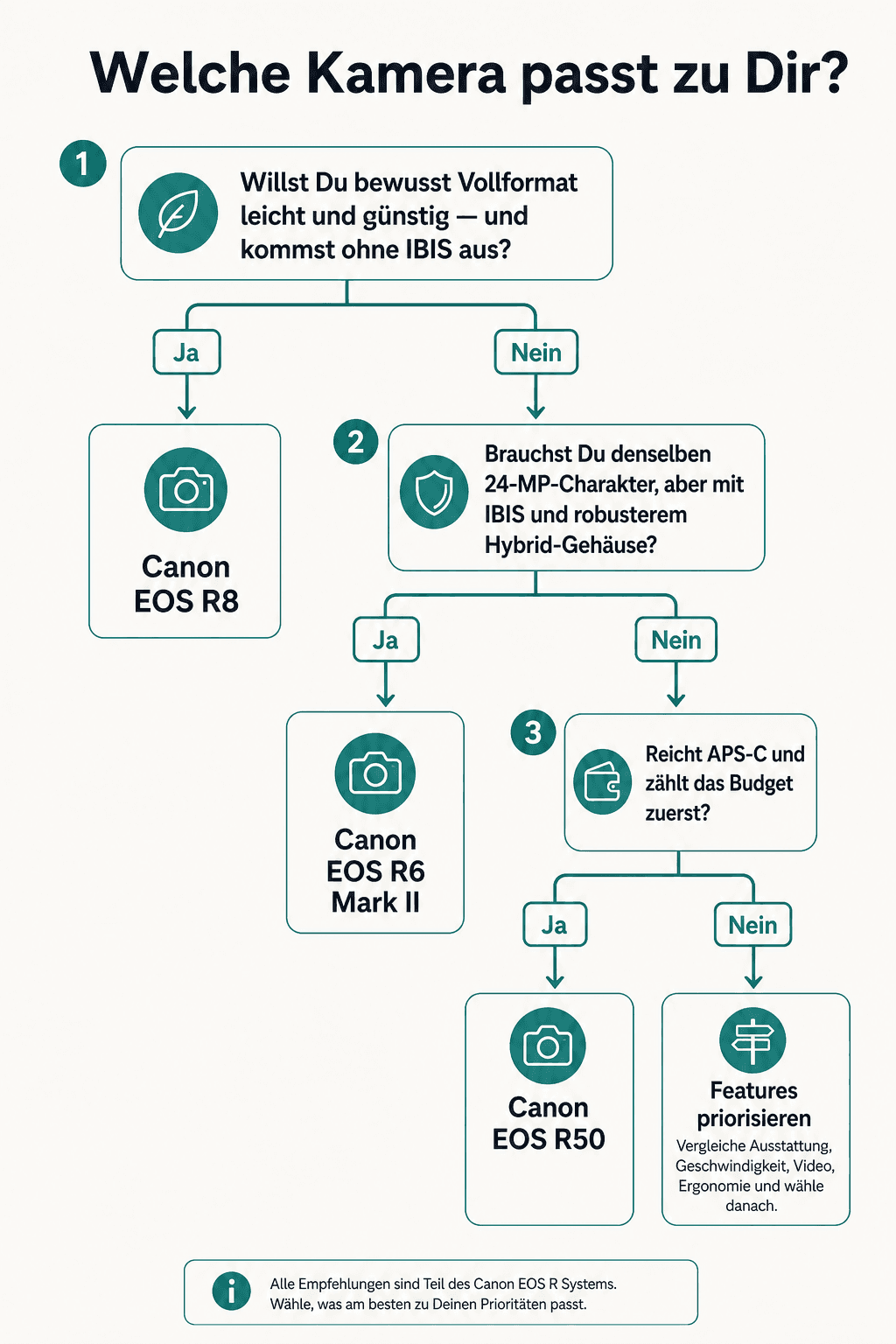
The decision tree: which camera fits you
Work the questions from top to bottom. The first honest answer matters more than any specs line. If you catch yourself between “finally full-frame sounds cool” and “I actually need IBIS”: take the job path. A cool name on the box doesn’t help you on set.
From use case to camera — as of September 2026
◆Light full-frame, IBIS optional (tripod/IS glass)? → Canon EOS R8
◆Events / hybrid handheld, IBIS needed? → [Canon EOS R6 Mark II](/en/canon-r6-mark-ii-review/)
◆Learning / budget for glass, APS-C enough? → Canon EOS R50 or R10
For most people who deliberately want light full-frame, can live without IBIS and stay clearly under the R6 Mark II body budget, the path lands on the R8 — typically around $1,200 to $1,450, anchor often $1,350.
12
Detail
Canon EOS R8: is light full-frame worth it?
After all that, the balance is simple: the R8 convinces when you want the job “24-megapixel full-frame light and RF” and neither event marathons without IBIS nor maximum battery reserve are your everyday. It frustrates when you expect IBIS, underestimate the small battery, or buy full-frame even though APS-C and good glass would have taken you further.
What convinces
Light FF, strong Dual Pixel AF, manageable 24 MP, RF system, often a clear price and weight edge vs. R6 Mark II — typically $1,200–1,450.
What you have to accept
No IBIS, LP-E17, one SD slot, less work-camera feel, IS glass or steady technique needed, glass and cards extra.
If that fits you, the R8 is the clear recommendation in this light full-frame entry class in 2026. If not, you’re often happier — and more honest — with R6 Mark II, R50 or R6 Gen1.
My practice filter is simple: if after reading you’re still stuck on dance floors and church light without stabilization, the R8 probably isn’t your camera. If instead you think “light FF, portraits/travel/content with planning — and body around $1,350,” then you’re exactly right here. Then plan glass, batteries and a card — and get out shooting.
Editor’s pick
Canon
Canon EOS R8
My pick for light full-frame entry
Light full-frame with the same 24-megapixel character and strong Dual Pixel autofocus as the R6 Mark II — typically new around $1,200 to $1,450, anchor often near $1,350. The honest choice when weight and entry price matter. Important and clear: no IBIS in the body, smaller battery (LP-E17) and only one SD slot.
Was überzeugt
+Affordable full-frame entry in the RF system
+Lighter and more compact than the R6 Mark II
+Same 24 MP character and strong AF
+RF path — upgrade later possible
Was Du wissen solltest
−No IBIS — handheld events and video harder
−Smaller battery (LP-E17), only one card slot
−Less “work camera” feel than the R6 II
−Stabilized lenses or steady technique needed
Editor's Statement
“Light FF entry — when full-frame character matters and you can live without IBIS”
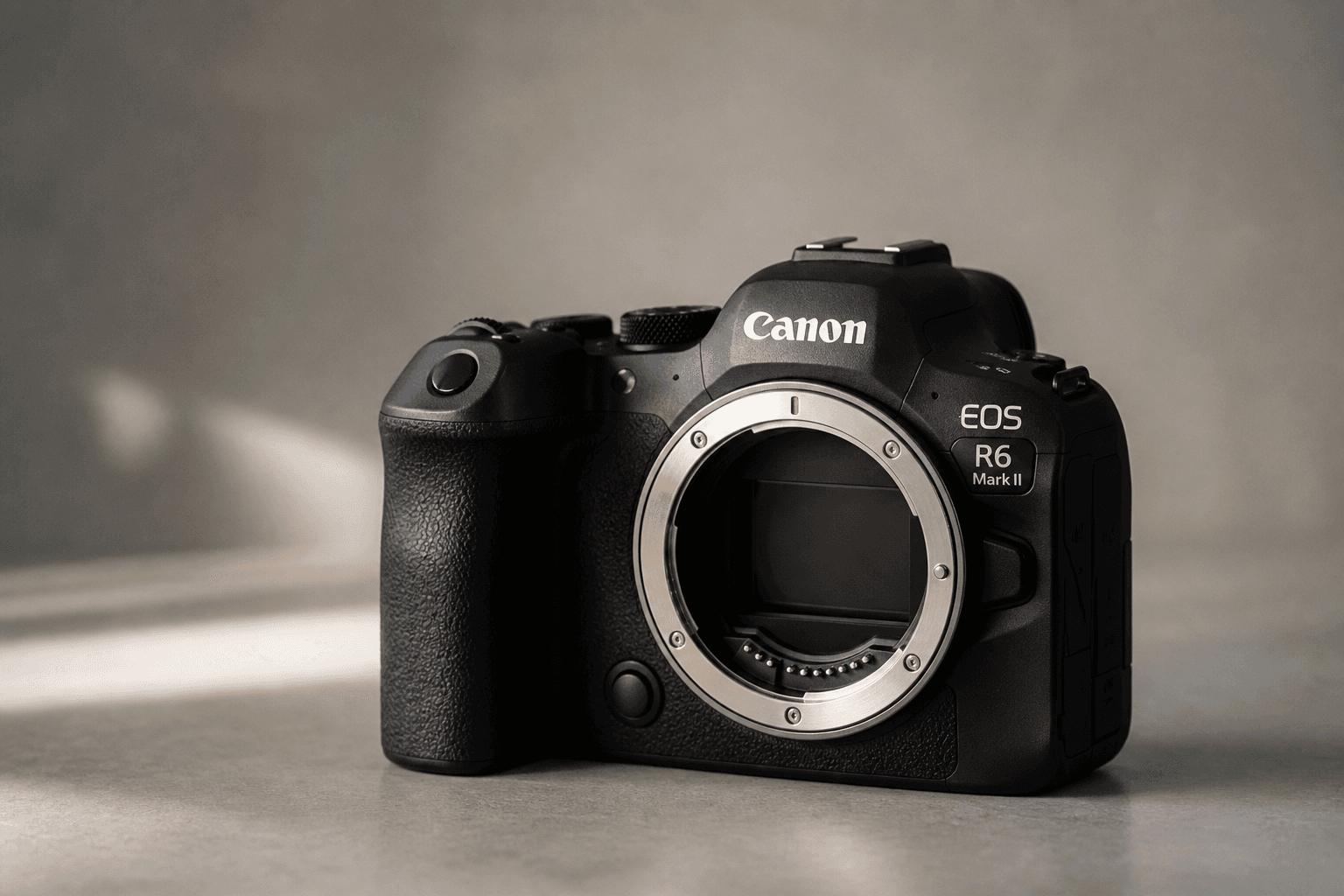
Canon EOS R6 Mark II: when the IBIS upgrade makes sense
The Canon EOS R6 Mark II is the upgrade in the same 24 MP family: IBIS, larger battery (LP-E6), two SD slots, firmer work-camera feel. Typically often around $1,700 to $2,100, anchor near $1,900. You pay for stabilization and endurance — not just a heavier body. Full detail: Canon R6 Mark II review.
Go for the R6 Mark II when events, run-and-gun, low light and walk-and-talk are worth the premium — and when you notice that missing IBIS really limits your workflow. Stay with the R8 when weight and body price matter and you solve stabilization with IS glass, a tripod or steady technique.
Both cameras are hybrids in the RF system with related image character and strong AF. The difference isn’t “Canon quality yes/no,” but IBIS, battery and slots — against a clearly higher price and more weight. Who buys the R6 Mark II only because it sounds “pro,” then only shoots daylight portraits, often invested at the wrong end. Who buys the R8 and then risks soft frames at every event, likewise.
Upgrade
Canon
Canon EOS R6 Mark II
Upgrade with IBIS — value hybrid
24-megapixel full-frame hybrid with Dual Pixel autofocus and in-body stabilization — typically new around $1,700 to $2,100, anchor often near $1,900. The upgrade pick when you want the same image character as the R8, but need IBIS, a larger battery and two SD slots for events and run-and-gun.
Was überzeugt
+IBIS against handheld shake
+Larger battery (LP-E6 family)
+Two SD slots for backup / relay
+Work-camera feel for events
Was Du wissen solltest
−Clearly more expensive and heavier than the R8
−Less crop reserve than R5 / R6 III
−No CFexpress Type B
−Lenses extra — body alone isn’t enough
Editor's Statement
“When IBIS, battery and two slots are worth the premium — full detail in the R6 Mark II review”
Canon EOS R50: when APS-C budget is the better idea
The Canon EOS R50 answers a different job: RF entry and learning with APS-C — typically around $600 to $750, anchor near $650. You clearly save on the body. What you deliberately accept: no full-frame sensor — often more budget for lenses and practice instead. Also here: no IBIS in the body, but you don’t pay the R8’s full-frame premium.
Go for the R50 when you’re still starting out, social and web are your main deliveries and you’d rather practice shooting than buy specs. Stay with the R8 when you really use full-frame character and know the IBIS compromise. For learning with more viewfinder and pace feel, often also the Canon R10 — depending on deals and handling preference.
Many people who google “R8” land more honestly on the R50 — because they really only want “a better camera than the phone” and don’t have a glass budget yet. That can fit. It isn’t a downgrade to “only” take APS-C. It’s often the faster path to better pictures: more money in the lens, more time outside. Sensor sizes: crop sensor vs. full-frame.
Alternative
Canon
Canon EOS R50
APS-C budget — when full-frame can wait
Compact APS-C entry camera in the RF system — typically around $600 to $750, anchor near $650. The alternative when you want to learn, film and shoot first without a full-frame budget and without the R8’s IBIS compromise. Sensor smaller than full-frame — often easier on the wallet and the setup.
Was überzeugt
+Clearly cheaper than R8 and R6 II
+Light, compact, RF entry
+Strong AF for the money
+Budget left for glass and practice
Was Du wissen solltest
−No full-frame — less bokeh / light reserve
−No IBIS in the body
−Less “work camera” than the R6 II
−APS-C crop on tele and wide — plan for it
Editor's Statement
“When APS-C budget is smarter than full-frame without IBIS”
The body price is only the start. A realistic R8 setup often lands $500 to $1,600 above that — depending on glass, cards and batteries. Who only counts the body underestimates the package. On the R8 especially: plan stabilized glass or a tripod honestly.
Lens
Without glass there’s no camera. At least one fast all-round or portrait lens. RF native or EF via adapter — but plan quality, not just “anything on it.” On the R8: check IS lenses especially if you work handheld in low light.
Memory card
One strong SD — and a backup workflow, because there’s only one slot. Cheap cards are the wrong place to save. See best SD card for camera.
Second / third battery
LP-E17 — smaller than LP-E6. For event and travel days plan spares — one battery rarely covers a full day with viewfinder and video. Think USB power where possible.
Audio and stabilization
External mic for usable sound. Without IBIS: check IS glass, tripod, monopod or gimbal for walk-and-talk. ND filters in sun for video often make sense.
Computer / storage
24 MP RAWs and 4K are manageable — still plan backup and editing. Coming from a smartphone: don’t store “somewhere,” store with a system.
Coming from a smartphone, people often underestimate exactly this list. The camera alone doesn’t make a portfolio. Light, sound and a lens that fits the job decide more than the last specs line. Plan the setup honestly — then the R8 stays a strong light tool instead of an expensive disappointment in a cupboard.
16
Verdict
The clear buying decision
The Canon EOS R8 is the honest light full-frame entry in 2026: 24 megapixels, strong AF, RF system, photo and video in one box. Typically $1,200 to $1,450, anchor often around $1,350. You get lightness and full-frame character. You get no IBIS, no large LP-E6 battery and no second slot.
This isn’t a “half R6 Mark II.” It’s its own, sensible camera for a clear job: light full-frame with body-price discipline when stabilization is solved another way and 24 megapixels are enough. Who respects that gets a lot of camera for the money. Who expects IBIS at R8 money or skips APS-C even though learning and glass matter more buys disappointment — and that would have been avoidable.
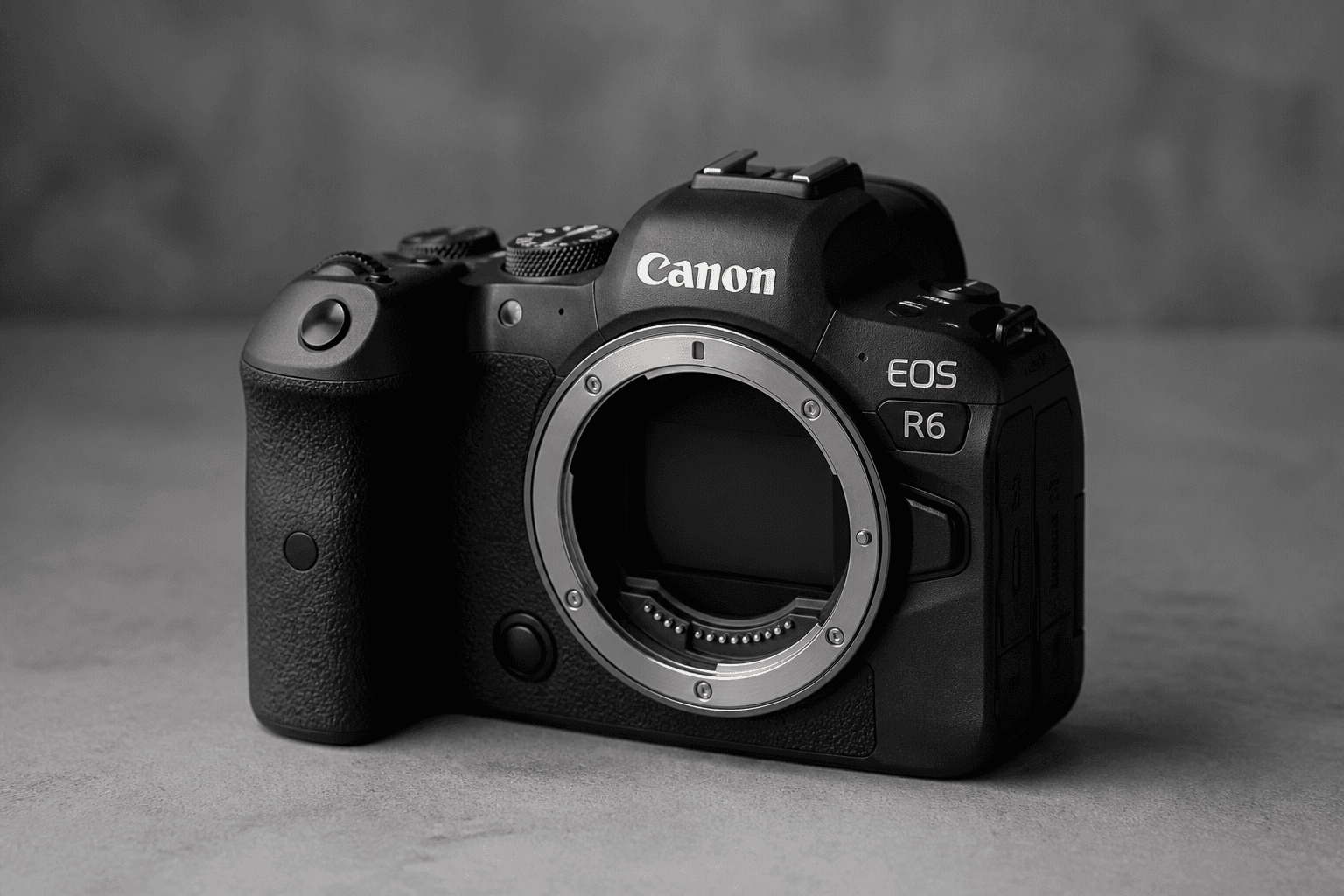
Yes, if you want light full-frame with 24 megapixels — strong autofocus, RF system, photo and video — and can live without IBIS (tripod, IS lenses, steady technique). Typically $1,200–1,450, anchor often around $1,350. For handheld events with in-body stabilization the R6 Mark II is often more honest. For learning and budget often the R50 or R10. Used full-frame with IBIS is covered in the Canon R6 review (Gen1).
Does the Canon EOS R8 have IBIS?+
No. The R8 has no stabilization in the body. You use lens IS (if available), Movie Digital IS for video, short shutter speeds, steady technique or a tripod. The R6 Mark II has IBIS — exactly why it’s the upgrade when you work handheld in low light and at events. Missing IBIS is the central compromise of the R8, not a small specs detail.
R8 or R6 Mark II — when is the upgrade worth it?+
R6 Mark II when IBIS, a larger battery (LP-E6) and two SD slots are worth the jump to often $1,700–2,100 — especially events, run-and-gun and walk-and-talk. R8 when weight and body price matter and you solve stabilization another way. Image character (24 MP) and AF are related. Everyday use without IBIS is not. Full detail: Canon R6 Mark II review.
R8 or Canon EOS R50?+
R8 when you really use full-frame character and know the IBIS compromise. R50 (around $600–750) when you’re learning, deliver social/web and prefer to put budget into lenses and practice. Many people overestimate the everyday benefit of full-frame and underestimate what better glass changes in the image. If after the check you land on “I really need blur and light reserve,” the R8 is often right. Otherwise APS-C is often smarter.
Which battery does the R8 use — and is one enough?+
The R8 uses the smaller LP-E17. For event, content or travel days with viewfinder and video, one battery rarely lasts. Plan spares and/or USB power. The R6 Mark II uses the larger LP-E6 family — another reason it feels more relaxed as a work camera. Don’t underestimate the battery just because the body is light.
How many memory card slots does the R8 have?+
Only one SD slot. No parallel backup in the body, no relay to slot two. Take a strong card and back up soon. Details and orientation in the best SD card for camera guide. For critical jobs with in-body backup duty, the R6 Mark II with two slots is often the more honest choice.
Is the R8 good for beginners?+
Technically yes — usable and teachable. Financially often a grown-up package: body, glass, batteries, and without IBIS often IS lenses. Many beginners learn faster and cheaper with R50 or R10 and invest the rest in lenses and practice. The R8 rewards you when you want full-frame on purpose and understand the stabilization deal — not when you’re only chasing the “full-frame” sticker.
Is the R8 enough for YouTube and content?+
Yes — especially in 4K with good glass, light, an external mic and planned stabilization (IS glass, tripod, steady technique). Without IBIS it doesn’t replace a concept or calm handling. For selfie vlogging without hybrid ambition it’s often overkill. For hybrid with a viewfinder and ambition it’s clearly in play — as long as you don’t expect run-and-gun like with the R6 Mark II.
R8 or used Canon EOS R6 (Gen1)?+
Used R6 Gen1 when you want IBIS and work-camera feel and treat 20 megapixels as a manageable everyday resolution — often a strong value answer. New R8 when you want a light body, newer 24 MP character and Dual Pixel II feel and can live without IBIS. Newness isn’t an automatic win. Details: Canon R6 review.
R8 or Canon R10 for learning?+
R10 (or R50) when you’re learning, want to protect budget and APS-C is plenty. R8 when full-frame already has a clear job benefit and you accept the IBIS compromise. Many people learn faster with the R10 because more money stays in glass and the pressure of “expensive camera must deliver” is smaller. See Canon R10 review.
Body only or with a lens — what should I buy?+
If you don’t have RF or adaptable EF glass yet: plan a usable lens from day one, otherwise you have an expensive box with no pictures. On the R8: check IS especially if you work handheld in low light. Body-only makes sense if you already own glass. Kits can fit — but check whether the kit lens hits your job.
Who is the R8 still okay for despite missing IBIS?+
For you if you often work with a tripod, mainly use stabilized zoom lenses, prioritize weight and price, and handheld events in low light aren’t your main job. Daylight portraits, travel, street, controlled locations — there the R8 can shine. As soon as dance floors, church light, reportage and walk-and-talk video join in, missing IBIS becomes an everyday topic fast. Then the R6 Mark II is usually the more honest investment.
Affiliate links marked with * — Amazon product links use partner ID martinkleinhe-20. I earn a small commission if you buy through these links; it costs you nothing extra. Assessments are based on my own practice, manufacturer specs and the consensus from reviews and user reports — no brand sponsored this article.
◆ Newsletter
Stay in the loop.
Camera and photography news, honest gear tests and new articles — in your inbox. Infrequent but relevant. No spam, unsubscribe anytime.