Compact Mirrorless Camera 2026: The Best for Every Day
Why a compact mirrorless camera makes more sense than a smartphone or heavy full-frame kit for hobby photographers — with 7 reasons, an honest comparison, a concrete product pick and tips for everyday use.
Author
Martin Kleinheinz
Photographer · Hannover, Germany
Updated
July 3, 2026
The most expensive camera in the world is worthless if it sits in a cupboard. I see it all the time: people buy a "proper" system camera — big, heavy, impressive — and after three weeks the smartphone is the default camera again. Not because the tech is bad, but because taking it with you is the most important spec.
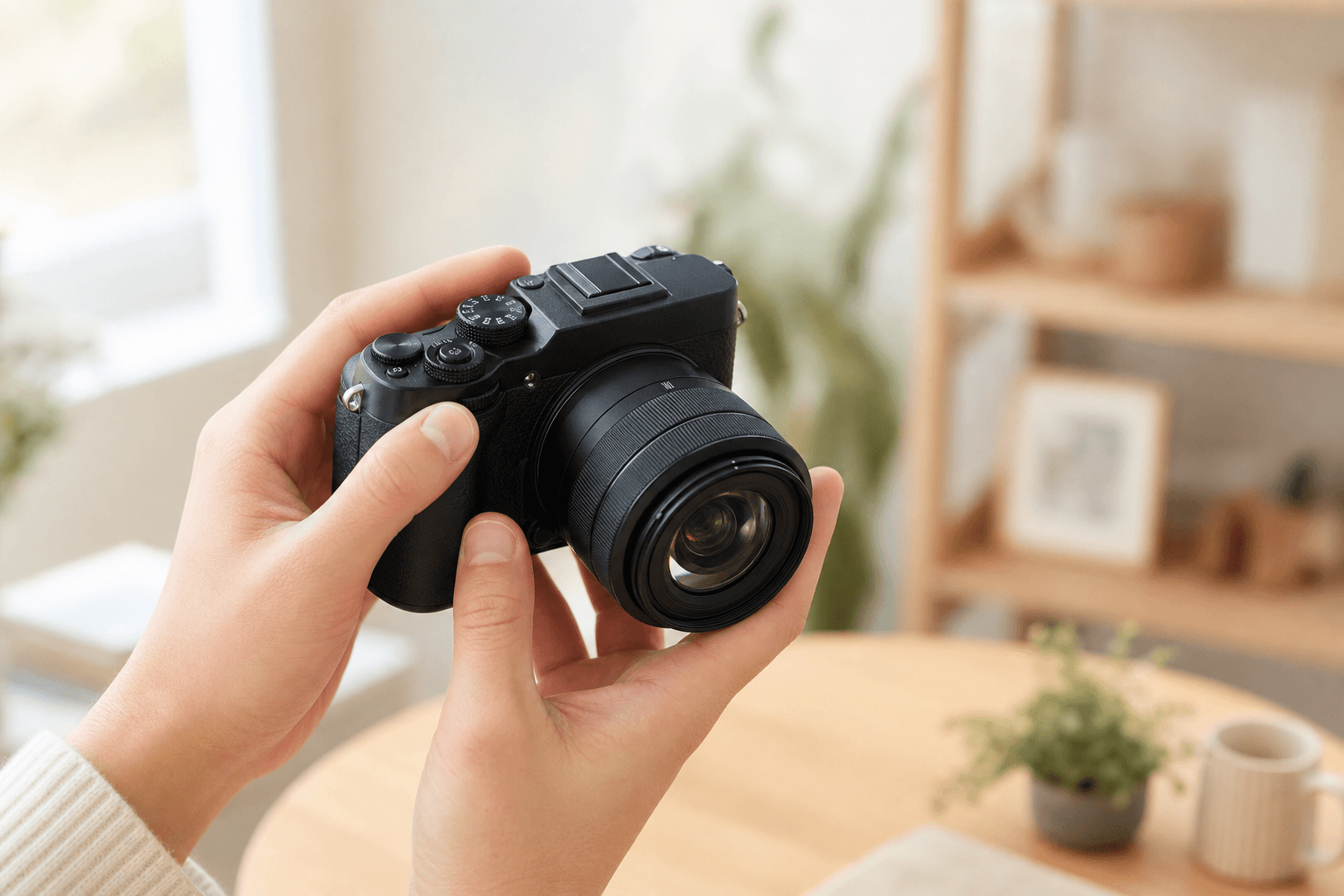
That's exactly where a compact mirrorless camera comes in. It's not the smallest possible device — compacts and phones exist for that. It's also not the most powerful — full-frame bodies with pro lenses exist for that. It's the sweet spot: big enough for real image quality and interchangeable lenses, small enough that you actually take it with you every day and enjoy using it.
This article explains in depth why that makes sense — with an honest comparison to smartphone and big camera. At the end you get a concrete product pick from our database and a clear buying decision.
00
Quick
Our pick: Sony ZV-E10 II
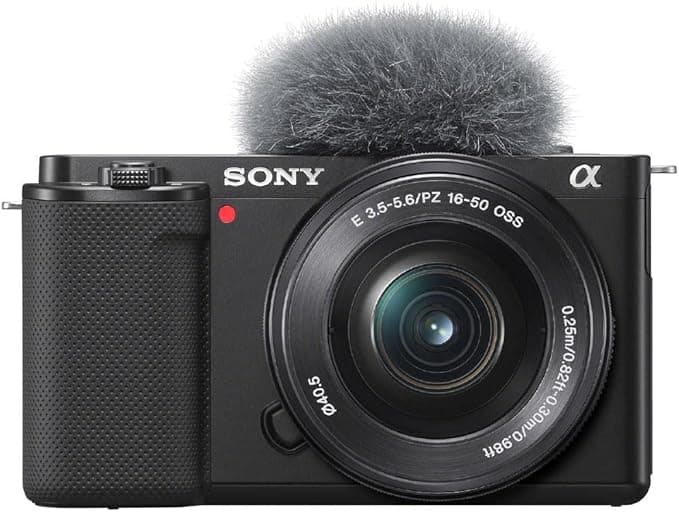
If you don't want endless comparing — here's the answer in one sentence: Sony ZV-E10 II with kit lens. Compact APS-C system camera, 377 g, strong autofocus, flip screen, 4K video if you want it — and a lens system you can grow into without starting over.
Daily Pick
Sony
Sony ZV-E10 II
The compact mirrorless camera for every day
APS-C system camera with interchangeable lenses, industry-leading eye autofocus, great 4K video and a fully articulating screen. At just 377 g body weight it's small enough to genuinely be with you every day — and strong enough to clearly beat smartphone photos.
Was überzeugt
+Extremely compact for a system camera — fits in small bags
+Best autofocus in its class, even with moving subjects
+Fully articulating screen for selfies, Reels and low angles
+Huge lens choice (Sony E + Sigma, Tamron)
Was Du wissen solltest
−No built-in viewfinder — screen only
−Sony menu takes a few evenings to get used to
Editor's Statement
“My #1 when the camera should come along every day”
A system camera has interchangeable lenses — you can later add a portrait lens, a wide angle or a compact pancake. "Compact" here means: body under roughly 450 g, often without a protruding grip, sometimes without a viewfinder — but with a screen that flips for selfies and low angles.
Type
Example
Interchangeable lens?
Typical weight
Compact mirrorless
Sony ZV-E10 II, Canon R50
Yes
350–430 g
Large mirrorless
Canon R6 II, Sony A7 IV
Yes
600–750 g
Fixed compact
Canon PowerShot V10, Ricoh GR
No
200–300 g
Smartphone
—
No
200 g (with case)
Compact mirrorless = middle ground between smartphone and pro body
The difference from a smartphone: larger sensor, real lenses with real aperture and camera handling that invites deliberate shooting. The difference from a big camera: you take it with you.
◆ Lightroom PresetsBundle
Photos with film character
9 Lightroom presets inspired by Portra, Kodak, Fuji & Ilford — for street, portrait and landscape. One-time €29, no subscription.
Before we talk models: why at all? The answer isn't "because the specs are better than a phone." The answer is: because you actually shoot more often with it — and get better. Photography isn't just a tech question. It's a habits question. And habits only form when the barrier is low enough.
A compact mirrorless camera solves exactly the problem most beginners underestimate: not missing knowledge, not missing megapixels — but missing the camera at the right moment. The sunset on the way home. The child who suddenly laughs. The scene in the café you'd otherwise snap with your phone — and forget.
1. It comes with you — instead of staying home
377–430 g body plus compact kit lens: that fits in a shoulder bag or small backpack pocket. A full-frame kit with standard zoom quickly weighs 1.2 kg and feels like an "outing." The small camera feels like everyday life.
2. You shoot more often — and improve faster
Getting better means: more images, more light situations, more compositions tried. Someone who has the camera in hand three times a week learns faster than someone with pro gear who heads out once a month.
3. Deliberate shooting instead of quick snaps
A camera in your hand changes how you see. You look for subjects, watch light, step to the side. The phone does everything on the side — the compact mirrorless makes photography a small pause many people genuinely enjoy.
4. Real image look without pro weight
APS-C sensor plus fast lens = background blur, less noise at dusk, more dynamic range than any smartphone. You see the difference — especially in portraits and evening light.
5. Growth without buying again
Interchangeable lenses mean: start with the kit and later add a 50 mm f/1.8 — without changing the camera. That's the difference from a fixed compact and a phone.
6. Less intimidation — for you and others
Big cameras with flash and tele lenses feel like an event to people. Compact mirrorless cameras are more discreet. You get more relaxed faces, dare to shoot in cafés and markets — and don't feel like "the one with the pro kit."
7. Better value for hobby photography
A small APS-C system camera with kit often costs €900–1,100 — noticeably less than a full-frame entry with comparable everyday usability. For hobby photography that's the most sensible start: lots of quality, little ballast.
“You don't buy the best camera — you buy the one you use most often.”
— Martin Kleinheinz
03
Comparison
Smartphone · compact mirrorless · big camera
To understand why the compact mirrorless camera is the right middle ground, an honest three-way comparison helps. Not a marketing table — but what actually matters in everyday use:
Criterion
Smartphone
Compact mirrorless
Large mirrorless (FF)
Everyday carry
Always with you
Very good — bag/backpack
Often too heavy — stays home
Image quality in daylight
Good
Very good
Excellent
Image quality in low light
Average — heavy noise
Good to very good
Very good to excellent
Background blur (bokeh)
Simulated, often artificial
Real — via sensor & lens
Maximum
Interchangeable lenses
No
Yes
Yes
Learning curve / deliberate seeing
Low
Medium — just right
High — overwhelming at first
Entry cost
€0 (already owned)
approx. €900–1,100
approx. €2,000–3,500
Fun factor without stress
High, but shallow
High — with depth
Medium — pressure from investment
Why the compact mirrorless hits the sweet spot for hobby use
The smartphone wins on availability. The big camera wins on maximum image quality — if you take it with you. The compact mirrorless wins on frequency of use × quality. And that product of use and quality is what makes you a better photographer.
04
Smartphone
Why the phone alone isn't enough — and when it is
Honestly: for many people the smartphone is enough. If you only occasionally shoot for the family group chat, you don't need a camera. But if you're asking whether a compact mirrorless makes sense, you've usually already noticed where the phone annoys you.
Three limits of the smartphone
Low light
Tiny sensor = little light captured. Evenings, in church, in a dim restaurant: images get mushy and noisy. An APS-C camera with an f/1.8 lens gathers many times more light.
No real zoom look
Portrait mode simulates blur in software — often works, but looks artificial at hair and glass edges. A real lens with a wide aperture creates natural separation.
No photographic ritual
The phone is for everything — messages, maps, bills. A camera is only for images. That separation helps many people look more deliberately. Sounds soft, works strongly in practice.
When the smartphone is enough
Stick with the phone if you don't want a second device, don't want more than quick snaps, or you'd never pack another gadget anyway. A camera that sits on a shelf after four weeks makes less sense than a phone you use daily.
05
Full-frame
Why not a big system camera right away?
"If I'm buying anyway, I'll do it properly" — that sentence has filled many cupboards with unused gear. Full-frame cameras like the Sony A7 IV, Canon R6 II or Nikon Z6 III are fantastic. For pros and very ambitious hobbyists. For daily shooting with joy they're often the wrong tool — for four reasons:
Weight and bulk
Body 600–750 g, standard zoom 400–800 g — you feel that after a two-hour walk. The small APS-C setup is often half the weight.
Price
Full-frame body plus usable lens: quickly €2,500 and up. For hobby use APS-C is visually plenty in 90 % of situations — especially in daylight and for social media.
Complexity
More menu, more decisions, more pressure ("I paid a lot for this"). Beginners get into flow faster with smaller cameras.
Oversized for the job
Family photos, walks, holidays, Instagram — full-frame wasn't built for that. It works, but it's like taking an SUV to the bakery: fine, but not the point.
Full-frame pays off if you regularly work in very low light, make large prints or shoot professionally. For "I want joy in photography every day" the compact mirrorless is the smarter choice — not the weaker one.
06
Honesty
When a compact mirrorless camera doesn't make sense
A good guide also says when it doesn't recommend. A compact mirrorless isn't the best solution for everyone:
Your situation
Better choice
You absolutely don't want to carry a second device
Smartphone — or fixed compact like Canon PowerShot V10
You mostly shoot sport from far away
Big camera + tele zoom (70–300 mm or longer)
You want to work exclusively through the viewfinder
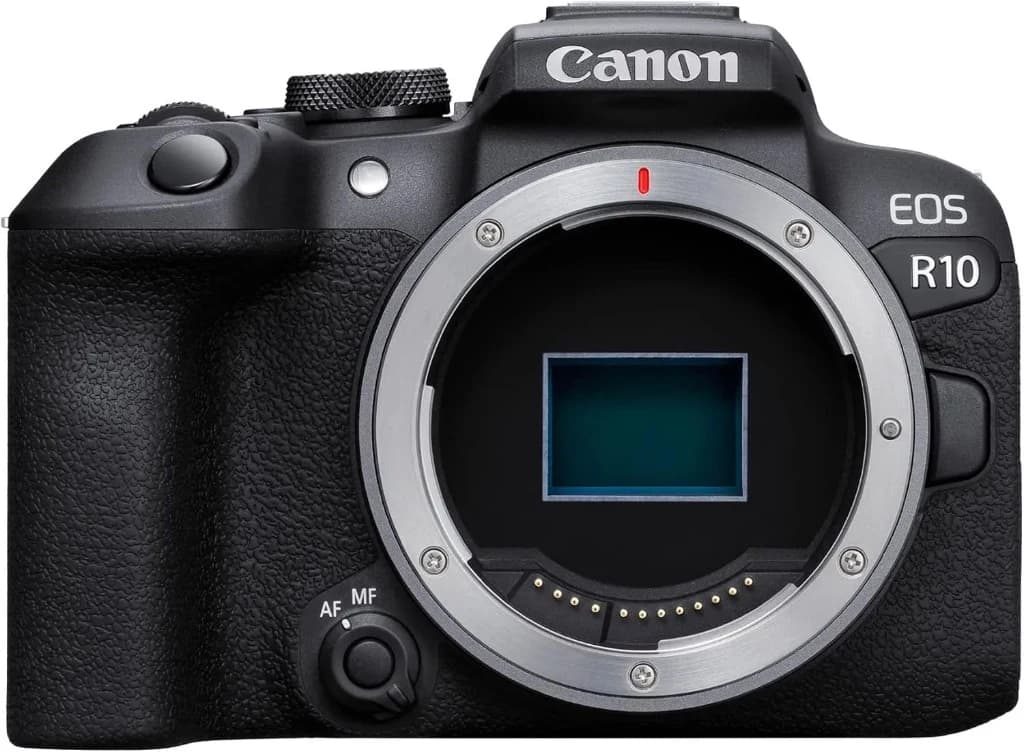
Canon EOS R50 or Canon EOS R10 — viewfinder included
You want maximum simplicity, no lens swapping
Fixed-focal-length compact (e.g. Ricoh GR)
You're planning professional client work
Larger system — full-frame or APS-C pro body
No one-size-fits-all — but for most hobby photographers the compact mirrorless fits
If none of that applies and you want to shoot more deliberately in everyday life, the compact mirrorless remains the recommendation.
Lightroom Presets9 film looks inspired by Portra, Kodak & Fuji —View pack →
07
Buying criteria
What to look for in a compact mirrorless camera
Forget the megapixel chase. For daily shooting these five points matter:
1. Weight & size
Under 430 g body is ideal. With kit lens under 600 g — then it stays pleasant.
2. Autofocus
Eye and face detection — so fast moments aren't missed. Kids, dogs, yourself in a selfie.
3. Screen
Flip forward = more angles and easier use without a viewfinder.
4. Sensor
APS-C is the sweet spot: clearly better than smartphone, without full-frame weight and price.
5. Lens system
Interchangeable lenses = growth without a new camera. Sony E, Canon RF and Nikon Z have good entry lenses.
08
Recommendation
Why the Sony ZV-E10 II for everyday use?
The ZV-E10 II is listed in our database as a content pick — rightly so. It was built for creators but hits exactly what hobby photographers want: light, fast, uncomplicated. 377 g, APS-C sensor with 26 MP, one of the best autofocus systems in the entry class and a screen you can fully rotate for portrait, landscape, selfies and filming from the front.
Comparison
ZV-E10 II vs. Canon EOS R50
Both are **small APS-C system cameras** under 400 g. The ZV-E10 II wins for everyday use and content — the R50 if you absolutely want a **viewfinder**.
Vergleich
Sony
Sony ZV-E10 II
Canon
Canon EOS R50
Bild
Empfehlung
Daily Pick
Viewfinder Alternative
Sensor
26 MP · APS-C BSI CMOS
24.2 MP · APS-C
ISO-Bereich
100 – 32,000 (expandable)
100 – 32,000
Autofokus
AI real-time AF · eye & subject detection
Dual Pixel II · subject detection
Detail
4K/60p 10-bit · flip screen · 377 g
4K60 · viewfinder · guided UI · 375 g
Stärken
+Extremely compact for a system camera — fits in small bags
+Best autofocus in its class, even with moving subjects
+Fully articulating screen for selfies, Reels and low angles
+Huge lens choice (Sony E + Sigma, Tamron)
+Real viewfinder — usable even in bright sun
+Guided menu explains settings step by step
+Very light in the Canon RF system
Schwächen
−No built-in viewfinder — screen only
−Sony menu takes a few evenings to get used to
−Screen doesn't fully flip forward
−No IBIS
Geeignet für
Anyone who wants to shoot every day — walks, family, travel, Instagram.
Beginners who want to shoot the classic way through the viewfinder.
◆Autofocus: Real-time eye and subject detection — kids run, you press the shutter, it's sharp.
◆Screen: Fully articulating — ideal for selfies, Reels and hip-level shots.
◆Video: 4K/60p in 10-bit — optional, but there if you want clips.
◆Lenses: Sony E-mount — huge choice, including affordable Sigma and Tamron lenses.
◆Weight: 377 g — one of the lightest system cameras with a modern feature set.
Daily Pick
Sony
Sony ZV-E10 II
The compact mirrorless camera for every day
APS-C system camera with interchangeable lenses, industry-leading eye autofocus, great 4K video and a fully articulating screen. At just 377 g body weight it's small enough to genuinely be with you every day — and strong enough to clearly beat smartphone photos.
Was überzeugt
+Extremely compact for a system camera — fits in small bags
+Best autofocus in its class, even with moving subjects
+Fully articulating screen for selfies, Reels and low angles
+Huge lens choice (Sony E + Sigma, Tamron)
Was Du wissen solltest
−No built-in viewfinder — screen only
−Sony menu takes a few evenings to get used to
Editor's Statement
“My #1 when the camera should come along every day”
The camera alone isn't enough — you need a routine that's fun. Five things that work best for my workshop participants:
1. One fixed bag
Camera + battery + microfibre cloth in one small bag. Always packed, always in the same place. No repacking before every outing.
2. Program auto is fine
At the start: P mode or auto. You learn composition and light — technique comes later (exposure triangle).
3. One subject per week
"This week: shadows." Or: "This week: people from behind." One focus keeps it playful.
4. 3 images per day
No pressure for perfection. Three shutter presses — morning, midday, evening. After 30 days you have 90 images and real feel.
5. 5 minutes reviewing in the evening
Phone or laptop — which image do you like? Why? That's worth more than a new camera.
10
Lens
Which lens for everyday use?
Start with the kit lens (usually 16–50 mm or 18–55 mm). It covers everyday life. If after a few months you want one upgrade — not five — then:
You want …
Lens type
Sony E example
Nicer bokeh, portraits
50 mm f/1.8 prime
Sony FE 50 mm f/1.8 or E 50 mm f/1.8 OSS
More room indoors
35 mm or 30 mm f/1.4
Sigma 30 mm f/1.4 DC DN
One lens, always on
Compact pancake
Sony E 20 mm f/2.8
Keep everything as is
Keep the kit
— fine for months
First extra lens after the kit — more in the [lens guide](/en/which-lens-for-what/)
11
Alternative
If you need a viewfinder
The only real downside of the ZV-E10 II: no viewfinder. In summer sun you see less on the screen — and some people simply prefer shooting with an eye to the viewfinder. Then the Canon EOS R50 is the best alternative in the same weight class (375 g), also in our database.
Viewfinder Alternative
Canon
Canon EOS R50
Alternative with a viewfinder
Also very light (375 g), but with a real viewfinder and guided beginner menu. Less content-focused than the ZV-E10 II, but ideal if you mainly want to shoot through the viewfinder.
Was überzeugt
+Real viewfinder — usable even in bright sun
+Guided menu explains settings step by step
+Very light in the Canon RF system
Was Du wissen solltest
−Screen doesn't fully flip forward
−No IBIS
Editor's Statement
“When a viewfinder matters more than a vlog screen”
The R50 has guided UI — Canon explains settings on screen. Fewer content features, more classic photography. Both cameras are small enough for everyday use — the choice depends on whether you prefer screen or viewfinder.
12
Decision
Your buying decision in 30 seconds
If you …
Then get …
want to shoot every day, including Reels & selfies
For most readers of this article the answer is Sony ZV-E10 II with kit. Small enough for a bag, strong enough for real joy, flexible enough for years. Don't buy it because it wins on a spec sheet — buy it because you'll take it with you tomorrow.
Daily Pick
Sony
Sony ZV-E10 II
The compact mirrorless camera for every day
APS-C system camera with interchangeable lenses, industry-leading eye autofocus, great 4K video and a fully articulating screen. At just 377 g body weight it's small enough to genuinely be with you every day — and strong enough to clearly beat smartphone photos.
Was überzeugt
+Extremely compact for a system camera — fits in small bags
+Best autofocus in its class, even with moving subjects
+Fully articulating screen for selfies, Reels and low angles
+Huge lens choice (Sony E + Sigma, Tamron)
Was Du wissen solltest
−No built-in viewfinder — screen only
−Sony menu takes a few evenings to get used to
Editor's Statement
“My #1 when the camera should come along every day”
Why a compact mirrorless instead of smartphone or full-frame?+
Because it hits the sweet spot: with you more often than big cameras, better image quality and interchangeable lenses than a phone, less weight and cost than full-frame. For daily hobby photography that's the most sensible mix of use and quality.
What is the best compact mirrorless camera for beginners?+
The Sony ZV-E10 II — 377 g, strong autofocus, flip screen and APS-C image quality. Ideal if you want to shoot every day without lugging a heavy camera.
Is the ZV-E10 II enough without a viewfinder?+
For most hobby photographers yes. You shoot via the screen — that's normal today and very good on this camera. Only in harsh sunlight or if you're used to a viewfinder is the Canon R50 the better choice.
How much does the Sony ZV-E10 II cost?+
With kit lens roughly €900–1,100 — check current shop prices. Noticeably cheaper than full-frame entry, with comparable everyday image quality.
Compact mirrorless camera or smartphone?+
Smartphone is enough for quick snaps. A compact mirrorless pays off if you want to shoot more deliberately, get better images in low light and use other lenses later.
Do I need a second lens right away?+
No. Use the kit lens for 3 months. Then decide — usually a 50 mm f/1.8 or 35 mm f/1.8 is enough as a first upgrade. See Which lens for what.
From my workflow
35mm & 120mm film presets
Portra, Kodak Gold, Velvia, HP5 & more — ready-made XMP presets for Lightroom Classic and mobile.
Transparency notice: This article contains affiliate links. If you buy through them I earn a small commission at no extra cost to you. Editorial content is unaffected.
◆ Newsletter
Stay in the loop.
Camera and photography news, honest gear tests and new articles — in your inbox. Infrequent but relevant. No spam, unsubscribe anytime.