Camera for Beginners 2026: The Honest Buying Guide Without the Jargon
Which features actually matter, the difference between a compact and an APS-C kit, and three concrete recommendations — depending on whether you're starting a hobby, shooting on holiday, or upgrading your Instagram.
Author
Martin Kleinheinz
Photographer · Hannover, Germany
Updated
June 5, 2026
You're thinking about buying a "real" camera — and you're facing a wall of model names, abbreviations and numbers that all sound important. APS-C, full frame, megapixels, IBIS, Dual Pixel: most guides throw jargon at you instead of answering the one question that's actually on your mind — which camera suits me and how much of all this do I even need?
That's exactly what this guide does. With no prior knowledge required, I'll explain which features really matter (and which are pure marketing), how a small compact differs from an APS-C system camera, and finish with three concrete recommendations — depending on whether you're starting a hobby, want better photos on holiday and with the kids, or want to take your Instagram to the next level. Mirrorless vs. DSLR?The comparison clears that up before you buy. The full equipment list by tier: Photography Equipment.
00
Quick
The 3 best beginner cameras of 2026
If you're in a hurry: here are my three recommendations at a glance. Each represents a typical beginner situation — the detailed reasoning, buying criteria and everything about lenses and accessories follow in the sections below.
Top 3 for beginners
Canon · Sony · Canon at a glance
**#1 Canon EOS R10** — the best all-rounder to learn on and for family photos. **#2 Sony ZV-E10 II** — when Instagram, Reels and video are part of the plan. **#3 Canon PowerShot V10** — the most compact for holidays and always with you.
Vergleich
Canon
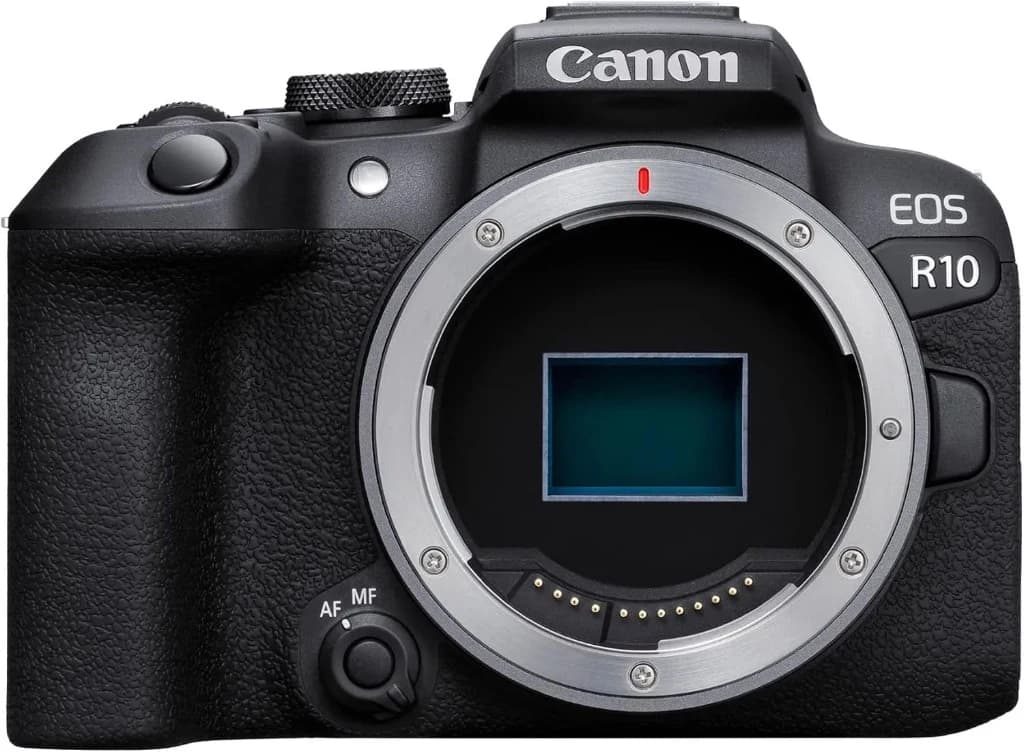
Canon EOS R10
Sony
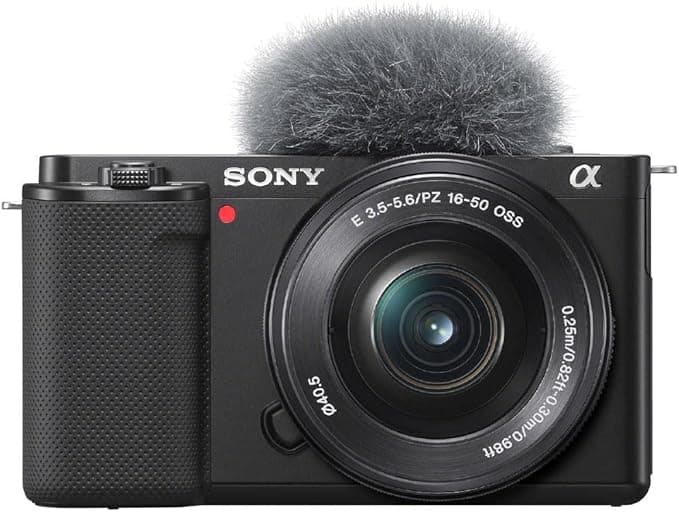
Sony ZV-E10 II
Canon
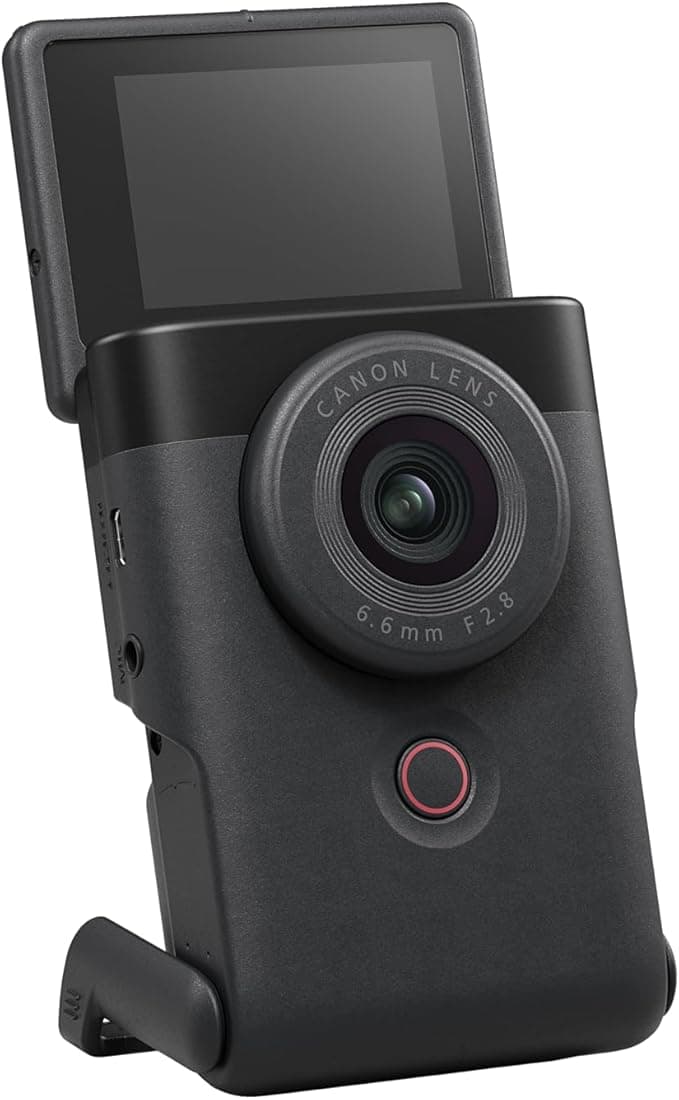
Canon PowerShot V10
Bild
Empfehlung
Top Pick
Content Pick
Compact Pick
Sensor
24.2 MP · APS-C CMOS
26 MP · APS-C BSI CMOS
1-inch · approx. 20 MP
ISO-Bereich
100 – 32,000 (exp. 51,200)
100 – 32,000 (expandable)
100 – 12,800
Autofokus
Dual Pixel CMOS AF II · subject detection
AI real-time AF · eye & subject detection
Face & eye AF
Detail
Viewfinder + flip screen · 23 fps · 4K30 · 429 g
4K/60p 10-bit · flip screen · no viewfinder · 377 g
4K/30p · built-in stand · ~211 g
Stärken
+Real viewfinder — usable even in bright sun
+Very good autofocus for the price class
+Huge lens choice (RF + EF via adapter)
+Best-in-class autofocus, also in video
+Fully articulating screen for selfie & vlog
+Huge lens choice (Sony E + Sigma, Tamron)
+Fits in any pocket — always with you
+Ready instantly, no settings required
+Clearly better than a phone for video & audio
Schwächen
−No in-body stabilization (IBIS)
−Kit lens is solid but not a low-light hero
−No built-in viewfinder — screen only
−Sony menu feels a bit nested at first
−Fixed lens — no zoom flexibility
−Weaker than APS-C in low light
Geeignet für
Hobby photographers, parents and anyone who wants to grow with the system.
Instagram, Reels and anyone who also wants to film.
Holidays, family moments, maximally simple and always with you.
Do you even need a camera — or is your phone enough?
Honest answer up front: modern smartphones take surprisingly good photos, and for many people they're entirely enough. If you only shoot the occasional picture for WhatsApp or family, you don't need a camera. A dedicated camera only pays off once you hit one or more of the points where the phone runs out of road.
The first point is low light. At dusk, indoors or in the evening, the smartphone starts to get noisy and mushy because its tiny sensor barely gathers any light. A camera with a large sensor delivers on a completely different level here. The second point is movement: running kids, pets, sport. Here a fast autofocus decides between sharp and blurry — and that's a strength of real cameras.
The third point is the look: that soft, separated background bokeh that makes portraits look professional comes from the interplay of a large sensor and a fast lens. The phone simulates it in software, but you can see the difference. And the fourth, often underrated point: the joy of doing it. Holding a camera, looking through a viewfinder and composing deliberately is a different experience than quickly tapping a screen — and that's exactly what gets many people to shoot more, and better, in the first place.
02
Orientation
Which beginner type are you?
There is no single "best camera for beginners" — it depends on what you want to do with it. From my workshops I mainly know three situations in which people reach for their first camera. Find yourself in one of them and the decision becomes easy at the end.
Type 1: You want to start photography as a hobby
You're interested in photography itself — you want to understand how images are made, play with depth of field and light, and improve over the years. Maybe you photograph your kids, landscapes on hikes or simply everyday life, but with the ambition to learn. For you an APS-C system camera with an interchangeable lens is the right choice: it grows with your skill, gives you full manual control when you want it, and a huge lens ecosystem for later.
Type 2: You want better photos on holiday and with the family
You don't want to study technology — you simply want to capture nice memories without lugging around a heavy system. Travel, the beach, family celebrations, the kids at play. What matters to you is low weight, compact size and that the camera delivers good results instantly without a long learning curve. For you a compact camera is often the most honest choice — small enough to genuinely always be with you, and still clearly better than a smartphone.
Type 3: You want to upgrade your Instagram or content
You create content — Instagram, Reels, maybe YouTube — and notice that the smartphone no longer cuts it visually when you want to stand out. You need good photos and video, a screen you can turn towards yourself, and reliable autofocus on your face. For you an APS-C camera built for content creators is ideal: high-quality images, strong video and a flip-out screen in one device.
These three types run through the whole article. In the recommendations (section 05) I map exactly one device to each situation — and in section 06 you'll find a table that sums it all up at a glance.
03
Buying criteria
Which features actually matter — and which don't
If you take one thing away from this article, make it this section. Most bad purchases happen because beginners focus on the wrong numbers. Here are the criteria that genuinely decide whether you get good images — in order of importance.
1. Sensor size — by far the most important criterion
The sensor is the chip that captures the light — the digital equivalent of film. The larger the sensor, the more light it gathers, the better the image quality, especially in low light, and the easier it is to get that nice blurred background. Two sizes matter for beginners: 1-inch (in good compacts) and APS-C (in system cameras). APS-C is much larger than 1-inch and worlds larger than a smartphone sensor. Full frame is larger still, but expensive and unnecessary for starting out.
Just remember: a 1-inch sensor in a compact is a clear step above the phone. An APS-C sensor in a system camera is another big step above that — and the reason APS-C kits deliver the best image quality per euro for ambitious beginners.
2. Megapixels — the big marketing myth
Here's the most important reassurance: megapixels barely matter when starting out. Every current camera, at 20 to 26 megapixels, has more than enough resolution for big prints, Instagram and even cropping. More megapixels do not mean "better" images — they only mean bigger files. A 24-megapixel APS-C sensor beats a 50-megapixel phone sensor in real image quality by a mile, because the individual pixels are larger and gather more light. So don't be dazzled by high megapixel numbers.
3. Autofocus — the difference between sharp and bin
Autofocus decides whether the subject is tack sharp — especially when it moves. Modern cameras have subject detection: they automatically recognise faces, eyes, animals and focus on them. For parents photographing running kids, or for selfie video, that's worth gold. Look for terms like "eye AF", "subject detection". Canon (Dual Pixel CMOS AF) and Sony (Real-Time AF) lead the beginner class here.
4. Viewfinder or screen — how you check your shot
There are two ways to see the image before you shoot: through the viewfinder (the little eyepiece you hold to your eye) or on the screen on the back. A viewfinder has two advantages: in bright sunlight you still see your image clearly, and the camera is steadier because you press it against your face. Screen-only cameras (like most content models) are lighter and better for filming yourself. For classic photography I recommend beginners a viewfinder — for vlogging a flip screen matters more.
5. Flip or articulating screen
A movable screen sounds like a gimmick but is hugely practical in everyday use: for shots over your head (at a concert, above a crowd), close to the ground (kids, pets) and above all when you film or photograph yourself. A fully articulating screen that flips to the front is practically mandatory for content creators — a nice extra for pure photographers.
6. The lens ecosystem — your most important long-term decision
When you buy a system camera, you buy into a system — that is, a specific lens family (Canon RF, Sony E, Nikon Z, Fujifilm X). That's a long-term decision: you'll replace the camera eventually, but the lenses often stay for years. Big systems like Canon RF and Sony E offer the most choice, from budget to pro, plus third parties like Sigma and Tamron. For beginners that's reassuring: you'll never be held back by missing lenses.
7. Image stabilization and weight
Image stabilization compensates for your shaking hands and helps in low light and video. Some cameras have it in the body (IBIS), some only in the lens, some not at all — for starting out it's nice but not essential as long as the kit lens is stabilized. Often more important in everyday use is weight: the best camera is the one you actually take with you. A small, light camera that's always in your bag takes more pictures than a heavy pro system that stays home.
04
The two paths
Compact vs. APS-C kit — what's the difference?
For beginners the decision almost always comes down to two categories. Understand the difference and you've made half the buying decision already.
The compact — all in one, always with you
A compact has a fixed lens — you can't change it, but you also don't have to think about anything. It's small, light and ready instantly. Modern compacts with a 1-inch sensor deliver image quality that clearly leaves the smartphone behind, especially in video and audio. The trade-off: less flexibility, weaker in very low light and no room to expand the system later. Perfect for holidays, family and anyone who values simplicity above all.
The APS-C system camera with kit lens — the expandable all-rounder
A system camera has an interchangeable lens. In the "kit" it's sold together with a versatile standard zoom (often 18–45 mm or 16–50 mm) — that covers from wide angle to slight telephoto in almost all everyday situations and is the perfect starter lens. The big advantage: later you can add a fast portrait lens, a travel zoom or a macro and tailor the camera precisely to your interests. Plus the larger APS-C sensor with better image quality. The price for it: a bit more size, weight and a small learning curve.
If you want to understand more deeply why sensor size makes such a difference, read my detailed comparison Crop or full frame: pros and cons of APS-C. For getting started, though, what you just read is enough.
05
Recommendations
The 3 recommendations in detail
Now it gets concrete. These three cameras cover the three beginner types from section 02. I use all three myself or have tested them extensively — and all three are the most honest choice in their respective role in 2026.
#1 Canon EOS R10 — the best all-rounder to learn on
If you want to start the hobby seriously, the R10 is my clear pick. It has a real viewfinder (rare in this price class), excellent autofocus with subject detection and access to Canon's huge RF lens system. It's light enough for every day but capable enough that you won't hit limits for years. For parents, hobby starters and anyone who wants to grow, it's the safest decision.
Top Pick
Canon
Canon EOS R10
The best all-rounder to learn on
Mirrorless APS-C camera with a real viewfinder, excellent autofocus with subject detection and the largest lens ecosystem for beginners. The R10 is the camera I hand to beginners most often: lots of learning support, easy to use and a system you can grow into for years — ideal for hobby, family photos and everything in between.
#2 Sony ZV-E10 II — the best choice for Instagram & content
If Reels, YouTube and a more polished Instagram matter alongside photos, there's hardly a way around the ZV-E10 II. It has the same large APS-C sensor as a photo camera, plus the industry's best eye autofocus, strong 4K video and a fully articulating screen you can turn towards yourself. Instead of a viewfinder it goes all-in on the selfie workflow — perfect if you're often in front of your own camera.
Content Pick
Sony
Sony ZV-E10 II
Best choice for Instagram & content
APS-C system camera with interchangeable lenses, industry-leading eye autofocus, great 4K video and a fully articulating selfie screen. If your goal is not just photos but also Reels, YouTube and a more polished Instagram, the ZV-E10 II is the most direct route there — without sacrificing photo quality.
#3 Canon PowerShot V10 — the most compact for on the go
If simplicity and size matter most to you, the PowerShot V10 is the most honest recommendation. It fits in any jacket pocket, has a built-in stand and is ready instantly — no lens questions, no menus. For holidays, spontaneous family moments and anyone who simply wants better photos and clips than their phone without dealing with technology, it's ideal. Its 1-inch sensor is smaller than APS-C but a clear step above the smartphone.
Compact Pick
Canon
Canon PowerShot V10
The most compact — always with you
A tiny camera that fits in any jacket pocket, with a built-in stand and 4K video. No lens swapping, no complicated menus — switch on and go. For anyone who simply wants better photos and clips than their phone on holiday or with the kids, without dealing with technology.
So you can decide at a glance, here's the summary — beginner type, matching camera and what each one is about.
Your goal
Recommendation
Type
Why
Start a hobby, family, learn & grow
Canon EOS R10
APS-C kit
Viewfinder, top AF, huge lens system
Instagram, Reels, video + photo
Sony ZV-E10 II
APS-C kit
Flip screen, best AF, strong 4K
Holiday & family, always with you, simple
Canon PowerShot V10
Compact
Tiny, instantly ready, better than a phone
The three beginner situations and the matching camera for 2026.
Torn between the R10 and the ZV-E10 II? Rule of thumb: if photography comes first (and you want a viewfinder), take the R10. If filming yourself comes first, take the ZV-E10 II. Both share the good APS-C image quality — you won't go wrong with either.
07
Around it
Your first lens and sensible accessories
A system camera is only as good as the lens in front of it. The good news: you barely need to buy anything to start — the kit lens lasts a long time. Here's what's genuinely sensible, and what you can save yourself.
The kit lens — your versatile all-rounder
The bundled standard zoom (e.g. 18–45 mm on Canon, 16–50 mm on Sony) is deliberately universal: wide angle for landscapes and rooms, slight telephoto for portraits. Learn with this lens first — it shows you which focal lengths you use most, and therefore which next lens is worth it for you.
The first extra lens — the 50 mm prime
When you eventually want a second lens, a fast prime (e.g. 50 mm f/1.8 or a 30–35 mm f/1.4 for APS-C) is the biggest leap for little money. It conjures the lovely blurred background, shines in low light and turns everyday photos into portraits with a wow effect. But: no rush at the start — that comes when you're ready.
The accessories that actually matter
◆A fast SD card with enough capacity (e.g. 128 GB, V30) — the most important purchase; nothing works without it.
◆A spare battery — the first battery is always empty when it gets exciting. Mandatory for small cameras especially.
◆A padded bag or sling — protects the camera and ensures you actually take it with you.
◆A microfibre cloth for cleaning the lens — cheap, often forgotten, constantly needed.
08
Get going
Your first camera settings
You've got the camera — now what? Don't worry, you don't have to master everything manually right away. Here's the gentle start that gets you good pictures from day one and still teaches you something.
The right mode to learn: A / Av (aperture priority)
Once you feel confident, forget the full-auto mode (often a green symbol) — and forget fully manual (M) for now. The ideal learning mode is A (on Sony/Nikon) or Av (on Canon): aperture priority. You set just one thing — how blurry the background should be — and the camera handles the rest. Small aperture number (e.g. f/1.8–f/4) = blurred background, lovely for portraits. Larger aperture number (f/8–f/11) = everything sharp, good for landscapes.
ISO on auto — one worry less
The ISO value determines how light-sensitive the sensor is. At the start simply set it to auto — modern cameras handle it reliably and you don't have to think about it. That way you focus on composition instead of technology. Later you can learn to control it deliberately.
Shoot in RAW (or RAW + JPEG)
In the menus you can choose the file format. RAW saves all the image information and gives you enormous latitude when editing later — brightness, colours and details can be rescued that would be lost in a JPEG. If you're unsure, set "RAW + JPEG": then you have both. I explain the exact difference in Which image format is best?.
And then there's only one thing left: get out and shoot. The fundamentals of composition — light, rule of thirds, perspective — I cover step by step in Take better photos. If you want to use your new camera straight away for a strong profile picture, How to create a profile picture will help. And for subject inspiration there are photoshoot ideas.
09
Traps
The most common mistakes when buying your first camera
From countless conversations with beginners I know the mistakes that happen again and again. Avoid these and you're already well ahead of the typical first-time buyer.
◆Focusing on megapixels instead of sensor size — the classic. A big sensor beats more megapixels almost every time.
◆Buying too much at once — camera plus three lenses plus tripod plus filters. Start with the kit, add deliberately later.
◆Buying the most expensive camera "for the future" — a pro camera doesn't make you a pro; it overwhelms and stays home.
◆Choosing the system without looking at lenses — you marry the lens ecosystem, not just the body.
◆Buying a camera that's too big and heavy — if it's too bulky, you won't take it. Weight is a real criterion.
◆Ruling out used — well-kept previous models often offer 90 % of the performance at half the price.
◆Forgetting that skill matters more than gear — the best investment is practice, not the next gadget.
10
FAQ
Common questions about your first camera
Which camera is best for absolute beginners in 2026?+
For most beginners the Canon EOS R10 — viewfinder, excellent autofocus and a big lens system, while being easy to use. For content and video the Sony ZV-E10 II; for maximally simple and compact the Canon PowerShot V10.
Is a compact enough or do I need a system camera?+
A compact is plenty if simplicity and small size matter most (holiday, family). To learn photography, hold up in low light and expand later, an APS-C system camera with a kit lens is the better choice.
How many megapixels should my first camera have?+
Megapixels barely matter when starting out. 20–26 MP is more than enough. Focus instead on sensor size (APS-C or 1-inch), autofocus and the lens system.
What does a good beginner camera cost?+
A compact like the Canon PowerShot V10 is roughly €400–500. An APS-C kit like the Canon EOS R10 or Sony ZV-E10 II with a lens runs roughly €900–1,300. Check current prices directly at the shop, as they fluctuate.
Should I buy a used camera instead?+
Well-kept previous models or checked used bodies are an excellent way to get a lot of camera for the money — lenses in particular barely age. Check the shutter count and buy from reputable dealers with a warranty.
Do I need a full-frame camera?+
No, definitely not for starting out. Full frame is more expensive and heavier; the benefit only shows in very low light or pro use. APS-C offers beginners the best image quality per euro and is easier to carry.
Canon, Sony, Nikon or Fujifilm — which brand for beginners?+
All four make excellent beginner cameras. Canon is especially beginner-friendly (handling, service in Germany), Sony leads on autofocus and video, Fujifilm is strong on look and feel, Nikon is a solid all-rounder. More important than the brand is that the system offers enough lenses for your plans — details in the camera brands comparison.
Can I shoot professionally with a beginner camera?+
Yes. An APS-C camera like the R10 or ZV-E10 II delivers image quality you can easily fulfil paid jobs with. The limits lie more in skill and special cases (sport in low light, huge prints) — not in the fundamental quality.
Transparency notice: This article contains affiliate links. If you buy through them I earn a small commission at no extra cost to you. Editorial content is unaffected.
◆ Newsletter
Stay in the loop.
Camera and photography news, honest gear tests and new articles — in your inbox. Infrequent but relevant. No spam, unsubscribe anytime.