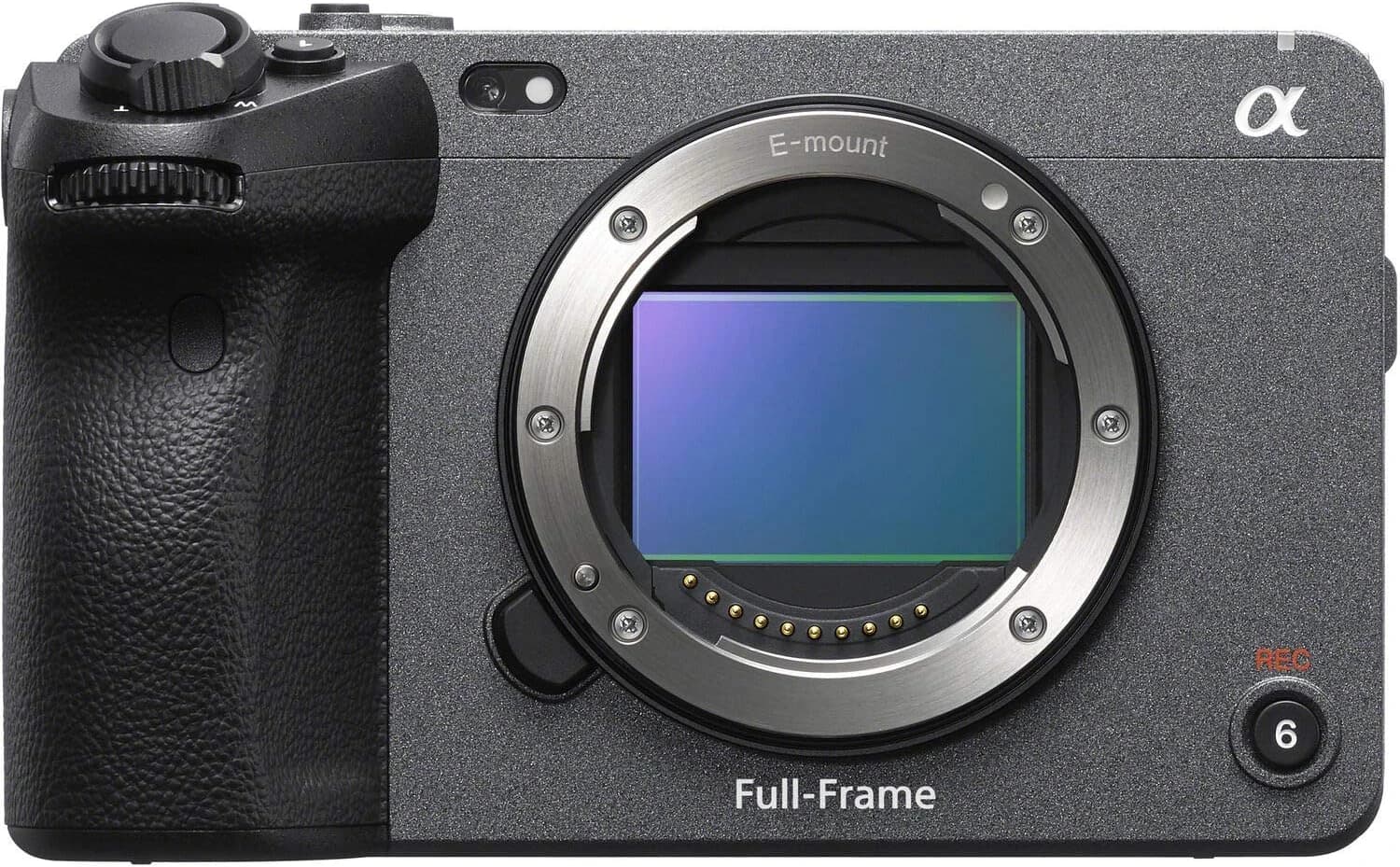
Sony FX3 Review: Sony FX3 for Video and Cinema

Is the FX3 worth it in 2026 — and when do the FX30 or A7S III fit better?

Sony FX3 — clear buying guide for video and cinema
Martin Kleinheinz
Author
Martin Kleinheinz
Photographer · Content Creator · Hannover
Updated
September 1, 2026

You’re googling “Sony FX3” because you want to film for real — not just a few Reels on a phone. The FX3 is Sony’s compact cinema camera with a full-frame sensor. Plain English: the sensor is as large as on classic 35mm cameras. That helps in low light and often gives you the softer background many people call a “cinematic look.” The body typically costs around $3,800 to $4,200. That’s a lot of money. So you should understand what you’re buying — and what you’re not.

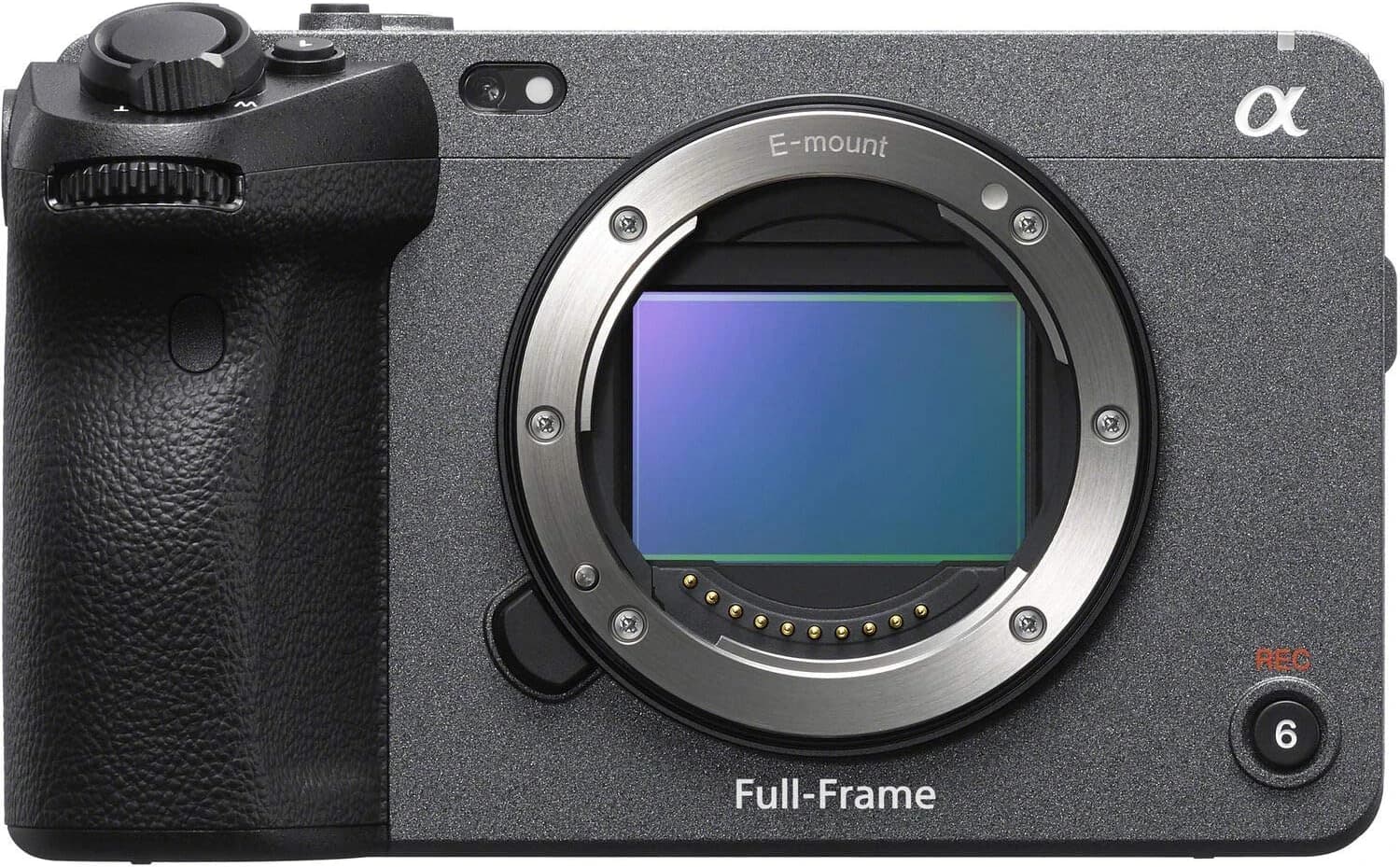
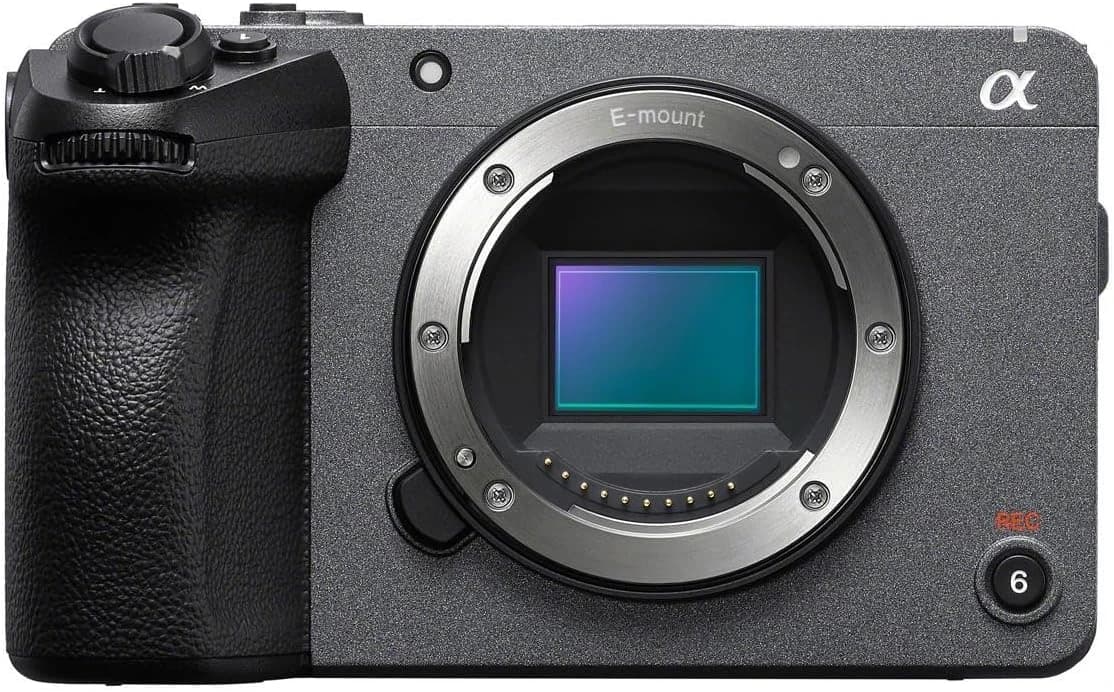
In short: the FX3 is primarily a video camera. It has a cooling fan (so long takes don’t stop), a handle with pro audio ports (XLR) in the box, and a film look that often works without long color grading. It can shoot stills too — but as a side job. New units may sell as FX3A: sharper screen, same camera at the core. For the buying decision, the question is the same.

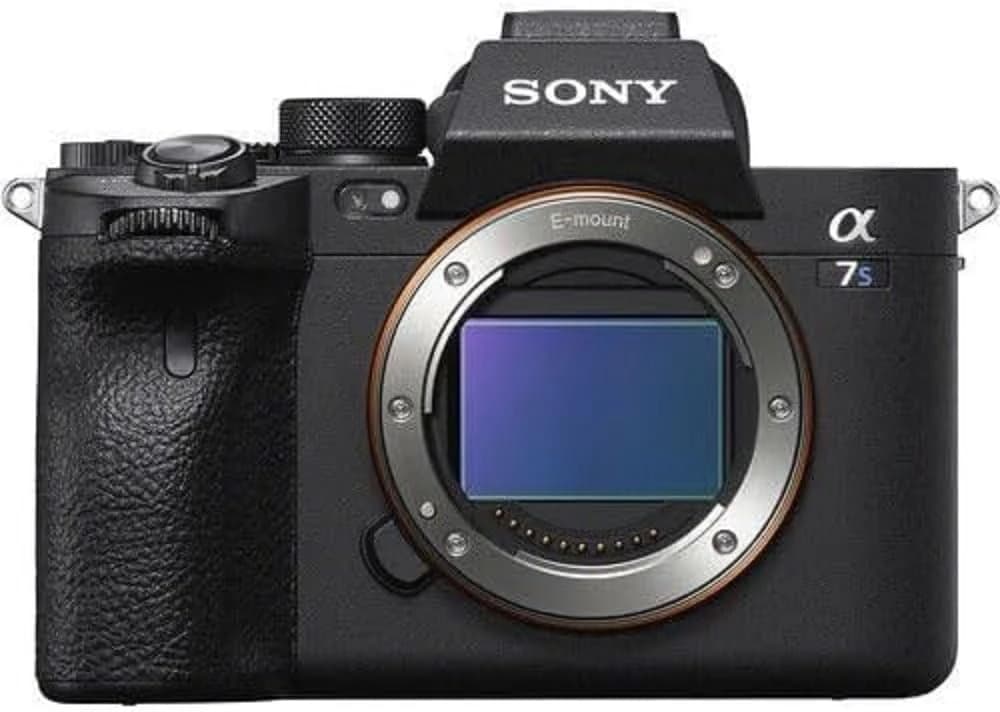
Next to it sit two alternatives that are often smarter: the Sony FX30 (around $1,800–2,100 body) with a smaller sensor but the same cinema feel — and the Sony A7S III (often $3,400–3,800), basically the hybrid sister with a viewfinder. Here I’ll walk you through the decision in plain language.

00
Short

Is the Sony FX3 worth it in 2026? The quick verdict

Short version: the FX3 is the camera I’d recommend when video is your job — serious YouTube, indie clips, wedding/event film, ads — and you want full-frame plus strong low light. You’ll typically pay around $3,800 to $4,200 for the body. The official list price often sits near $3,899. On top come a lens, a memory card and often an ND filter (like sunglasses for the lens).

What you actually get: a large sensor that delivers a lot at dusk and indoors; 4K video up to 120 frames per second (strong slow motion); in-body stabilization against shake; a cooling fan that makes long takes possible; and the XLR handle for proper microphones — without buying an extra interface. What you don’t get: a viewfinder at your eye. And not a stills all-rounder for big prints either.

If you want the same cinema feel but need to save hard and shoot mostly daylight or studio, look at the [FX30](/en/sony-fx30-review/). If you want the same low-light character but need a viewfinder and real stills, the A7S III is often more honest. And if you’re looking for a hybrid under about $2,000: lean toward the Sony A6700 or the creator overview under vlog camera for YouTube.

Top 3

My three recommendations

The Sony FX3 is my recommendation when video is the job and you want full-frame, low light and long takes. The Sony FX30 fits when you want the same cinema feel, but budget and the smaller sensor are okay. The Sony A7S III is the pick when you need the same sensor look, but a viewfinder and real stills use matter more than a fan and a cinema chassis.

Vergleich
Sony
Sony FX3
Sony
Sony FX30
Sony
Sony A7S III
Bild
Sony FX3
Sony FX30
Sony A7S III
EmpfehlungEditor’s pickValueAlternative
SensorFull-frame · strong in low lightAPS-C · smaller than full-frameFull-frame · strong in low light
ISO-Bereich4K up to 120 fpsStrong 4K · Cinema Line4K up to 120 fps
AutofokusIn-body (Active crops a bit)In-bodyIn-body
DetailFan + XLR handle includedFan · XLR often extraElectronic viewfinder · hybrid
Stärken
  • +Very strong in low light — events, night, indoors
  • +Fan keeps long 4K takes stable
  • +XLR handle for pro mics is included
  • +Autofocus helps solo and run-and-gun
  • +Ready film look (S-Cinetone) without long grading
  • +Clearly cheaper than the FX3
  • +Same cinema controls and cooling
  • +Enough for many creators in daylight/studio
  • +E-mount — lenses and gear fit the Sony system
  • +Very good viewfinder — nicer outdoors and at events
  • +Real hybrid camera for photo and video
  • +Same strong low-light character as the FX3 family
  • +Often a bit cheaper than current FX3 street prices
Schwächen
  • Body alone already ~$3,800–4,200 — glass is extra
  • No viewfinder — tough in bright sun
  • Photos only a side job (around 12 megapixels)
  • No built-in ND filter — often need one outdoors
  • Smaller sensor — weaker in low light
  • Everything looks tighter with full-frame glass (crop)
  • XLR handle often not in the body price
  • No viewfinder — same as the FX3
  • No active fan — long hot takes riskier
  • Buy the XLR handle separately
  • No cinema layout (tally, handle feel differ)
  • Still an expensive setup once you add glass
Geeignet fürYouTube, indie, wedding/event video and low light — when video is the main reason to buy.Cinema entry with a budget cap — when low light and full-frame blur aren’t must-haves.Anyone who wants low light but won’t sacrifice stills and a viewfinder — hybrid instead of a pure cinema body.
Wo kaufen

In the rest of this article I’ll explain the terms and everyday reality — not as a datasheet, but so you can follow the decision.

01
Audience

Who the FX3 really fits

Before we talk 4K and Log profiles: the most important question is whether video is why you’re buying. The FX3 feels like a small black box without a classic viewfinder. You film off the screen or a monitor. That’s normal for many creators — and unfamiliar for classic stills people.

It fits well when you film alone or in a small team, work a lot handheld, and want to stay sharp and steady at night, in churches or dark venues. It fits poorly when you mainly want still photos, have to stay under $2,000, or only shoot occasional selfie vlogs — then there are more honest, cheaper paths.

Use caseDoes the FX3 fit?Why
YouTube / creator (serious)ExcellentLook, AF, fan, audio handle — if the budget works
Wedding / event videoExcellentLow light and tracking help a lot
Indie / commercial clipExcellentCompact, Cinema Line, S-Cinetone out of the box
Photo-first hybridWeakNo viewfinder, stills are a side job — lean A7S III or A7 IV
Budget under ~$2,200 bodyNoThen FX30 or A6700
Occasional Reels / selfie vlogOverkillLean ZV-1 or a pocket setup

Fit based on my own practice and user consensus — as of September 2026

If you’re unsure whether you need a system camera at all: for many people a strong hybrid or vlog camera is enough at first. The FX3 is the step when video earns money or you deliberately want cinema quality — not the “somehow a better camera” entry point.

02
Understand

What the tech means — without datasheet vibes

Here come the numbers — explained so you know what they mean for you. The three cameras in this review do related but different jobs.

Sensor: The FX3 has a full-frame sensor. Bigger than in smartphones and most entry-level cameras. Fewer megapixels than stills monsters — in return, large pixels that gather light well. That’s why the strong night/indoor performance. The FX30 has a smaller sensor (APS-C / Super 35). Everything looks tighter with the same lenses, and in low light you lose reserve.

4K and 120 fps: 4K is the resolution that’s standard today for solid YouTube and many client jobs. 120 frames per second means: you can do slow motion without it turning to mush right away. That’s one reason creators like the FX3.

S-Cinetone and S-Log3: S-Cinetone is a ready film look — often usable straight away. S-Log3 is a flat image for post: more room in highlights and shadows, but you have to grade. Beginners often start with S-Cinetone and learn Log later.

Stabilization (IBIS): Inside the body sits a system against shake. In Active mode it gets stronger — and the frame gets a bit tighter (roughly around 10 percent). Myth that “the FX3 has no stabilization”: wrong.

TopicSony FX3Sony FX30Sony A7S III
Sensor (simple)Full-frame, strong in low lightSmaller (APS-C)Full-frame, strong in low light
ViewfinderNo — screenNo — screenYes — electronic
CoolingFanFanNo fan
Audio handle (XLR)IncludedOften extraExtra
JobVideo-first cinemaCinema on a budgetHybrid photo+video
Price approx. (US 2026)$3,800–4,200$1,800–2,100$3,400–3,800

Three philosophies at a glance — as of September 2026

If you remember the table, that’s almost enough for the buying decision: video-first full-frame → FX3. Cinema cheaper → FX30. Hybrid with viewfinder → A7S III.

03
Everyday

How the FX3 really feels

Datasheets rarely tell you whether you’ll happily carry the camera all shoot day. That’s what decides whether it makes clips — or sits in a cupboard.

The FX3 is compact for a cinema camera. With battery around 715 g, with the XLR handle clearly more. Many work without a big cage because the threads and layout already feel “finished.” You film off the flip screen. In harsh sun you miss a viewfinder — then a monitor or shade helps.

The fan is the everyday difference from the A7S III: long 4K recordings stop less often. In most situations it’s quiet. On very quiet dialogue close-ups it can become audible — then adjust the mode or plan mic distance and placement.

XLR handle
Comes with the FX3. You can plug in pro microphones without buying an extra interface. You still need the mic itself.
NP-FZ100 battery
Familiar Sony battery. For shoot days I always plan a spare and/or USB power. One battery rarely covers a full event day.
Two card slots
You can run backup or relay — important on paid jobs. For high bitrates often CFexpress Type A or fast SD. Orientation: best SD card for camera.
No internal ND
In sun you often need a filter on the lens, or the aperture closes too far or the shutter gets too short. Not a drama — but cost and planning.

In tests and user reports I keep hearing the same thing: low light, autofocus, form factor and the audio handle get praise — price, missing viewfinder and total cost get criticism. That matches what I see day to day.

04
Image

How the image looks — and why many like the look

Many buy the FX3 not for a specs line, but because the image looks like film quickly. With S-Cinetone you often get natural skin tones and calm contrast without hours of grading. When you want more control later, you go into S-Log3 — flat, but flexible.

In low light the FX3 is a workhorse in its price class: interiors, receptions, night in the city. The FX30 can do that too — just with less reserve. The A7S III delivers a similar low-light character, just in a hybrid body.

  • Everyday / creator: start with S-Cinetone, lock in two looks, stay consistent
  • Events: low light + AF are the real advantage — not megapixel marketing
  • Slow motion: 4K120 helps for moments and trailers — files get big
  • Internal RAW: doesn’t exist — only external over HDMI if you need a recorder
05
Focus

Focusing while filming: strong for solo and events

Autofocus means: the camera keeps faces and eyes sharp while you move. On the FX3 that’s one reason solo creators and event filmmakers like it. You can run interviews, walking shots and receptions without constantly pulling focus by hand.

It doesn’t replace good timing and light. In extreme backlight or very frantic action, manual focus or a second set of eyes can still help. But for the everyday of many video jobs, the AF here is a real tool — not a gimmick.

06
Stills

And stills? Side job — not a reason to buy

Yes, the FX3 shoots stills — around 12 megapixels. For social, web and documentation that’s often enough. For large fine-art prints or photo series as the main business, it’s the wrong camera. Plus there’s no viewfinder.

If you take photo and video equally seriously: A7S III or a hybrid like A6700 / A7 IV depending on budget and system. The FX3 earns its price through video.

07
Decision

FX3, FX30 or A7S III — which question are you asking?

Many compare cameras as if there’s one objectively best. There are three different questions. The FX3 answers: “I want video-first full-frame with a fan and audio handle.” The FX30 answers: “I want the same cinema feel cheaper.” The A7S III answers: “I want the same low-light look, but hybrid with a viewfinder.”

You need …Lean FX3Lean FX30Lean A7S III
Long takes / coolingYesYesRisk in heat
Maximum low lightYesLessYes
Viewfinder at the eyeNoNoYes
Real stills useSide jobSide jobYes
Body budget ~$2,000NoYesNo
XLR without extra buyYesOften noNo

Which question are you really asking? — as of September 2026

If you google “FX3” but actually want to stay under $2,200, you’re often better with the FX30 — not because the FX3 is bad, but because the price is a different league. If you need a viewfinder, the most expensive cinema body won’t help you.

08
Compare

Three cameras at a glance

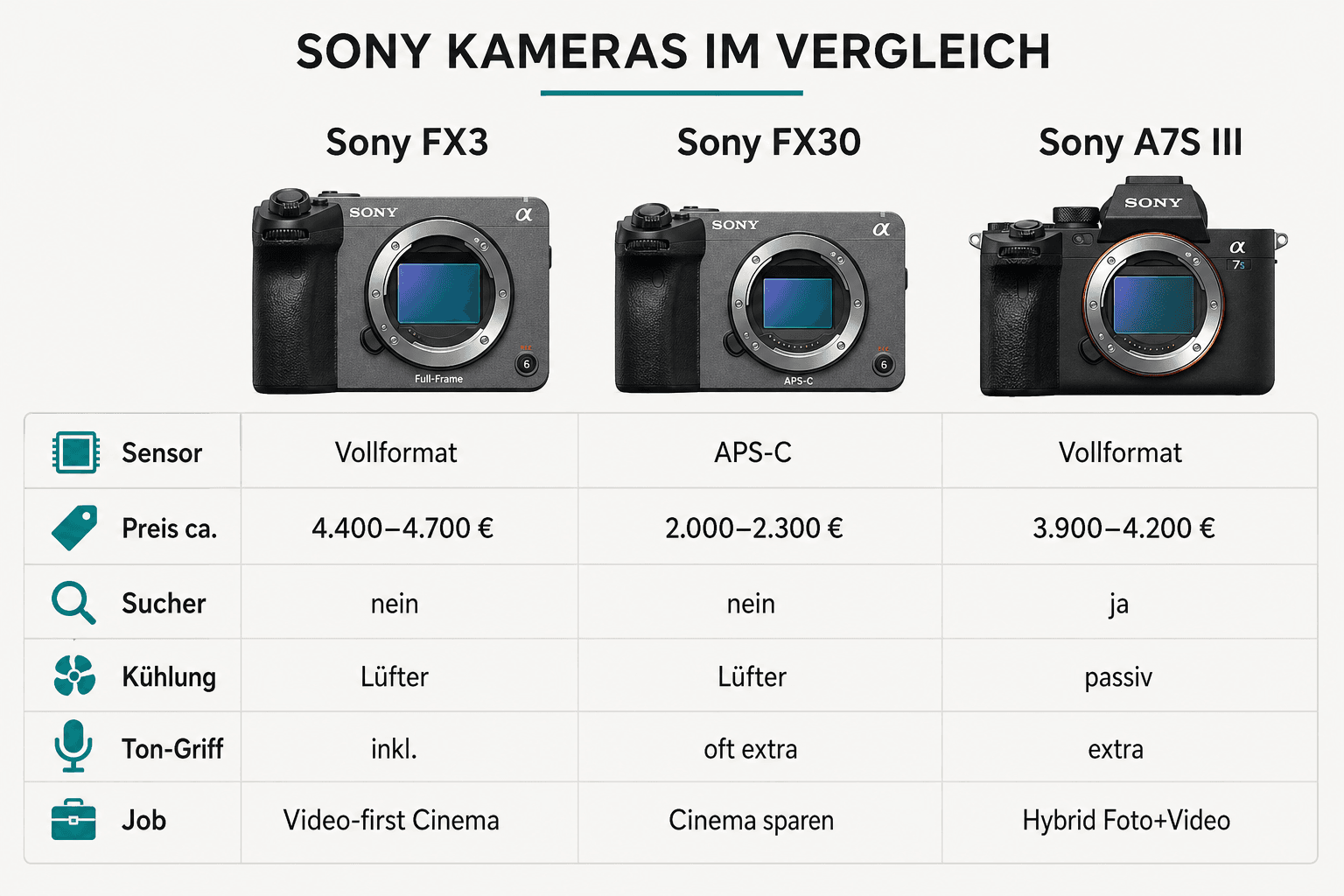
The graphic and table summarize what you read above.

Comparison: Sony FX3, Sony FX30 and Sony A7S III
FX3 vs. FX30 vs. A7S III — as of September 2026
CriterionFX3FX30A7S III
SensorFull-frameAPS-CFull-frame
Viewfindernonoyes
Fanyesyesno
XLR handleincl.often extraextra
Price approx.$3,800–4,200$1,800–2,100$3,400–3,800

As of September 2026 — check current shop prices

Versus the FX30 you pay for full-frame and low light. Versus the A7S III you pay for a cinema body, fan and included XLR — and you give up the viewfinder.

09
Decision

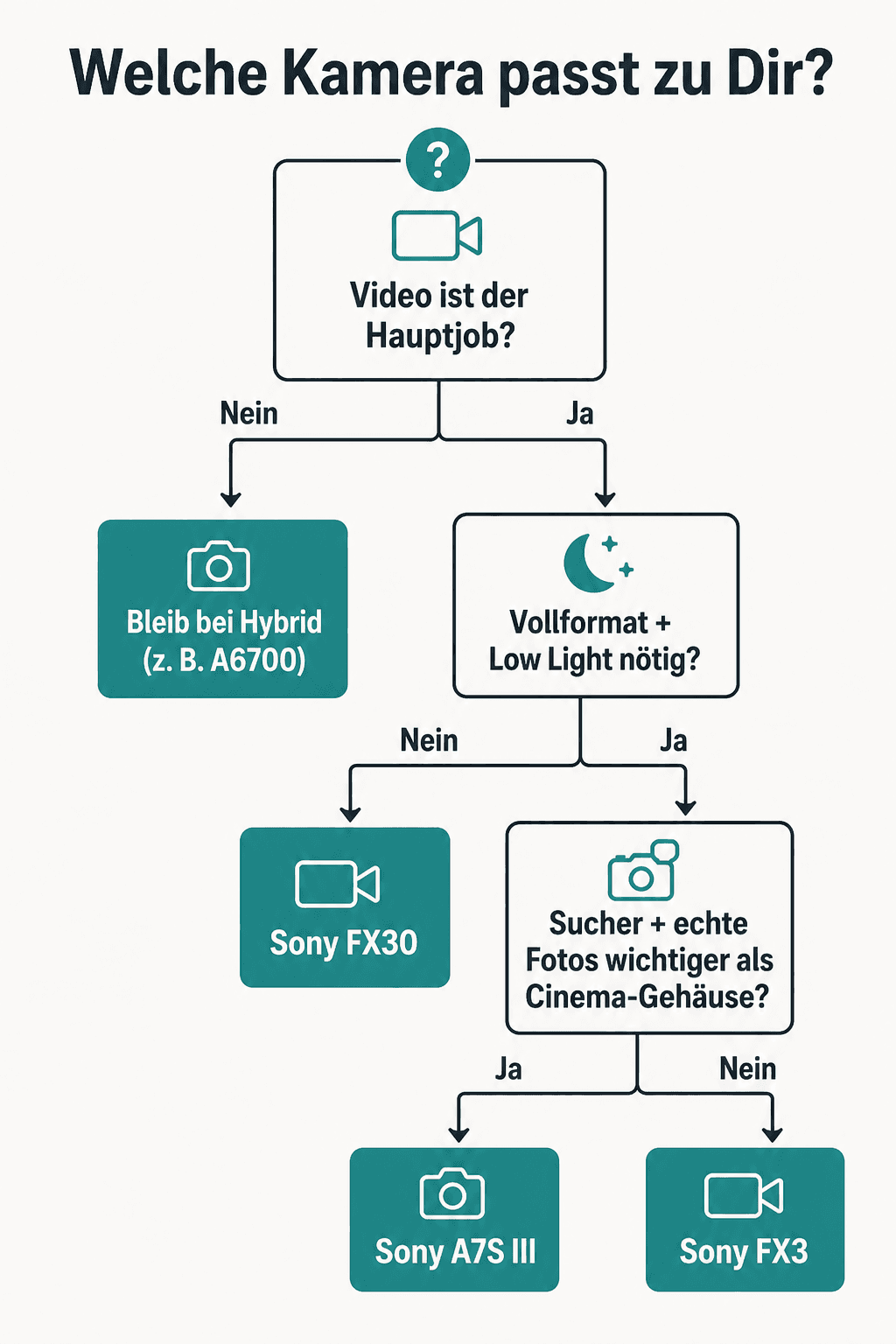
The decision tree: which camera fits you

Work the questions top to bottom. The first honest answer counts more than any specs line.

Decision tree: FX3, FX30 or A7S III
From use case to camera — as of September 2026
  • Is video the main job and you want full-frame + low light? → Sony FX3
  • Want cinema, but need to save and have enough light? → Sony FX30
  • Need a viewfinder and real stills? → Sony A7S III
  • Budget more hybrid under ~$2,000? → Sony A6700
  • Mostly selfie vlog? → ZV-1 or vlog guide

For most people who deliberately want a dedicated full-frame cinema camera and accept the price, the path lands on the FX3.

10
Detail

Sony FX3: is the premium price worth it?

After all that, the simple balance: the FX3 shines when you want the job “video-first, low light, long takes, pro audio without an extra interface.” It frustrates when you expect a viewfinder, mainly want to shoot stills, or underestimate the full package.

What convinces
Low light, fan, AF, XLR handle included, compact cinema form factor, S-Cinetone for fast results.
What you have to accept
Price around $3,800–4,200 plus glass. No viewfinder. Stills as a side job. ND often extra. Spare battery and fast cards.

If that fits you, the FX3 is the clear recommendation in this class in 2026. If not, you’re often happier — and more honest — with the FX30 or A7S III.

Editor’s pick
Sony FX3
Bewertung
4.8
/ 5,0
★★★★
Basierend auf 0 verifizierten Bewertungen
Sony

Sony FX3

My pick when video is the job

Compact full-frame video camera with a cooling fan, strong low-light performance and an XLR handle in the box — typically around $3,800 to $4,200. For serious filmmaking, events and indie clips. Still photos work, but they’re a side job. New stock may ship as FX3A (sharper screen, same camera at the core).

Was überzeugt
  • +Very strong in low light — events, night, indoors
  • +Fan keeps long 4K takes stable
  • +XLR handle for pro mics is included
  • +Autofocus helps solo and run-and-gun
  • +Ready film look (S-Cinetone) without long grading
Was Du wissen solltest
  • Body alone already ~$3,800–4,200 — glass is extra
  • No viewfinder — tough in bright sun
  • Photos only a side job (around 12 megapixels)
  • No built-in ND filter — often need one outdoors
Editor's Statement

Video-first with full-frame — when low light and long takes are worth the price

Verfügbar bei
11
Cheaper

Sony FX30: when the cheaper cinema is better

The Sony FX30 often costs roughly half of the FX3 body and feels related in operation: fan, cinema layout, E-mount. The smaller sensor means: less low-light reserve and a tighter angle of view with full-frame lenses. For many creators with daylight, studio or softbox, that’s totally fine.

Go FX30 when budget is priority. Stay FX3 when night, events and full-frame are worth the premium. And check whether the XLR handle is actually in the offer. Full write-up: Sony FX30 review.

Value
Sony FX30
Bewertung
4.7
/ 5,0
★★★★
Basierend auf 0 verifizierten Bewertungen
Sony

Sony FX30

Same cinema feel — for less

Almost the same body and controls as the FX3, but with a smaller sensor (APS-C). Typically around $1,800 to $2,100 for the body — often without the XLR handle. The more honest choice when you need to save and shoot mostly daylight or studio.

Was überzeugt
  • +Clearly cheaper than the FX3
  • +Same cinema controls and cooling
  • +Enough for many creators in daylight/studio
  • +E-mount — lenses and gear fit the Sony system
Was Du wissen solltest
  • Smaller sensor — weaker in low light
  • Everything looks tighter with full-frame glass (crop)
  • XLR handle often not in the body price
  • No viewfinder — same as the FX3
Editor's Statement

When you want the cinema workflow but stay under ~$2,200 body

Verfügbar bei
12
Hybrid

Sony A7S III: when viewfinder and stills are the better idea

The A7S III answers a different question: you want the strong low-light look, but as a hybrid with an electronic viewfinder and more serious stills use. No fan, XLR often extra, but classic Alpha feel.

Go A7S III when you work a lot at the eye outdoors and need still + motion. Stay FX3 when long takes, cinema ergonomics and an included audio handle are priority.

Alternative
Sony A7S III
Bewertung
4.7
/ 5,0
★★★★
Basierend auf 0 verifizierten Bewertungen
Sony

Sony A7S III

Hybrid sister with a viewfinder

Practically the same sensor family as the FX3 — but as a classic Alpha with a viewfinder and a stronger stills focus. Typically around $3,400 to $3,800. No fan, no cinema chassis, XLR handle extra. The pick when photo and video both matter seriously.

Was überzeugt
  • +Very good viewfinder — nicer outdoors and at events
  • +Real hybrid camera for photo and video
  • +Same strong low-light character as the FX3 family
  • +Often a bit cheaper than current FX3 street prices
Was Du wissen solltest
  • No active fan — long hot takes riskier
  • Buy the XLR handle separately
  • No cinema layout (tally, handle feel differ)
  • Still an expensive setup once you add glass
Editor's Statement

When you want the same low-light look, but viewfinder and hybrid matter more

Verfügbar bei
13
Cost

What you really need on top — and what it costs

The body price is only the start. A realistic US setup quickly lands $1,000 to $2,000 above that — depending on glass.

Lens
At least one fast all-round or prime lens. No glass, no camera.
Second / third battery
Required for shoot days. NP-FZ100 is standard in the Sony kit.
Fast memory card
For 4K120 and high bitrates, skip the bargain card. See best SD card for camera.
ND filter
Often needed in sun because the FX3 has no internal ND.
Microphone
The XLR handle is the socket — not the mic. Plan audio deliberately.
14
Verdict

The clear buying decision

The Sony FX3 is the 2026 camera for people who take video seriously and are ready to invest around $3,800 to $4,200 plus glass. You get low light, a fan, an audio handle and a look that works without long grading. You don’t get a viewfinder or a stills all-rounder.

Want cinema cheaper: FX30. Need hybrid with a viewfinder: A7S III. Content budget below that: A6700 or vlog camera for YouTube.

15
FAQ

Common questions about the Sony FX3

Is the Sony FX3 worth it in 2026?
Yes, if video is your main job and you want full-frame, low light and long takes — and you accept the body price around $3,800–4,200 plus glass. Otherwise often FX30, A7S III or a cheaper hybrid.
What’s the difference between FX3 and FX3A?
At the core, the same camera. The FX3A mainly brings a sharper screen and smaller hardware tweaks. For the buying decision the question is the same: do you need this full-frame cinema body?
FX3 or FX30 — when is APS-C enough?
FX30 when you want to save and shoot mostly daylight/studio. FX3 when night, events and maximum low-light reserve matter.
FX3 or A7S III?
FX3: fan, cinema body, XLR included, no viewfinder. A7S III: viewfinder, hybrid photo+video, XLR extra, no fan. Same strong low-light character in the family.
Does the FX3 have image stabilization?
Yes, in the body. Active mode stabilizes more, but crops the frame a bit. The “no IBIS” myth is wrong.
Does the FX3 overheat? How loud is the fan?
The fan is there to keep long takes stable. Usually quiet; on very quiet close-ups it can become audible — then plan mode and mic placement.
Is the XLR handle included?
On the FX3, yes. The microphone isn’t — only the ports. On the FX30 often body without handle, depending on the bundle.
Can the FX3 shoot stills too?
Yes, around 12 megapixels — often fine for web and doc. I wouldn’t buy it as a primary photo camera.
What is S-Cinetone vs. S-Log3?
S-Cinetone: ready film look, often usable straight away. S-Log3: flat image for post with more room — you have to grade.
Which memory card do I need?
A fast card for 4K and high bitrates — often CFexpress Type A or strong SD. Details in the SD card for camera guide.
Do I need a spare battery?
Yes. For shoot days plan at least a second NP-FZ100 — better more.
What does a realistic setup cost?
Body plus a fast lens, batteries, card and often ND/mic: budget roughly $1,000–2,000 above the body — depending on glass.
Is an A6700 enough instead of an FX3?
For many hybrid creators yes — and it saves a lot. The FX3 fits when you deliberately want full-frame cinema and maximum video reserve.
FX3 vs ZV-E1 — when is the cheaper full-frame enough?
ZV-E1 can work for creator full-frame, but has different limits (including less of a cinema workflow). For the same job comparison to the FX3, FX30 and A7S III are the more honest alternatives.
Affiliate links marked with * — Amazon product links use partner ID martinkleinhe-20. I earn a small commission if you buy through these links; it costs you nothing extra. Assessments are based on my own practice, manufacturer specs and the consensus from reviews and user reports — no brand sponsored this article.
Newsletter

Stay in the loop.

Camera and photography news, honest gear tests and new articles — in your inbox. Infrequent but relevant. No spam, unsubscribe anytime.

Keep reading

From the journal.

Fotograf, Martin Fernando Mera Kleinheinz · Franz-Bork-Straße 21, 30163 Hannover · 0179 4085297