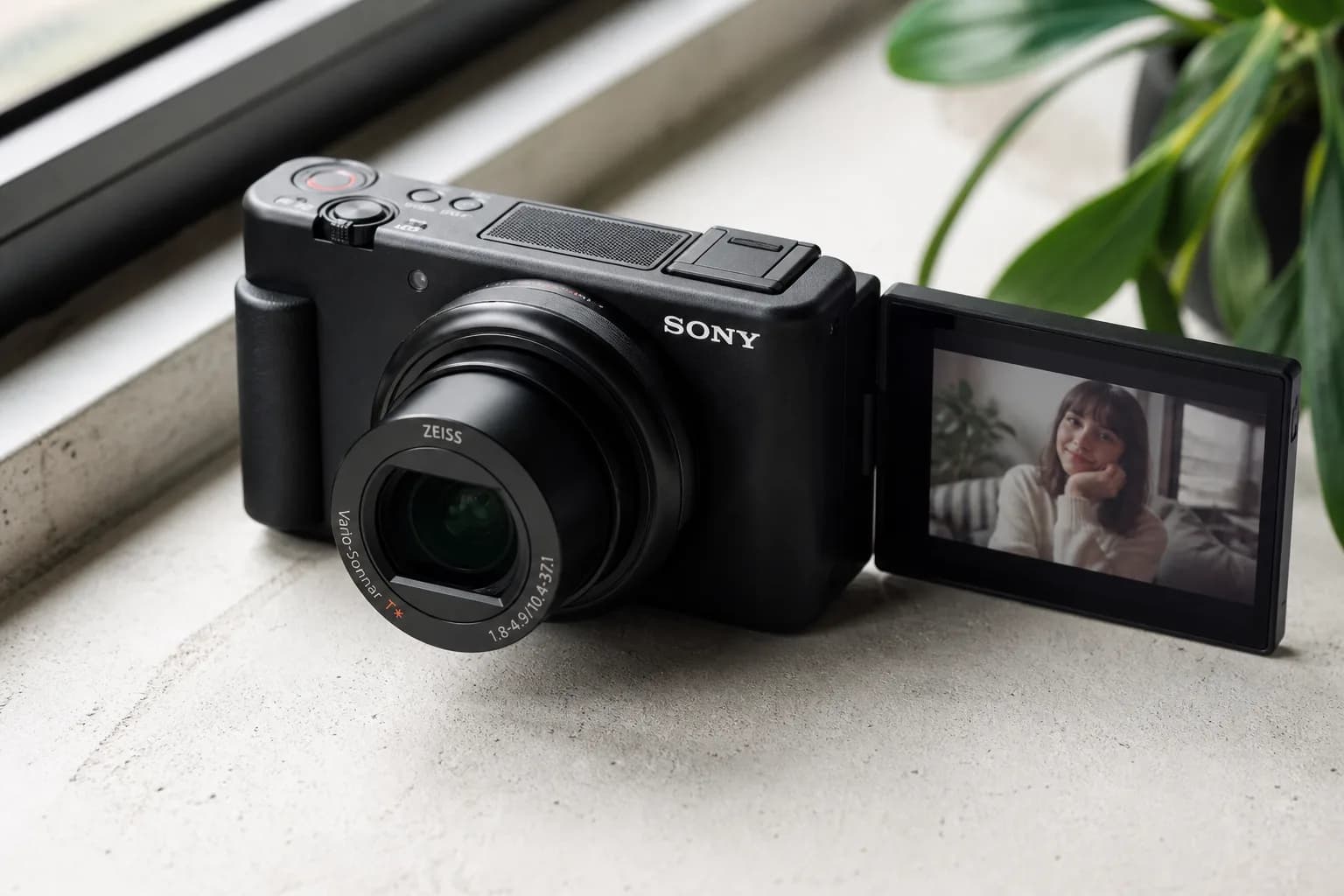

Sony ZV-1 Review: ZV-1 vs II in Plain English

ZV-1 or ZV-1 II — which vlog compact fits you in 2026? Plus when the ZV-E10 II makes more sense.

Sony ZV-1 Review 2026 — vlog compact camera buying guide
Martin Kleinheinz
Author
Martin Kleinheinz
Photographer · Content Creator · Hannover
Updated
August 27, 2026

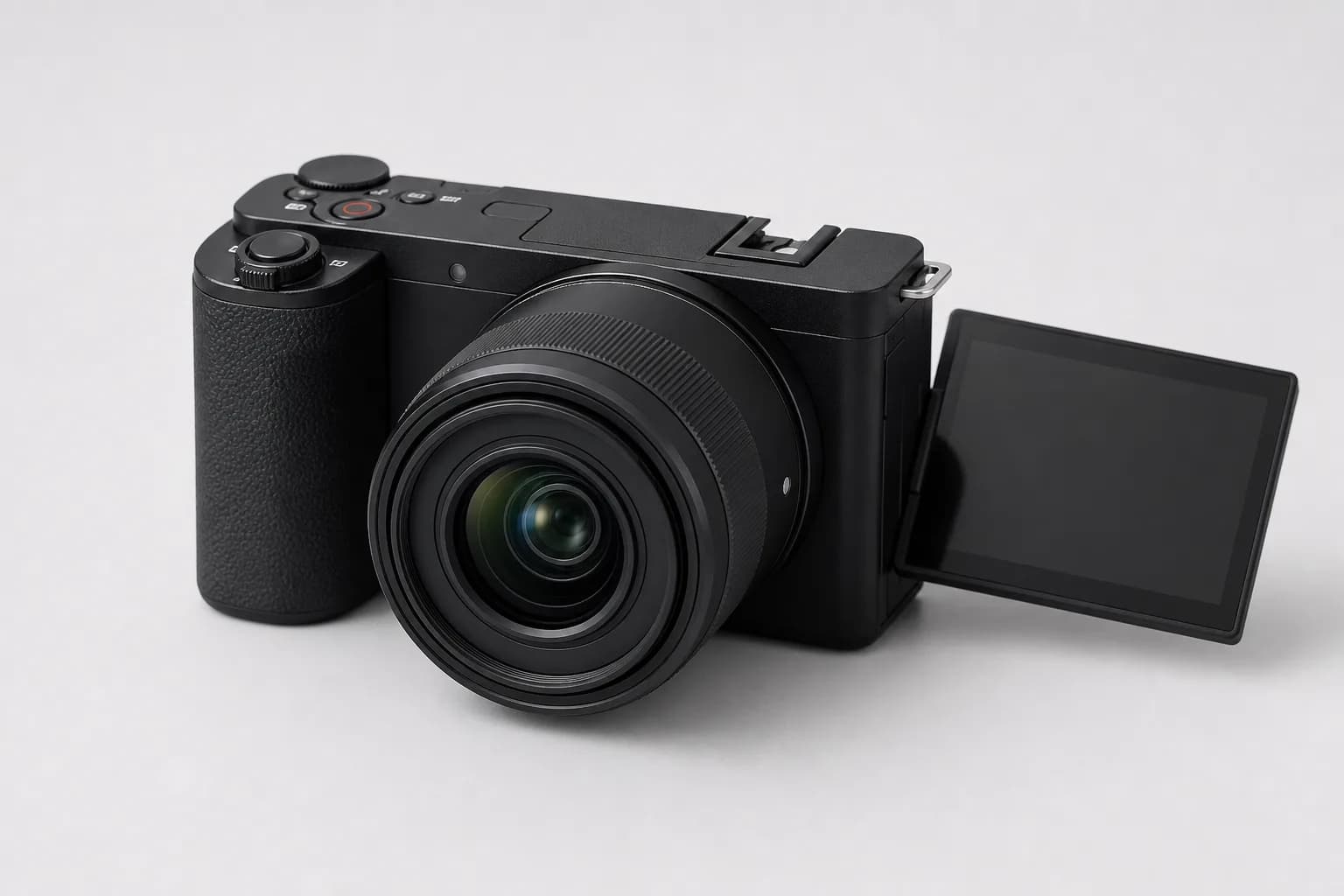
A camera that sits in front of you, keeps you sharp and snaps focus onto products the moment they enter the frame — that's the promise of the Sony ZV-1 series. I've used Gen 1 and the ZV-1 II in real creator work: talking heads for social, short product clips, hybrid stills in between. That's where the decision lands — not on the spec sheet, but when you're in front of the lens, hold up a product and the mic has to save your voice without building a full setup every time.

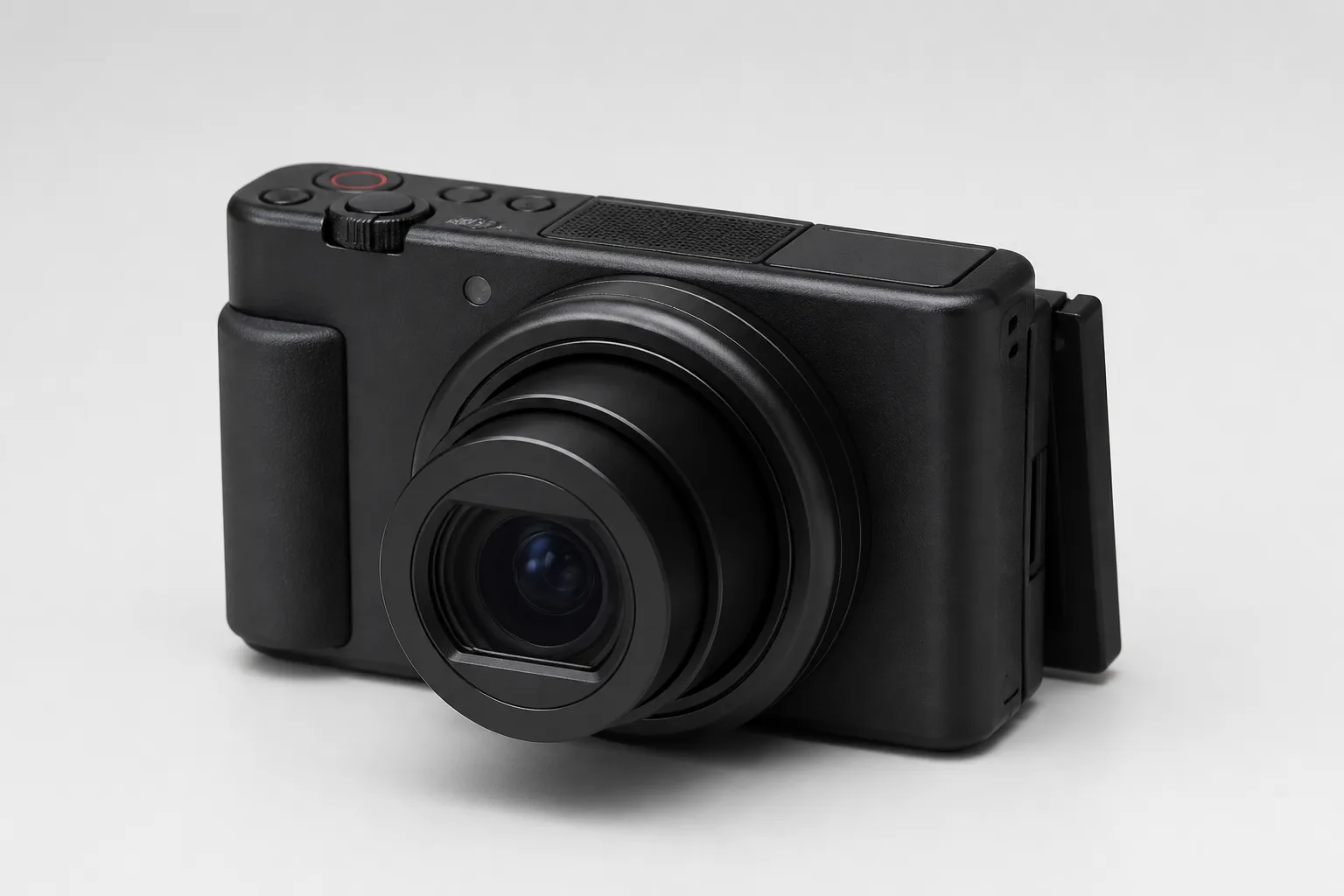
The ZV series has a clear reputation: a vlog compact with Product Showcase, Bokeh Switch and a decent directional mic. What often gets lost: the ZV-1 II is not a straight upgrade of the first generation. It's the stronger selfie-vlog sister — and it deliberately drops things that can matter for hybrid shooters and travel days: OIS and the 70mm reach.

You won't get a spec-sheet dump here, but a clear buying call: when the ZV-1 II fits, when the cheaper ZV-1 (Gen 1) is still the smarter pick in 2026 — and when you should step up to the ZV-E10 II with interchangeable lenses.
00
Quick

Is the Sony ZV-1 Worth It? The Quick Verdict

Short version: The Sony ZV-1 II is the right camera if you mostly film in front of the lens — selfie vlog, talking head, product demos. With 18–50mm, USB-C, better touch and the three-capsule mic, it's the more consistent vlog sister. If you want hybrid photo and video, occasionally need 70mm and don't want to give up optical stabilization, the cheaper ZV-1 Gen 1 (often around €500–580) is often the better call in 2026. If you want to grow: ZV-E10 II.

Top 3

My Three Recommendations

**#1 Sony ZV-1 II** — if you mainly shoot selfie vlogs and talking heads. **#2 Sony ZV-1 (Gen 1)**, if OIS, 24–70mm and price matter more than the new wide angle. **#3 Sony ZV-E10 II**, if you want to swap lenses and grow.

Vergleich
Sony
Sony ZV-1 II
Sony
Sony ZV-1
Sony
Sony ZV-E10 II (kit)
Bild
Sony ZV-1 II
Sony ZV-1
Sony ZV-E10 II (kit)
EmpfehlungEditor’s pickValueUpgrade
Sensor20.1 MP 1" Stacked CMOS20.1 MP 1" Stacked CMOS26 MP APS-C
ISO-BereichZEISS 18–50mm f/1.8–4.0ZEISS 24–70mm f/1.8–2.8Interchangeable (E-mount)
AutofokusElectronic (Active SteadyShot)Optical + electronicdepends on lens / Active mode
DetailUSB-C, Product Showcase, 3-capsule micOIS, Product Showcase, mech. shutterCreator UI, strong video, system growth
Stärken
  • +18 mm wide angle for selfie vlogs and tight spaces
  • +USB-C and a modern touch menu for everyday use
  • +Intelligent 3-capsule mic with clear direction modes
  • +Product Showcase and Bokeh Switch for creator workflow
  • +Compact and light — a real pocket vlog cam
  • +24–70mm with consistently strong aperture
  • +Optical stabilization helps stills and video
  • +Better street price than the ZV-1 II
  • +Mechanical shutter — more flexible for stills
  • +Same creator basics: Product Showcase, Bokeh Switch
  • +APS-C delivers noticeably better low-light image quality
  • +Swap lenses — from wide to portrait
  • +Clearer growth path for serious creators
  • +Longer battery life than the ZV-1 family
Schwächen
  • No optical image stabilization — Active mode crops
  • Tele ends at 50mm and gets dimmer (f/4)
  • Electronic shutter only (rolling shutter possible)
  • Battery stays short — plan spare NP-BX1 packs
  • Tighter for true arm’s-length selfie vlogs than 18 mm
  • Micro-USB instead of USB-C
  • Touch menu and mic logic older than the II
  • Battery also short — spare packs are mandatory
  • No true pocket format anymore
  • Kit + extra lenses drive the price up
  • More learning and setup than a fixed-zoom compact
  • Often oversized for pure selfie vlogs
Geeignet fürSolo vloggers and creators who need arm’s length, USB-C and creator features.Hybrid shooters who want photo + video and prefer OIS/70 mm over selfie wide angle.Creators who want to grow and will trade size and budget for a real system.
Wo kaufen

Why the II isn't an automatic upgrade — and why Gen 1 often remains the more sensible hybrid pick in 2026 — is what the rest of this review covers, including all the numbers and what actually matters day to day. If you're still weighing compact vs. system camera in general, our vlog camera for YouTube guide gives the broader framing.

01
Audience

Who the ZV-1 Series Really Fits

Before you dig through zoom numbers and mic specs: the most important question is whether your use case even matches the ZV-1 family. The table shows the classic use cases and where each generation is strong — and where another choice makes more sense.

Use CaseDoes the ZV-1 Series Fit?Why
Selfie vlog / talking headExcellent (especially II)Flip screen, Product Showcase, strong onboard mic, wide angle on the II
Product demos / unboxingExcellentProduct Showcase snaps focus from face to object and back in a blink
Hybrid photo + videoGood (lean Gen 1)Gen 1 with OIS and 24–70mm; II trades OIS and telephoto for wide angle
Travel / street (stills)ConditionalNo viewfinder, limited telephoto — the RX100 VII is often the better sister here
Low light / growthConditional1" sensor has limits — then lean toward the ZV-E10 II with APS-C and interchangeable lenses

Fit assessment based on hands-on practice and user consensus — as of August 2026

Content creators who stand in front of the camera get exactly what a vlog camera for YouTube should deliver: flip screen, eye AF and usable audio without an external mic from day one. If you prioritize travel stills and telephoto, you're often better served by the best travel camera than by a pure vlog compact. If you're a beginner looking for your first serious camera at all, it's worth checking our camera for beginners guide first — the ZV series isn't a toy, but it's a patient entry if your focus is clearly video in front of the lens.

02
Specs

The Specs: ZV-1 vs. ZV-1 II at a Glance

Before everyday usability: here are the numbers from Sony and the common spec consensus that explain the gap between Gen 1 and II. Not a datasheet dump for its own sake — every line shows up again in the real-world check.

CategorySony ZV-1 (Gen 1)Sony ZV-1 II
Sensor20.1 MP 1" stacked Exmor RS CMOS20.1 MP 1" stacked Exmor RS CMOS (same class)
Lens24–70mm (full-frame equiv.), f/1.8–2.818–50mm (full-frame equiv.), f/1.8–4.0
StabilizationOIS + electronicElectronic only (Active SteadyShot, crop)
ShutterMechanical + electronicElectronic only
Video4K up to 30p4K up to 30p, often marketed as unlimited
AudioDirectional mic3-capsule mic, direction selectable
PortMicro-USBUSB-C
ND filterNo (or limited by model)Built-in ~3 stops
Weightapprox. 294 gapprox. 292 g
BatteryNP-BX1, approx. 260 shots (CIPA)NP-BX1, approx. 290 shots (CIPA)
Street price (DE)Typically around €500–580Typically around €710–800

Sony ZV-1 vs. ZV-1 II — key specs, as of August 2026

On paper both share the same sensor approach — and that's exactly why the zoom and stabilization difference matters so much. Whether it holds up day to day is what the next section settles.

03
Everyday

Handling, Battery and Menus — What the Spec Sheet Leaves Out

Numbers say little about how a camera feels when you hold it in front of you and talk at the same time. Here's the honest everyday check — from my own creator practice and the consensus from reviews and forums, not a lab measurement series.

Handling & grip
Both ZV-1 models are light and compact — ideal for a selfie arm and tabletop tripod. There's no deep front grip; for pure vlog sessions that's no drama, on longer photo walks you notice the missing grip. Many add a small stick-on grip or Sony's grip accessory — for me often the first thing after unboxing.
Display & touch
The forward-facing flip screen is the heart of the camera. On the ZV-1 II, touch control is noticeably more mature — tap to focus, menu shortcuts, less finger gymnastics. Gen 1 works, but feels older once you switch often between face, product and menus.
Battery — NP-BX1 remains the bottleneck
Both run on the familiar NP-BX1. CIPA around 260–290 shots sounds like stills-day life; with video and a constantly on display, real sessions are clearly shorter — that's how I experience content days too. Plan realistically for one spare battery, better two, especially when you're out without a wall outlet.
Ports in everyday use
Micro-USB on Gen 1 vs. USB-C on the II sounds like a minor detail — it isn't. USB-C charges on the go with the same cable as your laptop and power bank. If you produce a lot on the move, you feel the difference immediately.

Amazon ratings for the series typically sit in the high 4s. Praise goes to Product Showcase, image quality for the size and the onboard mic. The recurring criticism: battery life, limited zoom and — on the II — missing OIS. That matches what I see in my own use: no surprises, just clear priorities.

04
Image

Still Image Quality: What the 1" Sensor Actually Delivers

A 1" sensor isn't APS-C and isn't full frame — you have to accept that for any buying decision in this class. In daylight, the ZV-1 and ZV-1 II deliver crisp, contrasty JPEGs with typical Sony color — the look I know from content and event work. Up to about ISO 800 you're on safe ground; above that, noise rises visibly.

  • Up to ISO 800–1,600: clean images, solid base for social and web
  • ISO 3,200–6,400: clear noise, still usable for Reels and smaller outputs
  • Above that: last resort — the sensor area shows its physical limit here

The photographic difference between generations sits in the lens: Gen 1 offers 24–70mm at f/1.8–2.8 and stays brighter at the telephoto end. The II starts at 18mm (better for selfie and tight rooms), but drops to f/4.0 by 50mm — less reach, less light at the long end. For pure portrait detail at distance or street crops, Gen 1 has a clear edge.

Short version: both are solid stills companions for content and everyday use, but not travel telephoto machines. If you prioritize stills and zoom, keep the Sony RX100 VII in view as the sister camera — or stick with ZV-1 Gen 1. For storage and 4K runs, the best SD card for camera guide helps.

05
AF

Autofocus: Product Showcase as the Real Strength

If one feature separates the ZV series from ordinary compact cameras, it isn't the sensor — it's autofocus in front of the lens. Real-time Eye AF holds your face even when you move. And Product Showcase does exactly what creators buy cameras for: you hold up a product, focus jumps to it, you take it away, focus returns to your face — without tapping manually on every take. That's how I use it for unboxing-style clips and quick product demos.

Product Showcase
The real-world advantage for unboxing, reviews and product demos. Works reliably on Gen 1 and II as long as contrast and light are decent. In dark corners or on very shiny surfaces it occasionally needs a second try — not a dealbreaker, but plan for it realistically.
Real-time Eye AF
Eyes stay sharp even in profile and with slight movement. For talking heads and selfie vlogs, that's the difference between "professional enough" and "constantly refocusing."
Tracking while walking
On walking vlogs the AF usually keeps you well. The II feels more relaxed thanks to the wide angle (more room in the frame); Gen 1 needs a bit more framing discipline when you work closer to the 70mm end.
Touch AF (especially II)
Setting focus points on the flipped-forward display is smoother on the II. If you switch often between face, product and background, that saves takes.

In practice that means: for creator workflows in front of the camera, the ZV series is noticeably more relaxed than a normal compact without these modes. If you chase sports, wildlife or fast street moments instead, the RX100 VII gives you a more aggressive AF/burst package — different priority, different camera.

06
Video

Video & Audio: Strong for Creators, with Clear Limits

Both generations deliver 4K up to 30p from the 1" stacked sensor — more than enough for YouTube, Reels and client clips. Image quality is clean and detailed in good light; in low light you feel the sensor sooner than on an APS-C system camera. For social media Reels and talking heads the format is ideal; for nighttime event docs it's more of a borderline case — there I lean toward APS-C or better light.

  • 4K/30p: solid detail for web and social
  • Active SteadyShot (II): smoother handheld per Sony, costs field of view via crop
  • OIS (Gen 1): optical stabilization without the same crop penalty — an advantage when walking and zooming
  • Heat: "unlimited" marketing aside — on long 4K takes and in heat the camera can throttle or shut down; users report this and it fits the body size

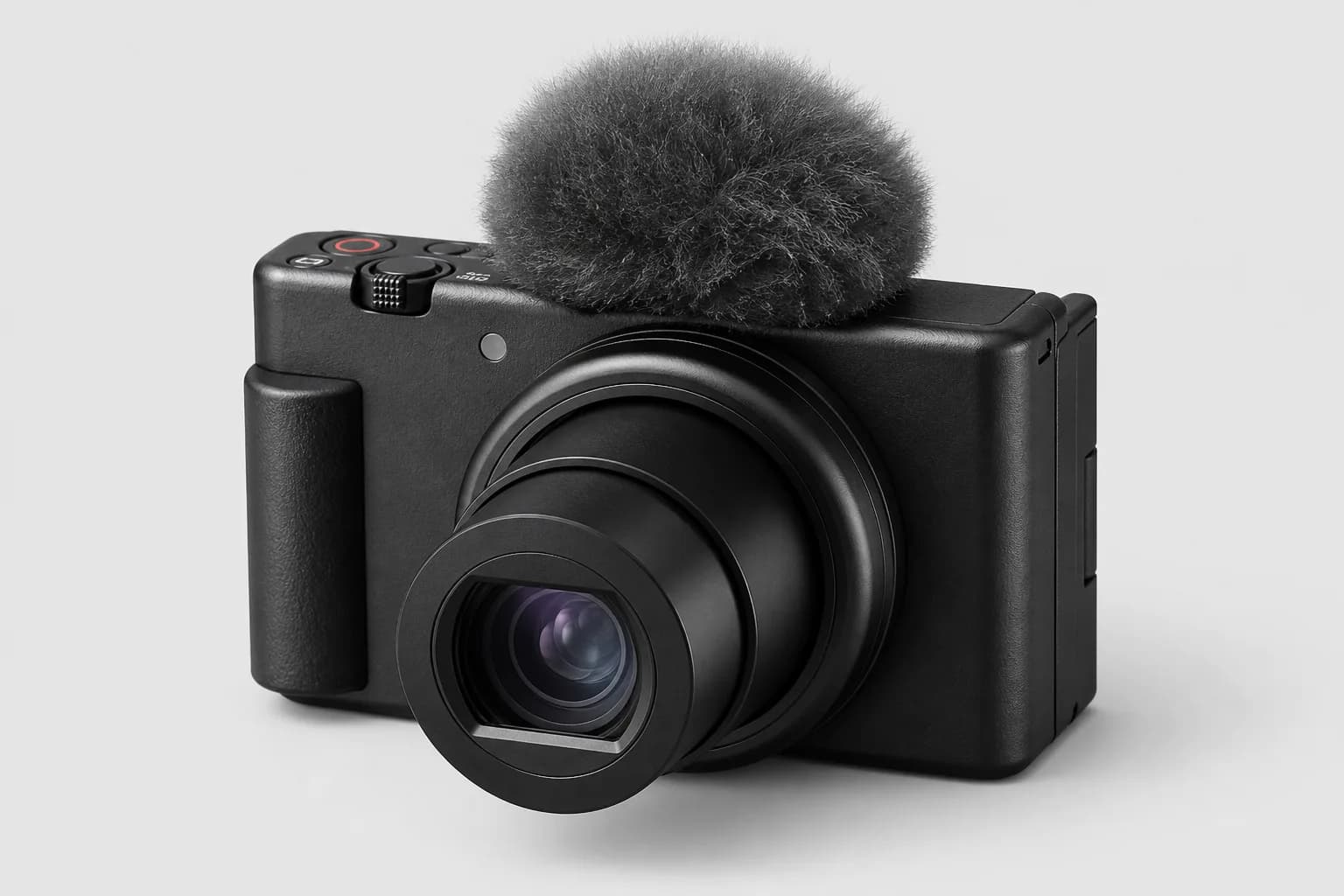
Audio is where the wheat separates from the chaff. Gen 1 already brings a usable directional mic — often enough for quiet indoor rooms. The ZV-1 II steps up with a 3-capsule system and selectable direction: front for selfie talking head, omni for groups, rear when the camera faces you and you stand behind it. For windy outdoor shoots a deadcat or external mic still makes sense — onboard is good, not magic.

If you want to invest seriously in video with interchangeable lenses, better low light and longer future-proofing, you'll land on the ZV-E10 II sooner or later — more on that in the upgrade section. The ZV-1 compacts remain the "one camera, go shoot" solution.

07
Decision

ZV-1 vs. ZV-1 II: Not a Straight Upgrade

This is the core of this Sony ZV-1 review: the ZV-1 II doesn't simply replace Gen 1. It shifts the priorities. Understand that and you save money — or you buy the right sister on purpose.

You need …Lean ZV-1 Gen 1Lean ZV-1 II
Selfie vlog in tight spacesWorks (24mm)Better (18mm)
Walking vlog + zoom on the goBetter (OIS + up to 70mm)Weaker (e-IS + only to 50mm)
Hybrid stills (everyday, detail)Better (brighter telephoto, mech. shutter)Okay, but shorter zoom
Best onboard mic / touch / USB-CSolid, but olderClearly ahead
Value for money 2026Often the smarter hybrid pickPremium for a vlog focus

Decision matrix Gen 1 vs. II — as of August 2026

Simply put: the II is the better selfie vlog camera. Gen 1 is often the better all-round hybrid camera — and especially attractive in 2026 because of the price. Anyone who thinks "newer = better" and skips Gen 1 pays more for features they may not need and loses features they'll miss.

08
Comparison

Four Options in a Direct Comparison

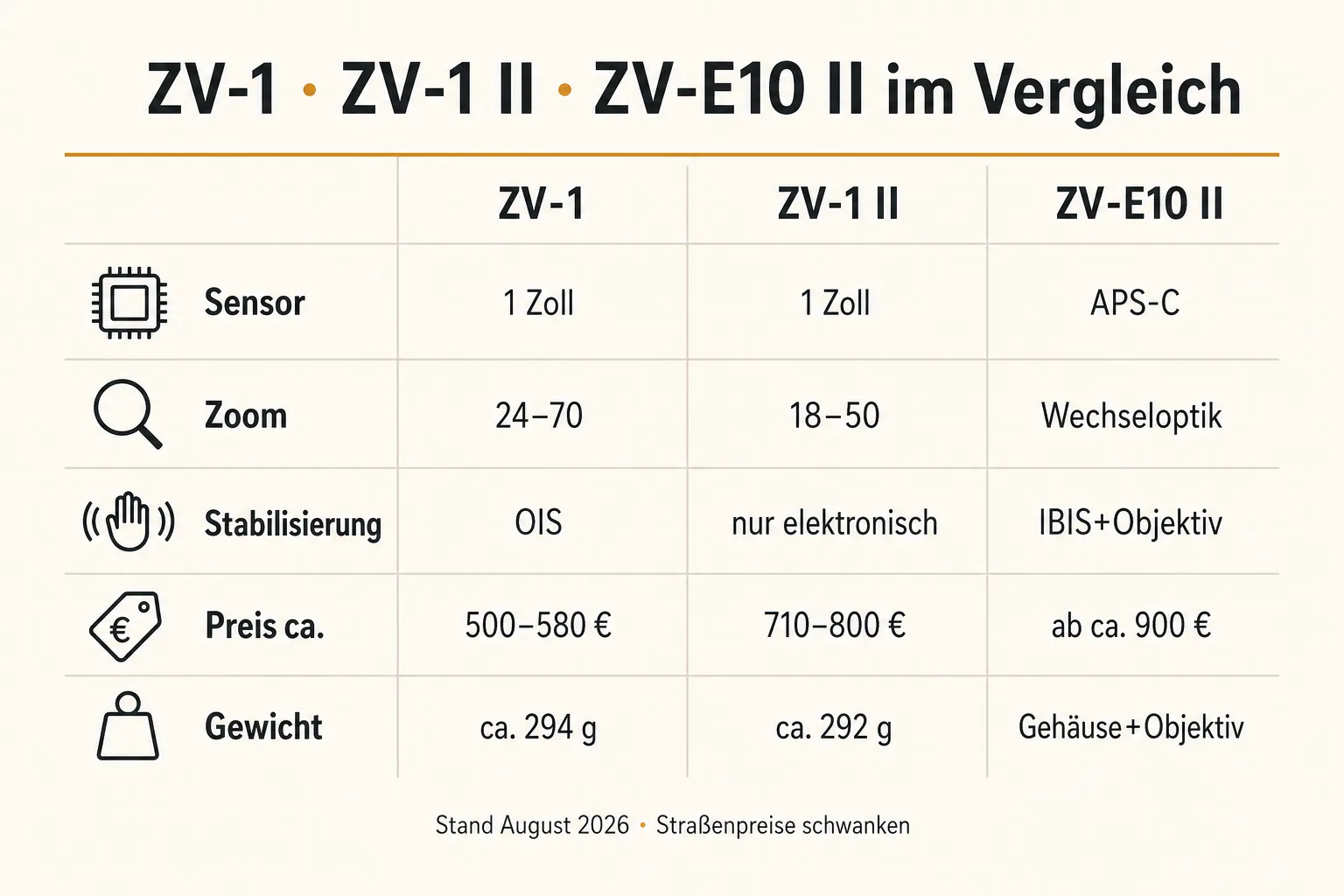
Instead of isolated datasheets, a direct comparison helps. The graphic summarizes the candidates; the table fills in the details — including the smartphone as an honest baseline and the RX100 VII as the photo/travel sister.

Comparison graphic: Sony ZV-1 II, ZV-1 Gen 1, ZV-E10 II and smartphone
ZV-1 II vs. ZV-1 vs. ZV-E10 II vs. smartphone — the candidates at a glance
CriterionZV-1 IIZV-1 Gen 1ZV-E10 IISmartphone
Sensor20.1 MP 1"20.1 MP 1"26 MP APS-Csmall, by model
Lens18–50 f/1.8–4.024–70 f/1.8–2.8Interchangeable (E-mount)fixed / multi-cam
StabilizationelectronicOIS + electronicdepends on lens / IBIS kitvery good (software)
Vlog featuresShowcase, 3-cap. mic, touchShowcase, directional micShowcase-like, systemno Product Showcase
ViewfinderNoNoNo (body)Display
Weightapprox. 292 gapprox. 294 gkit often 500 g+always with you
Price approx.€710–800€500–580€900–1,300 kit€0–1,500

As of August 2026 — check exact prices and availability at the shop

Against a smartphone, both ZV-1 models win on real zoom feel, Product Showcase, background separation and creator workflow. Against the RX100 VII they lose on telephoto, viewfinder and photo-travel all-round — but win on mic, selfie handling and vlog modes. The ZV-E10 II wins on growth and low light, loses on "one camera, done" simplicity. No option is objectively best — each answers a different question. For a budget under €1,000, our best camera under $1,000 overview is also worth a look.

09
Decision

The Decision Tree: Which Camera Fits You

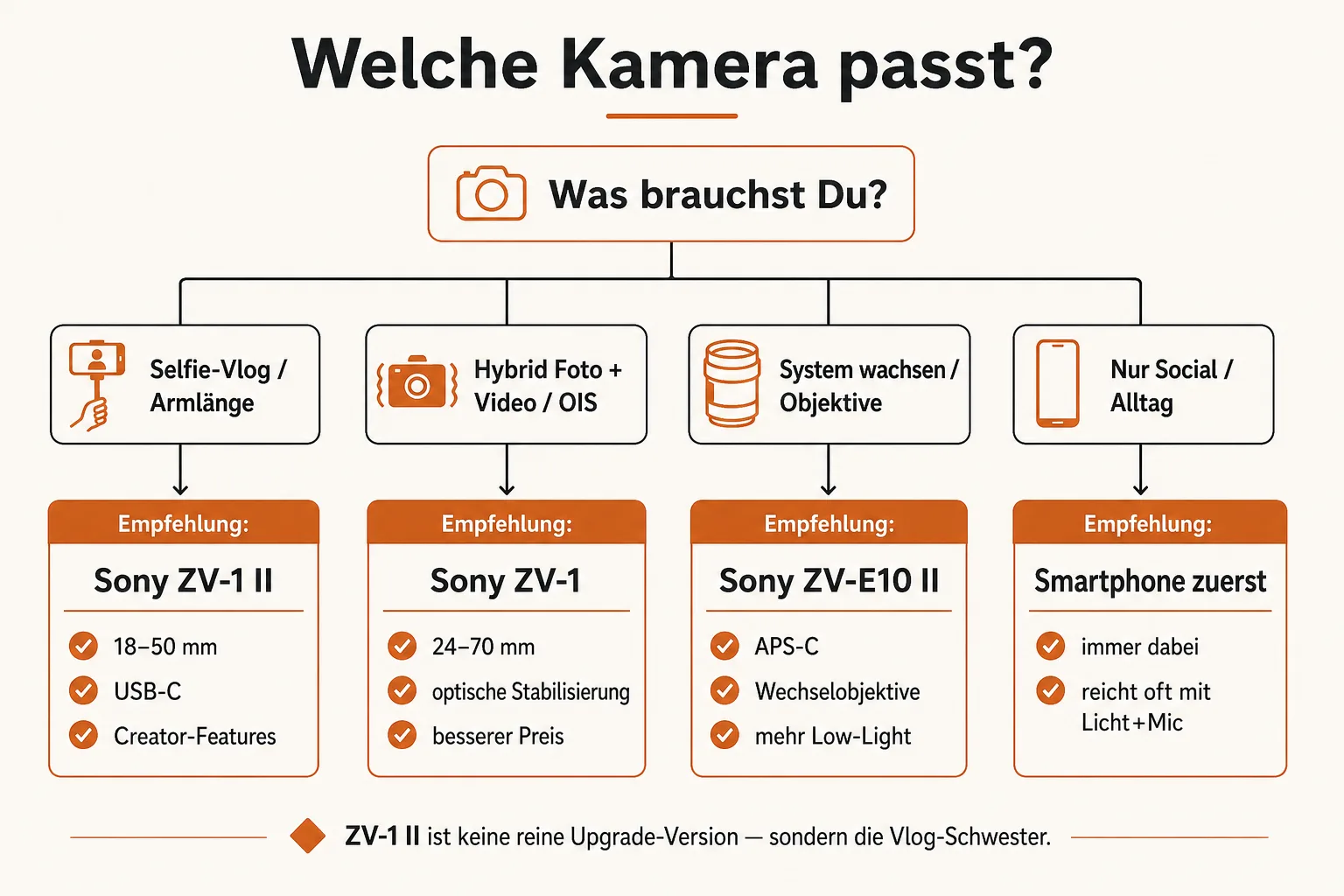
Instead of comparing more specs, walk the tree from top to bottom. The first question decides more about your purchase than any single figure from the tables above.

Decision tree: Sony ZV-1 II, ZV-1 Gen 1 or ZV-E10 II
Decision tree — from use case to the right camera
  • You mostly film in front of the lens (selfie, talking head, product) → Sony ZV-1 II
  • You want hybrid photo + video, OIS and up to 70mm → Sony ZV-1 Gen 1
  • You want interchangeable lenses, more low light and system headroom → Sony ZV-E10 II
  • Priority travel stills + telephoto + viewfinder → lean Sony RX100 VII
  • Your smartphone is enough for stories and short clips → don't buy any of the three, see FAQ

For most readers who made it this far and clearly do vlog in front of the lens, the path lands on the ZV-1 II — which is why it's my recommendation in this review. If you think hybrid and protect the budget, you often land on Gen 1. If you're unsure whether a compact system camera is the next step, our overview of compact mirrorless cameras gives broader framing.

10
Detail

Sony ZV-1 II in Detail: Strengths and Trade-offs

After all the tables, one question remains: on the ZV-1 II, does what convinces outweigh what annoys? Here's the short balance sheet before the verdict card.

Everyday strengths
18mm wide angle makes selfie and tight rooms relaxed. The 3-capsule mic sounds noticeably more grown-up than many onboard solutions. USB-C, touch and Product Showcase add up to a workflow that feels like 2026 — without needing external audio immediately.
The trade-offs
No OIS, only electronic stabilization with crop. Zoom ends at 50mm and gets darker (f/4.0). Electronic shutter only. For pure photo hybrids and walking vlogs with zoom, that's noticeable — and exactly why Gen 1 isn't an "old" camera, but a different answer.

On price, the II typically sits around €710–800. That's fair for the vlog package — but only if you really need those vlog priorities. Otherwise you pay for features and give up stabilization and telephoto.

Editor’s pick
Sony ZV-1 II
Bewertung
4.5
/ 5,0
★★★★
Basierend auf 0 verifizierten Bewertungen
Sony

Sony ZV-1 II

Best for selfie vlogs — wide angle, USB-C, smarter mic

20.1 MP 1" sensor, ZEISS zoom 18–50mm f/1.8–4.0, Product Showcase, Bokeh Switch and intelligent 3-capsule mic. USB-C, full touch menu, Active SteadyShot (electronic, with crop). Typically around $750–850 — the right pick when arm’s-length vlogs, tight rooms and creator workflow matter more than telephoto reach and OIS.

Was überzeugt
  • +18 mm wide angle for selfie vlogs and tight spaces
  • +USB-C and a modern touch menu for everyday use
  • +Intelligent 3-capsule mic with clear direction modes
  • +Product Showcase and Bokeh Switch for creator workflow
  • +Compact and light — a real pocket vlog cam
Was Du wissen solltest
  • No optical image stabilization — Active mode crops
  • Tele ends at 50mm and gets dimmer (f/4)
  • Electronic shutter only (rolling shutter possible)
  • Battery stays short — plan spare NP-BX1 packs
Editor's Statement

When you film yourself and need 18 mm in the frame

Verfügbar bei
11
Alternative

Budget: When ZV-1 Gen 1 Is the Smarter Pick

The first ZV-1 often costs around €500–580 in 2026 and still brings the same sensor approach, Product Showcase, Bokeh Switch and — crucially — OIS plus 24–70mm at f/1.8–2.8. For anyone who doesn't only shoot talking head but also photographs on the go, zooms into detail and wants to stabilize without a heavy crop, that's a concrete advantage.

The trade-off: Micro-USB instead of USB-C, older mic, slightly less modern touch UI, starts at 24mm instead of 18mm. If you mostly shoot selfie in small apartments, you'll miss the II's wide angle. If you work hybrid, you save money and keep the more practical photo/walking DNA. Similar Gen-1 logic also applies to ZV-1A deals — check specs and the bundle.

Value
Sony ZV-1
Bewertung
4.4
/ 5,0
★★★★
Basierend auf 0 verifizierten Bewertungen
Sony

Sony ZV-1

Budget hybrid — OIS and 70 mm for photo + video

20.1 MP 1" sensor, ZEISS zoom 24–70mm f/1.8–2.8, optical plus electronic stabilization, mechanical and electronic shutter. Product Showcase, Bokeh Switch, directional mic. Typically around $550–650 — often the smarter 2026 pick if you shoot hybrid stills and video, not only selfie vlogs. Watch Amazon listings carefully for ZV-1 vs ZV-1A vs ZV-1 II.

Was überzeugt
  • +24–70mm with consistently strong aperture
  • +Optical stabilization helps stills and video
  • +Better street price than the ZV-1 II
  • +Mechanical shutter — more flexible for stills
  • +Same creator basics: Product Showcase, Bokeh Switch
Was Du wissen solltest
  • Tighter for true arm’s-length selfie vlogs than 18 mm
  • Micro-USB instead of USB-C
  • Touch menu and mic logic older than the II
  • Battery also short — spare packs are mandatory
Editor's Statement

More tele, OIS, and often a clearer price win than the II

Verfügbar bei
12
Alternative

Upgrade: When the Sony ZV-E10 II Pays Off

The Sony ZV-E10 II isn't a compact with a fixed zoom — it's the entry into the E-mount system with an APS-C sensor (26 MP). You gain low-light image quality, flexibility through interchangeable lenses and a clearer growth curve — from kit zoom to fast primes. Kit prices typically sit around €900–1,300, depending on the lens. For creators building content as a side hustle, that's exactly the point where the fixed 1" compact gets tight.

The cost: more weight, more decisions (which lens?), less "one camera, done." For creators who know content stays a hobby or side hustle, that's the right step. For anyone who just wants to shoot and doesn't want a lens collection, the ZV-1 compact remains the more relaxed choice. If you're weighing system vs. compact in general, compact mirrorless cameras and the vlog camera guide give orientation. In a budget under €1,000, the best camera under $1,000 is also worth a look.

Upgrade
Sony ZV-E10 II (kit)
Bewertung
4.6
/ 5,0
★★★★
Basierend auf 0 verifizierten Bewertungen
Sony

Sony ZV-E10 II (kit)

Upgrade — APS-C system that can grow with you

26 MP APS-C sensor, E-mount interchangeable lenses, strong video feature set and clearly more low-light headroom than the 1" compacts. Typically around $900–1,300 depending on kit — the step when you want a creator system, not just a pocket cam. Bigger and more to learn than ZV-1/II, but more future-proof.

Was überzeugt
  • +APS-C delivers noticeably better low-light image quality
  • +Swap lenses — from wide to portrait
  • +Clearer growth path for serious creators
  • +Longer battery life than the ZV-1 family
Was Du wissen solltest
  • No true pocket format anymore
  • Kit + extra lenses drive the price up
  • More learning and setup than a fixed-zoom compact
  • Often oversized for pure selfie vlogs
Editor's Statement

When lenses, low light and growth matter more than pocket size

Verfügbar bei
13
Accessories

Accessories: What You Actually Need with the ZV-1

The shopping list is short, but not optional. Three items make the difference between frustration and a relaxed content day.

Spare NP-BX1 battery
Both generations live on the NP-BX1. A second battery is mandatory for content days; a third makes sense for events and travel. OEM packs are more reliable; cheap third-party ones usually work, often with a bit less real capacity.
Small tripod / grip
For talking heads and Product Showcase, a mini tripod or vlog grip saves more takes than any filter. Position the camera in front of you, hands free — that's the real productivity gain.
Windshield / external mic
Indoors, onboard is often enough (especially the II). Outside and in traffic, a deadcat or a small on-camera mic helps. The 3.5 mm jack is there for a reason — use it.
Matching memory card
For 4K, a solid V30 SDXC is enough in most cases. Classes and capacity are covered in the best SD card for camera guide.
14
Verdict

The Clear Buying Decision

The Sony ZV-1 series isn't a universal compact for everyone — but for creators in front of the lens it's one of the clearest answers in the 1" segment. The ZV-1 II is the right pick when selfie vlog, wide angle, mic and a modern port are your priorities. The ZV-1 Gen 1 is often the smarter hybrid pick in 2026: OIS, 24–70mm, better price — and still Product Showcase.

Want to grow, swap lenses and keep more reserve in low light: the ZV-E10 II is the more consistent system step. Prioritize travel stills, telephoto and a viewfinder: look at the RX100 VII and our best travel camera guide before you lock into the ZV line. And if your smartphone already covers short clips — save the money and invest in light and audio instead.

15
FAQ

Common Questions About the Sony ZV-1

Is the Sony ZV-1 II still worth it in 2026 versus a smartphone?
Yes, if you need Product Showcase, stronger background separation, a better creator mic and an in-front-of-the-lens workflow that doesn't feel like a phone hack. For pure stories in good light, top smartphones deliver very good results — the gap shows up in product demos, talking heads and a consistent look.
Is the ZV-1 II better than the ZV-1 Gen 1?
For selfie vlog and talking head: usually yes (wide angle, mic, USB-C, touch). For hybrid photo+video, walking with zoom and OIS: often no. The II is a different priority, not a straight upgrade — that's the central point of this Sony ZV-1 review.
Does the ZV-1 II have image stabilization?
Yes, but electronic (Active SteadyShot) with crop — no optical OIS like Gen 1. Irrelevant on a tripod; a noticeable difference when walking and zooming.
How long does the ZV-1 battery really last?
CIPA sits roughly at 260 (Gen 1) to 290 (II) shots. With video and a constant display, real sessions are shorter — that's how I experience it too. Plan spare batteries, especially on content days away from home.
Can the ZV-1 II really record unlimited?
Sony often markets no hard clip limit like older models. Heat and body size remain real limits: on long 4K takes and in a warm environment the camera can throttle or shut down. Rarely an issue for typical vlog clips; plan for it on continuous shoots — that's consensus from user reports, not my own lab measurement.
Do I need an external microphone?
Indoors and in quiet environments often no — especially with the II. Outside, in wind or for demanding interviews, an external mic or at least a windshield is worth it. The jack is there so you can grow, not because onboard is useless.
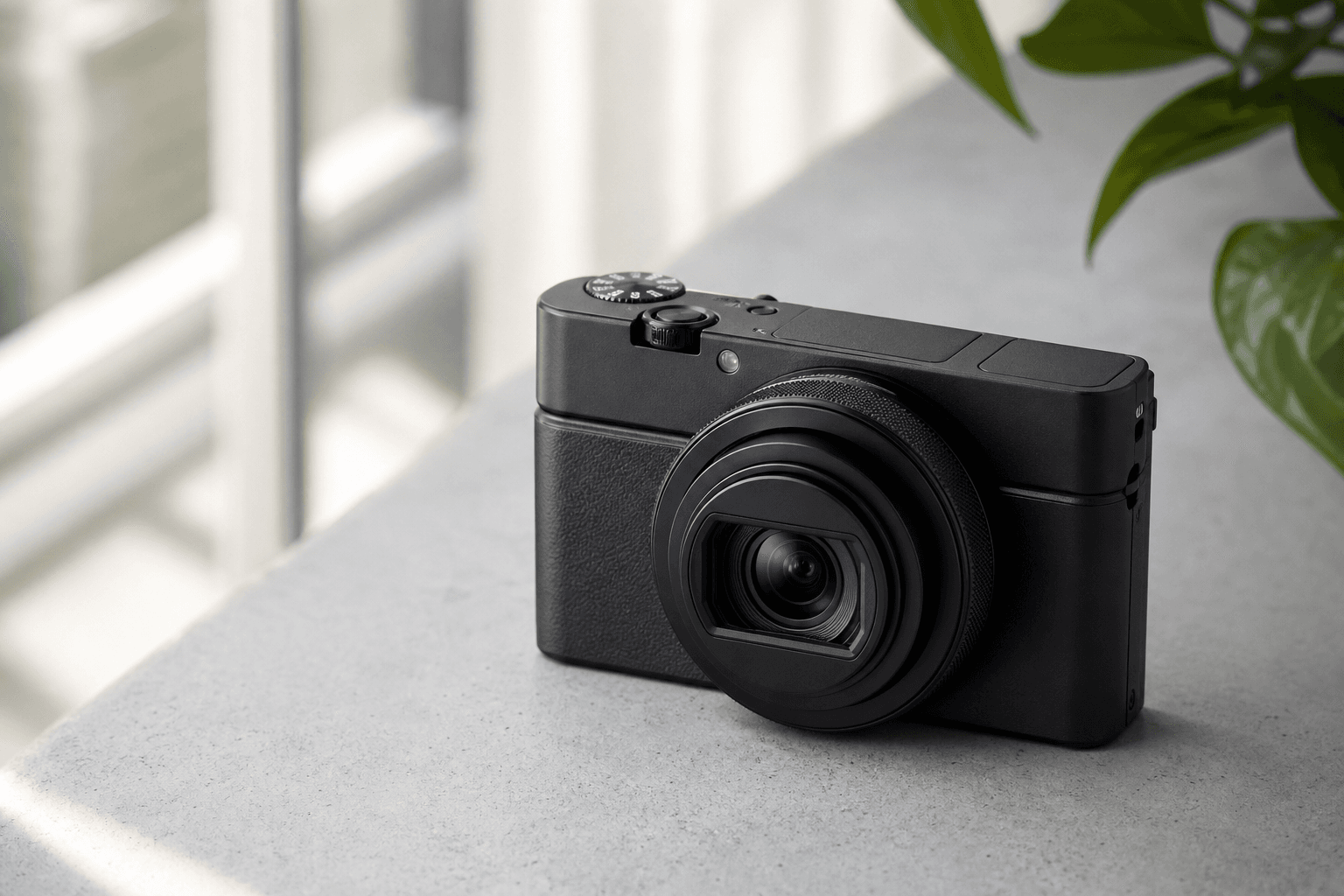
ZV-1 or RX100 VII — which is better?
Different jobs. ZV-1 series: vlog in front of the lens, mic, Product Showcase. RX100 VII: travel/street stills, telephoto to 200mm, viewfinder, aggressive AF. Details in the RX100 VII review — choose by priority, not by specs alone.
When is the Sony ZV-E10 II worth it instead of the ZV-1?
When you want interchangeable lenses, better low-light quality and system growth — and you're willing to accept size and complexity. For "one camera, done," the ZV-1 compact stays more relaxed. Orientation also under compact mirrorless cameras and in the vlog camera guide.
Is the ZV-1 good for beginners?
Yes, if your goal is clearly vlog/content in front of the lens. Menus and AF are learnable; Product Showcase helps immediately. For pure photo beginners without a video focus, there are often cheaper or more flexible paths — see camera for beginners.
Which SD card fits the Sony ZV-1?
For 4K, a solid UHS-I card with V30 is enough in most cases. Capacity and speed class details are in the best SD card for camera guide.
What's the difference from the ZV-1A?
The ZV-1A largely follows Gen-1 logic (including a 24–70-like setup and OIS character), often cheaper and with a different bundle. Before buying, check specs and what's in the box — the decision hinges on feature logic, not just the letter in the name.
Does the ZV-1 work as a travel camera?
Conditional: compact yes, but no viewfinder and limited telephoto. For travel stills with zoom and EVF, the RX100 VII or our best travel camera overview is usually the better category.
Affiliate links marked with * — Amazon product links use partner ID martinkleinhe-20. I earn a small commission if you buy through these links; there's no extra cost to you. The assessments are based on hands-on practice, manufacturer specs and the consensus from reviews and user reports — no brand sponsored this article.
Newsletter

Stay in the loop.

Camera and photography news, honest gear tests and new articles — in your inbox. Infrequent but relevant. No spam, unsubscribe anytime.

Keep reading

From the journal.

Fotograf, Martin Fernando Mera Kleinheinz · Franz-Bork-Straße 21, 30163 Hannover · 0179 4085297