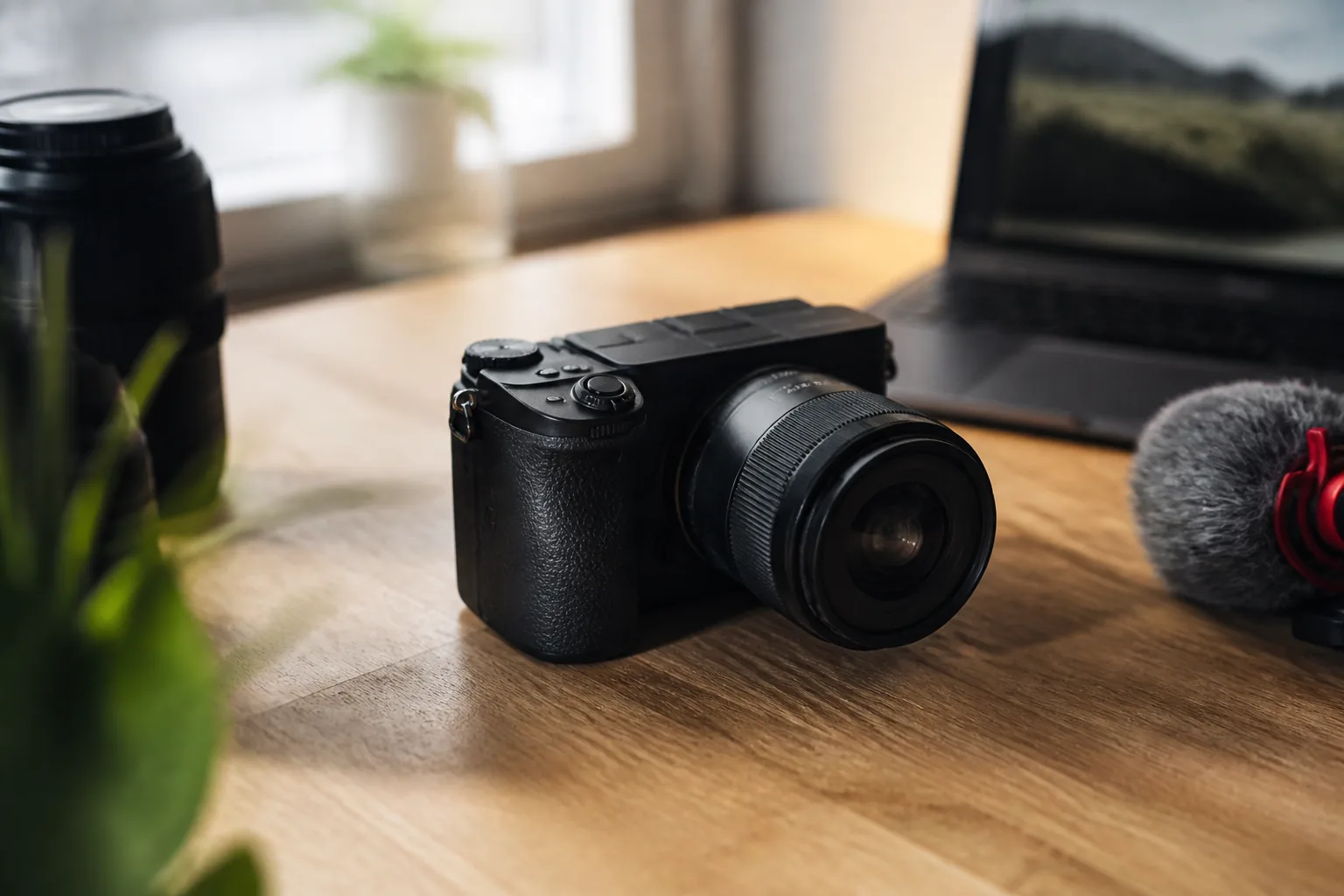
Numbers say little about how the camera feels when you shoot travel, content and everyday stills and video. Here’s the practice check: viewfinder, stabilization, weight, battery and menus.
- Viewfinder — gold in sun and hybrid work
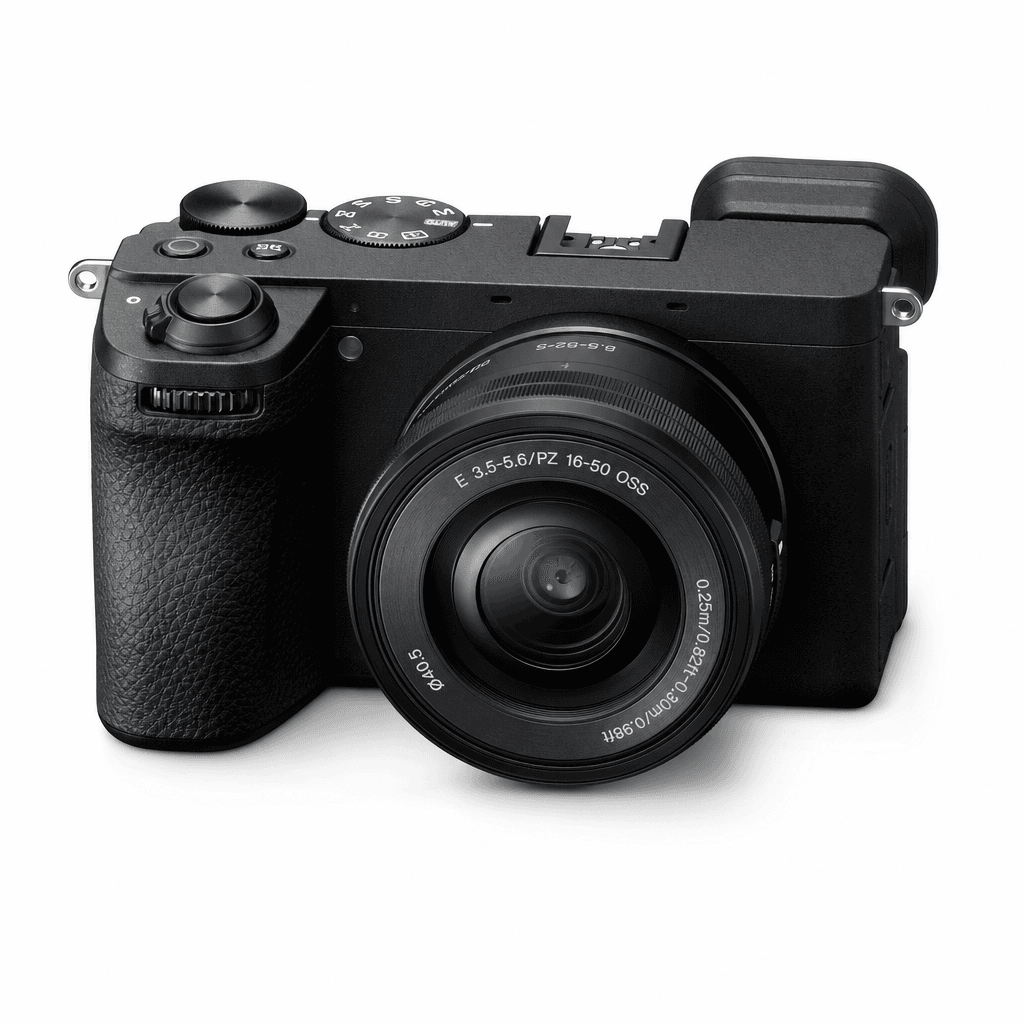
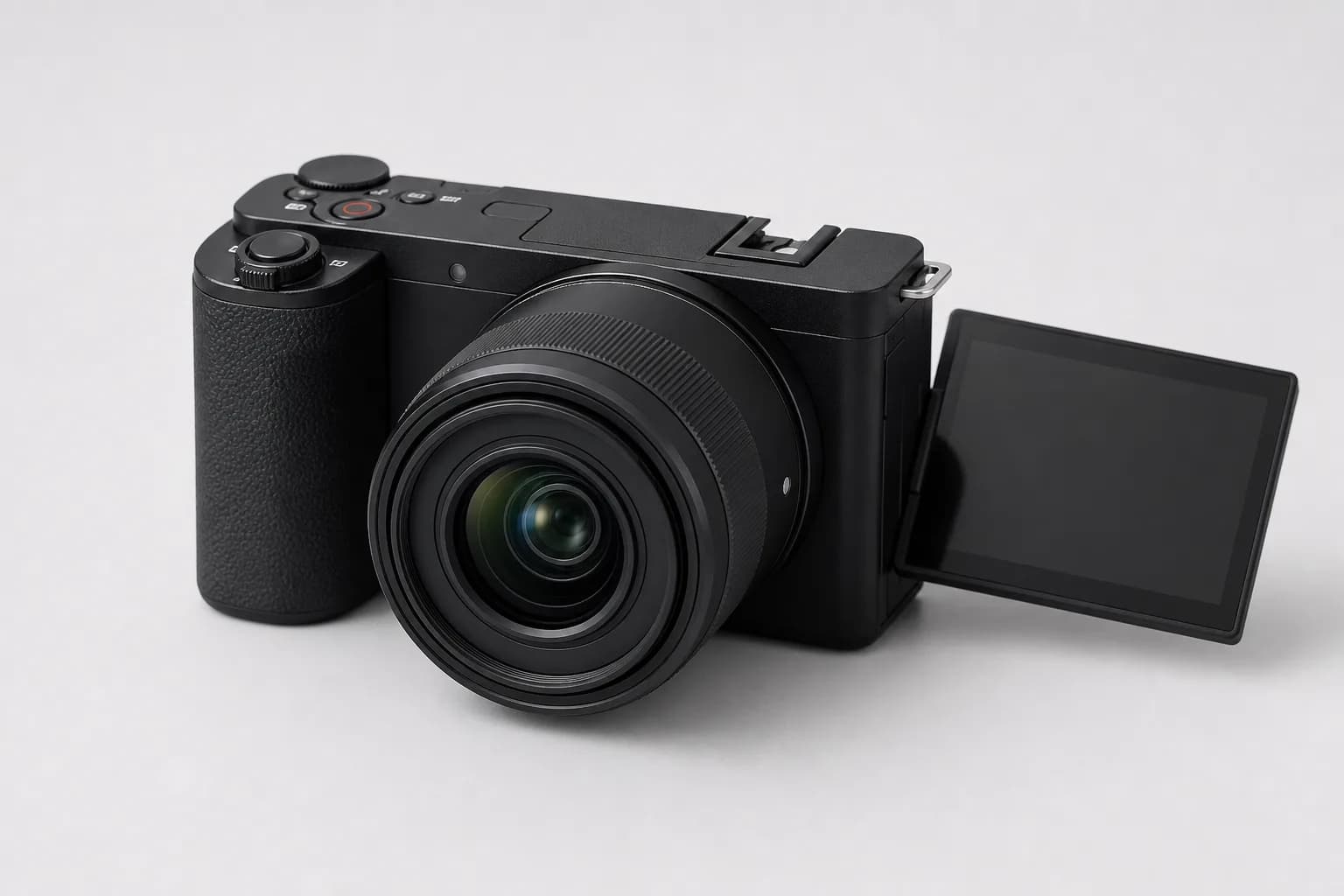
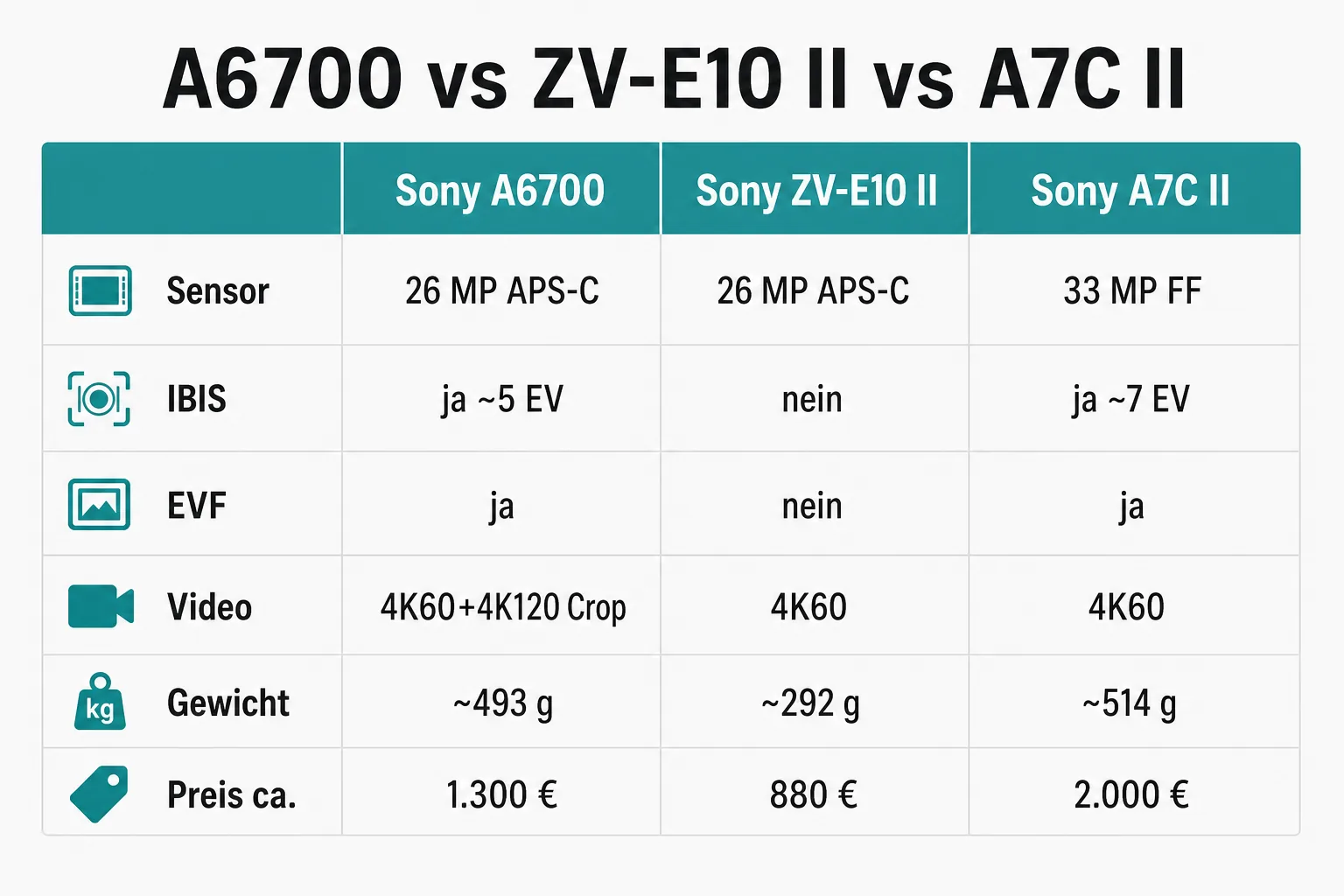
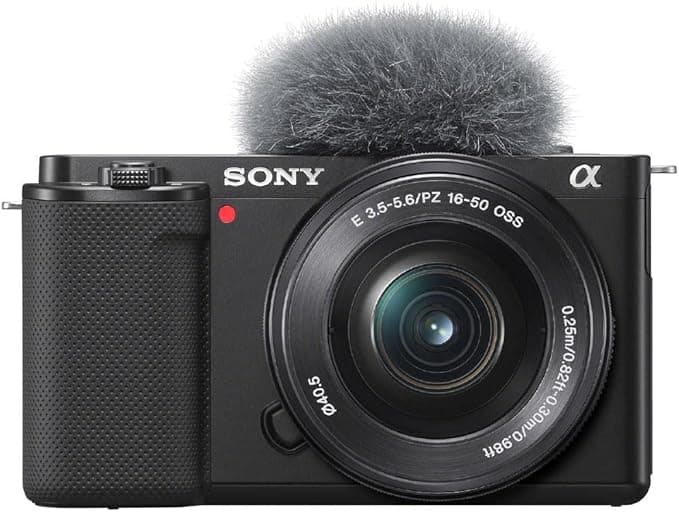
- The electronic viewfinder helps for stills and hybrid: exposure and focus without a washed-out screen. The ZV-E10 II skips this on purpose — content often runs in front of the lens on the flip screen. Anyone who works with the camera to their eye feels the A6700 advantage immediately.
- In-body stabilization (~5 stops)
- Five axes make handheld video and stills at short shutter speeds calmer — even with lenses that have no stabilizer of their own. The ZV-E10 II has no IBIS: then gimbal, lens OSS or steady technique help. Absolute values are lab (CIPA); in practice it means you shoot and film more relaxed.
- Size & weight (~493 g)
- Light enough for hybrid everyday and travel light, grippy enough for confidence. Versus the ZV-E10 II (~292 g) it’s noticeably more camera. Versus many full-frame bodies, APS-C stays handier — see compact mirrorless cameras.
- NP-FZ100 battery
- Same large battery type as many Sony hybrids: solid reserve versus compacts like the RX100 VII. Practice: a spare still belongs in the kit — especially on video days and travel.
- Menus & custom buttons
- Sony menus stay denser than many people like. The A6700 rewards setup: custom buttons, Fn menu, photo/video switching. Once configured, it works fast — unplanned it feels complex at first.
- One slot, heat, long takes
- Only one card slot: plan backup deliberately. On long high-bitrate takes, heat can matter — for typical hybrid everyday often fine; for marathon studio takes, plan honestly.
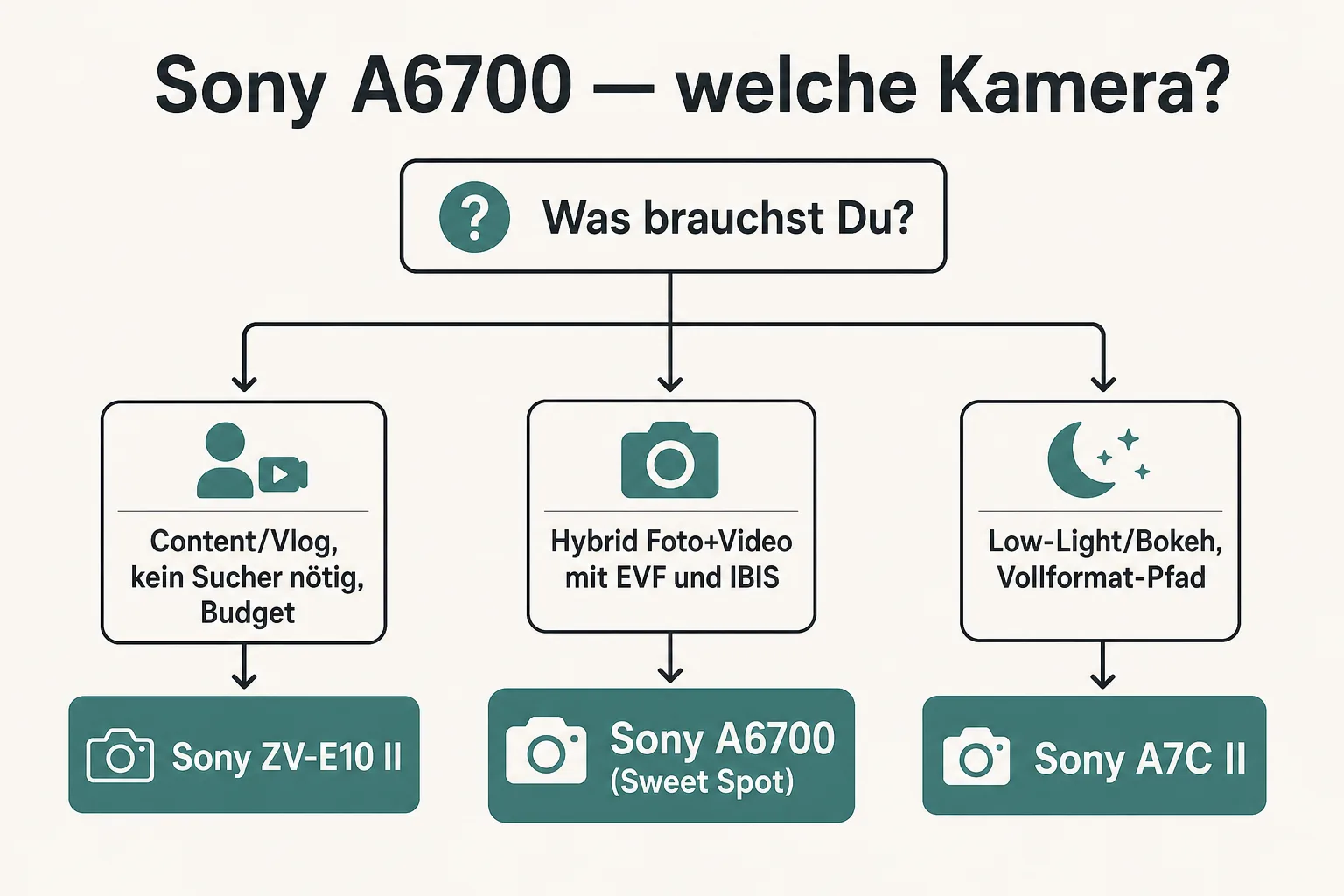
In reviews and user reports, AF, IBIS, video and hybrid features of the A6700 get frequent praise. The criticism repeats: price near compact full-frame entry, one slot, menu complexity, 4K120 with crop. That matches what I see: clear hybrid strengths, clear limits — no universal wonder and no substitute for a pocket camera.