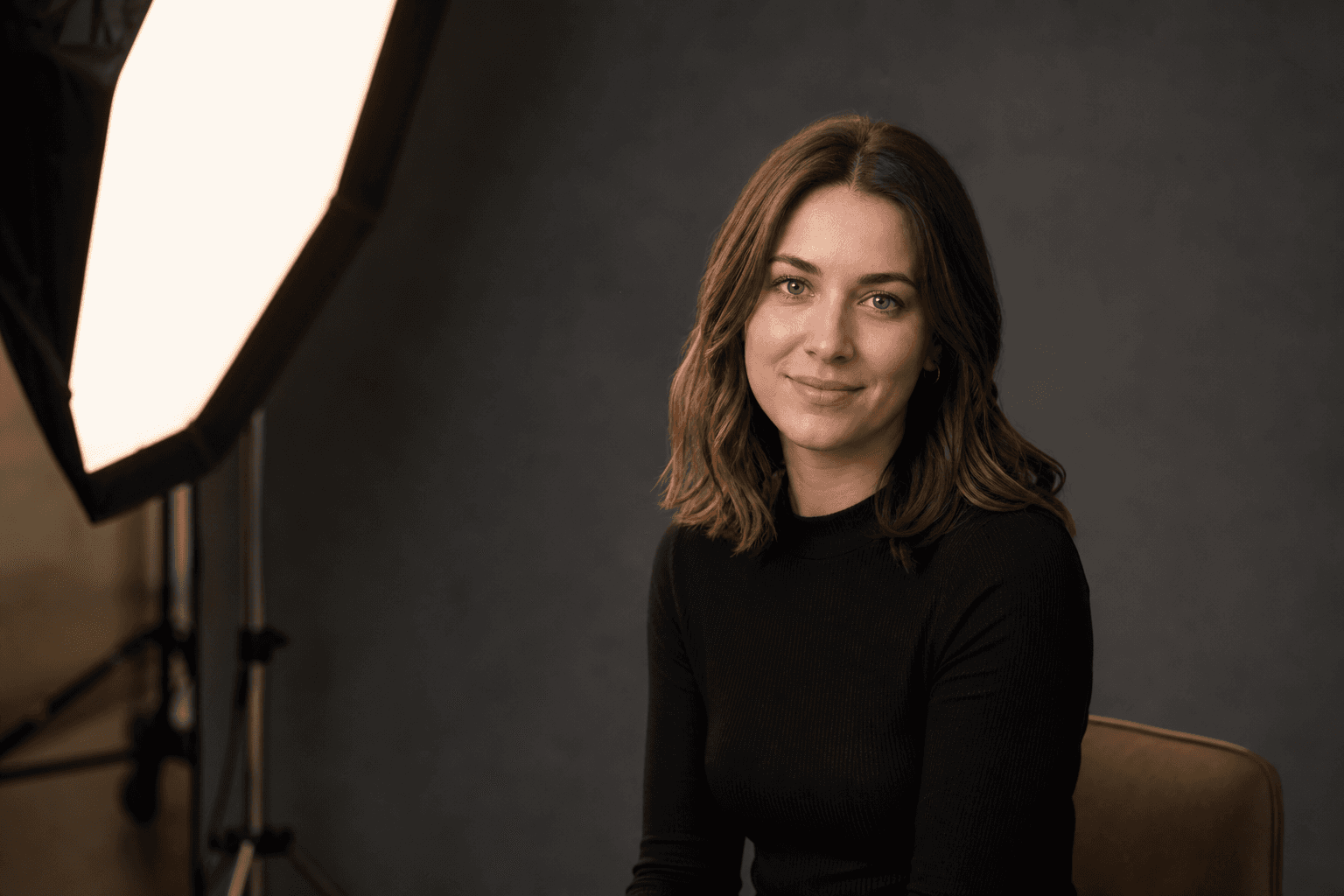
Headshot, half-length, couple portrait — which focal length for what, f/1.8 vs. f/1.4 explained clearly, plus budget and top picks for Canon, Sony, Nikon and Fuji.
Author
Martin Kleinheinz
Photographer · Hannover
Updated
August 22, 2026
"Which lens for portrait?" — usually followed by a link to a €2,000 f/1.2 L lens, as if everything below were a toy. In practice, portraits fail not because of missing bokeh, but because of wrong focal length, f/1.8 with soft eyes, and light from the wrong direction.
This guide explains in plain text why 50 mm, 85 mm and 35 mm work for different portrait types — not just which number goes in a table. Then come the concrete models for Canon, Sony, Nikon and Fujifilm, including the eternal question 50 mm f/1.8 vs. f/1.4.
You don't have to buy everything at once. Most people need one second lens after the kit — usually a 50 mm f/1.8. If you want to understand mm numbers from scratch: Which Focal Length for What. For landscape, macro or events: Which Lens for What.
00
Overview
Portrait lens at a glance
Portrait lenses differ mainly in focal length (which framing fits in the frame) and aperture (how much background blur and light you get). The table is not a shopping list — it shows the logic behind every recommendation. Section 02 explains each portrait type in more detail.
Portrait purpose
Focal length (FF eq.)
Aperture
Why?
Headshot / face
85–105 mm
f/1.8 – f/2.8
Flattering perspective, soft background
Half-length / upper body
50–85 mm
f/1.8 – f/2.8
Neutral, enough room for hands and clothing
Full body + environment
35–50 mm
f/2 – f/4
Subject in the scene, less distortion than 24 mm
Two people
50–70 mm
f/2 – f/2.8
Both in frame, some distance needed
Children (movement)
35–50 mm
f/2 – f/2.8
More room, faster follow focus
Full-frame equivalent — on APS-C use shorter physical focal length (section 02)
01
Core logic
Choosing a portrait lens the right way
For portraits, what counts is the distance between you and the face — not the DXOMark ranking. Too close with 35 mm: nose and forehead look emphasised. Too far with 135 mm without intent: everything looks compressed. 85 mm is the sweet spot for headshots, 50 mm for half-length — that's not a marketing rule, it's perspective.
Primes (50 mm, 85 mm) are ideal for portrait: faster, cheaper, better for learning. A 24–70 mm f/2.8 can do portraits — but it's heavier, pricier and one stop slower than a 50/1.8. A zoom pays off if you shoot reportage portraits at events; for dedicated portrait work, almost always a prime.
Crop sensors (APS-C) extend effective focal length: 50 mm on Sony ZV-E10 behaves like ~75 mm full frame — often an advantage for portraits. A native 50 mm f/1.8 on crop almost replaces an 85 mm full-frame lens. More on mm numbers: Which Focal Length for What.
02
Portrait
Which lens for portrait?
Portrait is not one thing. A LinkedIn headshot needs a different focal length than a full-body portrait by the lake. The wrong choice distorts faces (too wide from close up) or compresses everything (too tele from far away without intent). Then there's aperture: wide open f/1.4 looks like bokeh on Instagram — on the monitor often only the lashes are sharp.
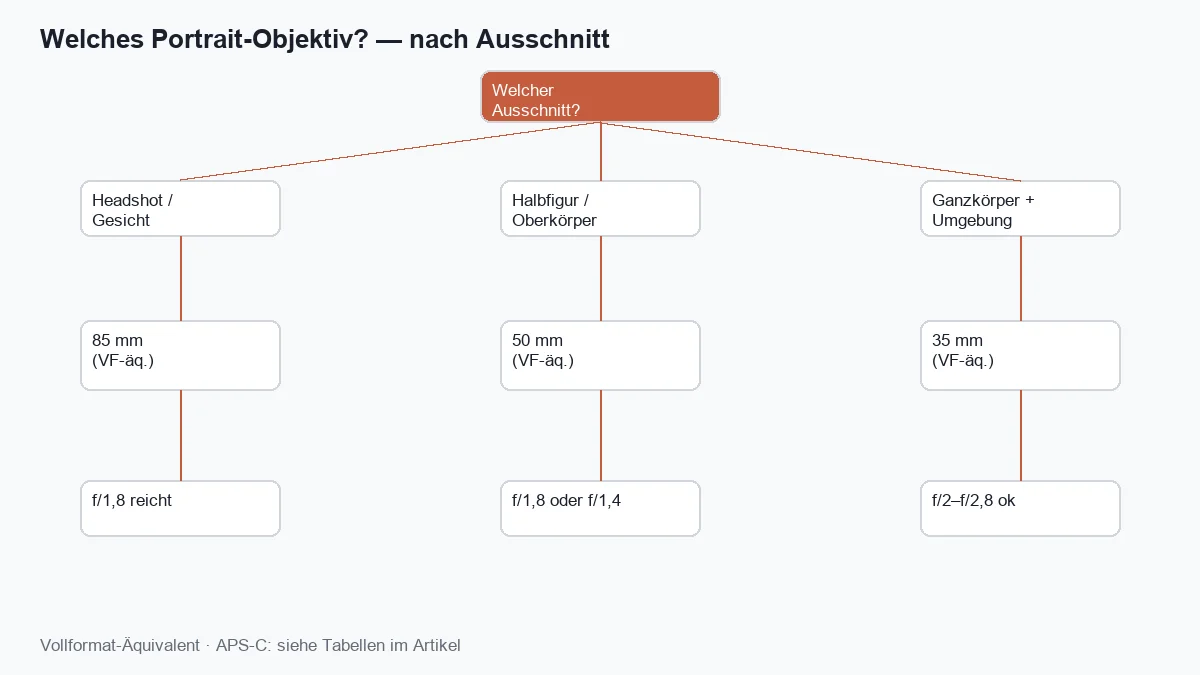
From framing to focal length — full-frame equivalent
Headshot & face
85 mm (full-frame equivalent) is the classic: the face looks proportional, nose and forehead are not emphasised like with 50 mm from short distance. The background falls away softly — without needing metres of distance. Aperture f/2–f/2.8, not always f/1.4: both eyes should be sharp, especially with a slightly turned head.
Half-length & upper body
50 mm is the all-rounder for half-length portraits: close enough for intimacy, wide enough for hands and clothing in frame. That's why 50 mm f/1.8 is the best-selling "second lens" worldwide. On APS-C, 35 mm physically often feels like ~50 mm — or you use 50 mm on crop (= ~75 mm) for tighter portraits without an 85 mm lens.
Environmental portrait
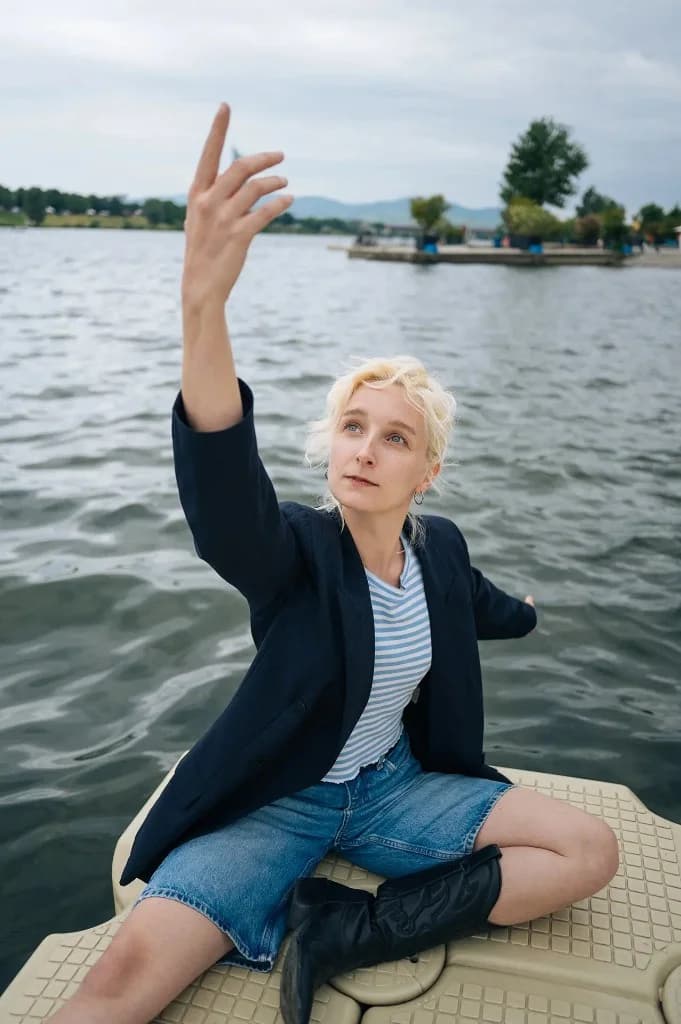
Subject in the scene — café, street, landscape in the background. 35 mm shows context without extreme edge distortion. Aperture f/2.8–f/4 so the background stays recognisable and not just a colour blob. Perspective and framing: Camera Perspectives.
50 mm vs. 85 mm at a glance: 50 mm feels neutral and documentary, 85 mm compresses slightly and flatters. Both work for portrait — for different distances. On APS-C multiply by 1.5× (Sony/Nikon/Fuji) or 1.6× (Canon):
Physical focal length
Canon APS-C (×1.6)
Sony/Nikon/Fuji APS-C (×1.5)
Portrait use
23 mm
≈ 37 mm
≈ 35 mm
Environmental portrait, tight
35 mm
≈ 56 mm
≈ 53 mm
Half-length, family
50 mm
≈ 80 mm
≈ 75 mm
Classic portrait on crop
56 mm (Sigma)
—
≈ 84 mm
Portrait classic APS-C
85 mm (FF)
85 mm full frame only
85 mm full frame only
Headshot full frame
Crop factor — why 50 mm on R10/ZV-E10 is already "portrait length"
Canon R10 / Sony ZV-E10: A 50 mm f/1.8 (or Sigma 56 mm f/1.4) often replaces an 85 mm full-frame lens. Full frame a7 / R8 / Z5: Start with 50 mm f/1.8, upgrade to 85 mm f/1.8 for headshots.
03
Aperture
f/1.8 vs. f/1.4 vs. f/1.2 — what's worth it?
Aperture controls two things: how much light enters the lens, and how deep the sharp zone is (depth of field). Smaller f-number = larger opening = more light and less sharpness in front of/behind the focus point. That's the "bokeh" effect — but it's not an end in itself. At f/1.4 on 85 mm, even the tip of the nose can be sharp while the ears go soft.
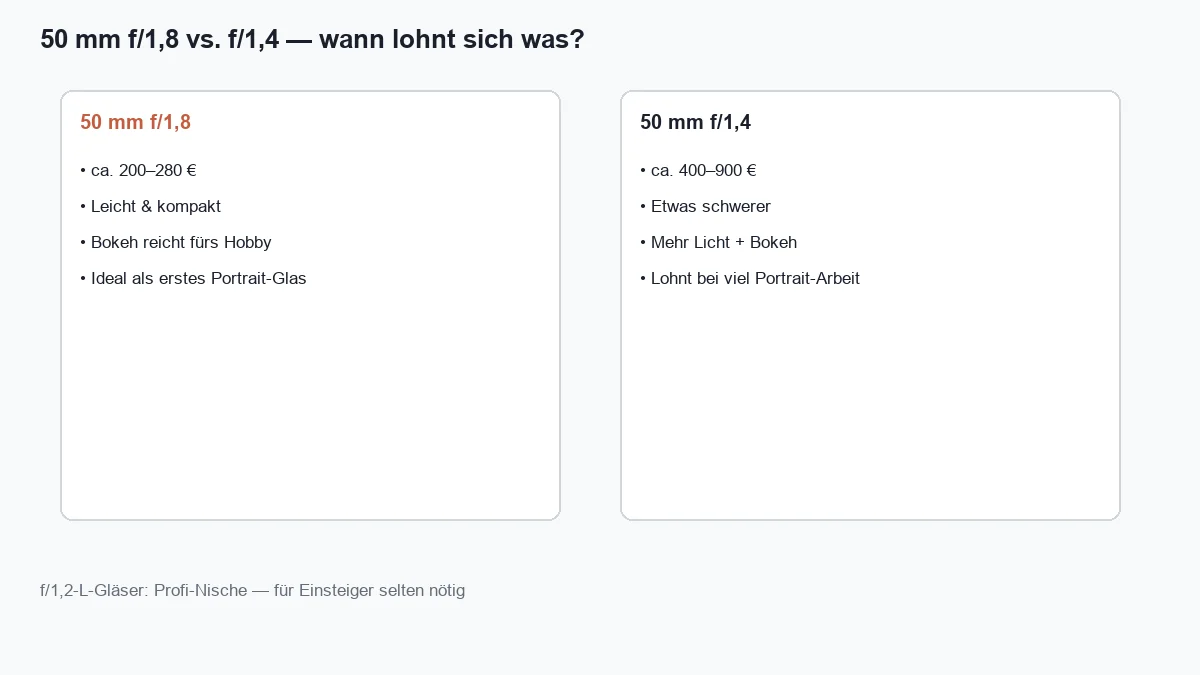
The step from f/1.8 to f/1.4 is noticeable — one stop more light, a bit more background blur. But it often costs twice as much, weighs more, and makes focusing harder. f/1.2 L lenses are status symbols and tools for pros in extremely low light — for hobby portrait, usually overkill.
50 mm f/1.8 vs. f/1.4 — for beginners f/1.8 is almost always enough
Aperture
Typical 50 mm price
Advantage
Disadvantage
f/1.8
€200–450
Light, affordable, enough bokeh
Less light than f/1.4
f/1.4
€400–1,000
More bokeh, 1 stop light
Heavier, narrower sharp zone
f/1.2 (L)
€1,500+
Maximum bokeh
Overkill for hobby, heavy
Aperture comparison — mid-range beats high-end for most people
Practical tip: Shoot portraits at f/2–f/2.8, not always f/1.4. Eyes stay sharp, bokeh is still beautiful. f/1.4 only when you deliberately want one eye sharp or have extremely little light.
04
Canon
Canon RF — affordable & recommended
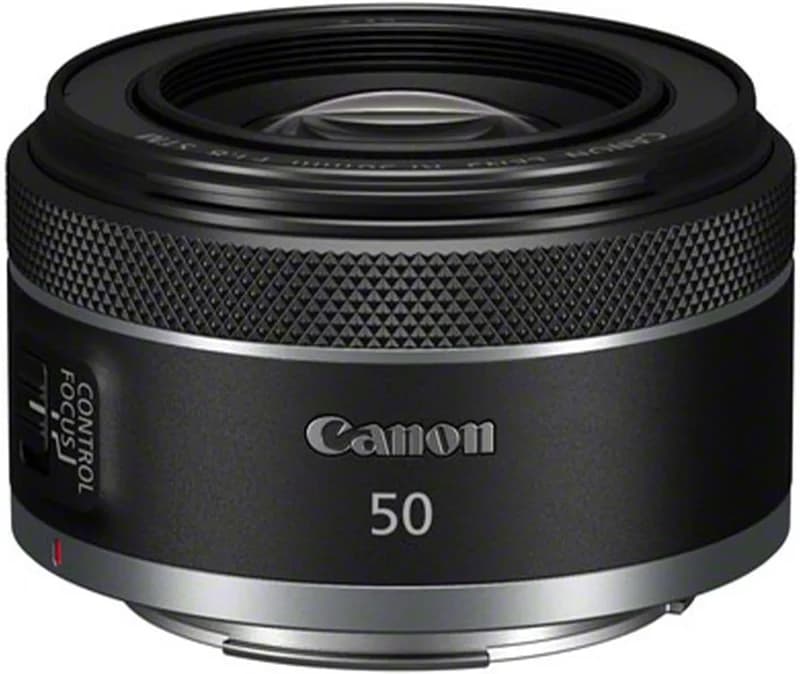
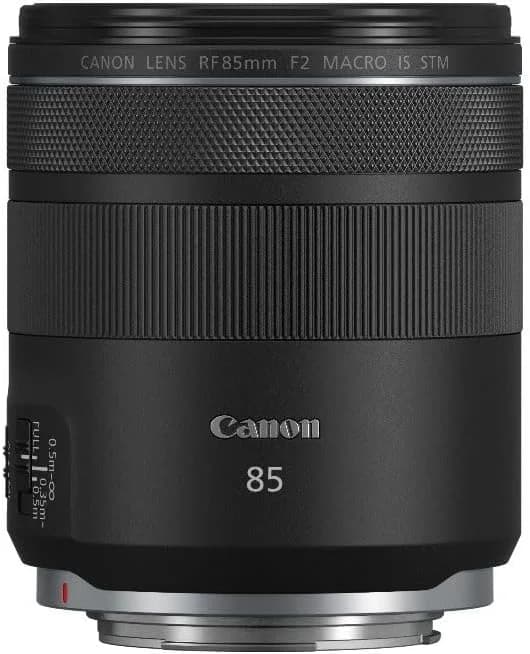
Canon RF (R8, RP, R6 …) and RF-S (R10, R50 …) have a growing prime ecosystem. For portrait, mid-range glass is enough — no L f/1.2 needed. The RF 50 mm f/1.8 is the classic entry; if you mainly shoot faces, the RF 85 mm f/2 is hard to beat.
Purpose
Budget
Best pick
Approx. price
First portrait lens
RF 50 mm f/1.8 STM
—
~€220
Headshot full frame
RF 85 mm f/2 Macro IS
RF 85 mm f/2 Macro IS
~€600
APS-C portrait (R10)
RF 50 mm f/1.8 (≈80 mm eq.)
RF 50 mm f/1.8
50/1.8 ~€220
f/1.4 upgrade
—
Sigma 50 mm f/1.4 DG DN (adapter/RF)
~€850
Canon RF portrait lenses 2026
Canon RF Portrait
Budget · Top Pick
**RF 50 mm f/1.8** — first buy for almost every Canon user. **RF 85 mm f/2** — when headshots are your main subject (full frame). Amazon partner links*.
Vergleich
Canon
Canon RF 50 mm f/1.8 STM
Canon
Canon RF 85 mm f/2 Macro IS STM
Bild
Empfehlung
Budget Pick
Top Pick
Sensor
50 mm · full frame
85 mm · full frame
ISO-Bereich
f/1.8 – f/22
f/2 – f/22 · macro to 0.5×
Autofokus
approx. 160 g
approx. 500 g
Detail
approx. €220
approx. €600
Stärken
+Very affordable
+Compact
+Good AF for the price
+Ideal for faces
+In-lens IS
+Macro bonus
Schwächen
−No image stabilisation
−f/1.8 bokeh weaker than f/1.4
−Narrow angle indoors
−More expensive than 50/1.8
Geeignet für
Canon RF beginners — all-round portrait and first fast lens.
Canon RF full frame — classic portraits and headshots.
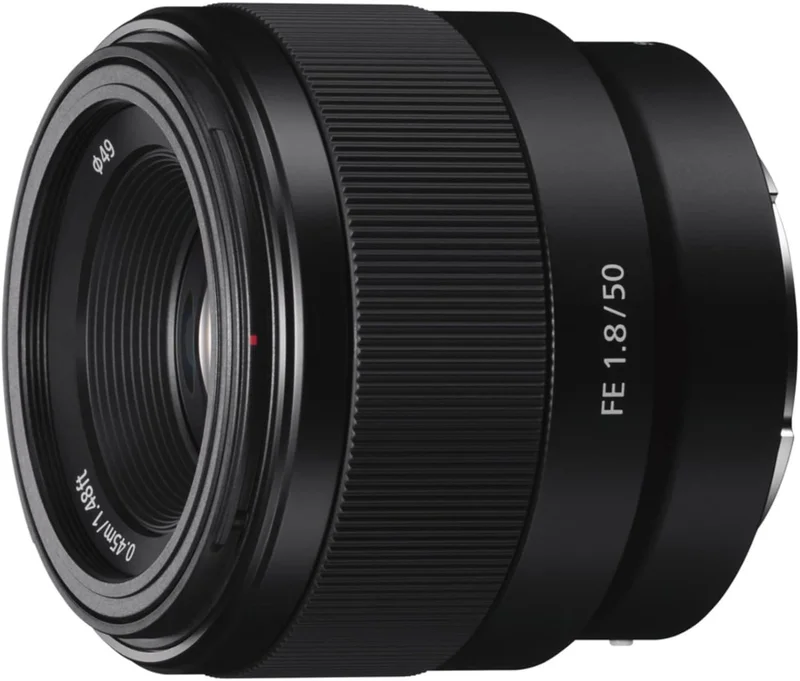
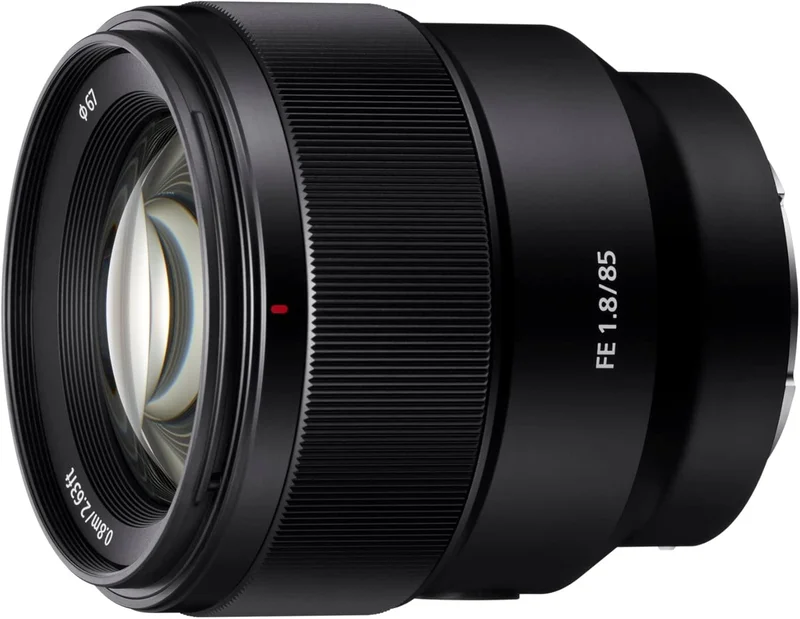
Sony E covers full frame (a7, a7C) and APS-C (ZV-E10 II, a6700). The FE 50/1.8 is legendarily cheap and unbeatable for half-length portraits. On APS-C, Sigma 56/1.4 beats any kit zoom — ≈85 mm full-frame feel for headshots.
Purpose
Budget
Best pick
Approx. price
Full frame entry
FE 50 mm f/1.8
—
~€200
Headshot full frame
FE 85 mm f/1.8
FE 85 mm f/1.8
~€500
APS-C portrait
—
Sigma 56 mm f/1.4 DC DN
~€450
f/1.4 upgrade 50 mm
—
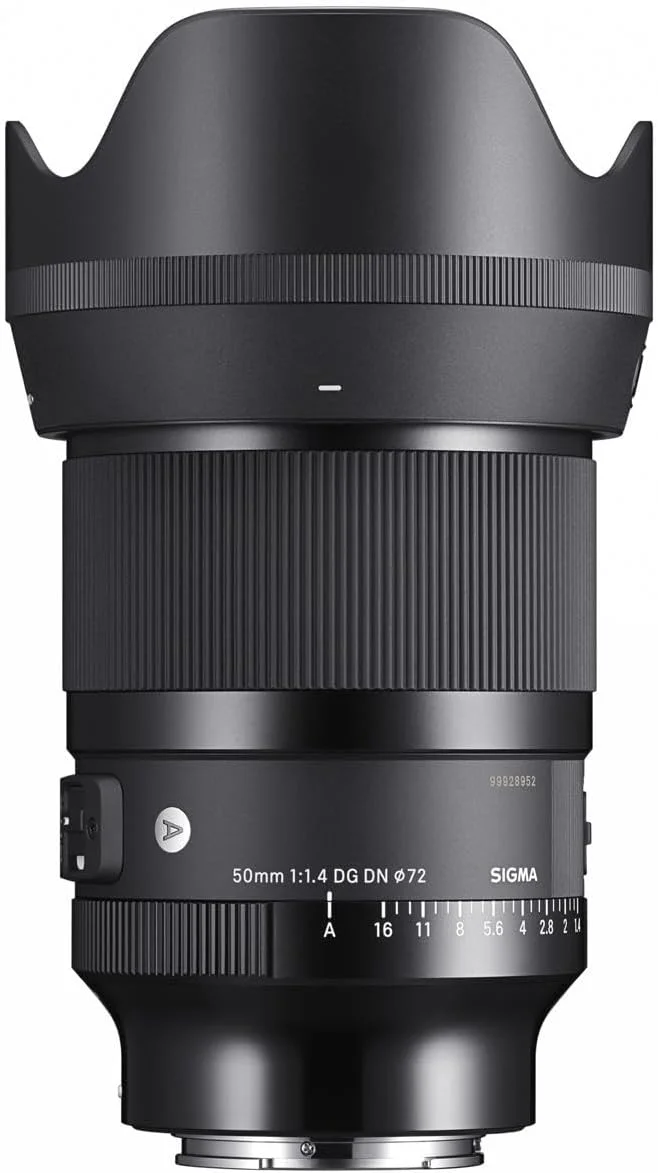
Sigma 50 mm f/1.4 DG DN Art
~€850
f/1.4 upgrade 85 mm
—
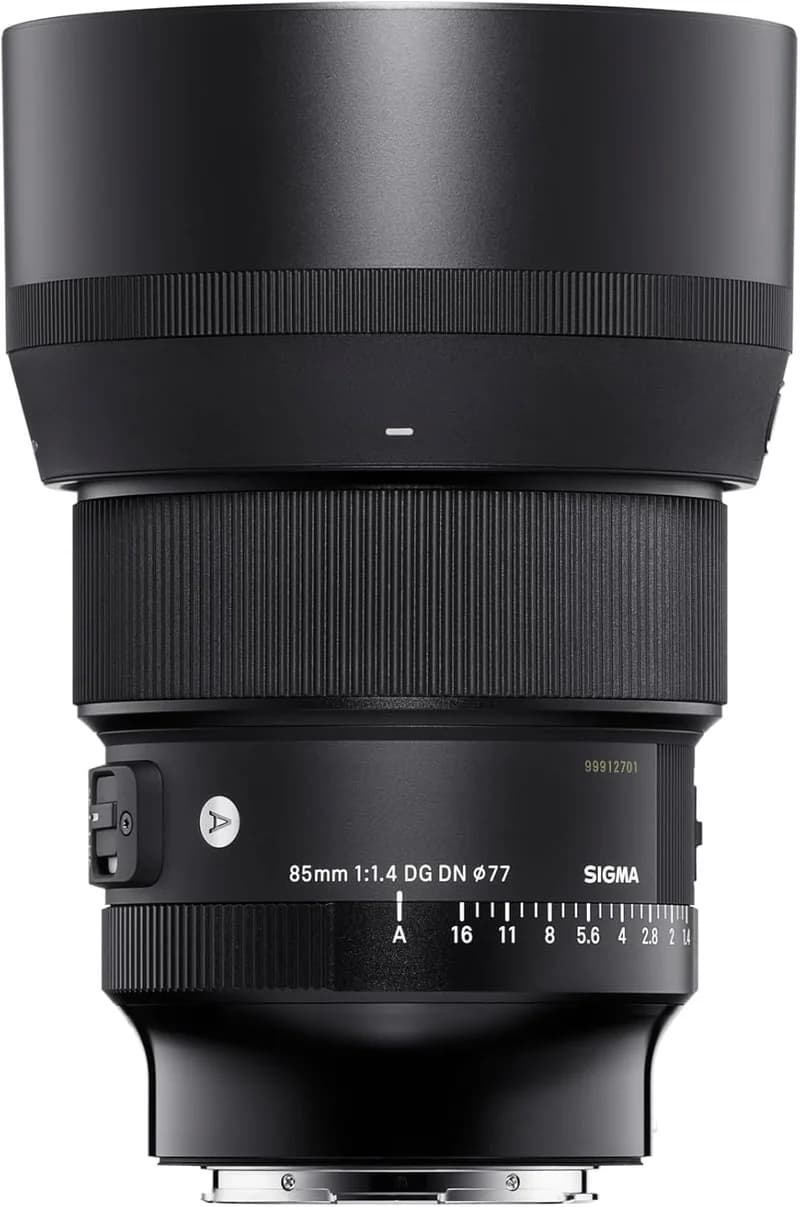
Sigma 85 mm f/1.4 DG DN Art
~€1,000
Sony E portrait lenses 2026
Sony FE Portrait
Budget · Top Pick
**FE 50 mm f/1.8** — unbeatable entry. **FE 85 mm f/1.8** — classic portrait lens. APS-C: also **Sigma 56 mm f/1.4** (section 08).
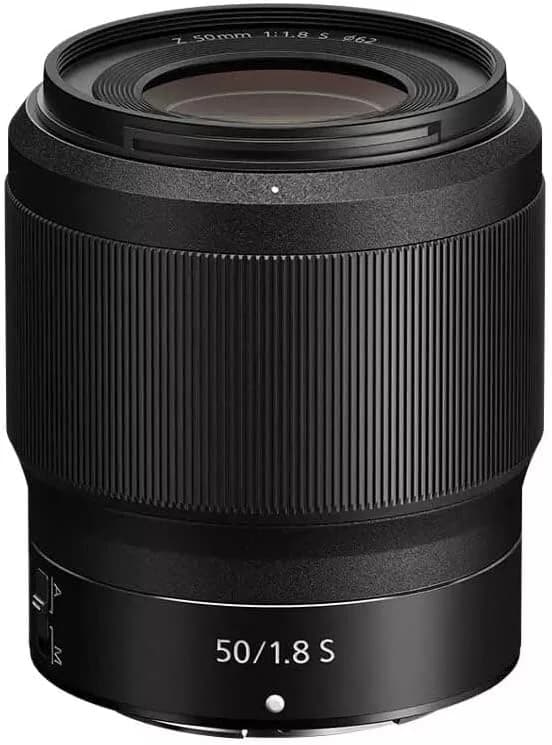
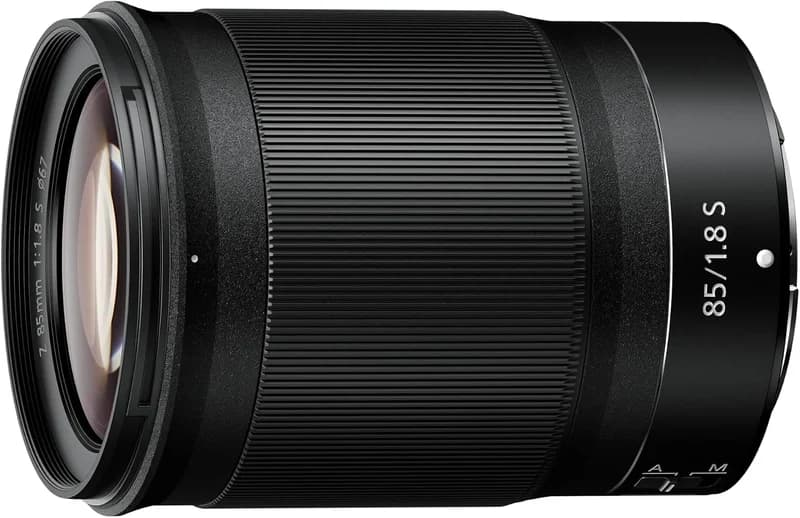
Nikon Z has no cheap 50/1.8 like Canon — but S-line quality already in mid-range. Z 50 mm f/1.8 S is one of the sharpest 50/1.8 on the market; Z 85 mm f/1.8 S is the reference for headshots on Z mount.
Purpose
Budget
Best pick
Approx. price
All-round portrait
Z 50 mm f/1.8 S
Z 50 mm f/1.8 S
~€450
Headshot
Z 85 mm f/1.8 S
Z 85 mm f/1.8 S
~€700
APS-C (Z fc, DX)
Z DX 24 mm f/1.7
Sigma 56 mm f/1.4 (FTZ)
varies
Budget alternative
Z 40 mm f/2
—
~€250
Nikon Z portrait lenses 2026
Nikon Z Portrait
Budget · Top Pick
**Z 50 mm f/1.8 S** — sharp all-round portrait lens. **Z 85 mm f/1.8 S** — reference for headshots on Z mount.
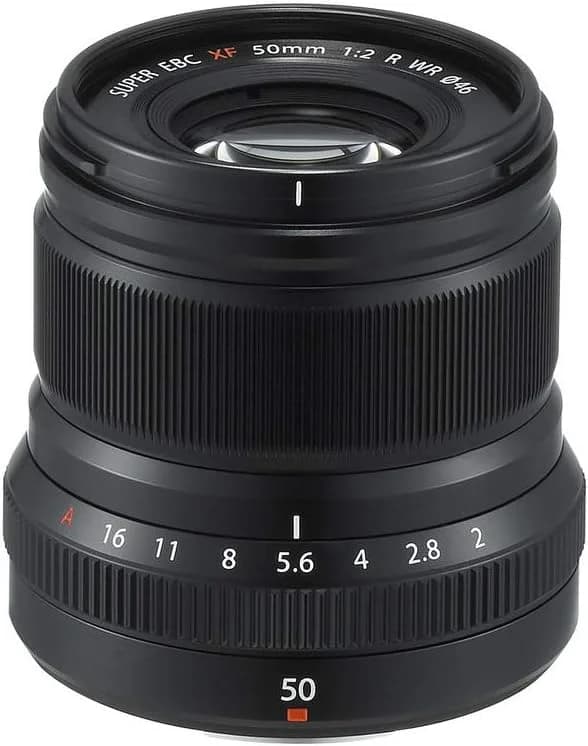
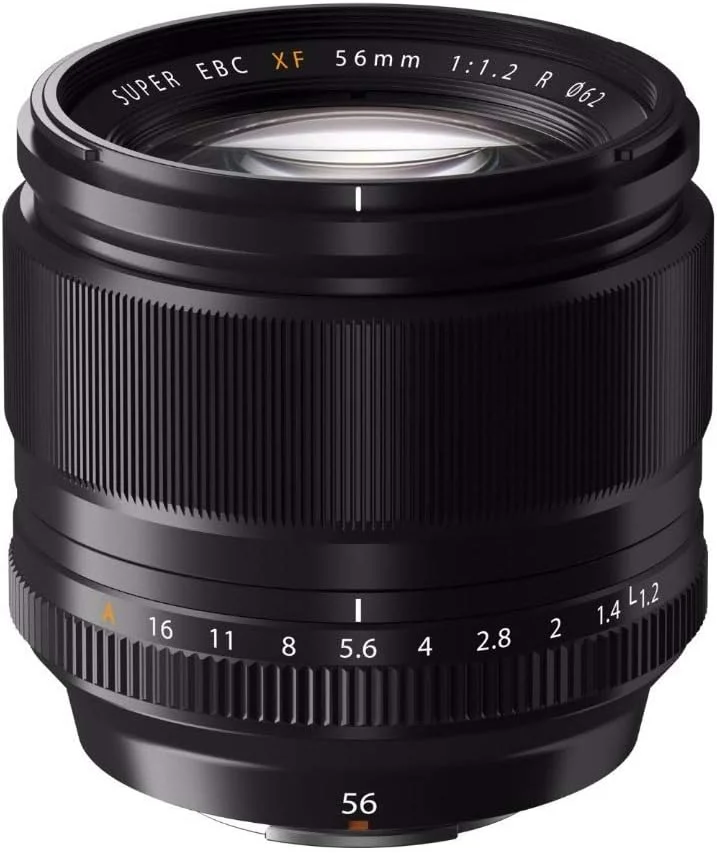
Fuji X has no full-frame comparison — 1.5× crop built in. The f/2 WR lenses are affordable and compact; XF 56/1.2 is the premium portrait lens with creamy bokeh at ≈85 mm full-frame equivalent.
Purpose
Budget
Best pick
Approx. price
Portrait budget
XF 50 mm f/2 R WR (≈75 mm eq.)
—
~€400
Even cheaper
XC 35 mm f/2 (≈53 mm eq.)
—
~€200
Premium bokeh
—
XF 56 mm f/1.2 R WR (≈85 mm eq.)
~€900
Half-length / all-round
XF 35 mm f/2 R WR
XF 35 mm f/2 R WR
~€400
Fujifilm X portrait lenses 2026
Fujifilm X Portrait
Budget · Top Pick
**XF 50 mm f/2** — compact, weather sealed, ≈75 mm eq. **XF 56 mm f/1.2** — creamy bokeh for serious portrait work.
Vergleich
Fujifilm
Fujifilm XF 50 mm f/2 R WR
Fujifilm
Fujifilm XF 56 mm f/1.2 R WR
Bild
Empfehlung
Budget Pick
Top Pick
Sensor
50 mm · ≈75 mm eq.
56 mm · ≈85 mm eq.
ISO-Bereich
f/2 · weather resistant
f/1.2 – f/16
Autofokus
approx. 200 g
approx. 445 g
Detail
approx. €400
approx. €900
Stärken
+Very compact
+WR
+Beautiful Fuji colours
+Creamy bokeh
+Strong low light
+Fuji colour look
Schwächen
−f/2 slightly less bokeh than f/1.4
−AF not the fastest line
−Expensive
−Heavier than f/2 lenses
−AF slower than newest XF
Geeignet für
Fujifilm X-T/X-S — portrait without budget stress.
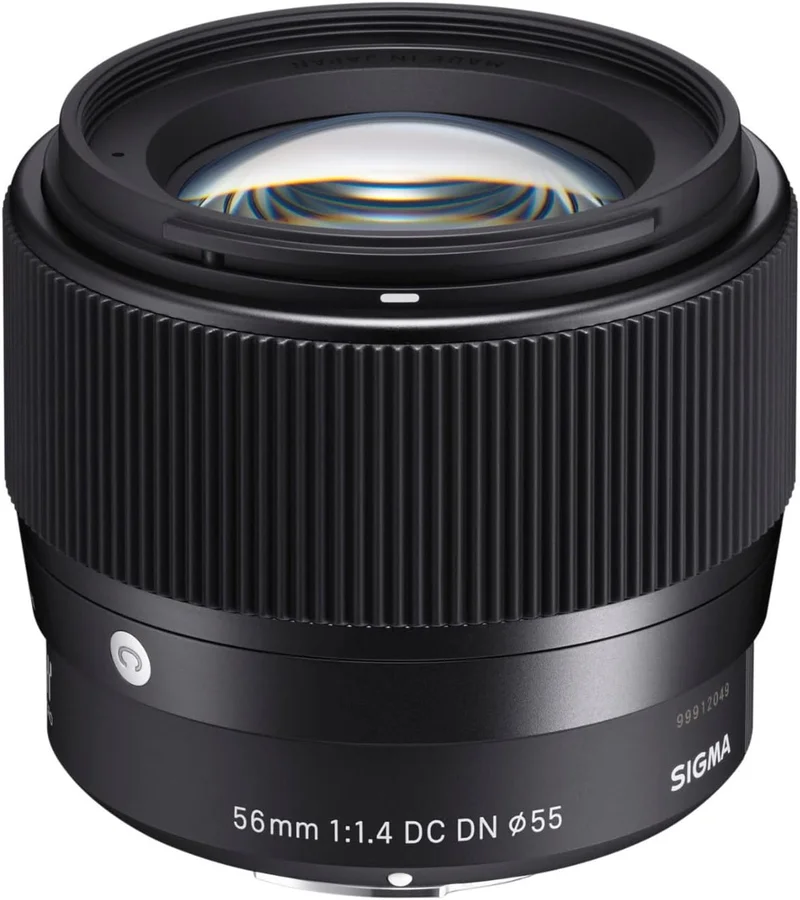
Sigma Contemporary/Art delivers excellent portrait glass on Sony E (and partly L mount) — often cheaper than OEM f/1.4. Especially important for APS-C: the Sigma 56 mm f/1.4 is the standard among portrait photographers with crop sensors.
Sigma Portrait
APS-C · 50/1.4 · 85/1.4
**56 mm f/1.4** — APS-C portrait (~85 mm eq.). **50 mm f/1.4 Art** — f/1.8 upgrade full frame. **85 mm f/1.4 Art** — alternative to Sony GM.
Portrait lens buying is not a spreadsheet problem. Ask yourself one question: Which framing are you missing with your kit zoom? Soft half-length portraits in low light → 50 mm f/1.8. Faces look distorted from close up → 85 mm (FF eq.). Subject should stand in the scene → 35 mm. More than one problem at once? Solve the most common first — don't buy three lenses at once.
1. Choose framing
Headshot → 85 mm eq. · Half-length → 50 mm eq. · With environment → 35 mm eq. (section 02).
2. System table
Sections 04–07: budget row for your brand — usually 50 mm f/1.8.
3. Aperture realistically
Buy f/1.8, shoot at f/2–f/2.8. f/1.4 only after you've maxed out the 50/1.8.
4. Six weeks with just this lens
Master one lens — then 85 mm or f/1.4 upgrade.
You have …
Buy first …
Optional later …
Canon RF full frame
RF 50 mm f/1.8
RF 85 mm f/2
Canon RF APS-C (R10)
RF 50 mm f/1.8
RF 85 mm f/2 when switching to full frame
Sony FE full frame
FE 50 mm f/1.8
FE 85 mm f/1.8
Sony APS-C
Sigma 56 mm f/1.4
FE 85 mm when switching to full frame
Nikon Z
Z 50 mm f/1.8 S
Z 85 mm f/1.8 S
Fujifilm X
XF 50 mm f/2
XF 56 mm f/1.2
Final decision — one clear first portrait lens per system
10
FAQ
Common questions
50 mm or 85 mm for portrait?+
50 mm for half-length and first lens — 85 mm (FF eq.) for headshots and flattering faces. On APS-C, 50 mm already behaves like short tele.
Is 50 mm f/1.8 enough?+
For hobby portrait and social: yes. f/1.8 delivers enough bokeh at f/2–f/2.8. f/1.4 pays off with regular portrait work and low light.
Which portrait lens for Canon R10?+
RF 50 mm f/1.8 STM (~€220) — on APS-C ≈80 mm, ideal for portraits. Later RF 85 mm f/2 if you switch to full frame or want more distance.
Sigma 56 mm or OEM 50 mm?+
Sigma 56 mm f/1.4 on Sony APS-C: sharper, more bokeh, ≈85 mm eq. — worth it from ~€450. OEM 50/1.8 is the cheaper all-rounder.
Zoom or prime for portrait?+
Prime: faster, cheaper, better for learning. Zoom (24–70 f/2.8) only if you want reportage portraits in one lens — heavier and pricier.
Which aperture for sharp eyes?+
Not blind f/1.4 — f/2 to f/2.8 for headshots. Always focus on the nearer eye.
Affiliate links marked with * — lens recommendations are based on practice, not commission. Amazon partner ID: martinkleinhe-20.
◆ Newsletter
Stay in the loop.
Camera and photography news, honest gear tests and new articles — in your inbox. Infrequent but relevant. No spam, unsubscribe anytime.