Flash Photography: The Buying & Practice Guide for Hobby Photographers 2026

Speedlight, strobist, studio strobe and continuous light — which flash type for which subject, how to learn bounce and off-camera, and which setup is worth it for you. With product recommendations and buying decision at the end.

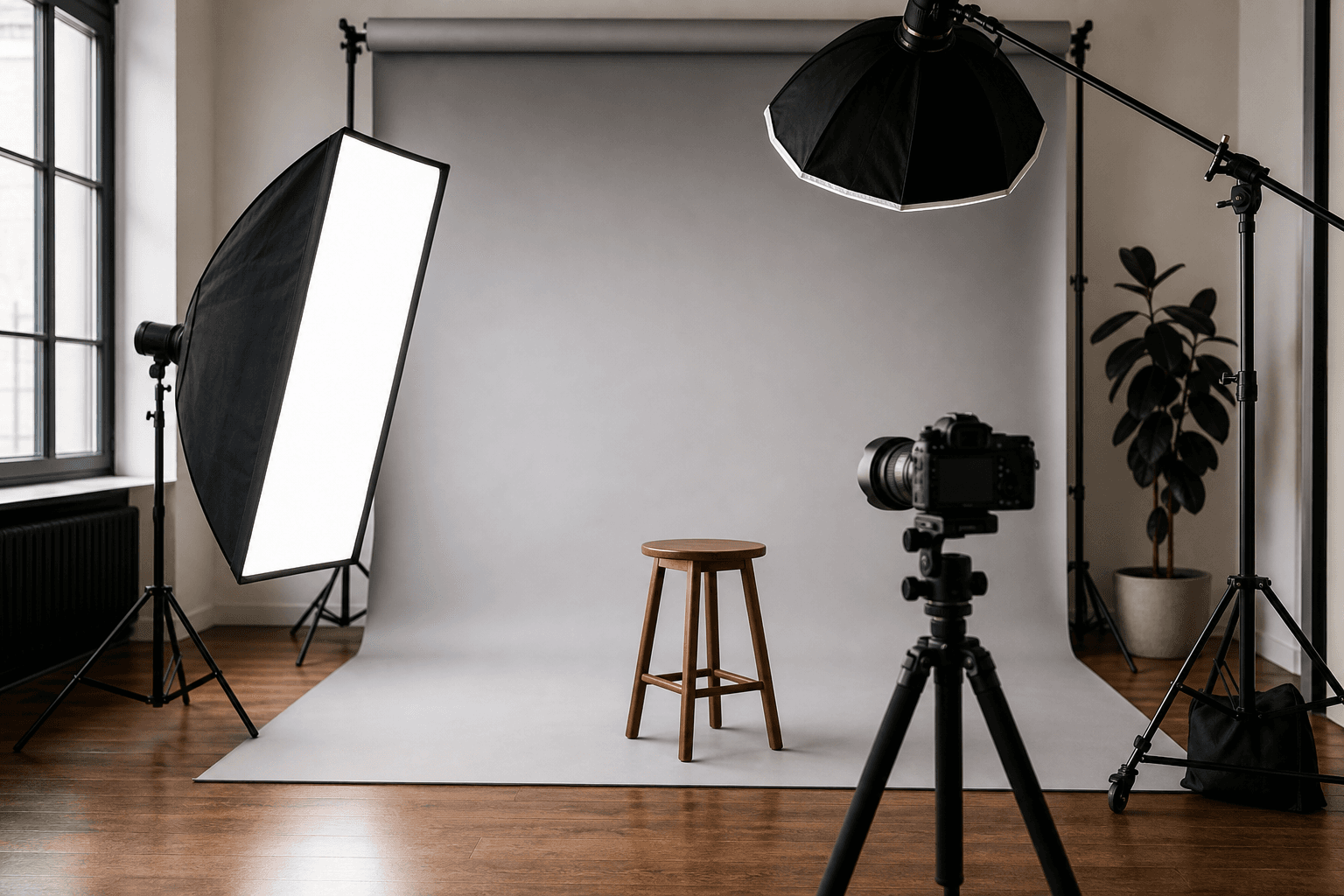
Flash photography — studio and speedlight setup for hobby photographers
Martin Kleinheinz
Author
Martin Kleinheinz
Photographer · Hannover
Updated
July 3, 2026

You master window light, know your aperture — and still it fails in the evening hall, at the family party or when you want a portrait with controlled light. Then flash becomes the next level. Not because you must go pro, but because shaping light is the biggest jump after the exposure triangle.

This guide explains all relevant flash types for hobby photographers: what a speedlight can do, when an AD200 makes sense, why studio strobes in the living room are often overkill — and how you choose the right system without a bad purchase. Exposure deep dive: Exposure Triangle. Event practice: Event Photography Tips.

In the end you should be able to make a clear buying decision — not the most expensive flash, but the right one.
00
Entry

Why flash photography is the next level

Natural light is beautiful — until it's missing, falls wrong or isn't controllable. Flash gives you light on demand: bright enough for sharp images, soft enough (when done right) for flattering portraits, consistent enough for ten group photos in a row.

More light
Lower ISO, freeze motion, smaller aperture — sharper, cleaner images.
Control
You decide where light falls — not the ceiling in the community hall.
Consistency
Ten photos in a row with same exposure — hard with window light alone.
Freedom
Shoot at night, in basements, at weddings — without ISO 12,800.

The price: learning curve. Used wrong, flash looks "flashed" — hard, flat, red eyes. Used right, nobody sees you flashed. That's what separates hobby from next level.

01
Overview

The flash types — an overview

"Flash" isn't one thing. This table is your compass — before you drown in product lists:

TypePowerSizePrice (approx.)Typical for
Built-in flashVery weakIn camera€0Emergency — rarely good
SpeedlightGN 50–60Compact€150–350Events, family, bounce
Compact strobist (e.g. AD200)200 WsHandheld€300–450Off-camera portrait
Battery studio (e.g. AD600)600 WsMedium€600–900Events, outdoor, large modifiers
Mains studio strobe300–1000 WsHeavy€200–2000Studio, fixed location
Ring flashMediumOn lens€100–500Macro, medical, specialty

Flash types compared — power, use, budget

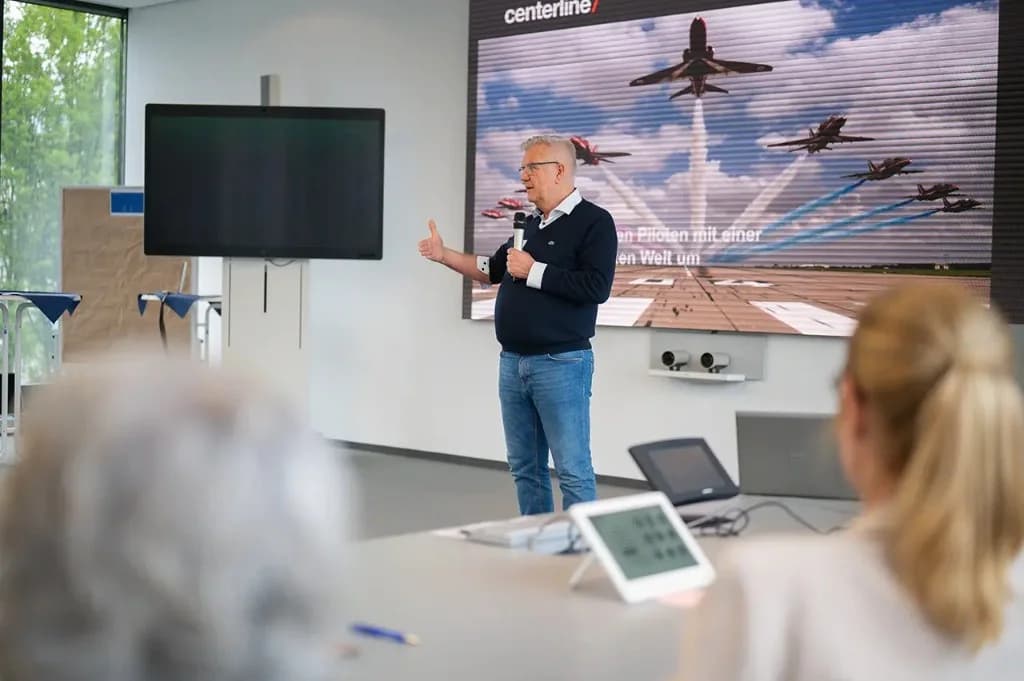
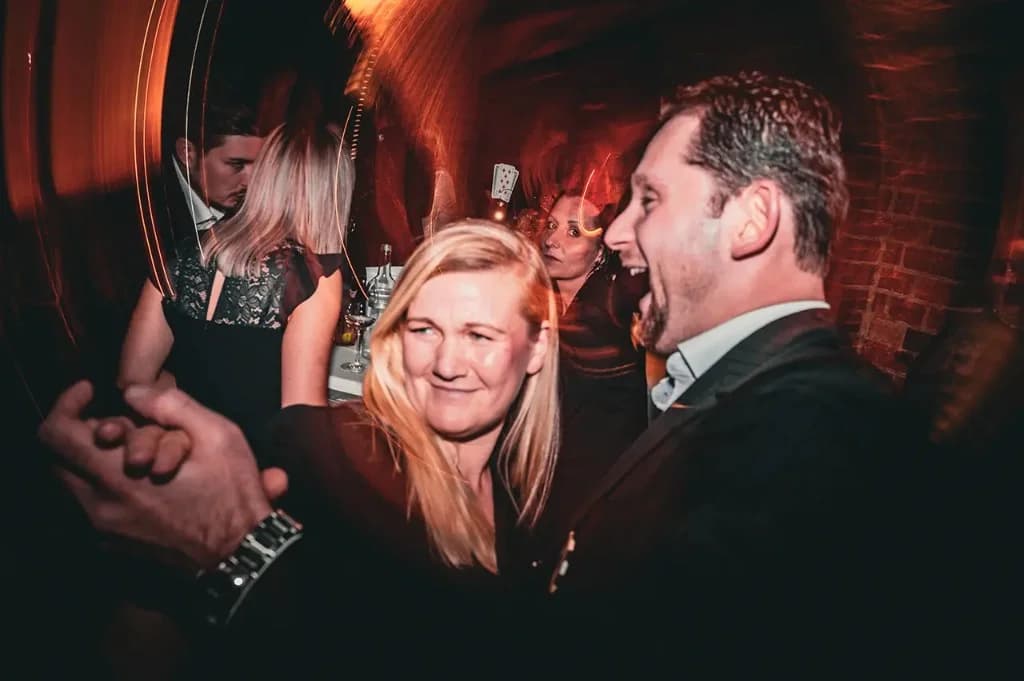
Event photography with flash — typical speedlight use
The entry for most hobbyists: a tilt/swivel speedlight
03
Speedlight

Speedlight — the entry for 80% of hobbyists

A speedlight sits on the hot shoe — or via radio beside it. It's stronger, the head tilts and swivels for bounce flash off ceiling or wall. That's the technique that lifts indoor event photos from amateur to "looks professional".

Brands & systems

  • OEM (Canon Speedlite, Nikon SB, Sony HVL) — expensive, perfect compatibility
  • Godox / Flashpoint — 60–70% cheaper, same features for hobby
  • Yongnuo — budget, sometimes inconsistent — only for experimenting

My hobby recommendation: Godox V1 or V860III in your camera system version. TTL for fast situations, manual for consistent group photos. Details in Product recommendations below.

Bounce flash — your standard technique

Instead of flashing at your subject: head up or to the side — light bounces off white ceiling or wall and falls softly from above. That's 80% of all indoor flash in my event practice. In depth: Event Photography — Bounce Flash.

Top Pick
Godox V1
Bewertung
4.7
/ 5,0
★★★★
Basierend auf 0 verifizierten Bewertungen
Godox

Godox V1

Best entry: round speedlight

Round head like a mini softbox, strong TTL, tilt/swivel for bounce flash and radio-compatible for off-camera. The Godox V1 is my standard recommendation for hobby photographers who want indoor events, family parties and portraits with controlled light — without studio budget.

Was überzeugt
  • +Softer light than classic rectangular speedlights
  • +Strong enough for bounce on normal ceilings
  • +Radio for off-camera without extra transmitter (version dependent)
Was Du wissen solltest
  • Larger than flat entry-level flashes
  • Pick system version (Canon RF, Sony E, Nikon Z)
Editor's Statement

My #1 speedlight for hobby — events, portrait, bounce

Verfügbar bei
04
Strobist

Compact strobist — AD200 class

Between speedlight and studio monster: compact battery strobes like the Godox AD200 Pro. 200 watt-seconds — significantly more power than a speedlight, still fits in a backpack. With softbox on stand: home studio portrait without mains plug.

Stronger than speedlight
Larger softboxes, more distance to subject, less ISO.
Off-camera standard
On stand, sideways — classic portrait light.
Manual dominates
TTL sometimes possible — but manual teaches you light properly.

For whom: Hobby photographers who take portrait seriously — not just bounce on camera, but deliberate light placement. Not needed for occasional family parties.

Portrait Pick
Godox AD200 Pro
Bewertung
4.6
/ 5,0
★★★★
Basierend auf 0 verifizierten Bewertungen
Godox

Godox AD200 Pro

Compact strobist flash — portrait level-up

Between speedlight and large studio strobe: 200 Ws, interchangeable heads (round/rectangular/bare bulb), compact enough for location. Ideal when you shoot off-camera portraits with softbox and need more power than a speedlight — without a home studio.

Was überzeugt
  • +Significantly more power than speedlight
  • +Compact for trips and location
  • +Lots of accessories (softbox, octa) available
Was Du wissen solltest
  • Separate radio trigger needed (e.g. XPro)
  • No TTL in all setups — learn manual
Editor's Statement

Sweet spot for hobby portrait & small home studio

Verfügbar bei
05
Power

Battery studio strobe — AD400 / AD600 class

600 Ws and more: for large rooms, outdoor portrait in daylight (flash as fill or main), large octaboxes. Godox AD600 Pro is the entry into pro power — no cables, Bowens mount for large modifiers.

For whom: Ambitious hobbyists, side-gig event photographers, location shoots. Not for: living-room portrait with 60×60 softbox — AD200 or speedlight is enough.

Event and location photography — high flash power in difficult light
More power = larger rooms, outdoor, heavy modifiers
Power
Godox AD600 Pro
Bewertung
4.6
/ 5,0
★★★★
Basierend auf 0 verifizierten Bewertungen
Godox

Godox AD600 Pro

Power for events & outdoor

600 Ws battery studio strobe — when speedlights hit their limits: large rooms, outdoor in daylight, big softboxes. For ambitious hobbyists and side-gig photographers who need events or location portraits with serious light. Heavier and pricier — but a different league.

Was überzeugt
  • +Overpowers speedlights on power
  • +Outdoor portrait in sun possible
  • +Bowens mount — large modifiers
Was Du wissen solltest
  • Bigger, heavier, more expensive
  • Overkill for living-room portrait only
Editor's Statement

When GN 60 isn't enough — events & large locations

Verfügbar bei
06
Studio

Mains studio strobe — fixed location

Classic studio monolights with mains power: affordable starters (Godox QT, Neewer) to pro (Profoto D2, Broncolor). Advantage: unlimited flashes without battery stress, often faster recycle. Downside: only where there's a socket.

SegmentExamplesFor whom
Entry mainsGodox QS, Neewer VisionHome studio with fixed space
Mid-rangeGodox QT600II, Flashpoint StudioSemi-pro, small studio
ProProfoto, Broncolor, ElinchromAgency, rental, full-time

Mains studio strobe — when the flash doesn't travel

As a hobbyist with a fixed photo room a cheap mains monolight + softbox + stand can be a great setup — often cheaper than AD600. For travel: battery version.

07
Distinction

Flash vs continuous light — don't confuse them

LED panels and continuous softboxes are not flash — they shine continuously. Advantage: you see light live in the viewfinder. Downside: weaker, harder with motion, great for video.

FlashContinuous (LED)
UsePhoto — frozen momentsVideo, reels, slow portrait
See lightOnly after the shot (or modelling lamp)Live in viewfinder
Power in daylightCan overpower sunRarely except strong LED
Learning curveHigher — short exposureLower — like window light

Flash and continuous light solve different problems

08
Technique

Technique basics — what you need to know

TTL vs manual

ModeWhat happensWhen to use
TTLCamera meters, flash adjusts automaticallyEvents, reportage, changing distances
ManualYou choose 1/1, 1/4, 1/8 …Group photos, same distance, studio

TTL = fast. Manual = consistent.

Sync, HSS & shutter speed

Classic flash sync: usually 1/200–1/250 s max — otherwise black bar. HSS (High Speed Sync) allows shorter times with bright background — eats flash power. For indoor events: 1/125 s, aperture f/2.8–f/4, ISO 400–800 — starting point from event cheatsheet.

Off-camera flash

Flash not on camera — on stand sideways, from above, behind subject. You need a radio trigger (Godox XPro). That's the creative jump after bounce. Trigger recommendation:

Accessory
Godox XPro II
Bewertung
4.5
/ 5,0
★★★★
Basierend auf 0 verifizierten Bewertungen
Godox

Godox XPro II

Radio trigger for off-camera

Without a radio trigger your flash stays on camera — bounce works, creative light barely. The XPro II sits on the hot shoe, controls multiple Godox flashes, TTL or manual. Essential accessory once the flash comes off the body.

Was überzeugt
  • +Reliable radio control
  • +Affordable for what it does
  • +Multiple flash heads controllable
Was Du wissen solltest
  • Only makes sense with compatible Godox flash
  • Choose camera-specific version
Editor's Statement

Add when off-camera is on the agenda

Verfügbar bei

Understanding guide number (GN)

Guide number 60 at ISO 100 roughly means: more range and power than GN 40. For normal rooms GN 50–60 is enough. Calculators on this site: Flash Distance Close-Up · Open Flash Calculator.

09
Use cases

Which flash for which scenario?

You shoot …Recommended flashTechniqueBudget
Family party, birthday indoorsSpeedlight (V1/V860)Bounce off ceiling€150–300
Wedding / event as guestSpeedlight + diffuserBounce, TTL€200–350
Portrait at homeAD200 + softbox OR speedlight off-cameraSidelight, manual€250–500
Outdoor portrait in sunAD200 or AD600HSS or shade + fill€400–900
Fixed home studioMains monolight or AD200Softbox, reflector€200–600
Macro / medical / ring lookRing flash or small speedlightDirect, diffused€100–400
Club fair, large hallAD600 or 2× speedlightBounce, high ceiling€600–1,000

Scenario → flash type — buying decision at a glance

10
Decision

The buying decision in 5 steps

Before you order — these five questions in order. Answer honestly, don't wishful think:

1. Where do I shoot most?
Indoor events → speedlight. Portrait at home → AD200. Only outdoors daytime → maybe reflector first instead of flash.
2. Must the flash travel?
Yes → battery (speedlight, AD series). No, fixed room → mains monolight cheaper.
3. TTL or want to learn manual?
Both ideal. Budget only: speedlight with TTL enough to start.
4. Off-camera planned?
Yes → budget radio trigger (XPro). No → speedlight first, trigger later.
5. What's my real budget incl. accessories?
Speedlight + diffuser: ~€200. AD200 + softbox + stand + trigger: ~€600–800. AD600: ~€900+.
If your answer …Then buy …
"Events & family indoors"Godox V1 or V860III
"Portrait with softbox"Godox AD200 Pro + XPro + 60×60 softbox
"Large rooms / outdoor"Godox AD600 Pro
"Fixed studio, rarely travel"Mains monolight (Godox QS/QT)
"I'm unsure"V860III — cheapest sensible entry

Quick decision — one flash, not a cart of bad purchases

Comparison

The three most common hobby paths

Budget speedlight · Premium speedlight · Compact strobist — for most one column is enough.

Vergleich
Godox
Godox V860III
Godox
Godox V1
Godox
Godox AD200 Pro
Bild
Godox V860III
Godox V1
Godox AD200 Pro
EmpfehlungValue PickTop PickPortrait Pick
SensorGN 60GN 60 (ISO 100, 105 mm)200 Ws
ISO-BereichYesYes — Canon / Nikon / Sony versionsGN 52 (with standard reflector)
AutofokusLi-ion — many shots per chargeRound · 180° swivelapprox. 560 g — portable
DetailGodox 2.4 GHz — pairs with XProLi-ion battery · built-in radio · HSSSoftboxes, beauty dish, gel filters
Stärken
  • +Affordable entry into system flashes
  • +Full bounce capability
  • +Large spare parts and accessory ecosystem
  • +Softer light than classic rectangular speedlights
  • +Strong enough for bounce on normal ceilings
  • +Radio for off-camera without extra transmitter (version dependent)
  • +Significantly more power than speedlight
  • +Compact for trips and location
  • +Lots of accessories (softbox, octa) available
Schwächen
  • Rectangular head — slightly harder direct light without modifier
  • Build less premium than V1 or OEM brands
  • Larger than flat entry-level flashes
  • Pick system version (Canon RF, Sony E, Nikon Z)
  • Separate radio trigger needed (e.g. XPro)
  • No TTL in all setups — learn manual
Geeignet fürBudget-conscious hobbyists learning flash basics.Hobby photographers: events, family, indoor portrait — first "real" flash.Hobby photographers with portrait focus who take off-camera seriously.
Wo kaufen
11
Products

Product recommendations — concrete, placeholder links

These models I use in workshops and at events — or recommend to hobbyists with a clear use case. Shop links follow; specs and placement are final.

Value Pick
Godox V860III
Bewertung
4.5
/ 5,0
★★★★
Basierend auf 0 verifizierten Bewertungen
Godox

Godox V860III

Budget speedlight with pro features

Classic speedlight form factor, TTL, HSS and swivel head — significantly cheaper than the V1. Those who want to learn bounce flash and off-camera without spending much start here. With mini softbox or diffuser it's a solid setup.

Was überzeugt
  • +Affordable entry into system flashes
  • +Full bounce capability
  • +Large spare parts and accessory ecosystem
Was Du wissen solltest
  • Rectangular head — slightly harder direct light without modifier
  • Build less premium than V1 or OEM brands
Editor's Statement

When budget is tight — still TTL & bounce

Verfügbar bei
Top Pick
Godox V1
Bewertung
4.7
/ 5,0
★★★★
Basierend auf 0 verifizierten Bewertungen
Godox

Godox V1

Best entry: round speedlight

Round head like a mini softbox, strong TTL, tilt/swivel for bounce flash and radio-compatible for off-camera. The Godox V1 is my standard recommendation for hobby photographers who want indoor events, family parties and portraits with controlled light — without studio budget.

Was überzeugt
  • +Softer light than classic rectangular speedlights
  • +Strong enough for bounce on normal ceilings
  • +Radio for off-camera without extra transmitter (version dependent)
Was Du wissen solltest
  • Larger than flat entry-level flashes
  • Pick system version (Canon RF, Sony E, Nikon Z)
Editor's Statement

My #1 speedlight for hobby — events, portrait, bounce

Verfügbar bei
Portrait Pick
Godox AD200 Pro
Bewertung
4.6
/ 5,0
★★★★
Basierend auf 0 verifizierten Bewertungen
Godox

Godox AD200 Pro

Compact strobist flash — portrait level-up

Between speedlight and large studio strobe: 200 Ws, interchangeable heads (round/rectangular/bare bulb), compact enough for location. Ideal when you shoot off-camera portraits with softbox and need more power than a speedlight — without a home studio.

Was überzeugt
  • +Significantly more power than speedlight
  • +Compact for trips and location
  • +Lots of accessories (softbox, octa) available
Was Du wissen solltest
  • Separate radio trigger needed (e.g. XPro)
  • No TTL in all setups — learn manual
Editor's Statement

Sweet spot for hobby portrait & small home studio

Verfügbar bei
Accessory
Godox XPro II
Bewertung
4.5
/ 5,0
★★★★
Basierend auf 0 verifizierten Bewertungen
Godox

Godox XPro II

Radio trigger for off-camera

Without a radio trigger your flash stays on camera — bounce works, creative light barely. The XPro II sits on the hot shoe, controls multiple Godox flashes, TTL or manual. Essential accessory once the flash comes off the body.

Was überzeugt
  • +Reliable radio control
  • +Affordable for what it does
  • +Multiple flash heads controllable
Was Du wissen solltest
  • Only makes sense with compatible Godox flash
  • Choose camera-specific version
Editor's Statement

Add when off-camera is on the agenda

Verfügbar bei
Power
Godox AD600 Pro
Bewertung
4.6
/ 5,0
★★★★
Basierend auf 0 verifizierten Bewertungen
Godox

Godox AD600 Pro

Power for events & outdoor

600 Ws battery studio strobe — when speedlights hit their limits: large rooms, outdoor in daylight, big softboxes. For ambitious hobbyists and side-gig photographers who need events or location portraits with serious light. Heavier and pricier — but a different league.

Was überzeugt
  • +Overpowers speedlights on power
  • +Outdoor portrait in sun possible
  • +Bowens mount — large modifiers
Was Du wissen solltest
  • Bigger, heavier, more expensive
  • Overkill for living-room portrait only
Editor's Statement

When GN 60 isn't enough — events & large locations

Verfügbar bei
12
Practice

First steps after purchase

Day 1
Flash on camera, TTL, head up at white ceiling — 20 test shots of partner or object. Never direct into face.
Week 1
Compare bounce from left/right. Check ceiling height (max. ~3 m sensible).
Week 2
Manual: 1/4 power, same distance — 10 identically exposed photos.
Week 3
Off-camera: flash on chair sideways, radio trigger — first Rembrandt light.
Month 2
One real event or mini shoot — bounce only, no experiment zoo.

Embed in learning path: Learn Photography Properly Phase 4 (event) or portrait path. Use calculators: Flash Distance.

A flash you don't understand is money in the cupboard. A flash you use consciously twenty times is education.

Martin Kleinheinz
13
FAQ

Frequently asked questions about flash photography

Which flash is best for beginners?
A tilt/swivel speedlight with TTL — Godox V860III (budget) or V1 (round, softer). For family parties indoors that's enough for years.
OEM flash or Godox?
OEM (Canon, Nikon, Sony): more expensive, perfect integration. Godox: 60–70% cheaper, for hobby almost equivalent. I shoot professionally with Godox often.
Do I need a studio strobe immediately?
No. Most hobbyists better skip speedlight → AD200 before buying AD600 or mains studio.
Why does my flash photo look so harsh?
Direct front flash. Fix: bounce off ceiling/wall or off-camera with softbox/diffuser.
Can I mix flash and window light?
Yes — flash as main light, ambient slightly underexposed. Manual camera or flash as fill in backlight.
Is one flash enough for group photos?
One strong speedlight with bounce is enough for 10–20 people in normal room height. Larger groups: more power (AD200/600) or two flashes.
We'll add the concrete shop links for recommended flashes shortly. Once affiliate links are in place: buying through them supports the blog — at no extra cost to you. My recommendations are based on experience at events and portraits, not commission.
Newsletter

Stay in the loop.

Camera and photography news, honest gear tests and new articles — in your inbox. Infrequent but relevant. No spam, unsubscribe anytime.

Keep reading

From the journal.

Fotograf, Martin Fernando Mera Kleinheinz · Franz-Bork-Straße 21, 30163 Hannover · 0179 4085297