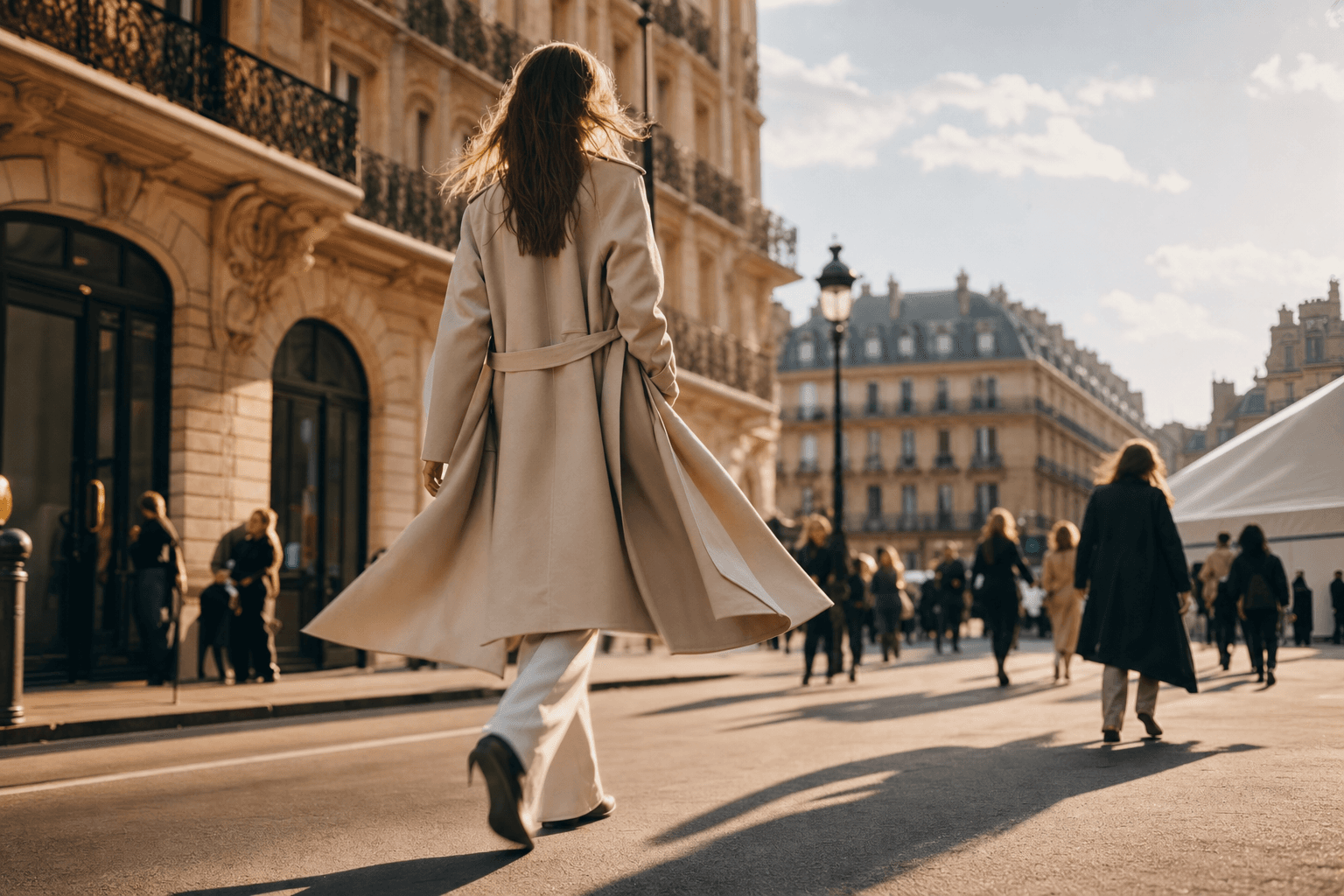
How to Become a Model in 2026: A Realistic Guide for Women and Men
Measurements, pay, workload, nutrition, longevity, AI trends and the dark side of a profession that is being reinvented right now — with studies, data and an honest application reality check.
Autor
Martin Kleinheinz
Photographer · Hannover, Germany
Aktualisiert
June 2, 2026
Maybe someone stopped you on the street, friends have told you for years "you should be modeling" — or you keep scrolling Instagram and wonder how these people actually get there. This article is for you if you are right at the beginning and want an honest overview, without career fairy tales and without scare tactics.
I'm Martin, a professional photographer for twelve years, working regularly with agency models in Hamburg, Berlin and Milan. We'll go through this step by step: model market, measurements, pay, body and nutrition — and at the end the concrete path into your first serious agency. Women and men each get their own dedicated section, because measurements, fees and career length differ significantly.
01
Start
What modeling actually means
Before we talk about measurements, castings or money, it helps to understand what "being a model" even means. At its core it is a self-employed profession: you sell your appearance — your face, your body, your presence — as a tool brands and magazines use to tell their product or editorial story. That sounds simple, but it isn't, because "appearance" means something completely different depending on the client.
A designer at Paris Fashion Week is looking for a very specific body type because their samples are cut in one single size. A catalogue retailer like Zalando or H&M needs friendly, "normal" looking people because customers should be able to see themselves in the image. A fitness brand wants visible definition. A wedding magazine wants romance in the gaze. These clients operate in different markets that have little to do with each other — even though they all list "model agency" on their websites.
That's the most important aha-moment right at the start: there is no single model market. Someone who is too short at 1.68 m (5'6") for Paris Fashion Week can be perfect for commercial campaigns. Someone who is "editorial" at 17 is suddenly in demand in the mature market at 33. And a man who will never walk runway can be booked for decades as a fitness or lifestyle model. In section 02 we look at these markets in detail, then we split deliberately into women (section 03) and men (section 04), because measurements, fees and career paths differ significantly.
A second key thing to take away: modeling is not a job with a fixed salary and paid vacation. You are usually self-employed, you invoice clients, handle your own taxes, have no sick pay and no regulated working day. Some weeks you're booked three times, others nothing happens for months. Whoever can handle that emotionally and financially can make a very good living. Whoever needs stability will struggle — or will combine modeling with a second pillar like university, a job or content creation.
02
Market analysis
The 2026 model market in numbers
The global fashion industry generates around USD 2.5 trillion in annual revenue (source: McKinsey/BoF State of Fashion 2026 and the Model Alliance). Model agencies are a small but strategic slice of that — estimates range between USD 4.3 billion and 7.1 billion in annual revenue worldwide depending on methodology (IBISWorld 2024, Allied Market Research).
In the United States, the Bureau of Labor Statistics lists "Models" under SOC 41-9012 with a median annual wage of roughly USD 48,464 (most recent OEWS data) — a figure that obscures the extreme spread between zero-income beginners and high-six-figure top faces. In Germany, the official Bundesagentur für Arbeit gives a Fotomodell average of around €24,648 gross per year, but most German models work as self-employed contractors, so the real distribution is steep.
Six sub-markets — who gets booked where
High fashion / runway
Milan, Paris, NY, London Fashion Week. Designer-driven. Day rate often low (€150–800), but prestige opens campaign doors with five-figure fees.
Editorial
Vogue, Numero, AnOther, i-D. Artistic expression, poor pay (€50–500 per day), best portfolio substance.
Commercial / catalogue
H&M, Zalando, About You, Marks & Spencer, J.Crew. Higher rates (€800–1,500), predictable bookings, less visibility. Bread-and-butter market.
Curve / plus-size
Double-digit growth since 2017 (BoF). MUSE NYC, Curvy is the New Black, Modelwerk Curve, MGM Curve.
Fitness / sport
Sport campaigns (Nike, On, Lululemon, Gymshark), supplement brands. Specific measurement / body expectations and very high body-consistency demands.
Hand / parts / hair / senior
Niche markets. Hand models for jewelry campaigns ~€500/day. Senior (50+) is growing with demographic shifts.
Market
Day rate (entry)
Day rate (established)
Median career length
High fashion (women)
€150–500
€2,000–10,000+
3–6 years
High fashion (men)
€100–400
€1,000–4,000
6–10 years
Editorial
€0–300 (TFP)
€500–2,500
4–8 years
Commercial / catalogue
€400–800
€800–1,800
8–15 years
Curve / plus-size
€400–900
€1,000–3,500
8–15 years
Fitness / sport
€300–700
€800–3,000
5–10 years
Senior (50+)
€400–900
€1,000–2,500
open-ended
Sources: photta.app 2026 fee guide, CM Models, SHOWCAST, own DACH market observation. All figures before agency commission (20–30%) and separately negotiated buyouts.
03
Women
Becoming a model as a woman: measurements, markets, careers
Requirements for female models depend radically on the sub-market. High fashion / runway remains the most restrictive in 2026 — designers cut samples in EU 34 (US 0/2), shows are cast in this format before NY, Paris and Milan Fashion Week. Commercial / catalogue is considerably more open.
Measurement table for women — what sub-markets expect
Sub-market
Height
EU size
Shoe (EU)
Reality
High fashion / runway
175–180 cm
34–36
39–41
Very restrictive. Designer-driven.
Editorial / Vogue style
173–178 cm
34–38
38–41
More flexibility on look / personality.
Commercial / catalogue
168–176 cm
34–40
37–41
Size flexibility. "Looking real" matters.
Curve / plus-size
168–180 cm
42–48
38–42
Growth market. Proportion matters more than numbers.
Fitness / sport
165–180 cm
34–40
38–42
Visible definition, body fat 14–22%.
Petite / accessories
160–170 cm
34–38
36–39
Jewelry, beauty, hand. Niche market.
Mature / silver (45+)
168–180 cm
36–44
37–42
Strongly growing. Lifestyle, pharma, insurance.
Sources: CM Models 2026, Modelwerk Hamburg, Models.com talent guide. Measurements are industry benchmarks, not hard exclusion criteria outside of high fashion.
From first polaroid to a Vogue cover story
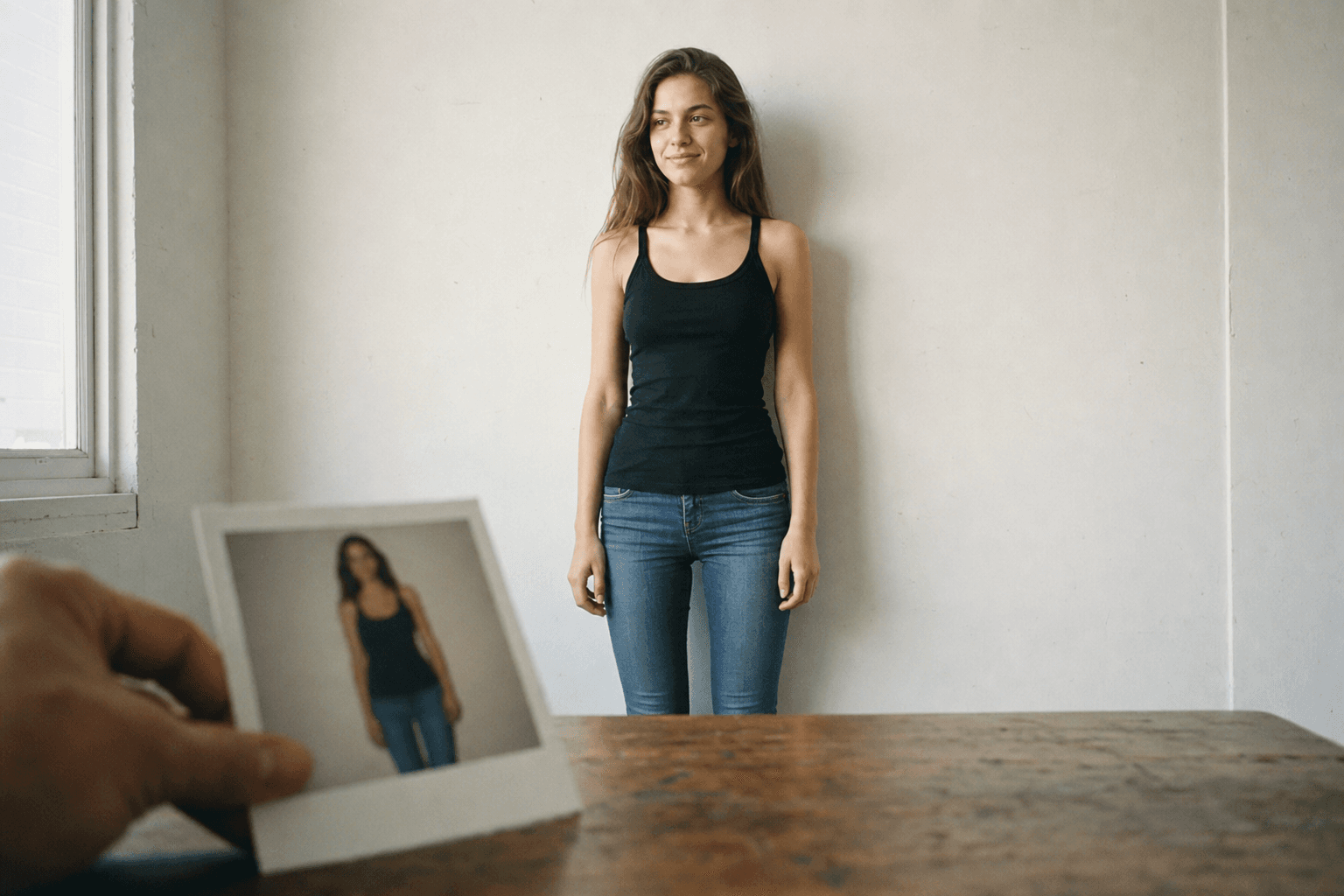
What a classic mother-agency polaroid looks like: daylight, neutral wall, simple outfit, no makeup. That's all you need for the first appointment.
A typical career starts between 14 and 24 with what's called a mother agency — your first, usually national agency. In Germany those are houses like Modelwerk Hamburg, MGM Munich, VIVA Berlin or Louisa Models. You send a few simple daylight smartphone photos, ideally get invited for a polaroid call, and then sign a mother-agency contract. The first months are mostly TFP shoots (Time for Print: you work for the images, not for pay), small tests and sedcard build-up for your book. Very little money flows in this phase.
If you fit the high-fashion grid — roughly 1.75–1.80 m, EU size 34/36 — your mother agency may place you with an international booking agency: IMG, Elite, Storm, The Society, Next or Wilhelmina in New York, Paris or Milan. That's the "placement" model: both agencies share the commission later. For commercial, curve or fitness models this step is rarer — you'll usually stay with a regional agency that books you directly.
Anyone who makes the jump into the international league experiences the fashion-month season twice a year: February/March and September/October. For 8–12 weeks you travel between New York, London, Milan and Paris, sleep in shared model apartments and attend three to ten castings a day. Travel costs often go on your tab and get offset against later fees — which is exactly where the infamous "debt trap" forms, something we cover in detail in section 09.
If you walk a season well, you enter the editorial booking pool — Vogue, Numéro, AnOther — and ideally a campaign. A campaign is the real career lever: while an editorial might pay €500 a day, a Calvin Klein or Prada campaign can trigger five- to six-figure buyouts because you're not just paid for the day but for the months or years of usage rights.
An honest closing note on this career path: the median high-fashion career lasts three to six years. After that comes either the shift into commercial (longer career, less glamour, more predictable fees), launching your own brand (Karlie Kloss with Kode With Klossy, Ashley Graham with her lingerie line) or exiting into a second career. Whoever bets exclusively on the one horse from age 20 will feel the pressure by their late 20s — whoever builds a second pillar early survives the transition far more relaxed.
“Image is a powerful tool — but it's also a shallow one. I cannot change what you see when you look at me, but I can change what you do not see.”
Becoming a model as a man: different market, different rules
Male modeling is invisible to many readers — and at the same time more stable, less toxic and longer-lasting than its female counterpart. The market is smaller (estimated 25–30% of the model market), day rates are lower on average, but careers often last ten years or more. Mature male models (50+) are seeing their strongest market phase ever, thanks to the silver-fox trend.
Measurement table for men — what actually matters
Sub-market
Height
Chest
Waist
Suit (EU)
Shoe (EU)
High fashion / runway
185–192 cm
95–102 cm
74–80 cm
48 (US 38R)
43–45
Editorial
183–190 cm
95–104 cm
76–82 cm
48–50
43–45
Commercial / catalogue
180–192 cm
95–110 cm
78–92 cm
48–52
42–46
Fitness / sport
178–190 cm
100–115 cm
76–86 cm
48–54
42–46
Hand / parts
any
any
any
any
any
Mature / silver fox (45+)
178–192 cm
95–108 cm
82–96 cm
48–54
42–46
Sources: CM Models 2026, Models.com, Modelwerk Hamburg Men's Division. High fashion is conservative, commercial is flexible. Suit refers to European sizing.
Career reality: less glamour, more longevity
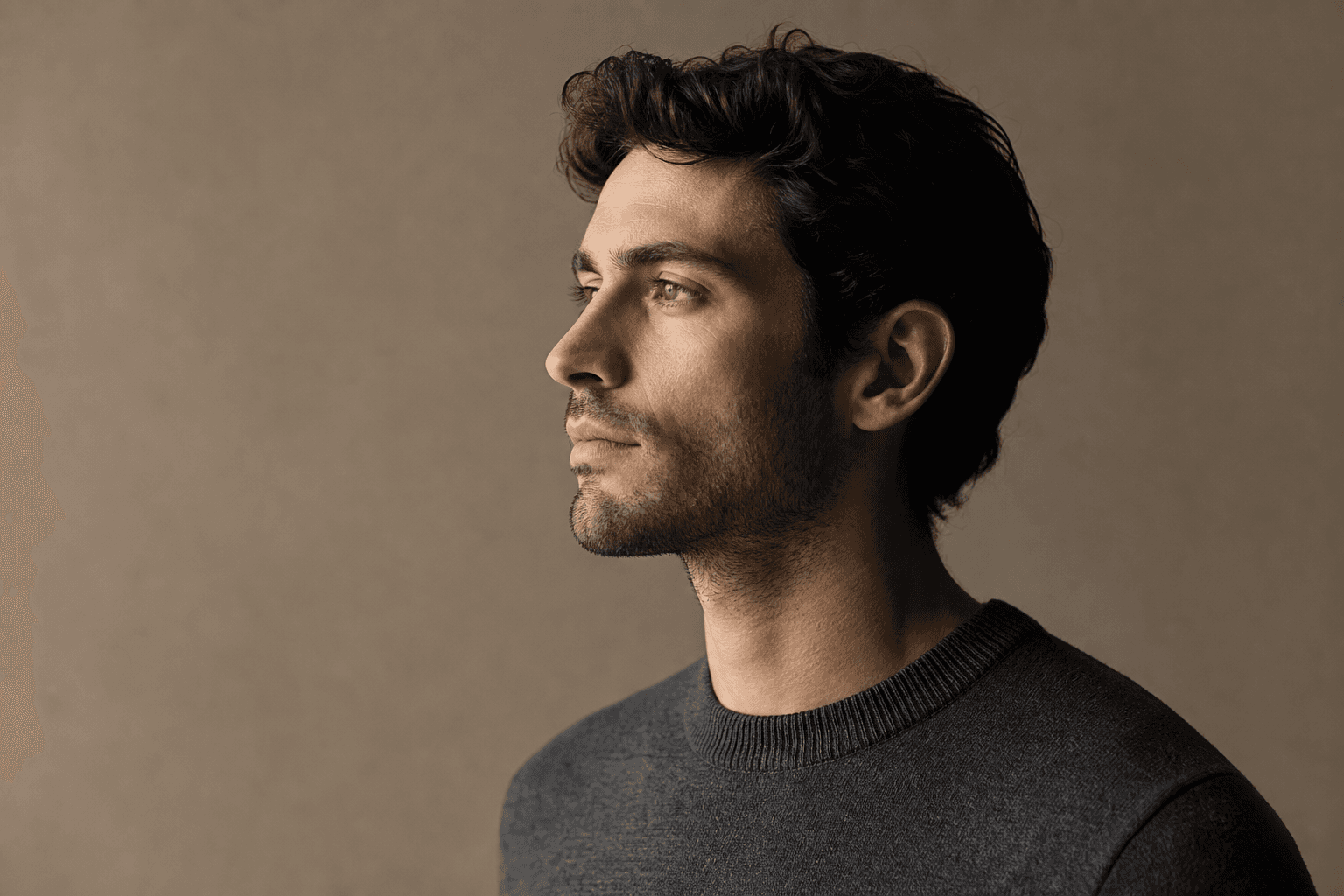
For men, editorial casters look for faces with character — forehead, jawline, gaze. Rarely the flawless teenage look still often expected of women.
Men typically start later than women — the common entry window is 18 to 28. Editorial casters look for less of the "young angel" type in men and more for faces with character, a personal story or a distinctive look. A 25-year-old with a beard, a visible style break or a striking stature often has better chances than a flawless 17-year-old.
Day rates sit on average 20–40% below comparable women's bookings in high fashion and editorial — modeling is one of the rare global industries where men are paid less structurally. In commercial, fitness and mature segments the spread closes or flips: an established silver-fox can easily clear €2,000 a day for an insurance or watch campaign, because the talent pool in that niche is much smaller.
In return, careers run longer. While women in high-fashion statistically shift markets after three to six years, men often work six to fifteen years continuously — and many longer. David Gandy has been modeling for over twenty years, Sean O'Pry has been booked steadily since 2008 (Models.com Hall of Fame). Start at 24 in a solid sub-market and you can realistically work into your early 40s.
A still-underrated segment is mature modeling: advertising with men over 50 has been growing strongly for years. Insurance companies, pharma brands, premium travel operators, watch brands and banks all need well-groomed, charismatic faces — ideally with a grey or white beard, visible life experience and a polished appearance. Solid day rates and longer contracts are the norm here because the talent pool is smaller than among young models.
Classic mature look: insurance companies, watch brands and premium travel operators pay day rates in 2026 that compete with younger commercial bookings.
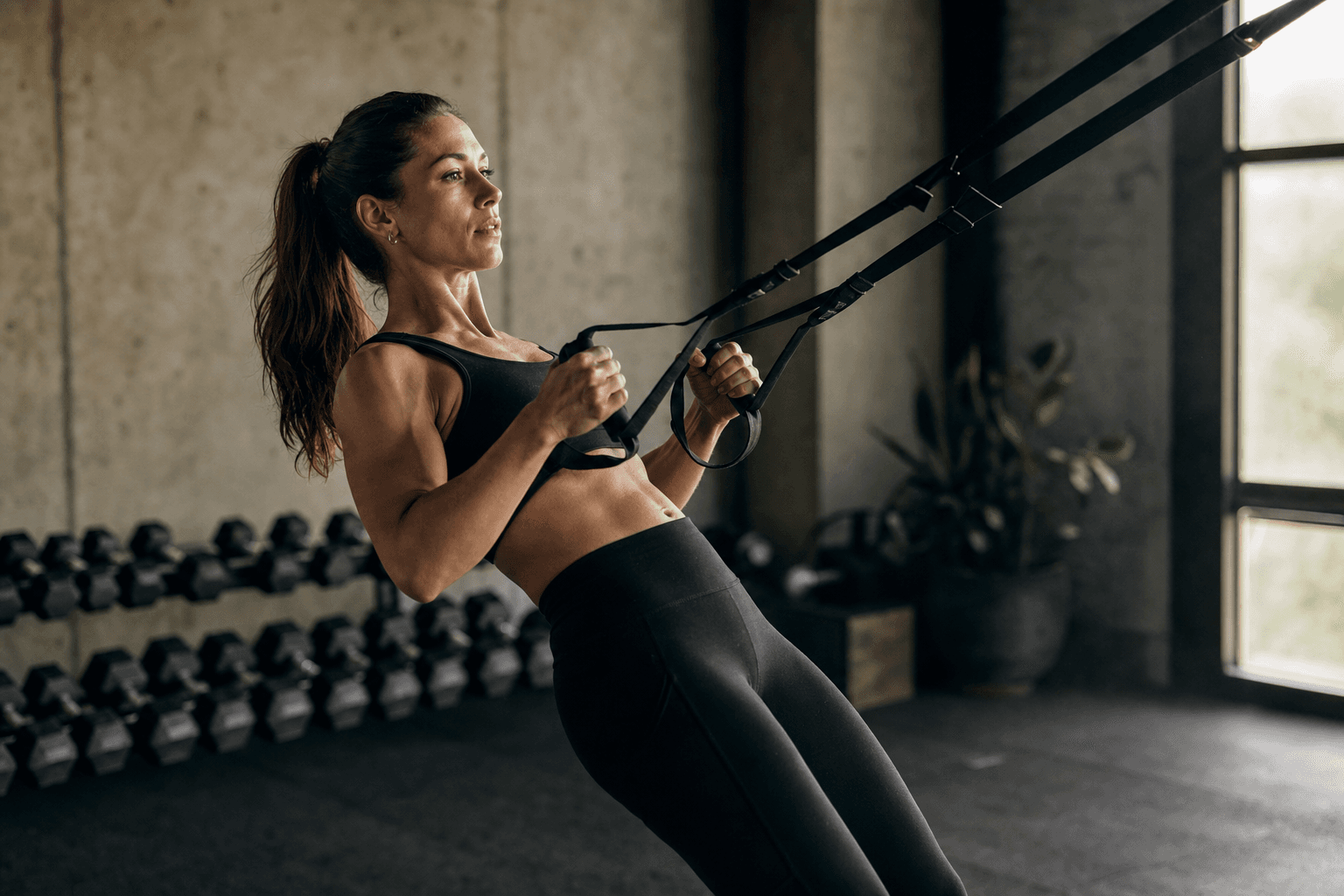
For anyone aiming at fitness and sport modeling, you're entering a different league — with the toughest physical demands. Supplement brands, sportswear labels, health apps and magazines pay well for visible body work, but expect 8–12% body fat year-round. That is only conditionally sustainable from a health standpoint — we cover honestly in section 05 what's realistic to maintain over years and where it starts to become problematic.
“Men get less money — but they also get less bullshit. We travel less, we are rarely asked about our weight — and we don't get aged out at 35.”
— David Gandy, GQ interview 2018 (paraphrased)
05
Body
Body, nutrition, training — reality without diet myths
Here is where it gets serious — and honest. The most common mistake new models make: crash dieting two weeks before their first call, followed by hunger-driven skin issues, no energy in the polaroid, bad posing presence. What works: year-round, documented nutrition with clear protein intake — not "cleaning up" two weeks before castings.
Nutrition: what sports science actually shows
The International Society of Sports Nutrition (ISSN) position stands (Helms et al. 2014, Aragon & Schoenfeld 2018) remain the gold standard for quiet, predictable body work in the modeling industry — far more solid than trend diets. Three core numbers to anchor on:
Protein
1.6–2.2 g per kg body weight per day (Helms 2014). Example: 70-kg woman = 112–154 g; 85-kg man = 136–187 g. Lower bound during cutting phases closer to 1.8 g/kg.
Calorie cut
Maximum 0.5–1.0% of body weight per week loss (ISSN). More = muscle loss and hormonal chaos. 70-kg person → max 350–700 g/week.
Refeeds
For diets longer than 6 weeks: controlled carb days (every 7–14 days at 100% maintenance calories, high carb share) — protects leptin, T3 and training capacity.
Training: thought separately, shared principles
Fitness modeling depends on visible, sustained body work — and often fails for exactly that reason. What is realistically sustainable over years, we cover next.
Women
Three to four days of full-body strength (squats, deadlifts, hip thrusts, rows, pull-ups), two to three mobility / pilates sessions for catwalk posture. Cardio: 2–3× Zone 2 of 30–45 min. No daily HIIT bouts without refeed.
Men
Four to five days push/pull/legs or upper/lower for volume and visible shoulder / V-form. Fitness models: 1–2× conditioning (rowing, loaded carries, short HIIT), 1× Zone 2 of 60 min. Body fat target: 8–12% (year-round contest level is not healthy).
Both
Sleep 7.5–9 h, lights out before 11 pm (see Huberman in section 06). Hydration: 30–35 ml/kg. Stress management is non-negotiable — casting stress sabotages cortisol axes.
If you want to experience body and training with peers rather than alone in the gym: my Hyrox Camp Faro 2026 covers Hyrox-style training, yoga and whole-food cooking — plus editorial sport photography that adds real portfolio substance.
06
Longevity
Longevity stack 2026 for models
In 2024 / 2025, "longevity" moved from niche biohacking to mainstream. Three voices shape the discourse: Bryan Johnson (Don't Die / Blueprint Protocol), Peter Attia (Outlive, Centenarian Decathlon, Four Horsemen framework) and Andrew Huberman (Huberman Lab podcast, neuroscience-based daily protocols).
Peter Attia: Four Horsemen, VO2max, Zone-2 training
Attia frames the biggest killers as "Four Horsemen": atherosclerotic heart disease, cancer, neurodegenerative disease, type 2 diabetes / metabolic syndrome. His most important lever for models: VO2max as the single strongest predictor of life expectancy (Mandsager et al., JAMA Network Open, 2018). Practically: 2× per week Zone-2 cardio (40–60 min at a conversational heart rate) plus 1× HIIT for the VO2max push.
Andrew Huberman: morning sunlight, sleep, cold exposure
Andrew Huberman's Huberman-Lab-Podcast recommendations are particularly valuable for models because they have to deal with constant travel and shifting time zones. The single most important lever is direct sunlight within 60 minutes of waking — 10 to 30 minutes is enough. It synchronizes your circadian rhythm and is the simplest measure with the highest sleep-ROI, especially against jet lag.
Equally important: sleep consistency. Same bedtime and wake time, plus or minus 30 minutes, on weekends too. Fashion month systematically sabotages this — which makes buffer periods before and after even more important.
Optional but well-researched: cold exposure via 2–4 minutes of cold shower or ice bath. Huberman recommends 11 minutes per week cumulatively. The Søberg et al. (2021) study shows positive effects on brown adipose tissue and stress resilience — both helpful in a hectic casting life. And for anyone with regular sauna access: Finnish cohort studies (Laukkanen et al. 2015, JAMA Internal Medicine) show that 4–7 sauna sessions of 20 minutes per week significantly lower all-cause mortality. For traveling models this is hard to implement, but where it's possible, it is one of the most effective longevity levers overall.
Bryan Johnson Blueprint — what to adopt, what to skip
Bryan Johnson's Blueprint protocol (freely documented at blueprint.bryanjohnson.com) is the loudest 2026 longevity voice — and also the most polarizing. Adoptable: consistent sleep hygiene, exact calorie / macro tracking, regular blood panels (lipid panel, hsCRP, HbA1c, ApoB), strict skincare (SPF 50 daily). Overkill for models: 111 supplements, plasma transfusions, off-label rapamycin.
“If you become famous at 23, you have 25 years ahead of you in which you should already have been taking care of your body. If you don't, you have no second act at 33.”
— Peter Attia, Outlive (2023)
07
Mental health
Mental health & the NY Fashion Workers Act
The most important empirical study on the modeling industry remains the Rodgers / Ziff study 2017 — conducted by the Model Alliance with researchers from Harvard T.H. Chan School of Public Health and Northeastern University, published in the International Journal of Eating Disorders (January 2017, Vogue coverage). 85 female models surveyed at New York Fashion Week February 2016.
BMI
81% of the surveyed models had a BMI <18.5 (WHO underweight). Mean BMI: 17.5 — lowest recorded: 14.5.
Pressure to lose weight
62% were asked by an agency, casting director or designer to lose weight.
Job threat
54% were told they would not be booked without losing weight.
Contract threat
21% were told their agency would drop them.
Behavior
56% sometimes / often / always skipped meals; 24% used diet pills or weight-loss supplements; 8% induced vomiting.
NY Fashion Workers Act — the structural answer
On December 21, 2024, Governor Kathy Hochul signed the New York State Fashion Workers Act (NYS Labor Law Article 36). It came into effect on June 19, 2025. Agency registration deadline: December 21, 2025 (one-year transition). The law is the first of its kind worldwide that treats model agencies as regular labor intermediaries — with obligations toward models.
Commission cap
Maximum 20% of the model's fee. No double-dip (model + client), no hidden mark-ups.
Fiduciary duty
Agencies owe models a "duty of loyalty and care" — negotiation, contracts, finances, legal protection.
No upfront fees
Sign-up fees, "composite card fees", accounting prepayments are banned. Classic scam vehicles are cut off.
Contract length max 3 years
With the right to terminate "at any time, for any reason."
AI digital replica
Separate, clear written consent for every AI-generated replica — with scope, purpose, fee and duration. Direct effect on Mango-style campaigns.
Working hours & breaks
Over 8 h per 24-hour window: 1.5× hourly rate. Mandatory 30-min meal break.
Penalties
Up to USD 3,000 (first offense) and USD 5,000 (subsequent offense) per violation. Plus private right of action for models.
08
AI
AI in the 2026 model market — threat or tool?
2024 was the turning point for AI in fashion photography. Mango launched the "Sunset Dream" campaign for Mango Teen in 95 markets in July 2024 (Mango press release) — every model in the campaign was AI-generated, workflow: shoot real garments, train an in-house generative model on that dataset, then composite the clothing onto AI bodies. Levi's had already tested AI models with Lalaland.ai in 2023 — the backlash forced the company to clarify "AI as complement, not replacement".
AI models that earn real revenue
Lil Miquela
Studio-built (Brud, later dissolved). Over 2.5 million Instagram followers, deals with Prada, Calvin Klein, Samsung. Estimated annual revenue ~USD 10 million (Forbes estimate).
Aitana López (Spain)
Created 2023 by Barcelona agency The Clueless. Monthly revenue USD 50,000–80,000 (La Nación, May 2026) — mix of brand deals, Fanvue subscriptions, her own AI skincare brand "Vellum". Per sponsored post: USD 6,000–8,000.
Imma (Japan)
Pink-hair avatar, IKEA Tokyo pop-up, SK-II, Magnum, Nike. Bridgehead into the Asian market.
Shudu Gram
First "digital supermodel" by Cameron-James Wilson (UK). Public debate about "digital blackface" — those who design AI models take responsibility for representation.
What this means for real models
Pay pressure
Aitana costs The Clueless roughly 80% margin (software subscriptions instead of day rates, travel, catering). For e-commerce volume clients (H&M, Marks & Spencer, About You) the "why hire a real model?" question gets harder.
Image rights & likeness
The NY Fashion Workers Act mandates separate AI consent. In the EU, the EU AI Act (effective August 1, 2024, full text: eur-lex.europa.eu/EUAI) regulates deepfake labeling — but likeness rights remain national.
Editorial stays human — for now
Vogue, Numéro, AnOther still work with real people in 2026. Cover stories, story-driven editorials, BTS content all pay into brand storytelling, not AI efficiency.
Use AI yourself
Models who use AI themselves — own headshot generators like AI photo editing, outreach copy, sedcard layouts — shift the tool onto their own side.
“Kim Kardashian makes a million euros for one Instagram photo and she does not cure cancer. Nobody earns a million euros for uploading a photo to a social network. It seems absurd to me.”
— Rubén Cruz (The Clueless), co-founder of Aitana López, Instagram Q&A 2026
09
Reality
Workload: how many days does a model actually work?
The most common self-deception of newcomers: "I'll get three bookings a week." The reality — even for models in their agency's top 30 — looks like this:
Beginner (years 1–2)
10–40 paid shoot days/year, many of them TFP/tests. Net income: realistically €0–8,000 — most models live in parallel from a job, university or family.
Solidly booked (years 3–5)
60–120 paid shoot days/year. At €800–1,500 gross day rate: €35,000–80,000 gross. After 20% agency and taxes: €20,000–45,000 net.
Top tier
150–250 shoot days, regular campaigns with five-figure buyouts. Peak income beyond €200,000/year — but realistic for under 1% of models in DACH.
Model apartments and the debt trap
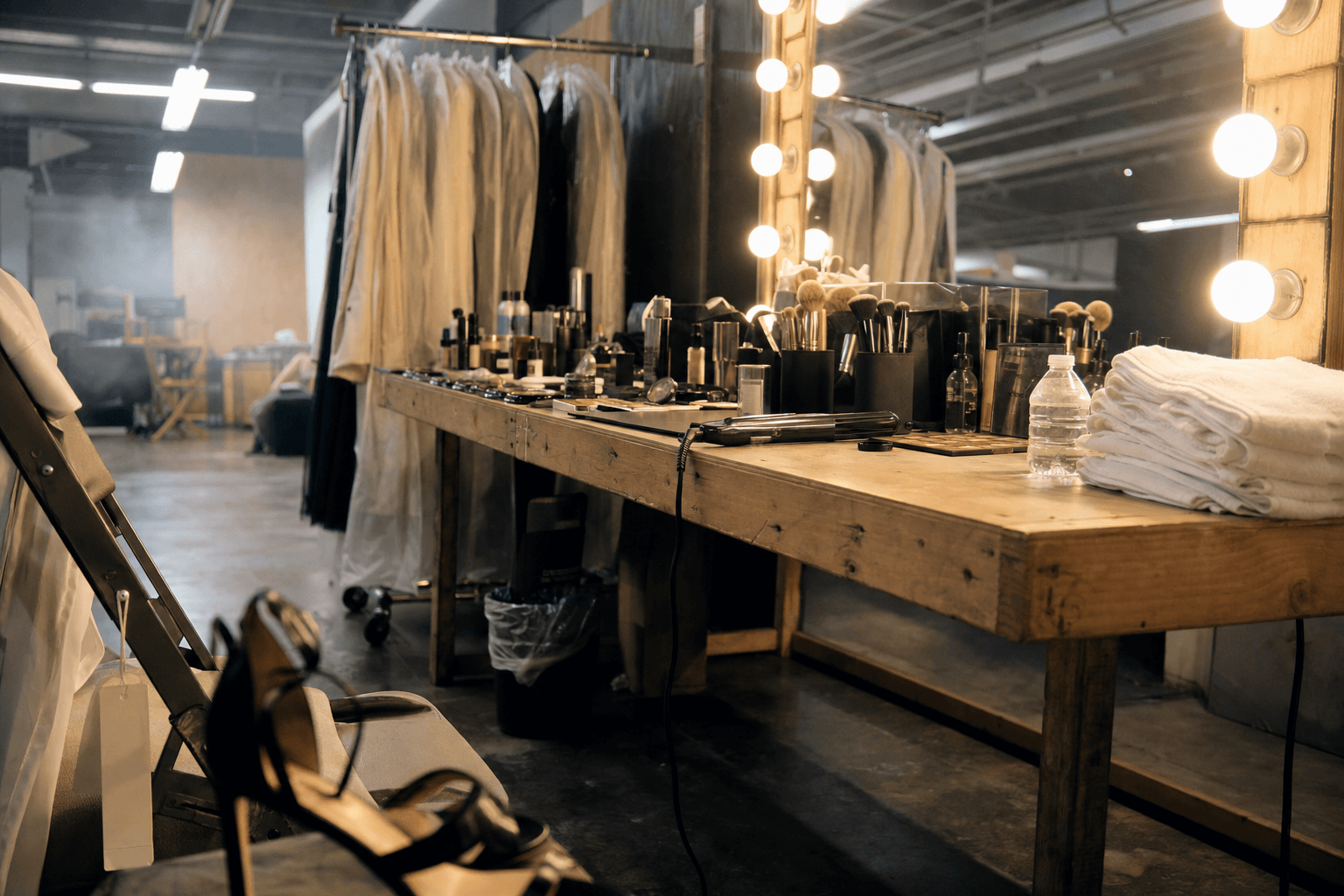
Backstage reality beyond the glamour shots: 30 minutes of makeup, 10 minutes of show, two hours of waiting. Whoever can't carry that emotionally won't carry the profession.
Castings in NY, Milan, Paris or Tokyo mean living in model apartments organized — and billed — by the agency. USD 70–150 per night for a bunk bed, three to eight models per room. Sara Ziff and the Model Alliance have documented for years: models often end a season owing USD 5,000–15,000 to their agency — offset against future fees.
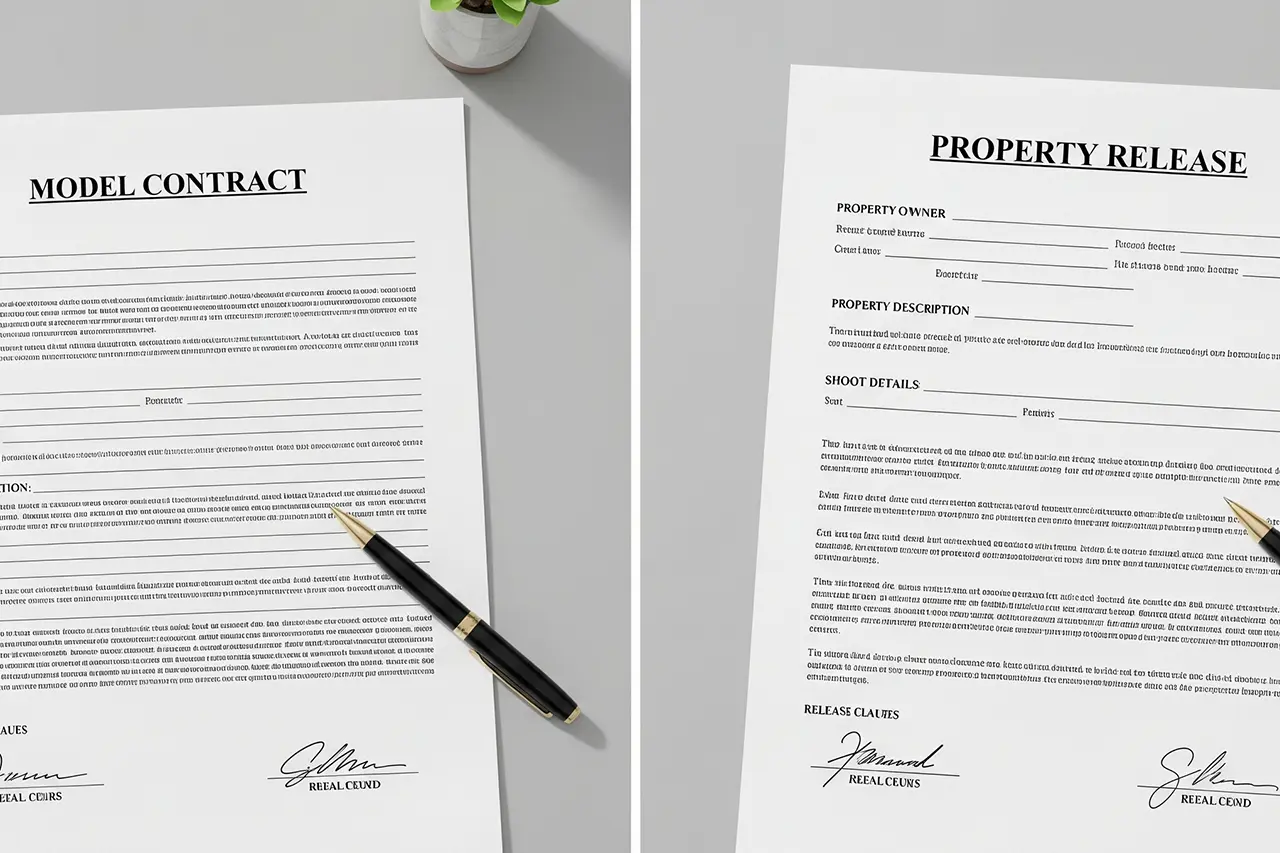
Contracts deserve their own attention too — for editorial tests, TFP shoots or polaroid sessions, always carry a free model and property release and familiarize yourself with the GDPR for photographers basics. Likeness rights in DACH/EU are strong — nobody can force you to release images you have not approved.
10
Application
Agency choice & application — the short version
This section is deliberately compact. A full deep-dive on model-agency applications will follow in its own article. Here are the key steps and a reality check for your sedcard hero image.
Serious vs. scam — three rules of thumb
No upfront fees
A serious agency charges nothing upfront — no sign-up fee, no "portfolio production package", no mandatory courses. If they want money before you work, it's a scam.
Polaroid call, not online contract
Real agencies want to see you in person — polaroid shoot with daylight, no makeup, skinny jeans, tank top. If an agency signs you online based purely on photos: be skeptical.
Transparent commission
20–30% is industry standard in DACH (SHOWCAST, MGM, Modelwerk). In NY since 2025: max 20% (Fashion Workers Act). More than 30%: question it.
Established names (selection)
International
IMG Models, Elite Model Management, Storm Management, The Society Management, Next Management, Wilhelmina Models, DNA Model Management.
Daylight, white wall, neutral background. No filters, no Photoshop, no posed shots.
Outfit
Skinny jeans / plain pants, tank top or T-shirt, black pumps or sneakers. Men: white T-shirt, jeans.
Shots
Headshot (front + slight side angle), half-body, full-body front, full-body side, full-body back. Men also: upper-body shirtless shot.
Hair & makeup
Hair down, not styled. Makeup at most BB cream. Agencies want to see your raw form.
For the studio version with editorial lighting: business photography & portraits Hannover or get in touch via contact for a dedicated sedcard shoot. For editorial-character content shoots: the Lake Como content trip delivers a full portfolio update in 3 days, including behind-the-scenes.
11
Career
Self-marketing & second career
Starting without an agency — or building a second pillar alongside an existing one — measurably increases your leverage in 2026. Three paths work especially well in practice, and they don't exclude each other.
The first is the influencer hybrid: continuous Instagram and TikTok content parallel to classic castings. Three to four posts per week, a recurring reel series, a clearly identifiable niche — sport, vintage, skincare, travel, Berlin city-life — and above all consistency over months. Brands today often book directly via DMs without going through an agency. If you need help with this build-up, my social media & reels service is built exactly for that.
The second path is UGC — User Generated Content. Brands pay USD 200–800 per video for authentic-feeling material they use in their own ads. No agency commission, no classic sedcard, often no specific height required. For aspiring models in build-up phases this is one of the fastest income sources — and at the same time good training for camera presence before your first real casting.
The third path is editorial self-publishing: your own blog or Substack with behind-the-scenes texts, honest strategy posts, images from the casting routine. It feels indirect at first, but it builds an independent brand that doesn't depend on any agency. One example from my own work is the article on digital nomads and photographers — the same logic applies to models who want to live and work internationally.
When (and how) to stop
Karlie Kloss founded Kode With Klossy (coding camps for girls) during her top years and exited smoothly. Ashley Graham became a brand founder (PrettyLittleThing × Ashley, her own lingerie line). Coco Rocha runs a posing academy. Tyra Banks moved into tech investments and education.
Common denominator: diversify before the career kink. A model who hasn't built a second identity beyond casting by 28 hits a hard transition phase at 33. That is exactly why sections 05 (body), 06 (longevity) and this chapter exist — as insurance.
12
Comparison
Women vs. men — direct comparison
Category
Women
Men
Median career length
3–8 years
6–15 years
Entry age
14–22
18–28
High-fashion height
175–180 cm
185–192 cm
High-fashion size
EU 34–36
EU 48 (US 38R)
Editorial day-rate median
€300–1,500
€200–1,000
Campaign day rate (established)
€2,000–10,000+
€1,000–4,000
Career end (statistically)
28–35
40+ (mature 50+)
Body-image pressure (studies)
Very high (Harvard 2017)
High, less documented
Travel load
Very high in fashion season
High, fewer model apartments
AI threat (sub-market)
High in commercial
Medium — editorial stays human
Comparison values are industry medians (CM Models, Modelwerk, photta.app, Models.com). Individual careers vary widely.
13
FAQ
Common questions about becoming a model in 2026
Can I be a high-fashion model at 168 cm (5'6")?+
No — for classic runway bookings in Paris / Milan / NY, the designer sample format starts at around 175 cm. But: commercial / catalogue, curve, petite, beauty and senior all work with models below 175 cm. At 168–174 cm, apply with Modelwerk Commercial, MGM Commercial or OKAY — not with IMG Runway.
Do I need professional photos before my first polaroid?+
No — agencies actually do not want them. A polaroid should show your raw form. You need a few well-exposed smartphone shots in daylight, no makeup, no filters. If you're torn between several self-shots, test the hero image first with PicVibe anonymously.
How much money do I need to start?+
With a serious agency: nothing upfront. No sign-up fee, no "composite card" package, no mandatory courses. You cover travel to castings as a self-employed worker. Plan €1,500–4,000 for year one (polaroid trips, possible sedcard print, light bookkeeping).
Which agency is best in Germany?+
There is no single "best" — there is the best for your profile. Modelwerk (Hamburg), MGM Models (Munich), VIVA Models (Berlin), Louisa Models (Munich) and Place Models (Hamburg) are established names with all divisions. For curve: Modelwerk Curve, MUSE. For mature: MGM Mature, Silver Models. Apply to several in parallel with the same polaroid.
What can I realistically earn in year one?+
Statistically likely: €0–8,000 net. Most models have more TFP than paid jobs in year 1. Reaching 60 shoot days in years 2–3 lands you at €20,000–45,000 net. Six-figure annual fees are realistic for under 1% of DACH models.
How do I protect myself from toxic agencies or sets?+
In NY directly under the Fashion Workers Act (NY DOL complaint line). In DACH: never sign contracts unread, bring a trusted person (parent, mentor), document every casting, never go alone to late-night tests. Industry info & help: Berufsverband Models e.V., Model Alliance (international).
Will models be replaced by AI by 2030?+
AI will not fully replace models — editorial, brand storytelling, behind-the-scenes and influencer content stay human. But commercial and e-commerce volume slots will keep eroding (Mango Sunset Dream 2024, Aitana López, Lalaland.ai). Anyone starting in 2026 should bet on personality, movement, voice, community — everything a diffusion model lacks.
Fitness modeling for men — really full-time viable?+
Rarely as pure modeling. Most DACH and international fitness models combine modeling with personal training, supplement affiliate, own programs or coaching. Keeping a body at 8–10% body fat year-round risks hormonal and sleep disorders — the ISSN explicitly warns about it. Realistic: seasonal peak form for 2–3 campaigns/year, easier "maintenance" between.
Is mature modeling actually a market in 2026?+
Yes, and growing fast. Insurance, pharma, premium travel, watch brands and banks need faces 50+. DACH agencies like MGM Mature, Silver Models, Louisa Models have dedicated divisions. If you walk into one in your 50s with an honest look (well-kept gray beard, naturally silver hair), you have realistic 2026 chances — even without prior experience.
**Disclosure:** I work as a photographer with agency models, and I co-built PicVibe — an app where profile pictures are rated anonymously by real people. Whenever this article links to PicVibe (in the application chapter), that is disclosed. All studies and figures come from public, linked sources — Harvard T.H. Chan, Model Alliance, US Bureau of Labor Statistics, McKinsey State of Fashion, NY Department of Labor, Mango, The Clueless. No paid placements, no agency partnership.
◆ Newsletter
Bleib auf dem Laufenden.
Kamera- und Fotografie-News, ehrliche Equipment-Tests und neue Artikel – direkt in Dein Postfach. Selten, dafür relevant. Kein Spam, jederzeit abbestellbar.