
Sony ZV-E10 Lenses: Which Lens Fits

11mm if you film yourself. An 18–50 if one lens should do the rest. 35mm with a stabiliser, and 56mm for portraits. What to leave.

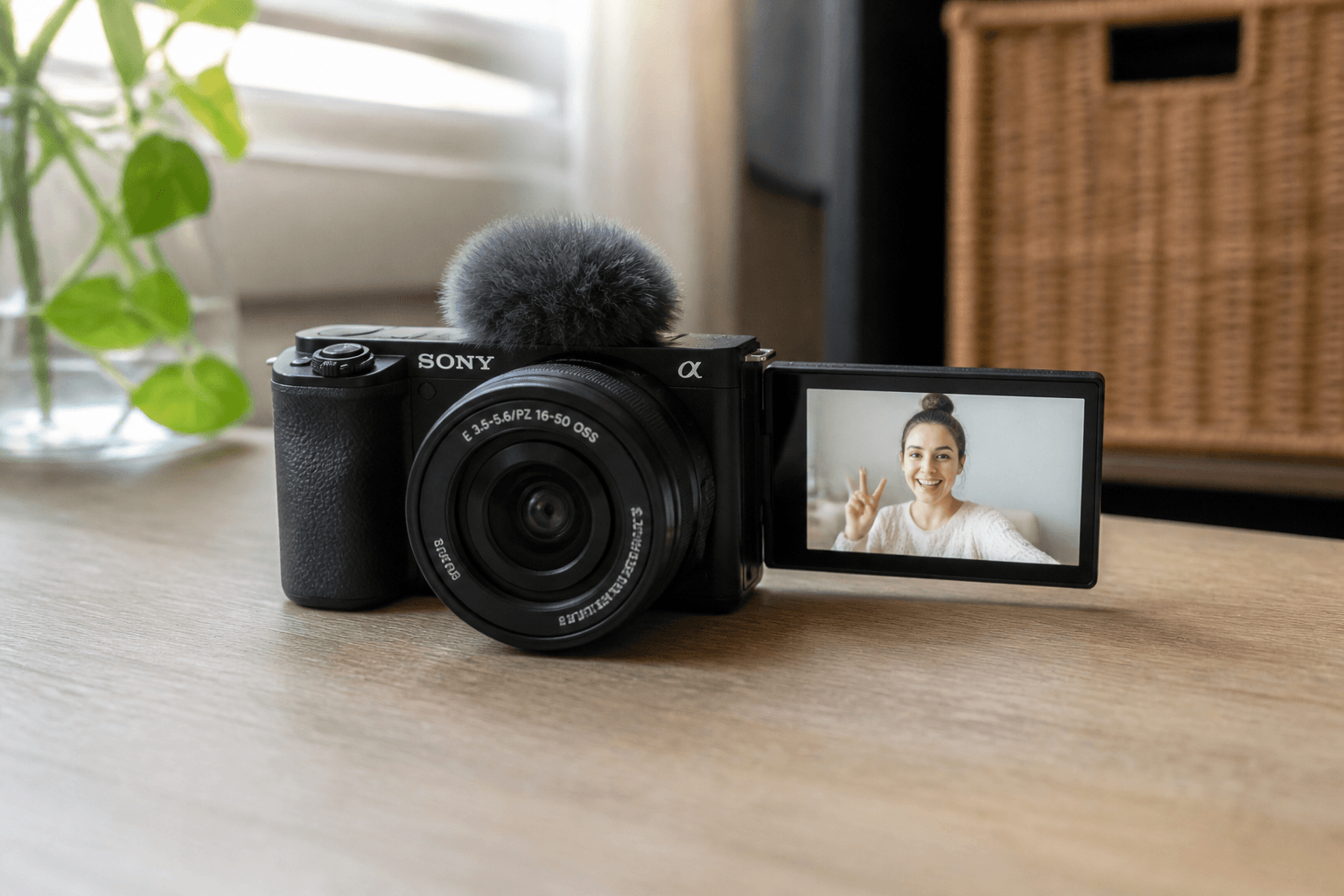
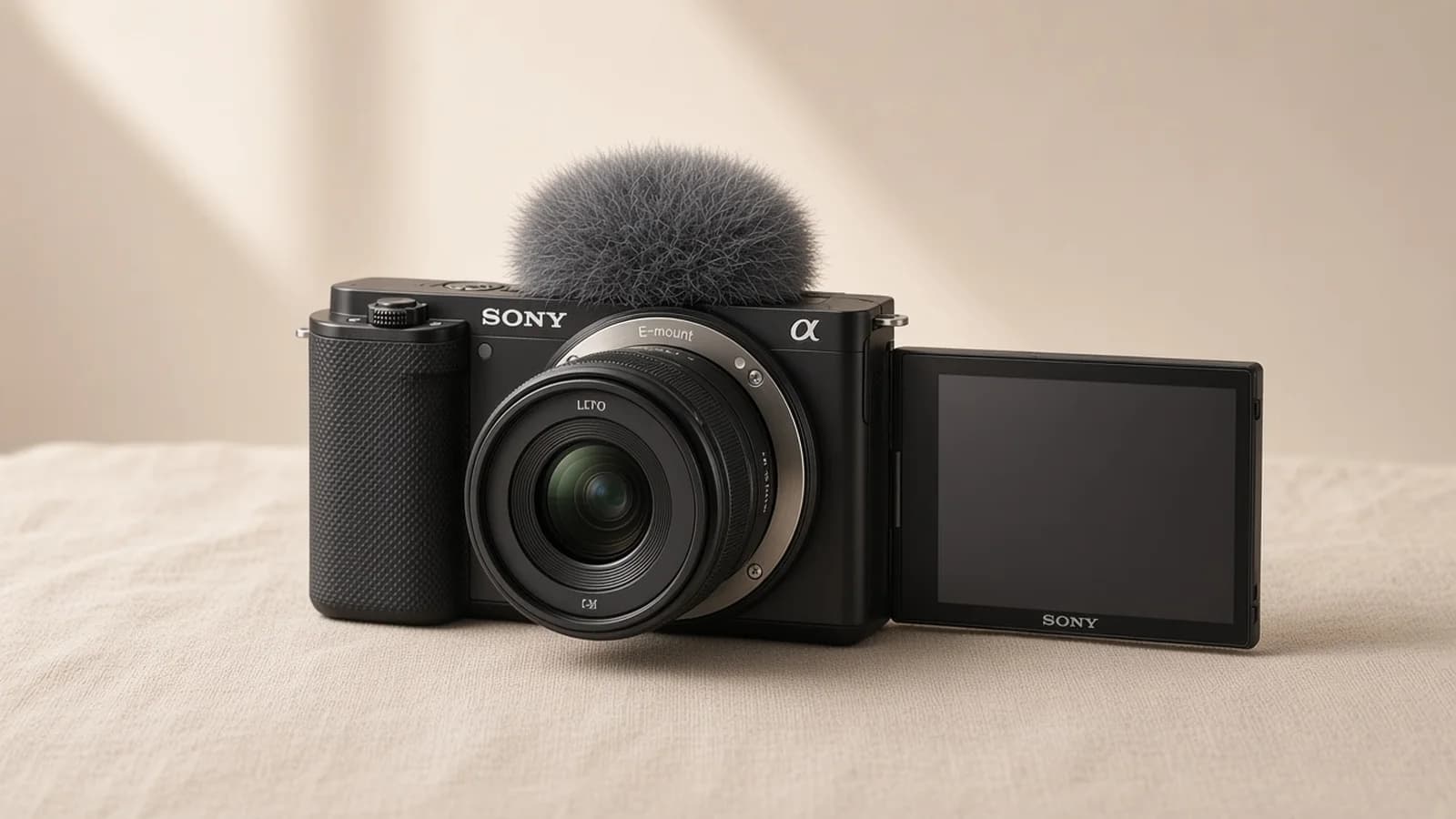
Sony ZV-E10 with a short lens and a furry windscreen, on a light surface
Martin Kleinheinz
Author
Martin Kleinheinz
Photographer · Hannover
Updated
November 1, 2026

The ZV-E10 is a small camera without a viewfinder. You flip the screen toward yourself and talk, or you put it on the table and show something. Which lens fits depends less on the name than on how far the camera is from you.

The sensor is APS-C, bigger than a phone and smaller than an old 35mm negative. Every lens therefore looks tighter than the number on the ring suggests, by about half again. An 11mm feels like 16.5mm on a large camera. A 50mm made for full frame becomes something like 75mm on the ZV-E10. Suddenly the normal lens is a portrait lens.

And the camera does not steady your shake. Only a lens with its own stabiliser does that, or you hold still, set it down, or use a grip. Whether the ZV-E10 is still the right camera in 2026 is in the review. Battery, card, sound and grip are written up separately: Sony ZV-E10 accessories.
00
Short

The lens I would put on a ZV-E10 first

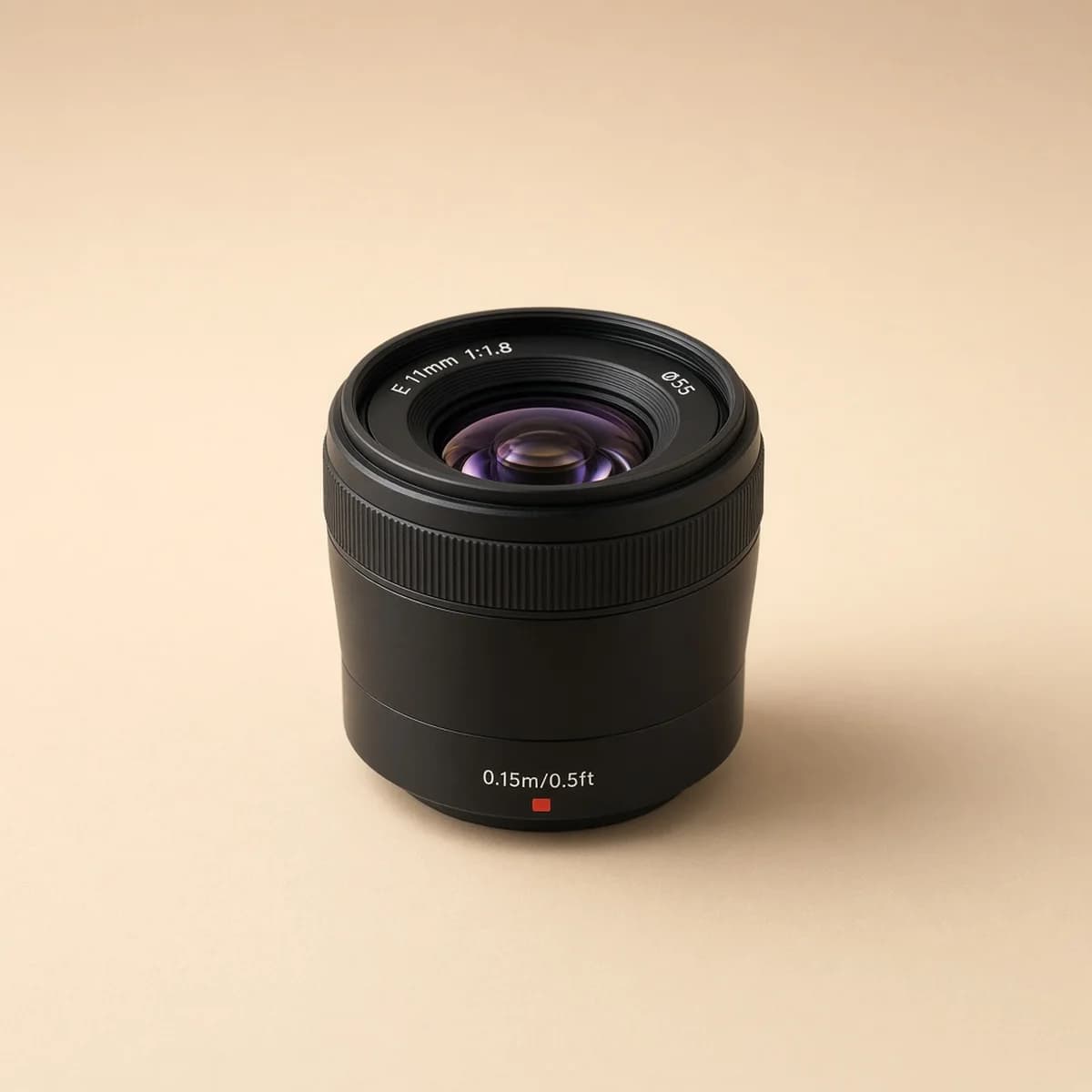
If you hold the camera at arm's length and film yourself, I would buy the Sony 11mm f/1.8 first. It is wide enough that you stay in frame, bright enough for a room, and it is small. If the camera should film other people, products and ordinary days, and you only want one lens, the Sigma 18–50mm f/2.8 stays on. For a tight selfie, 18mm is often already too tight. The shoulders fall out.

The 35mm f/1.8 is the only lens in this round that works against shake itself. That is the second lens when you film faces and products handheld, and not only yourself. The Sigma 56mm f/1.4 is a portrait with distance. Lovely, and the wrong first buy if your channel is you talking into the lens.

Four lenses

11mm, 18–50, 35mm and 56mm for the ZV-E10

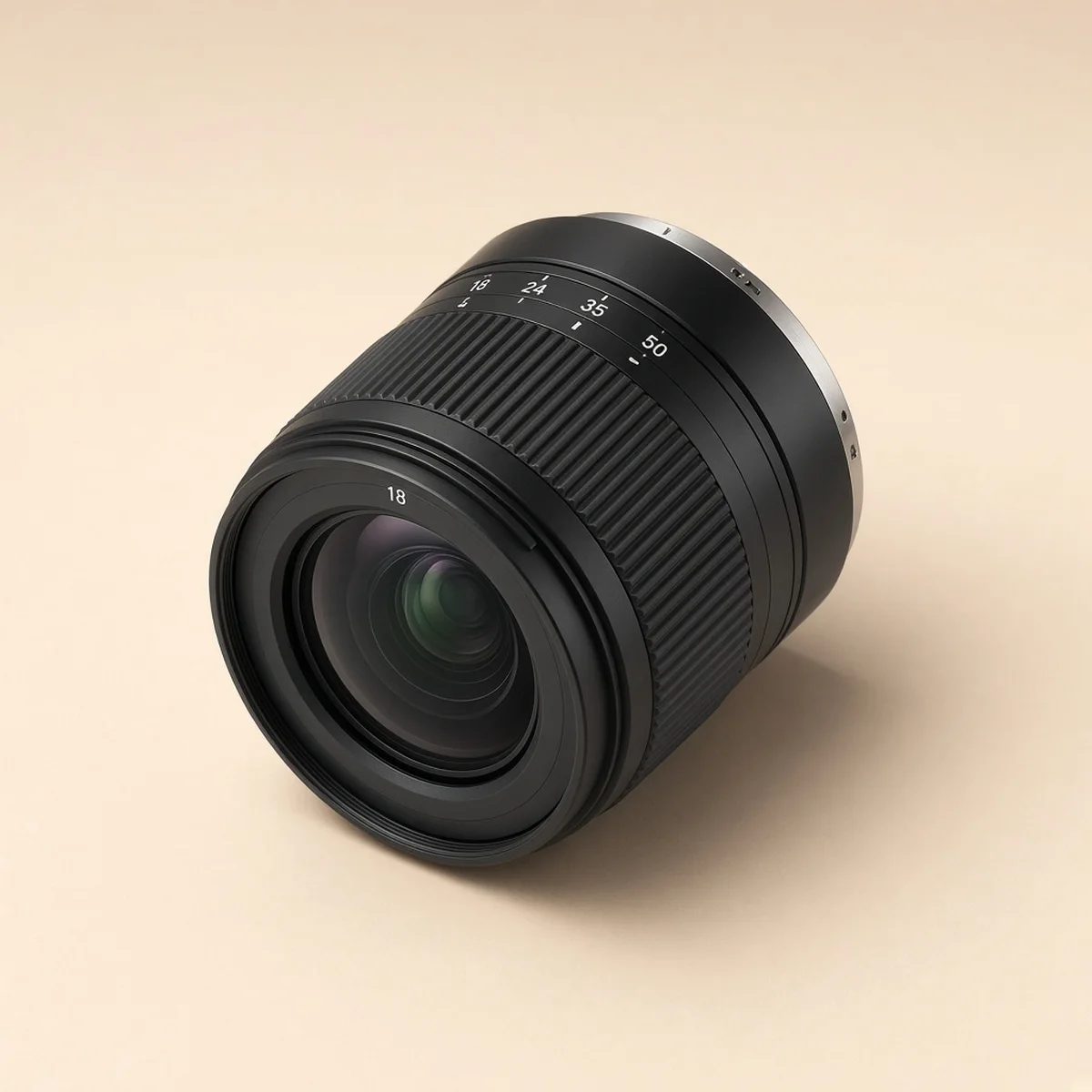
I would not buy all four at once. The 11mm when you have to stay in frame. The 18–50 when one lens should carry the rest of the day. The 35mm because it is the only one that steadies shake. The 56mm only once the portrait is its own shoot. What they cost today is on Amazon.

Vergleich
Sony
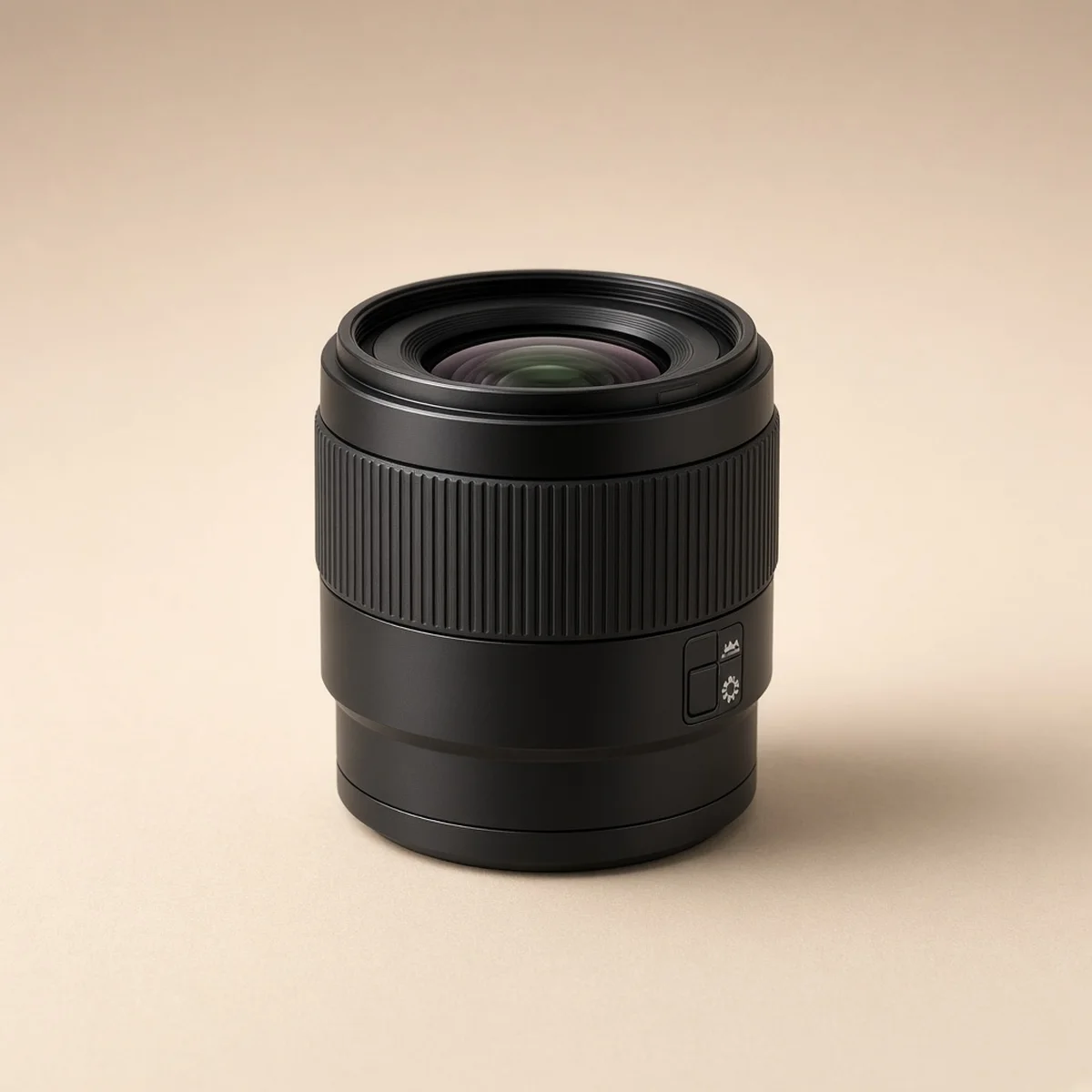
Sony E 11mm f/1.8
Sigma
Sigma 18–50mm f/2.8 DC DN
Sony
Sony E 35mm f/1.8 OSS
Sigma
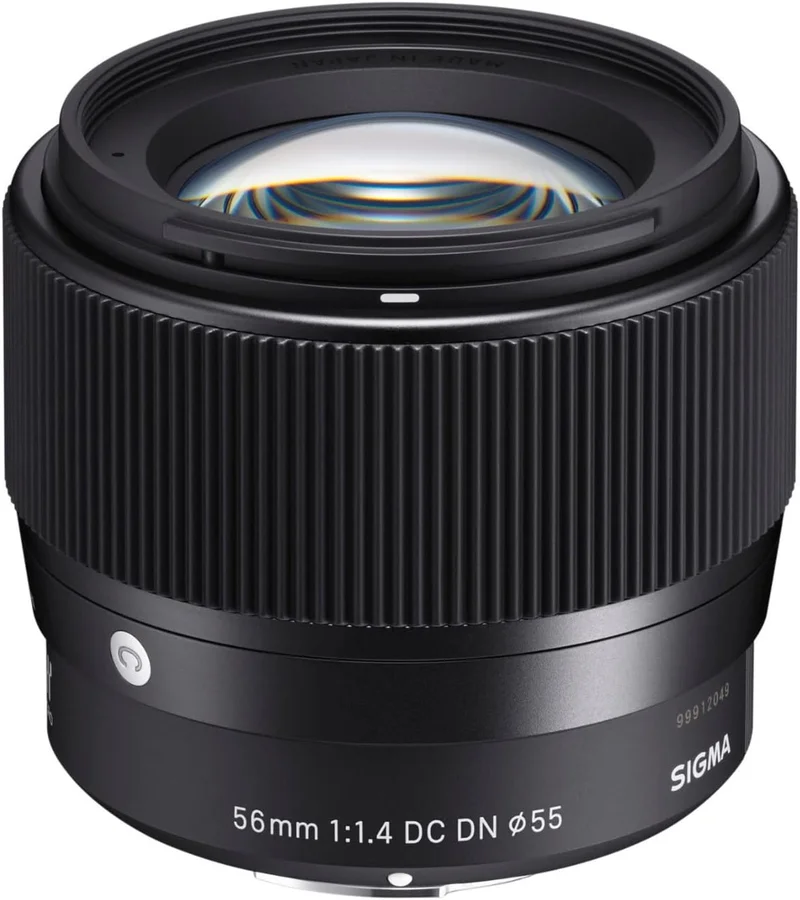
Sigma 56mm f/1.4 DC DN
Bild
Sony E 11mm f/1.8
Sigma 18–50mm f/2.8 DC DN
Sony E 35mm f/1.8 OSS
Sigma 56mm f/1.4 DC DN
EmpfehlungSelf filmingOne lensStabilisedPortrait
Sensorfeels like about 16.5 mmfeels like about 27–75 mmfeels like about 53 mmfeels like about 84 mm
ISO-Bereichf/1.8f/2.8 throughoutf/1.8f/1.4
Autofokusnonenoneyes, in the lensnone
Detailabout 181 gabout 290 gabout 154 gportrait, not selfie
Stärken
  • +You stay in frame without a selfie stick
  • +Bright enough for a room at night
  • +Small on an already light camera
  • +Brightness stays the same when you zoom
  • +Products, people and the day without swapping
  • +Quiet enough for video
  • +The only stabiliser among these four
  • +Softer background for portraits and products
  • +Small on the camera
  • +Soft background without a full-frame lens
  • +Built for APS-C
  • +Sharp enough to carry a portrait
Schwächen
  • −No stabiliser, walking stays unsteady
  • −Too wide for a portrait of someone else
  • −Too tight for a close selfie
  • −No stabiliser while walking
  • −Too tight for a short-arm selfie
  • −Older autofocus, sometimes audible in video
  • −Wrong for talking into a close camera
  • −No stabiliser
Geeignet fürFilming yourself with the camera close.People who film others and products, and only rarely themselves at arm's length.Products and faces when the camera is not in selfie position.Portraits once you have room to step back.
Wo kaufen
01
Camera

What on the ZV-E10 decides the lens

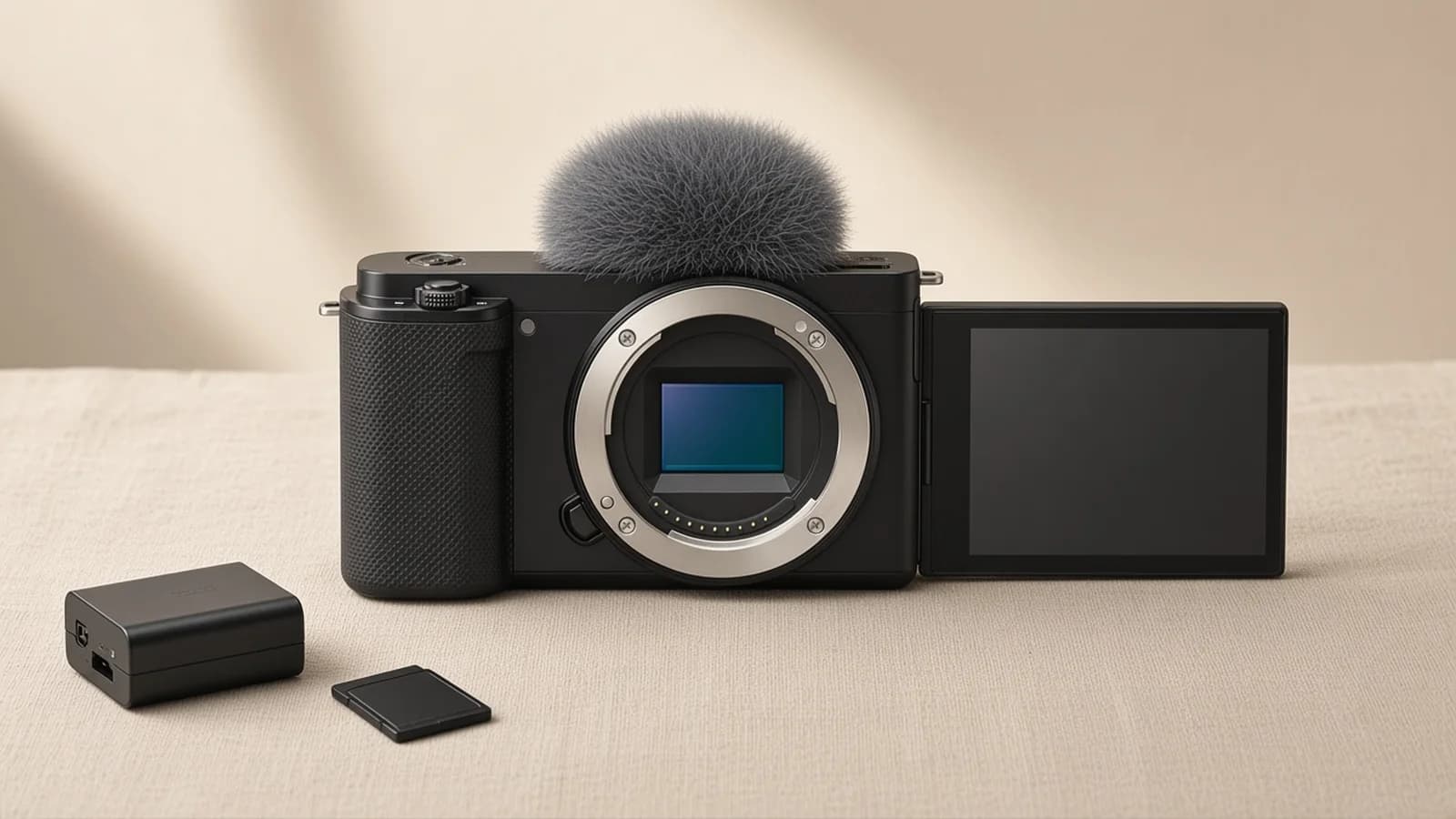
The mount is called E-mount. That is Sony's bayonet, the fitting the lens clicks into. APS-C lenses for this mount are built for this sensor size and stay small. Full-frame lenses fit mechanically too. They are often larger, and their focal length looks tighter on the ZV-E10. You take the same lenses with you if you later move to the ZV-E10 II or a Sony A6700. The A6700 then has a stabiliser in the body. There, a lens without OSS is less of a problem. OSS is the short name for steadiness in the lens.

The ZV-E10 has an electronic mode that computes the picture a bit steadier. It crops the frame tighter. That is exactly why a wide lens is not a luxury when you film yourself. What the mode cuts away, you have left over more often with 11mm than with 35mm. It does not replace walking. If you want the camera steady while you walk, you need a grip, a tripod, or the one lens with a stabiliser, and even that has limits.

02
Path

Choose a ZV-E10 lens by distance

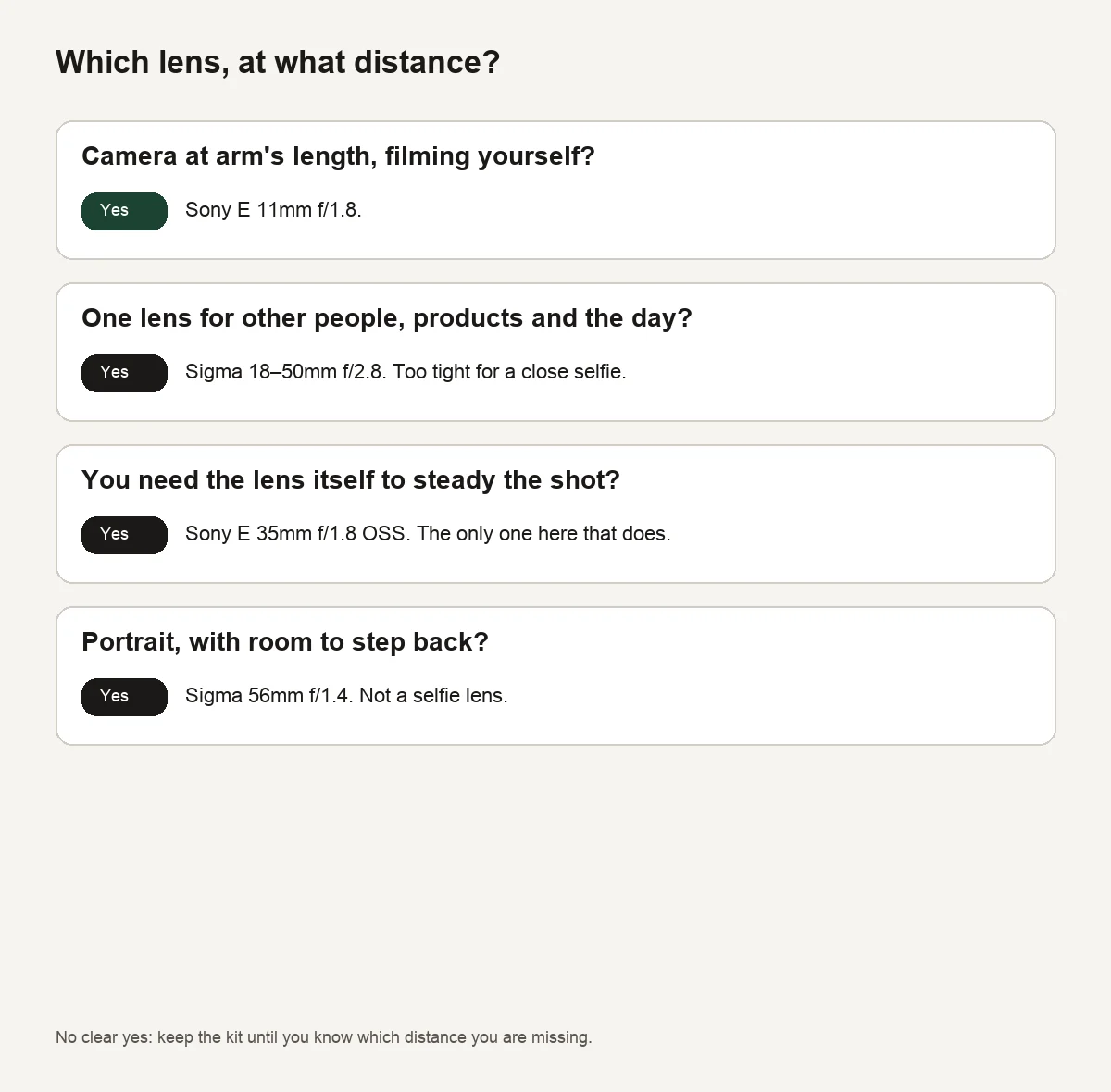
Go from the top down. The first yes is the purchase. Two lenses at once are worth it only when you really shoot two different distances. If you only show a product now and then and otherwise talk, the 11mm takes you a long way. If you never film yourself at arm's length, you do not need the 11mm, and the 18–50 is the more honest lens.

Decision tree: 11mm for filming yourself, Sigma 18-50 as one lens, 35mm with stabiliser, 56mm for portraits
No clear yes means: keep the kit until you know which distance you are missing.
03
View

Focal length on the Sony ZV-E10

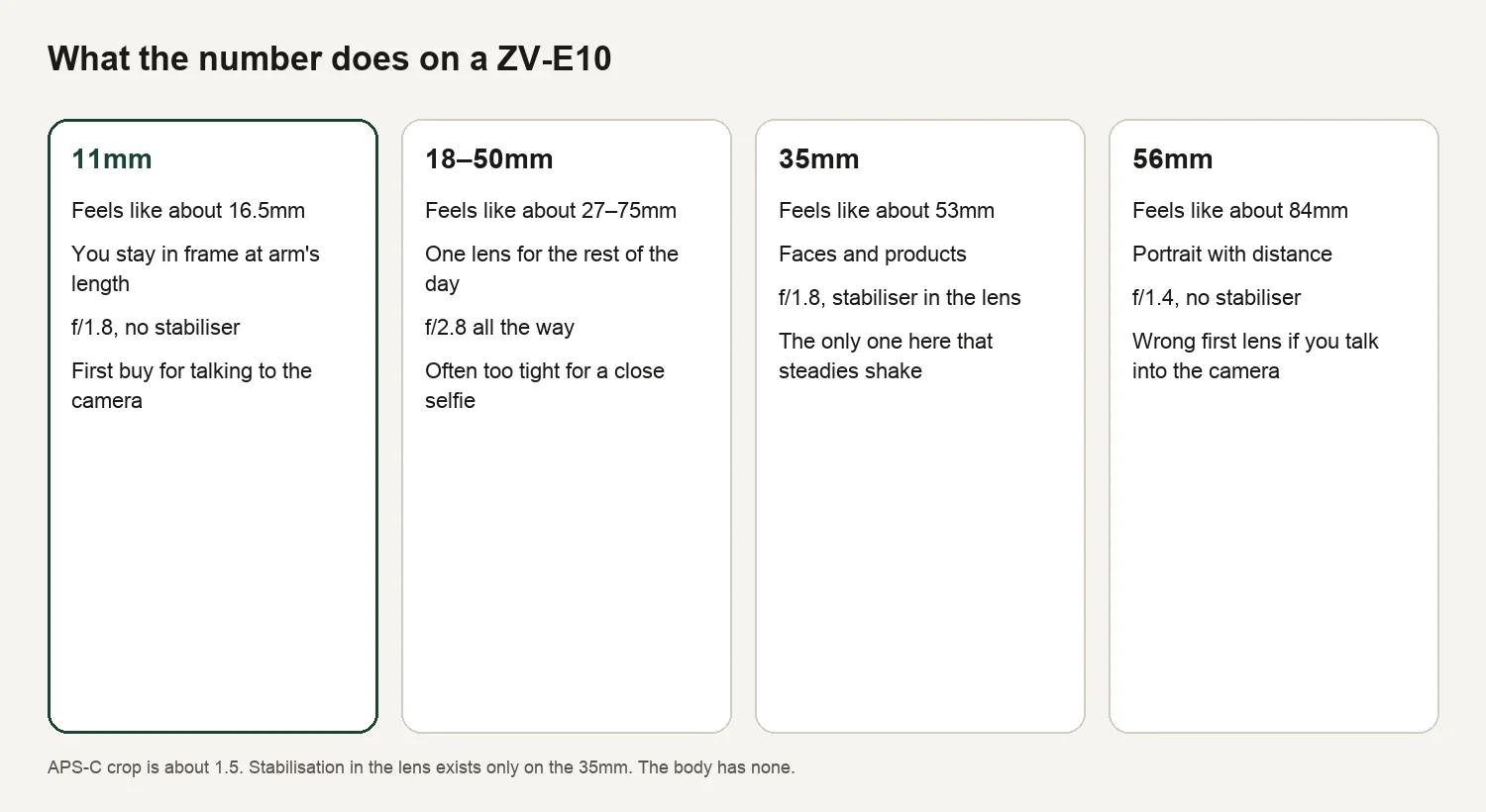
Focal length is the angle of view. A smaller number, more around you. A larger number, tighter on a face. On APS-C you roughly multiply by 1.5 if you want to compare the number with a full-frame camera. That is not a quality grade. It is only the translation, so 11mm and 56mm do not look like two random numbers.

Focal lengths on the ZV-E10: 11mm feels like 16.5mm, 18 to 50 like 27 to 75, 35mm like 53mm, 56mm like 84mm
The lens I take when the picture is more than a selfie is the 18–50.

How focal lengths feel in general, on a different camera, is in which lens for what. On the ZV-E10 the extra question is always: is the camera close to you, or are you filming someone else?

04
Buy

The best lenses for the ZV-E10

Sony E 11mm f/1.8 for filming yourself

This is a prime. You change the frame by holding your arm differently or taking a step, not by turning a ring. For talking into the camera that is an advantage: the view stays the same, autofocus looks for the face, and in the evening f/1.8 is visibly brighter than a kit that already starts at f/3.5 at 16mm and gets darker at the long end. Things close to the edge of the frame can bend a little. For a face in the middle that is rarely a reason to leave it.

Sigma 18–50mm f/2.8 as the only lens

f/2.8 all the way means it does not get darker when you zoom. That is exactly what happens with the kit zoom, and rooms go grey. About 290 grams is still a normal set on the light ZV-E10. 18mm, about 27mm in full-frame feel, shows a room. It does not reliably show your head and both shoulders when the camera is only an arm's length away. In return you film a product, a second person and the street without swapping.

Sony E 35mm f/1.8 OSS with stabiliser

About 53mm in full-frame feel. You stand a bit further away than with the 11mm, someone else's face fills the frame, a product on the table gets air. The stabiliser in the lens is the real difference from the other three on this camera. The autofocus is older and sometimes quietly audible in video. If your sound comes from a clip-on mic anyway, that bothers you less than a shaky picture.

Sigma 56mm f/1.4 for portraits

About 84mm in full-frame feel, and f/1.4. The background falls away and the face stands clear. You need room for that. In a small room you get pushed against the wall, and for filming yourself it is the wrong focal length. Buy it if you make portraits. Do not buy it because somewhere it says bright primes are always the next step.

05
No

Lenses I would not buy first for the ZV-E10

A full-frame 50mm f/1.8 fits the mount and is often cheap. On this camera it feels like about 75mm, usually has no stabiliser, and for portraits it is the shakier lens next to the Sigma 56, which is built for APS-C. A long telephoto for animals is a different hobby. The ZV-E10 is not meant for that, and without stabilisation in the body a long lens becomes unusable in video very quickly.

The Sigma 16mm f/1.4 is the larger, often cheaper wide alternative to the 11mm. It is bright and good indoors. At arm's length, 16mm — about 24mm in full-frame feel — is tighter than 11mm. Take it if the camera mostly sits on the table and the 11mm is too expensive. Do not take it if you specifically want to solve the short arm.

06
FAQ

Common questions about ZV-E10 lenses

What is the best lens for the Sony ZV-E10?
For filming yourself at arm's length, the Sony E 11mm f/1.8. If one lens should cover people, products and ordinary days, the Sigma 18–50mm f/2.8. There is no single best lens for every shoot.
Do I need a lens with a stabiliser?
The ZV-E10 has none in the body. While walking, OSS helps, and of these four only the 35mm f/1.8 has it. Standing and talking with a wide lens, the missing stabiliser is less of a problem than while walking.
Is the 16–50 kit lens enough?
For learning, yes. It is small and stabilised, but dark as soon as the light drops. Keep it until you know whether you are missing width or brightness. Do not buy it on top of the 11mm or the 18–50.
Do these lenses fit the ZV-E10 II?
Yes. E-mount stays. The same lenses also fit other Sony cameras with this mount, for example the A6700. The battery of the II is a different one. The lenses are not.
Can I put a full-frame lens on the ZV-E10?
Yes, mechanically. It looks tighter, it is often larger, and many cheap full-frame primes have no stabiliser. For portraits the Sigma 56mm is the better APS-C lens.
Which lens for YouTube on the ZV-E10?
If you talk into the camera, the 11mm. If you switch between yourself, an object and the room, and the camera is not only an arm's length away, the 18–50. Sound and battery change the finished video more than a third lens. The accessories guide is the next page.
Shop buttons are affiliate links to Amazon (partner ID martinkleinhe-20). If you buy through them, I get a small commission. The price stays the same for you. No brand paid for this page. Today's price is on the Amazon page.
◆ Newsletter

Stay in the loop.

Camera and photography news, honest gear tests and new articles — in your inbox. Infrequent but relevant. No spam, unsubscribe anytime.

Keep reading

From the journal.

Fotograf, Martin Fernando Mera Kleinheinz · Franz-Bork-Straße 21, 30163 Hannover · 0179 4085297