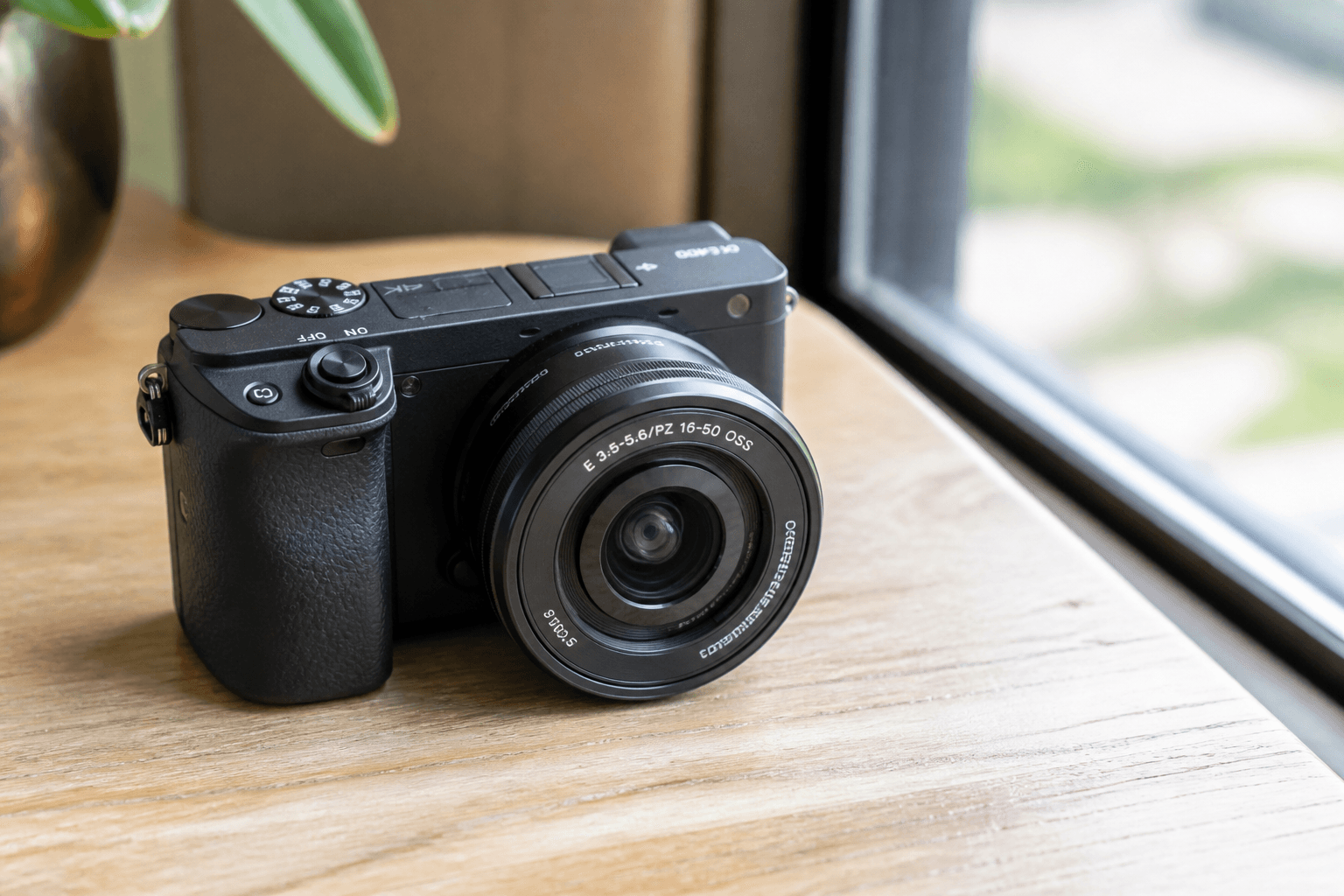
Sony ZV-E10 II Review: Sony ZV-E10 II Content Camera 2026
Is the ZV-E10 II worth it — and when do the A6700 or the first ZV-E10 fit better?
Author
Martin Kleinheinz
Photographer · Content Creator · Hannover
Updated
September 1, 2026
You’re googling “Sony ZV-E10 II” because you want a camera that works in front of you — not only at your eye. YouTube, Reels, product videos, talking-head: flip screen toward you, focus on the face, usable audio, and eventually better lenses instead of smartphone limits. The II is Sony’s modern answer to exactly that job: APS-C with interchangeable lenses, a larger battery and smoother 4K than the first ZV-E10.
Important up front: the II is not a classic photo Alpha with a viewfinder. It stays a content camera — honestly without an electronic viewfinder and without in-body stabilization. If you’re buying new and hybrid with a viewfinder plus shake protection, the Sony A6700 sits next to it. If you need to save hard, the first ZV-E10 remains the budget path. Creator overview: vlog camera for YouTube.
00
Short
Is the Sony ZV-E10 II worth it in 2026? The short verdict
Short version: the Sony ZV-E10 II is my new-buy recommendation in 2026 when you want content and vlog with interchangeable lenses and you know you don’t need a viewfinder. The body typically sits around $900 to $950, anchor often near $950. On top come a lens, a memory card and sensibly a spare battery. Plan that from day one — otherwise you end up with a modern box and no usable pictures.
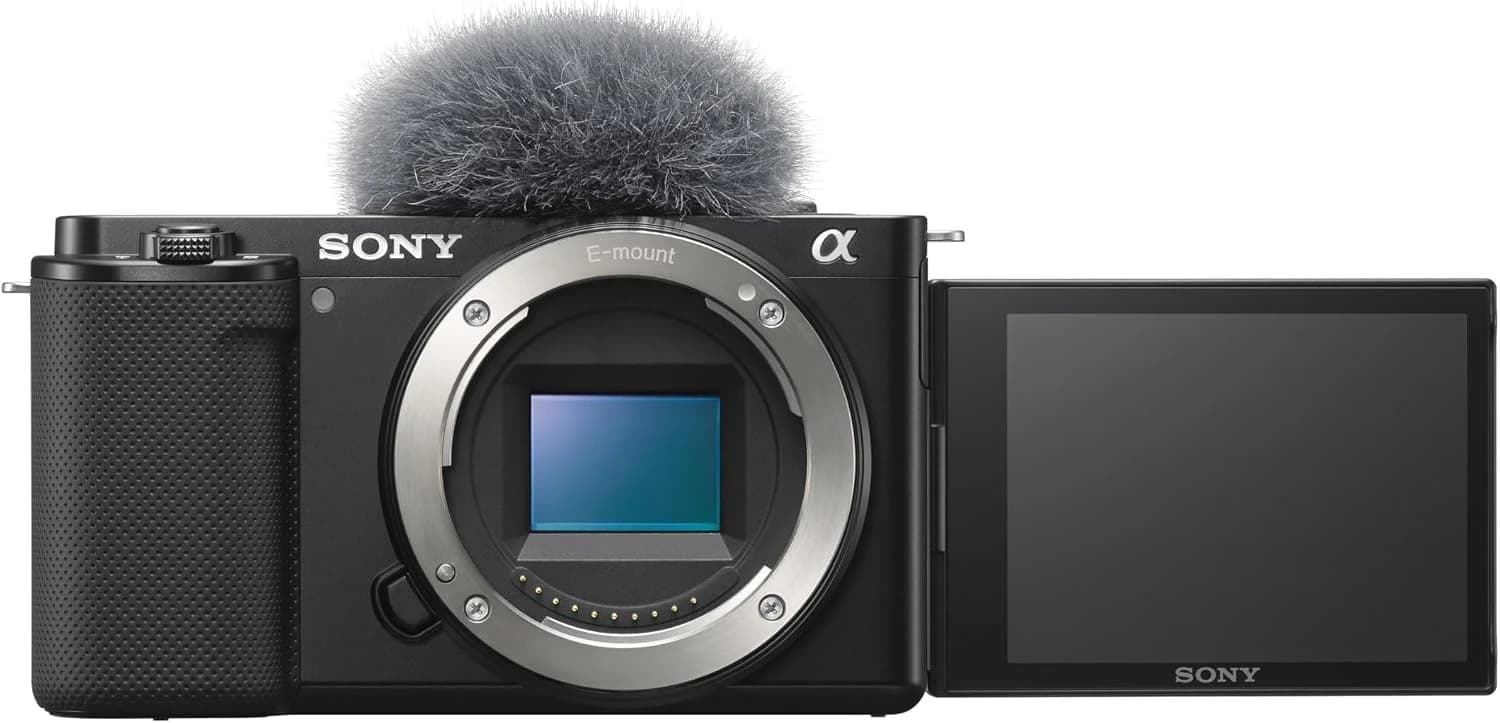
What you get: an APS-C sensor with about 26 megapixels from the same modern generation as the A6700 (APS-C means: larger than a smartphone and many cheap compacts — more reserve in light and subject separation than a phone), 4K60 and 10-bit internally (smoother and more flexible in post than Gen1 with 4K30/8-bit), Sony’s large NP-FZ100 battery, Product Showcase, a mic plus wind muff and a headphone jack. What you don’t get: an electronic viewfinder, IBIS (in-body stabilization against shake), two card slots or a mechanical shutter — the II works with an electronic shutter.
If you want the same sensor character, but need street, travel and stills at the eye with stabilization: A6700. If you need to save hard or start cheap and can live with older video plus a smaller battery: ZV-E10 Gen1. If you don’t want to learn a lens system at all and really want pocket: briefly the ZV-1 line — that’s a different job. Viewfinder and photo-first without a creator body: lean Sony A6400 or A6700.
Top 3
My three recommendations
The Sony ZV-E10 II is my recommendation when you buy new content or vlog with interchangeable lenses in 2026 and can live with a display instead of a viewfinder plus no in-body stabilization — typically around $900 to $950 body. The Sony A6700 fits when you want the same modern APS-C character, but need a viewfinder and stabilization against shake — anchor often near $1,300. The Sony ZV-E10 is the pick when you need to save hard and can live with 4K30 plus the smaller battery — typically around $550 to $600 new.
Vergleich
Sony
Sony ZV-E10 II
Sony
Sony A6700
Sony
Sony ZV-E10
Bild
Empfehlung
Editor’s pick
Alternative
Value
Sensor
APS-C · about 26 megapixels
APS-C · about 26 megapixels
APS-C · about 24 megapixels
ISO-Bereich
no — display
electronic at the eye
no — display
Autofokus
4K60 · 10-bit
strong 4K · 10-bit path
4K30 · 8-bit
Detail
not in the body
in the body
not in the body
Stärken
+4K60 and 10-bit — smoother and more flexible than Gen1
+NP-FZ100 — more reserve for longer shoot days
+Creator everyday: flip screen, Product Showcase, mic plus wind muff
+Headphone jack so you can monitor while recording
+E-mount — you can add better lenses later
+Viewfinder plus stabilization — stills and walking handheld feel more honest
+Same modern sensor character as the ZV-E10 II
+Stronger all-rounder when content is only part of your job
+NP-FZ100 — same battery path as the II
+Worth it when you clearly use the premium for EVF and IBIS
In the rest of this article I’ll explain the terms, everyday use and especially II versus Gen1, II versus A6700 and the question whether you really need a creator camera — or a hybrid with a viewfinder. I cover Gen1 here as the budget alternative; the deep Gen1 everyday sits in the Sony ZV-E10 review.
01
Audience
Who the ZV-E10 II really fits
Before we talk 4K60 and bit depth: the most important question is whether you work in front of the camera. The ZV-E10 II is built for people who flip the screen toward themselves, check the frame, talk and show products. That feels different from a classic system camera where you look through the viewfinder and walk the street. If your everyday is talking-head, tutorials, unboxing and short clips, you’re in the right film. If your everyday is mainly street, family and travel at the eye, you’re often more honest with an A6700 or A6400 — even if “ZV” in the name sounds cooler.
It fits well when you’re coming from a smartphone and finally want more control over sharpness, background and light — without carrying a large Alpha right away. You want E-mount, meaning interchangeable lenses: today a kit or a fast prime, tomorrow maybe a wide angle or a portrait lens. You shoot mostly stationary or with a tripod, gimbal or steady hands. It fits poorly when you expect walk-and-talk without help: no IBIS means the camera does not stabilize the sensor against your shake. Then you need a stabilized lens (often marked “OSS” on Sony), calmer technique, a tripod or a gimbal — otherwise you disappoint yourself.
It also fits poorly when you absolutely need a viewfinder at the eye in bright sun, or shoot events with backup on two cards. One slot and display-only are often fine for creators — often too little for classic work-camera jobs. And if the budget is tight and you really feel the price gap to the II: Gen1 stays legitimate. Just don’t pretend Gen1 is “the same, only cheaper.” Battery and video are the jumps you feel.
Use case
Does the ZV-E10 II fit?
Why
Talking-head / YouTube
Excellent
Flip screen, mic, AF, large battery — exactly the job
Product reviews
Excellent
Product Showcase helps a lot when switching face/product
Reels / Shorts
Good
Vertical and 4K60 — nicer workflow than Gen1
Walk-and-talk without help
Weak
No IBIS — plan gimbal, OSS or calm technique
Stills with viewfinder / sun
No
No EVF — then A6700 or A6400
Hybrid travel stills+video
Conditional
Works — A6700 is often the more honest all-rounder
Budget content entry
Often overkill
Gen1 can be enough when you clearly want the price gap
Fit by practice and user consensus — as of September 2026
A typical scenario: you sit at a desk, film tutorials, hold products into the camera, need reliable face focus and want to buy a better lens later. Then the II is often exactly right — especially when you shoot several takes in a row and notice the larger battery.
Another scenario: you travel, shoot city and portraits at the eye, film clips handheld in between and want one camera that takes both seriously. Then you often pay the smarter premium for the A6700 — viewfinder and IBIS aren’t specs there, they’re everyday help. And a third scenario: you want to start content, have a tight budget and accept 4K30 plus a spare battery. Then Gen1 isn’t a “loser,” it’s the honest entry — details in the ZV-E10 review.
If you’re unsure whether you need a system camera at all: for many Reels the smartphone is still enough for a long time. The jump pays off when you want image quality, lenses and a real creator workflow — not because “real camera” is on the datasheet. Orientation in the overview: vlog camera for YouTube.
One more reality check on weight: 292 grams body sounds featherweight — and without a lens it is. With a kit zoom or a fast prime you quickly land in a different league. That’s not a criticism, it’s planning: the II is the small system camera for content, not the invisible clip machine. If you want the camera “always with you” without thinking, that’s a different brief than “best image quality for my channel at the desk.”
02
Understand
What the tech means — without datasheet vibes
Here come the numbers — explained so you know what they mean for you. The three cameras in this review do related but different jobs. If you’re coming from a smartphone or an entry camera, some terms are new. So I translate them once — after that the everyday consequences are enough.
APS-C and 26 megapixels (II): APS-C is a sensor format. Simply put: larger than in a smartphone and in many cheap compact cameras, smaller than full-frame. For you that often means: more reserve in low light than a phone, more control over the background (blur), and manageable files for web and social. The II sits around 26 megapixels and uses a modern BSI Exmor R generation — roughly the same sensor idea as the A6700. “BSI” means back-illuminated: the tech helps use light more efficiently. You don’t need to memorize the word. Remember: image-wise the II is not old entry APS-C from ten years ago. Gen1 sat around 24 megapixels of an older generation — often totally fine for YouTube, but not the same modern starting point.
No EVF, no IBIS — the honest limits:EVF stands for Electronic Viewfinder, the small finder at your eye. The II has none. You work via the flip screen. In sun you need shade, a hood or practice — otherwise you fight reflections. IBIS stands for In-Body Image Stabilization: stabilization in the body against shake. The II doesn’t have it. For you that means: longer handheld exposures and calm walking clips are harder than on an A6700. OSS lenses, a tripod, a gimbal or calmer movement aren’t nice-to-haves — they belong to an honest setup.
4K60 and 10-bit — the jump you feel versus Gen1:4K is the resolution that’s standard for good YouTube and many clips today. 60 frames per second means: smoother with motion, nicer for light slow motion and often feeling more “modern” than 30 frames. Gen1 stayed at 4K30 internally. 10-bit means: more color information than 8-bit. For you that means: more room when you pull colors in post — skin tones, log-like looks, grades. For “upload straight with little color work,” 8-bit is often enough. For growing creators who learn to color, 10-bit is one reason the II makes sense new.
NP-FZ100 instead of FW50 — the big everyday jump: The II uses the NP-FZ100, Sony’s large everyday battery from many Alphas and the A6700. Gen1 uses the smaller NP-FW50. For you that means: longer shoot days, less panic about the yellow battery icon, and spare batteries you can later reuse sensibly in other Sony cameras. Many underestimate this. In practice the battery is often why people find Gen1 annoying — not the image quality.
One SD slot UHS-II, no CFexpress: The II has one memory-card slot for SD cards up to UHS-II (faster write speed than many cheap cards). No CFexpress, no second slot. For you that means: pick a strong card and back up outside the camera. Cheap cards are the wrong place to save — orientation: best SD card for camera.
Electronic shutter only: The II has no classic mechanical shutter. The sensor “reads” the image electronically. For you that means: quiet and modern — but under some artificial light or with fast motion, rolling-shutter effects (skewed lines, banding) can show more than on cameras with a mechanical shutter. For talking-head and products usually irrelevant. For sports under LED hall light, test honestly first.
Optional 4K120 license (from Dec. 2025): Sony offers a free license for the II that unlocks 4K at 120 frames per second — with a noticeable crop (the frame gets tighter, roughly around 38 percent). For you that means: nice slow motion if you plan the tighter framing. That’s a nice-to-have, not a reason to buy. Buy the II for battery, 4K60/10-bit and creator everyday use — not for an optional slow-motion unlock.
Heat and Auto Power OFF Temp: Long 4K recordings can warm the body. Sony knows the topic from the Alpha world. In the settings you’ll often find something toward Auto Power OFF Temp. / high temperature tolerance. For you that means: on long takes you can raise the shutoff threshold — but responsibly. Heat stays heat. Plan breaks, good airflow and realistic clip lengths. That’s not a dealbreaker for tutorials — but an honest note if you expect hours of continuous 4K60.
Topic
Sony ZV-E10 II
Sony A6700
Sony ZV-E10 Gen1
Sensor (simple)
APS-C · ~26 MP modern
APS-C · ~26 MP modern
APS-C · ~24 MP older
Viewfinder
No — display
Yes — EVF at the eye
No — display
IBIS (stabilization)
No
Yes — everyday helper
No
Video everyday
4K60 · 10-bit
Strong hybrid 4K · 10-bit
4K30 · 8-bit
Battery
NP-FZ100
NP-FZ100
NP-FW50
Card slots
1× SD UHS-II
1× slot
1× SD
Job 2026
New content default
New hybrid EVF+IBIS
Budget / used
Price approx. (US 2026)
$900–950 (anchor ~$950)
~$1,300
$550–600 new (anchor ~$580)
Three philosophies at a glance — as of September 2026
If you want to understand sensor formats in general: crop sensor vs full frame. For most ZV-E10 II buyers it’s enough: APS-C is large enough for strong content — and cheaper/lighter than the jump to full-frame that you often don’t need for talking-head.
03
Everyday
How the ZV-E10 II really feels
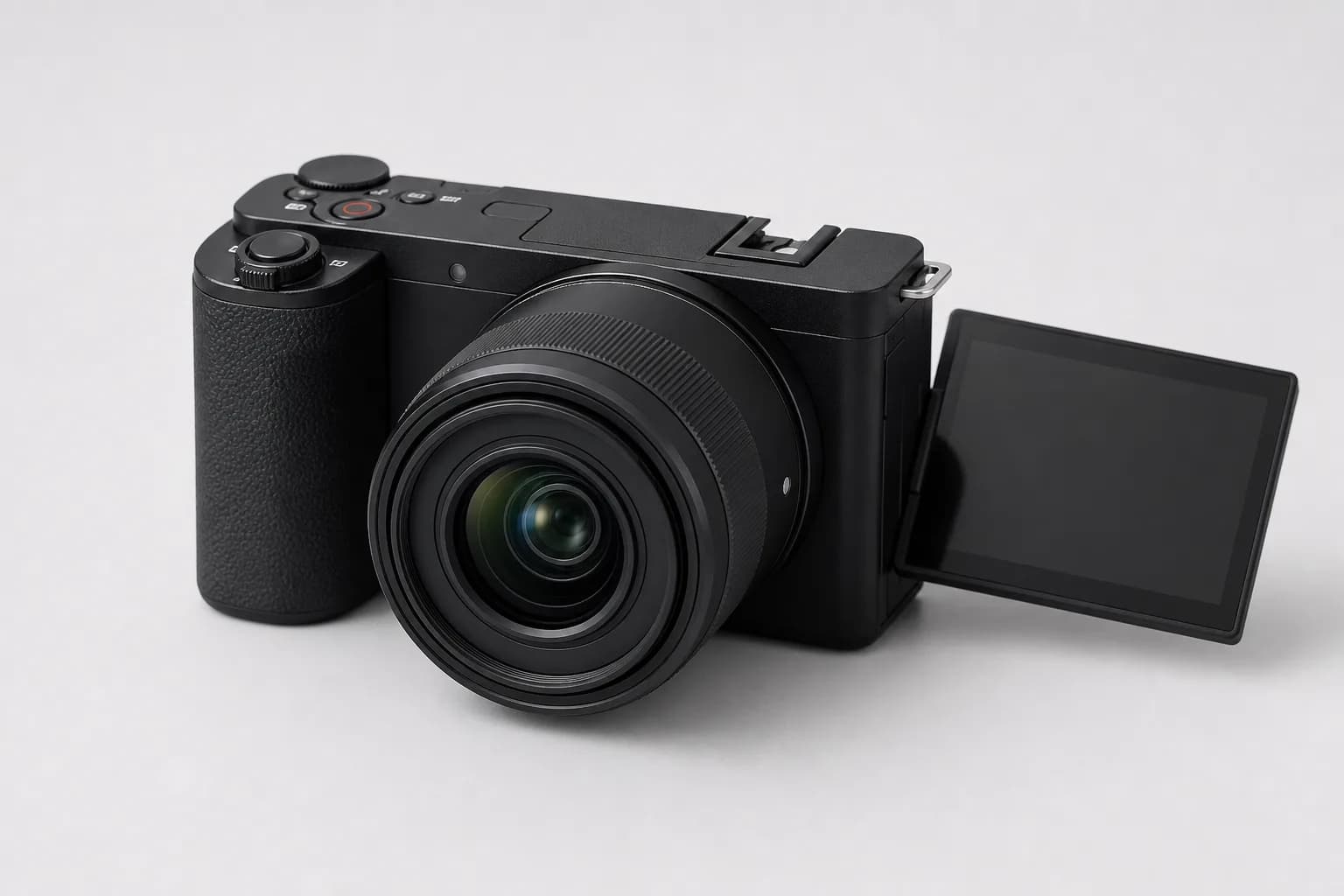
Tech on paper is one thing. How the camera feels decides whether you actually use it. The II is light: the body sits around 292 grams, with battery and card roughly around 377 grams. That’s noticeably handy. With a lens it still becomes a system — not a pants-pocket wonder. Anyone hunting “always in the jacket” is more honest with the ZV-1 line. The II is the pick when you want small enough and still want to keep lenses.
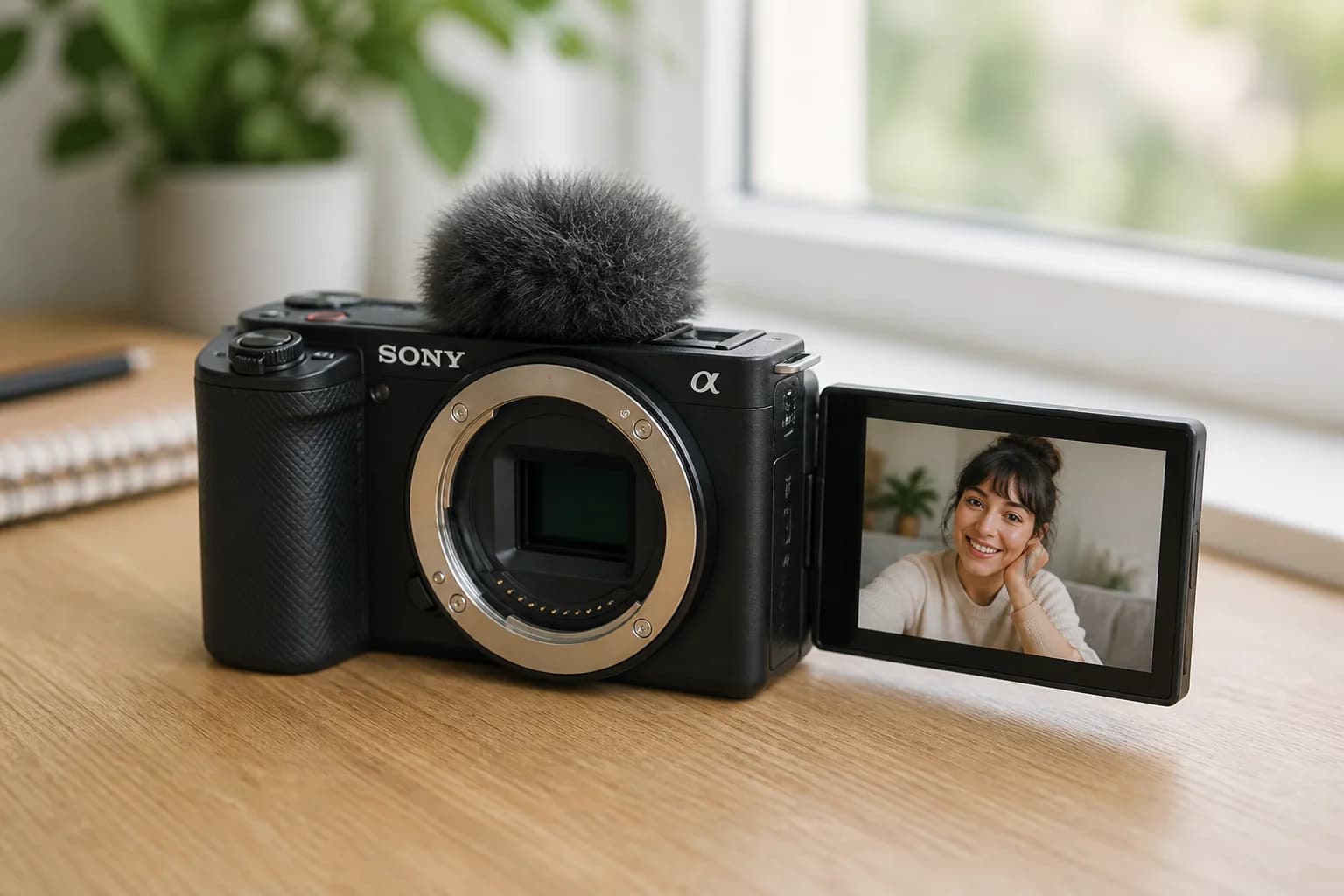
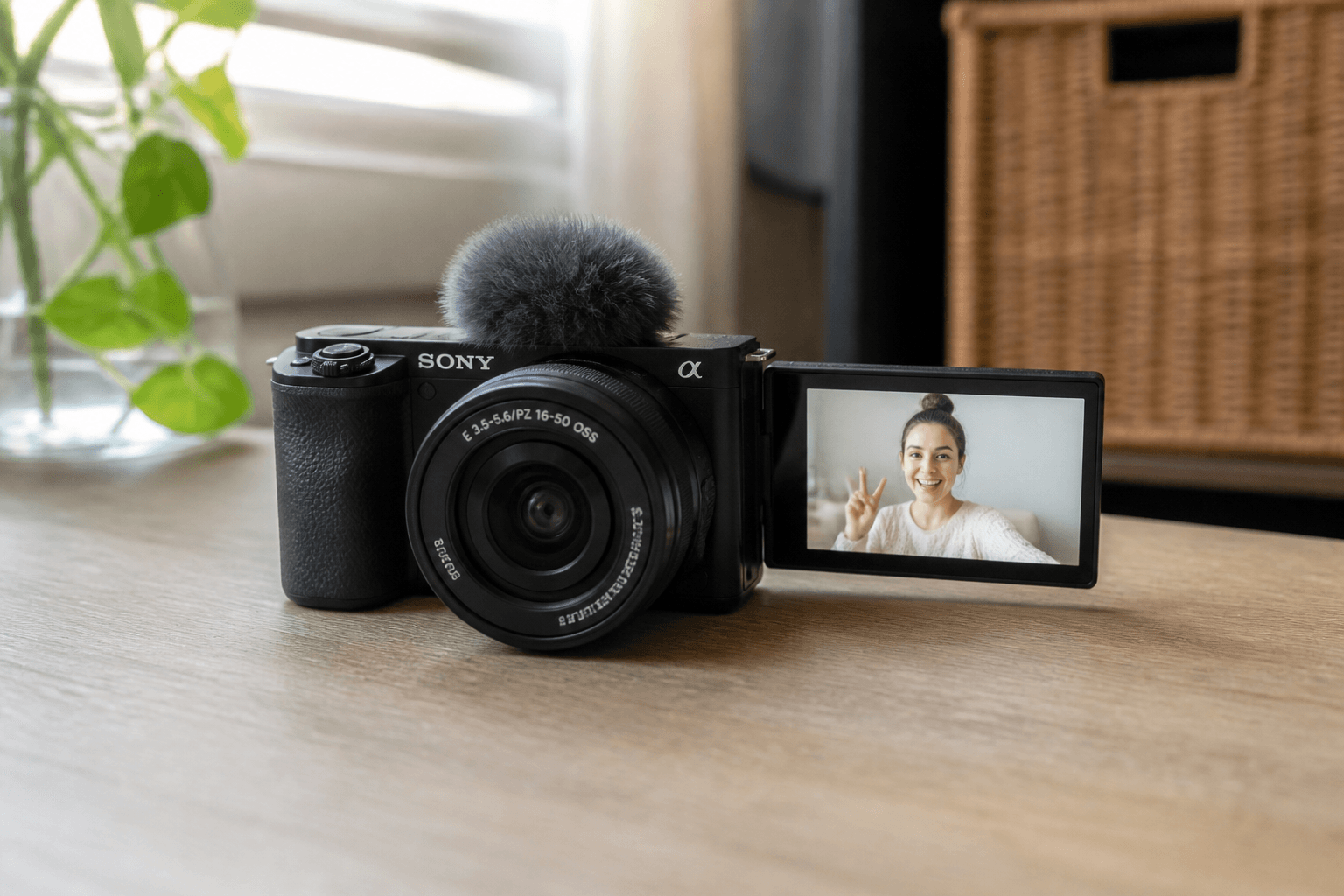
The flip screen is the center. You film yourself, check exposure and framing, correct position. Product Showcase switches focus from face to the product in front of the lens — that sounds like a gadget, but it saves takes when you hold things into the camera. The wind muff on the mic is typical ZV: outdoors in light wind often clearly better than a bare camera mic. For serious audio an external mic is still the next step.
The grip is okay for a light creator camera, not a classic Alpha work grip. With a larger zoom the balance gets front-heavy — normal system-camera life. Many use the II on a small desk tripod or a cage with a cold shoe for light and mic. That’s not mandatory on day one, but the natural path when “trying it out” becomes a channel.
What you notice quickly in everyday use:
◆Screen toward you — selfie angles and talking-head feel natural
◆Battery lasts longer than Gen1 — less stress between takes
◆Without a viewfinder in sun: plan position and shade
◆Without IBIS: steady hands or help (OSS, tripod, gimbal)
◆Light body — the lens decides the real carry feel
◆Headphone jack: check audio before you record 20 minutes wrong
Menus and controls stay Sony: deep, sometimes nested, but learnable. For creators there are helpful shortcuts — including toward vertical shooting and content features. You don’t need to become a menu nerd. You should invest 30 minutes before you shoot the first “real” upload. Otherwise you film with defaults that don’t match your light and your voice.
Compared with the A6700, the II feels less like “camera for everything” and more like “tool for in front of the lens.” That’s intentional. Anyone who wants both pays for the hybrid character on the A6700. Anyone who only wants the creator job carries less camera on the II that they’d never use as a viewfinder Alpha.
A small, often overlooked everyday point: the II invites you to quickly shoot “one more take” — exactly because the battery is more generous than Gen1. That sounds soft, but it changes your output. Less battery stress often means more courage for second and third attempts. Especially early on, when you’re still practicing speaking on camera, that’s worth more than a specs win on the datasheet.
On feel with accessories: once mic and light sit on the cold shoe, the light creator camera becomes a small rig. That’s normal. Plan from the start whether you stay handheld or go to a desk tripod early. Many happy II users shoot 80 percent of their clips stationary — and that’s exactly what the body is built for.
04
Result
Image and video: what you really notice
The question “How good does it look?” isn’t answered by megapixels alone. On the II you mainly notice: modern APS-C, clean files for web and social, and video that in 2026 no longer feels like a 2021 entry limit. Skin tones and everyday light depend heavily on lens, white balance and your setup — like any camera. The sensor gives you reserve. The setup decides whether you use it.
In stills everyday, 26 megapixels are enough for thumbnails, websites, prints at common sizes and crops for social. You’re not in the “I need 45 megapixels for client posters” league if your job is content. In video everyday, 4K60 and 10-bit are the features you feel as soon as you have motion or pull colors. For many talking-heads Gen1 would also be “sharp enough.” The II buys you smoothness, reserve and less compromise feel.
Low light: APS-C isn’t a full-frame miracle, but clearly ahead of a smartphone. For you that means: better room in evening light and indoors — still set light if you want to look pro. A window, a cheap LED and a decent lens often buy more than a pricier body in the dark.
◆Stills: 26 MP — enough detail and crop for content, without huge files
◆Video: 4K60 — smoother than Gen1; 10-bit — more room when coloring
◆Creator features: Product Showcase and mic/wind muff help in the take
◆Limit: without IBIS and without EVF the character stays “display content”
An honest comparison with the A6700: image-wise you sit close together because the sensor generation is related. It diverges as soon as you go handheld, work at the eye in sun or take hybrid stills seriously. Then the A6700 doesn’t win through “more megapixel magic,” but through viewfinder and IBIS.
Versus Gen1: many see little difference in a finished YouTube upload in good light. You feel the difference in shoot everyday — battery swaps, 30 vs. 60 frames, 8 vs. 10 bit — and when you start coloring seriously. So “looks the same” is no argument against the II if you’re buying new and want to work with it for years.
05
Practice
Focus and audio: here the take is decided
Autofocus on content cameras isn’t a bonus — it’s the insurance that your face stays sharp while you talk and gesture. The II is modern and creator-oriented here: face and eye are held reliably, Product Showcase helps when switching to the product. For you that means: less manual refocusing, more focus on text and timing.
No AF is perfect. In very low light, strong backlight or chaotic foregrounds any autofocus can hesitate. Then it helps: more light, calmer movement, and knowing when to briefly intervene manually. For 90 percent of talking-head and product clips, the II’s AF is exactly why people switch from a smartphone or older compacts.
Audio: the built-in mic plus wind muff is often better for sketches, quick clips and windy outdoor spots than a “naked” camera mic. For a channel you take seriously, still plan an external mic — on-camera shotgun or lav. The mic jack and the headphone jack are gold here: you hear whether you’re rustling, too far away or the AC is eating the track before you edit.
Many Gen1 users lived years without a headphone jack and cursed afterward. The II closes that gap. It sounds banal. In practice it saves retakes. If you only need one upgrade argument and talk a lot: battery and monitoring sit next to 4K60 among the most honest ones.
Compared with the A6700: you also get strong autofocus and jacks there — but the body is less “vlog-first.” Wind-muff character and Product Showcase everyday stay ZV strengths. If audio and face focus are your core and you rarely work at the viewfinder, the II stays the more direct machine.
06
Stills
Stills with 26 MP: think ahead, don’t overrate
The ZV-E10 II can shoot stills — clearly. 26 megapixels APS-C deliver enough for social, web, lookbooks and many client jobs in a content context. You get modern image quality and E-mount flexibility. Still: it’s not a photo-first camera. Without a viewfinder and without IBIS you work differently than with an A6700 or A6400.
In sun an EVF often saves the day. On the II you work with the display, maybe seek shade, raise brightness, and practice. Handheld at longer times there’s no sensor stabilizer in the body — OSS lenses or shorter times are your friends. For flatlays, products on a table and portraits with light that works excellently. For street at noon and spontaneous family snaps without a setup you’re often more relaxed with a camera that has a viewfinder.
Electronic shutter: for static subjects usually unnoticeable. With fast motion or problematic artificial light, artifacts can show. If stills become your main job, that’s an argument toward a hybrid with a mechanical shutter — not necessarily a KO for occasional content stills.
Lenses make a bigger stills difference than the body. A fast prime (fixed focal length = no zoom — you move) changes portraits more than switching Gen1 to II. Plan budget for glass. Body-only is only smart if you already own E-mount.
For thumbnails and still content from video frames, 4K helps: you can pull stills. That doesn’t replace a deliberately shot Raw in every situation — but for many creator workflows it’s practical.
07
Video
Video in creator everyday use: what the II really can do
Here’s the core of the II. 4K60 gives motion more smoothness — hand gestures, demos, light action look calmer and more modern than at 30 frames. 10-bit gives you color reserve. For many uploads you still shoot “finished” from the camera or with light correction. You notice the reserve when you learn to build looks.
Creator features aren’t toys: flip screen, Product Showcase, usable mic with wind muff, headphone jack. Plus vertical workflows for Reels and Shorts. The II thinks the job “I’m in the frame” with you. A classic Alpha thinks more “I look through the viewfinder at the world.”
Stabilization: without IBIS you stay on lens OSS, digital helpers, tripod, gimbal or calm movement. Digital stabilization can crop and soften — use it sparingly. For walk-and-talk a gimbal is often the more honest investment than “expecting another body feature” that doesn’t exist here.
◆4K60: smoother everyday and light slow motion without drama
◆10-bit: more air when grading — not mandatory for every upload
◆4K120 license: optional, with crop — nice-to-have, not a buy reason
◆Heat: pause long high-4K takes and know the temp setting
◆Audio: external mic + monitoring beats specs
Against Gen1 the II clearly wins in the video package: 60 instead of 30, 10 instead of 8 bit, larger battery, monitoring. Against A6700 it’s a job match: the A6700 is often the better hybrid video camera handheld with a viewfinder. The II is often the better “I film myself and my product” camera at a lower entry.
For YouTube beginners the II’s video lasts for years — if light and audio grow with you. The camera is rarely the bottleneck. Your idea, your edit and your consistency are more often.
A practical workflow tip that outlives specs: shoot at one frame rate and stick with it until you have a reason to switch. Many beginners jump between 24, 30 and 60 and later wonder about edit chaos. 4K60 is strong when you want motion and options — for calm talking-heads a lower rate can be plenty. The II gives you the choice. Project discipline stays yours.
And again on the optional 4K120 unlock: slow motion looks magical in demos. In channel everyday you use it less than marketing promises — and the crop forces you to rethink distance and framing. Nice when it’s there. Unnecessary as the main argument versus Gen1 or A6700.
08
Plain talk
Honest limits — what the ZV-E10 II isn’t
No buying guide without limits. The II is not an all-rounder Alpha. No electronic viewfinder means: in sun and classic stills feel you’re constrained. No IBIS means: walking clips and longer handheld exposures need help. One slot means: backup happens outside. Electronic shutter only means: certain light/motion situations can act up.
It’s also not a pocket compact. With a lens you need a bag. Anyone who wants “camera in the jacket pocket and done” lands more honestly with the ZV-1 idea — smaller sensor, fixed lens, less growth. The II is a system: freedom and responsibility at once.
Heat on long 4K sessions is realistically possible. That doesn’t make the camera unusable — it breaks unrealistic expectations. And: the optional 4K120 unlock with crop is no reason to buy the II “for slow motion.” Anyone who needs slow motion as a main feature plans crop and workflow deliberately — or looks at other bodies.
Lastly: affiliate or not — if your budget after body, kit glass and nothing else looks thin, start smaller or save for glass and mic. An II without light and audio is often worse content than Gen1 with a good mic and a lamp. Prioritize the workflow, not only the body year.
09
Decision
ZV-E10 II, A6700 or Gen1 — which question are you asking?
The right camera depends on the right question. “Which is better?” rarely gets you further. Better: “Which job am I paying for?”
Your question
Honest answer
New content with lenses, display okay?
ZV-E10 II
Viewfinder + IBIS, hybrid stills/video?
A6700
Save hard, start content?
ZV-E10 Gen1
Pocket without lens chaos?
ZV-1 line (different job)
Photo-first with viewfinder, older budget?
Check the A6400 path
Decision questions instead of a specs duel — as of September 2026
II versus Gen1: New and use for years → II. Price gap large and the brief is “talking-head is enough” → Gen1. The jump is battery, 4K60/10-bit and monitoring — not “suddenly Hollywood.” More Gen1 depth: Sony ZV-E10 review.
II versus A6700: Both modern APS-C and NP-FZ100. The A6700 costs clearly more and gives you EVF plus IBIS. If you only stand in front of the camera, you often pay on the A6700 for features you rarely use. If you mix stills and walking, you often pay on the II with nerves the A6700 saves you. Details: Sony A6700 review.
II versus A6400: The A6400 is the older photo/hybrid path with a viewfinder, without the ZV-line creator body. Sensible when you want used/older with an EVF and content is only a side job. For 2026 new content with a flip-screen selfie workflow, the II usually stays the more direct answer.
II versus ZV-1: Only as a side note — fixed lens, truly small, less system. If you want lenses, stay with the E series. If you hate lenses, read the ZV-1 review and skip adapter dreams.
10
Overview
Three cameras at a glance
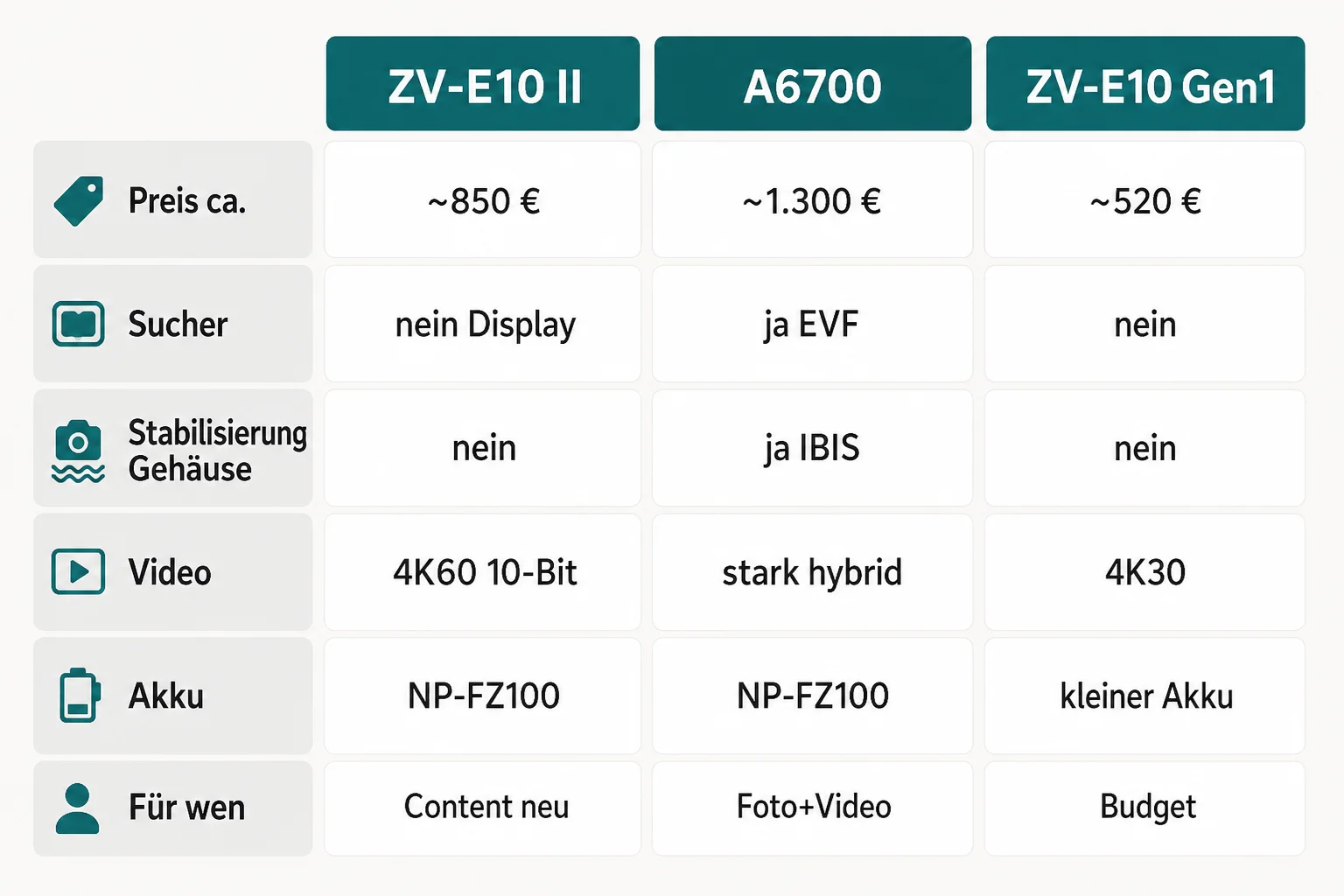
The graphic and the table compress what you’ve read so far: the same content family, three prices, three compromises. The II is the modern default. The A6700 is the hybrid premium. Gen1 is the budget entry.
ZV-E10 II vs. A6700 vs. Gen1 — job, price and compromise at a glance
ZV-E10 II
A6700
ZV-E10 Gen1
Role 2026
New content
New hybrid
Budget content
Viewfinder / IBIS
No / No
Yes / Yes
No / No
Video
4K60 · 10-bit
Strong hybrid 4K
4K30 · 8-bit
Battery
FZ100
FZ100
FW50
Price approx.
~$950
~$1,300
~$580
You buy when…
Creator new
EVF+IBIS matter
Price is priority
Short matrix — as of September 2026 · body prices rough US
If two rows are “must” for you and only one camera meets them, you have your answer. If no row burns, Gen1 or even longer the smartphone is often enough — and you invest in light and mic first.
11
Path
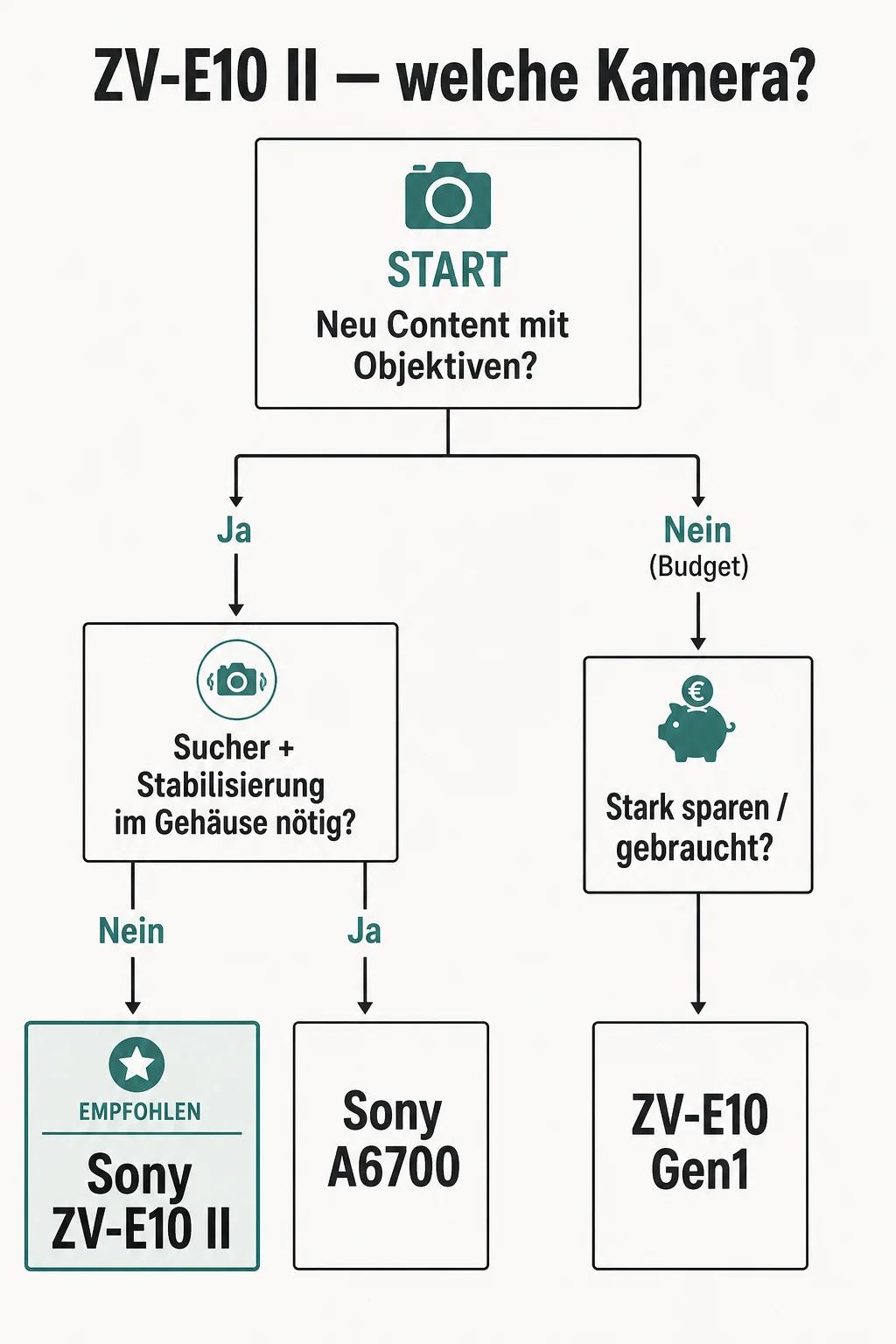
The decision tree: which camera fits you
Read the tree top to bottom. Stay honest on “Do I need a viewfinder?” and “Do I mainly film myself?” Many bad buys happen because someone wants a ZV and actually needs a hybrid Alpha — or the other way around.
From use question to camera — ZV-E10 II, A6700 or Gen1
◆In front of the camera + new + lenses → ZV-E10 II
◆Viewfinder and stabilization needed → A6700
◆Tight budget, start content → ZV-E10 Gen1
◆Pocket only, no lenses → ZV-1 path
◆Photo-first older/cheaper with EVF → check A6400
If you’re still between II and A6700 after the tree: count your situations for a week. More than half viewfinder/walking/stills? A6700. More than half display/selfie/product? II. Undecided and budget there: A6700 — you outgrow viewfinder and IBIS less often than a pure creator body.
12
Recommendation
Sony ZV-E10 II: is the new default worth it?
Yes — when the job fits. The II is the camera I name in 2026 when someone says: “I want a new Sony for YouTube and products, with lenses, without jumping straight to a hybrid Alpha.” You get modern APS-C character, 4K60, 10-bit, NP-FZ100, creator features and E-mount. You accept display-only, no IBIS, one slot and an electronic shutter.
Who the II is especially strong for:
◆YouTube, tutorials, product videos, Reels with system ambition
◆New buy meant to last several years
◆Switch from smartphone or Gen1 because of battery and video
◆Take audio seriously — use the headphone jack
◆Budget around $950 body plus glass and mic
Kit or body-only: if you have no glass, you need a starter lens. Better solid everyday glass than “body only” and then waiting months. If you already own E-mount, body-only and add deliberately. Prices swing — body roughly $900–950, anchor ~$950. Kits on Amazon can show different ASINs/prices; check what’s actually in the box.
The 4K120 license is a bonus if you unlock it and plan the crop. The buy decision stays: battery, 4K60/10-bit, creator everyday. You know heat and the temp setting now — so no surprise mid launch video.
Editor’s pick
Sony
Sony ZV-E10 II
My new-buy pick for content with interchangeable lenses
Modern APS-C content camera with interchangeable lenses — typically around $900 to $950 body, anchor often near $950. Larger battery, 4K60 and more grading headroom than the first ZV-E10. The honest new choice in 2026 when you film yourself, show products and want to grow with lenses — without a viewfinder and without in-body stabilization.
Was überzeugt
+4K60 and 10-bit — smoother and more flexible than Gen1
+NP-FZ100 — more reserve for longer shoot days
+Creator everyday: flip screen, Product Showcase, mic plus wind muff
+Headphone jack so you can monitor while recording
+E-mount — you can add better lenses later
Was Du wissen solltest
−No viewfinder — weaker in bright sun and for eye-level stills
−No stabilizer in the body — walk-and-talk needs help
−Only one SD slot (UHS-II) — no CFexpress, no in-camera backup
−Electronic shutter only — takes getting used to for some stills work
−Heat on long 4K takes is possible — plan the temp setting honestly
Editor's Statement
“New buy for YouTube, Reels and product videos with E-mount”
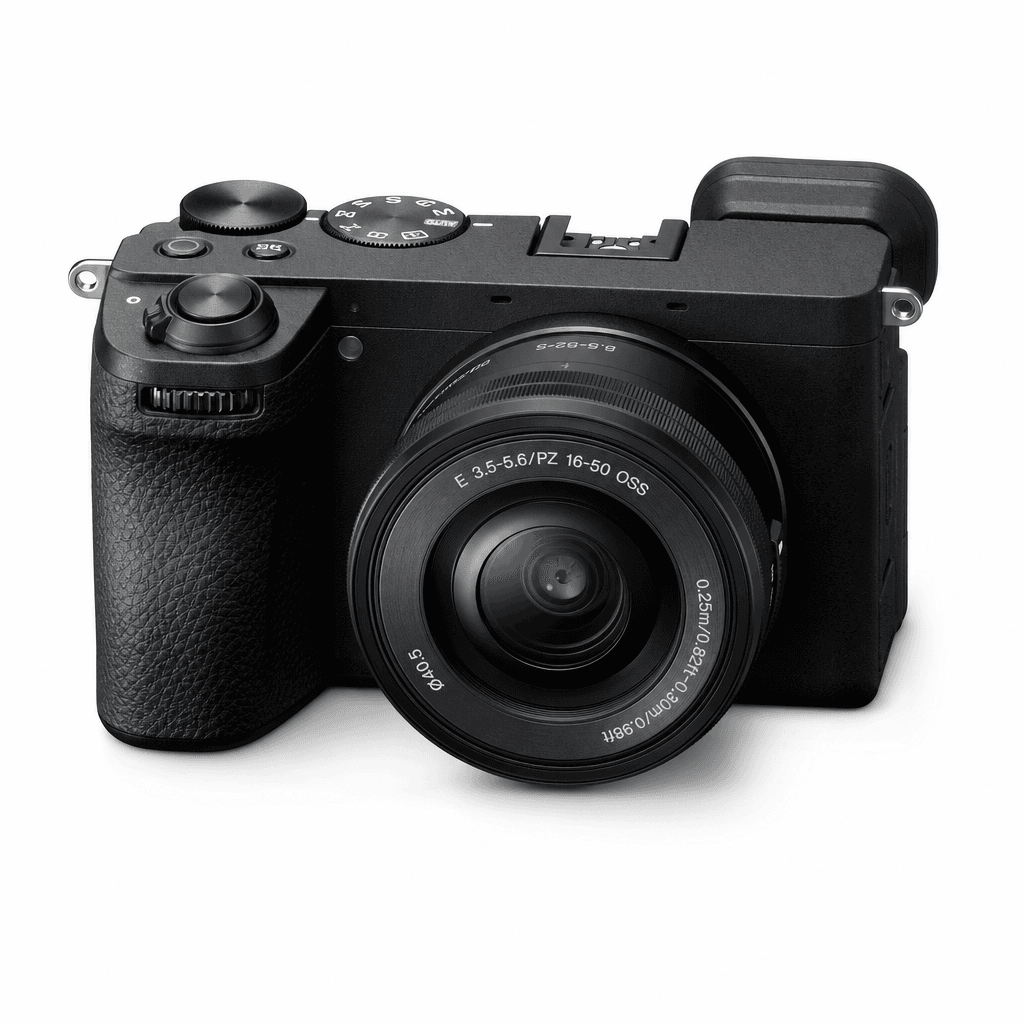
The A6700 is the close relative with a different body job. Same modern APS-C idea, same large battery — plus electronic viewfinder and IBIS. For you that means: stills at the eye in sun, calmer handheld clips, hybrid everyday without the creator compromise. Typically around $1,300 body.
Reach for the A6700 when content is only part of it. You shoot travel and family, film in between, want one camera that takes both seriously. Don’t reach for the A6700 if you exclusively do talking-head at a desk and never feel the premium in viewfinder or IBIS — then the II is often the more honest spend.
In depth: Sony A6700 review. Short: II = creator default. A6700 = hybrid default. Same sensor neighborhood, different everyday.
Alternative
Sony
Sony A6700
Hybrid with viewfinder and in-body stabilization
APS-C with an electronic viewfinder, stabilization against shake and a modern hybrid everyday — typically around $1,300 body. Same sensor generation as the ZV-E10 II, but for stills and video handheld with the viewfinder at your eye. The pick when you don’t only stand in front of the camera, but also shoot street, travel and everyday at eye level.
Was überzeugt
+Viewfinder plus stabilization — stills and walking handheld feel more honest
+Same modern sensor character as the ZV-E10 II
+Stronger all-rounder when content is only part of your job
+NP-FZ100 — same battery path as the II
+Worth it when you clearly use the premium for EVF and IBIS
Was Du wissen solltest
−Clearly more expensive than the ZV-E10 II
−Less “creator-first” body — not the ZV-line wind-muff feel
−Only one card slot
−APS-C stays APS-C — not full-frame
−If you only shoot talking-head, often more camera than you need
Editor's Statement
“When you want new hybrid with viewfinder plus IBIS”
The first ZV-E10 stays sensible in 2026 — as a budget or used path. New typically $550–600, anchor often near $580. You get the same creator idea: flip screen, Product Showcase, mic with wind muff, E-mount. You skip the large battery, 4K60/10-bit and the II’s headphone jack.
Gen1 is right when the price gap to the II is real for you and you know you’ll need spare batteries and possibly external monitoring. Gen1 is wrong when you pay “almost II money” and think you have the same thing. Then better save toward the II.
I differentiate this article on purpose: here Gen1 is the alternative, not the hero. The deep Gen1 review with everyday use and limits is under Sony ZV-E10 review.
Value
Sony
Sony ZV-E10
Budget — when the price sits clearly under the II
The first ZV-E10: APS-C content camera with flip screen, Product Showcase and wind muff — typically about $550 to $600 new, anchor often near $580, often less used. 4K30, smaller battery, older video. The budget pick when you need to save hard and know what you’re skipping.
The body is only the start. Without glass, a card and an audio setup you don’t get out of the II what you’re buying it for. Here’s the honest order — not the longest wish list.
Priorities for the start:
◆Lens: kit to start or a fast prime if you already know you shoot portraits/talking-head
◆SD card UHS-II: fast and reliable — see the SD card guide
◆Spare NP-FZ100 battery: relaxed even with the large battery
◆External mic: on-camera or lav — audio before specs
◆Small tripod or desk tripod: calm talking-heads without IBIS
◆Optional: LED light, gimbal for walk-and-talk, cage/cold shoe later
Rough cost logic: body ~$950. Plus $200–500 for sensible starter glass (strongly model-dependent), $30–80 card, $80–150 spare battery, $50–200 mic. You quickly land over $1,300 total system — so compare Gen1 when the budget cracks, and still don’t cut the mic.
OSS lenses (with stabilization in the glass) are especially valuable without IBIS when you film handheld. A tripod stays the calmest talking-head. Gimbal when walking is your format — not because it looks cool.
Spending order I often recommend: first usable glass and audio, then spare battery and a good card, then light, then gimbal. The II itself is already the “modern” part. You don’t need to max everything the same week. Better a setup you use weekly than a rig that intimidates you and ends in a drawer.
If you later move to the A6700, you take NP-FZ100 batteries and E-mount glass with you. That’s an argument for the II as an entry into the same battery and lens cosmos — without paying the hybrid premium immediately. Gen1 with FW50 builds less of a bridge that way. That also belongs in an honest two-to-three-year cost picture.
16
Buy decision
The clear buy decision
The Sony ZV-E10 II is the new default in 2026 for content with interchangeable lenses — when you accept a display workflow and plan without IBIS. Typically $900–950 body, anchor ~$950. You buy modern APS-C character, 4K60, 10-bit, NP-FZ100 and creator everyday use. You don’t buy a viewfinder or a stabilizer in the body.
The A6700 fits when viewfinder and IBIS carry your everyday — often around $1,300. The ZV-E10 Gen1 fits when you save hard and know the older video/battery compromise — often around $580 new. Pocket without a system: ZV-1 path. Photo-first with EVF and a different budget: check A6400.
My direction: new and creator with lenses → ZV-E10 II. Hybrid with eye and stabilization → A6700. Budget → Gen1. Then light, audio and lens — not another specs round.
17
FAQ
Common questions about the Sony ZV-E10 II
Is the Sony ZV-E10 II worth it in 2026?+
Yes, as a new buy for content and vlog with interchangeable lenses — typically $900–950 body, anchor often near $950. You get 4K60, 10-bit and the large NP-FZ100 battery. You skip a viewfinder and in-body stabilization. For hybrid with EVF and IBIS the A6700 is often more honest. For budget the first ZV-E10.
What’s the difference between ZV-E10 II and ZV-E10 Gen1?+
Both are creator cameras without a viewfinder and without IBIS. The II brings modern roughly 26 MP APS-C character, 4K60, 10-bit, NP-FZ100 and a headphone jack. Gen1 stays with an older roughly 24 MP sensor, 4K30, 8-bit and NP-FW50 — but clearly cheaper. The deep Gen1 everyday is explained in the Sony ZV-E10 review.
ZV-E10 II or A6700 — which should I buy?+
ZV-E10 II when you mainly film yourself and products and a display workflow is enough. A6700 when you need a viewfinder and stabilization against shake and hybrid stills/video is your everyday — anchor often near $1,300. Sensor generation similar, body job different. More in the Sony A6700 review.
Does the ZV-E10 II have in-body stabilization?+
No. There is no IBIS. For calm walking clips and longer handheld exposures you need OSS lenses, a tripod, a gimbal or calm technique. That also applies to Gen1. Anyone who wants IBIS looks at the A6700.
Does the ZV-E10 II have a viewfinder?+
No. You work via the flip screen. In sun, shade, practice or a camera hood help. Anyone who must work at the eye is better served with A6700 or A6400.
Which battery does the ZV-E10 II use?+
NP-FZ100 — Sony’s large everyday battery that many Alphas and the A6700 also use. That’s a big everyday jump versus Gen1’s NP-FW50. Still plan a spare battery for long shoot days.
Which memory card do I need for the ZV-E10 II?+
A reliable SD card, ideally UHS-II for higher write speeds. There’s only one slot and no CFexpress. Cheap cards are the wrong place to save. Orientation in the best SD card for camera guide — and plan backup outside the camera.
Can the ZV-E10 II do 4K60 and 10-bit?+
Yes. Internal 4K60 and 10-bit are among the reasons the II sits ahead of Gen1 new. Gen1 stayed at 4K30 and 8-bit. For simple uploads without color work, less is often enough — for growing workflows the reserve is noticeable.
What is the free 4K120 license?+
From December 2025 Sony offers a free unlock for 4K at 120 frames per second — with a noticeable crop (the frame gets tighter, roughly around 38 percent). That’s a nice-to-have for slow motion, not a main buy reason. Plan the tighter framing.
Does the ZV-E10 II get hot during video?+
On long 4K recordings heat can build up. Know the shutoff-temperature setting and only raise it as high as you can responsibly own. Breaks, airflow and realistic clip lengths help. For normal tutorials rarely a drama — for marathon continuous 4K a real topic.
Is the ZV-E10 II good for beginners?+
Yes, if you want to learn content and display operation suits you. Financially plan body, lens, card, mic and possibly light. Many start cheaper with Gen1 and good audio — and upgrade later. The II rewards you when you buy new and want to use the modern video/battery everyday for years.
Body only or kit — what should I buy?+
Without existing E-mount glass: plan a sensible starter lens, or the camera sits unused. Body-only if you already have glass or deliberately pick a prime/zoom separately. On Amazon the II ASIN can run as a kit — check the contents. Better II plus usable glass and mic than a body alone with an empty accessory drawer.
Affiliate links marked with * — Amazon product links use partner ID martinkleinhe-20. I earn a small commission if you buy through these links; it costs you nothing extra. Assessments are based on my own practice, manufacturer specs and the consensus from reviews and user reports — no brand sponsored this article.
◆ Newsletter
Stay in the loop.
Camera and photography news, honest gear tests and new articles — in your inbox. Infrequent but relevant. No spam, unsubscribe anytime.