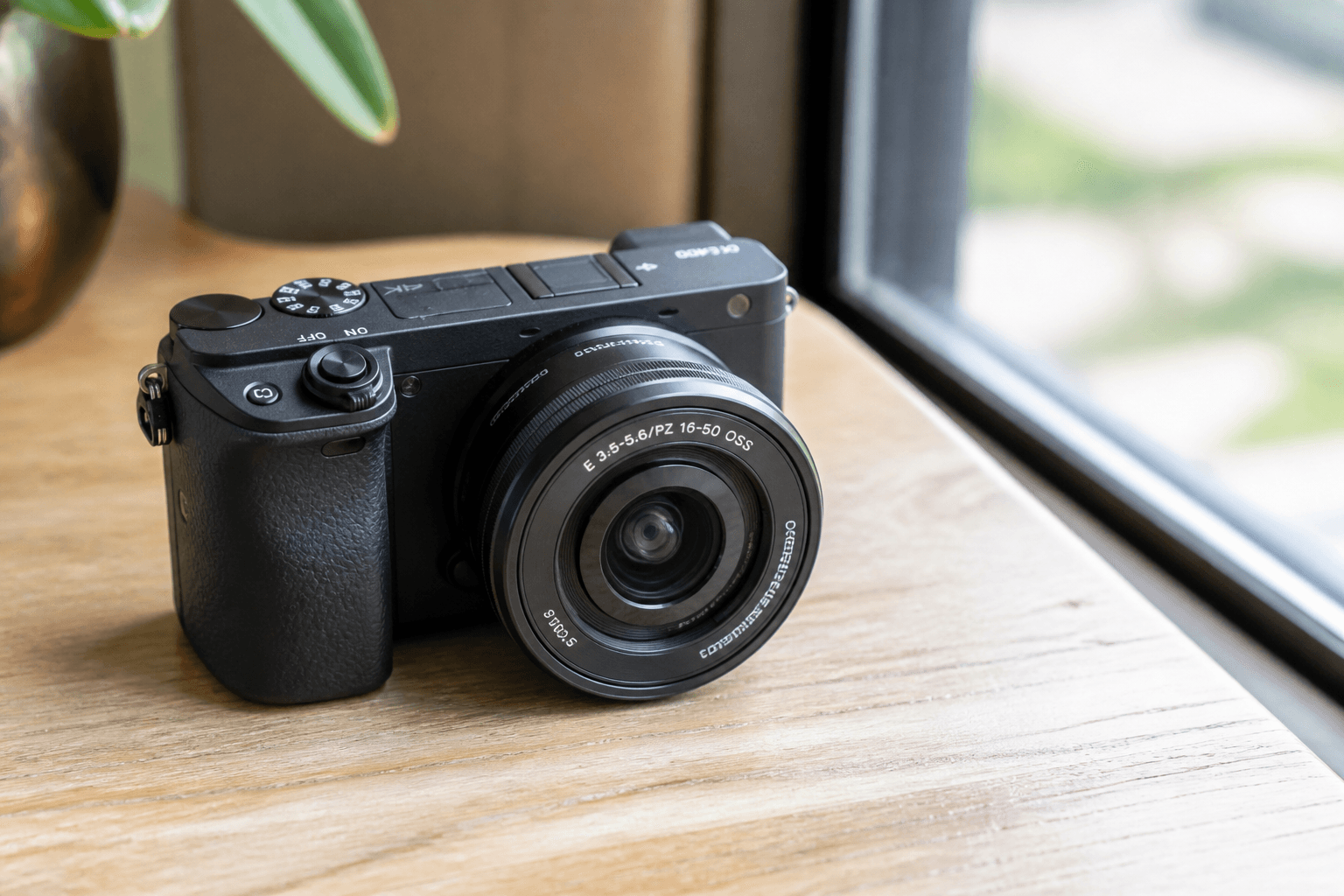
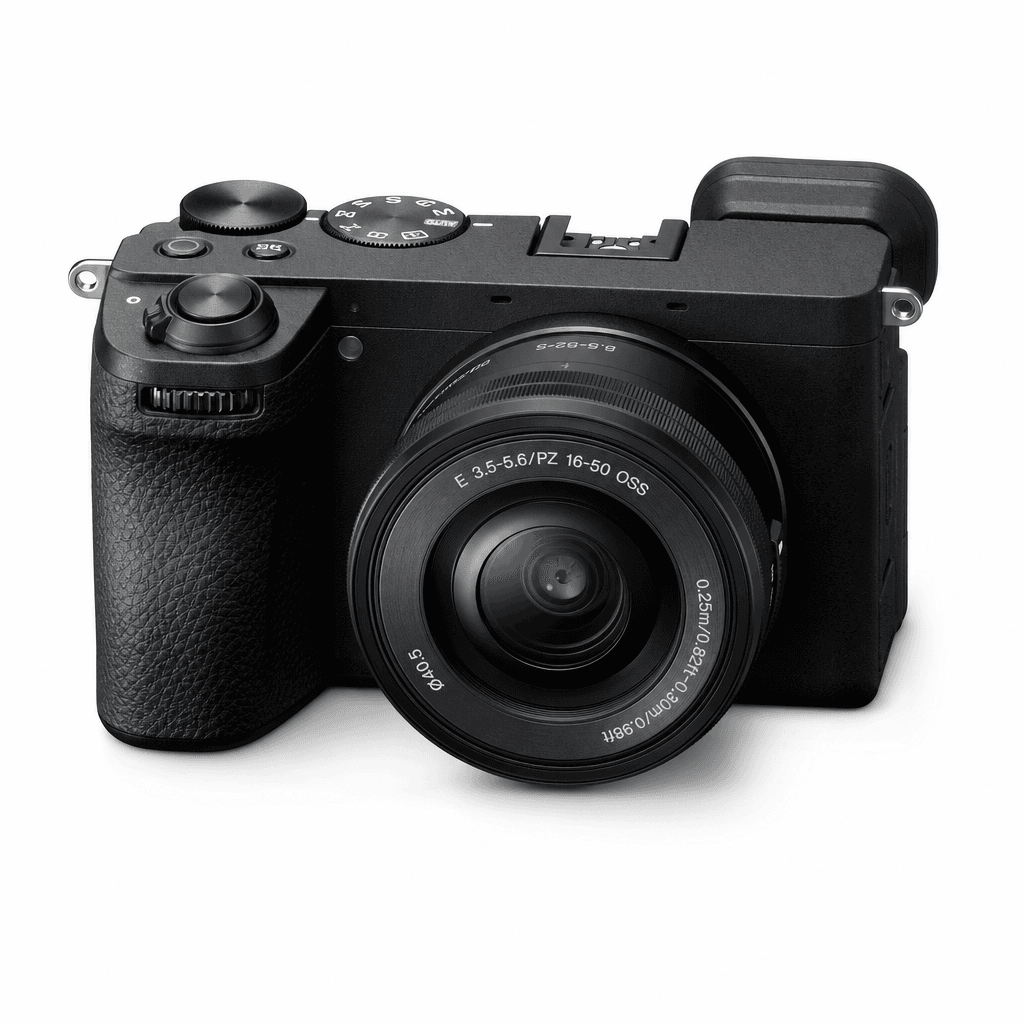
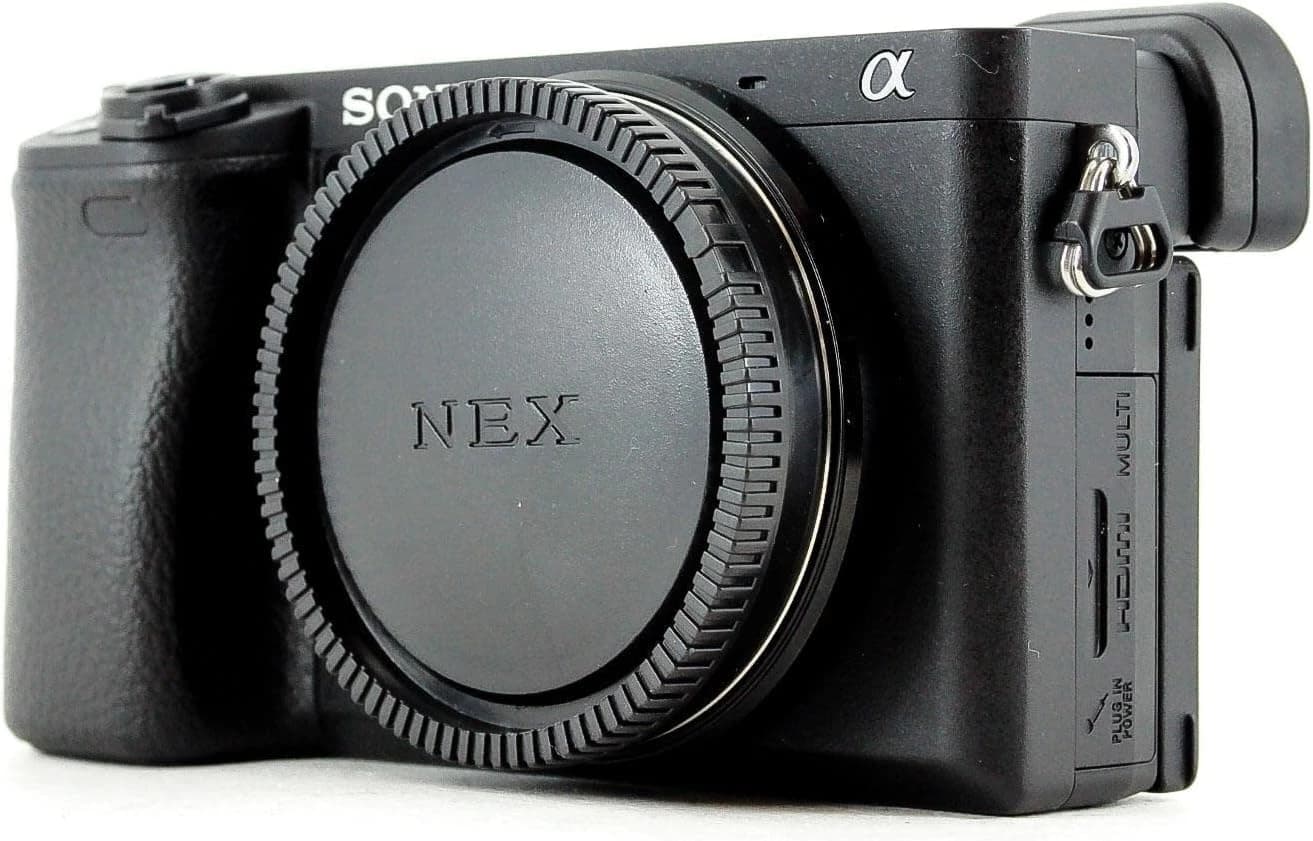
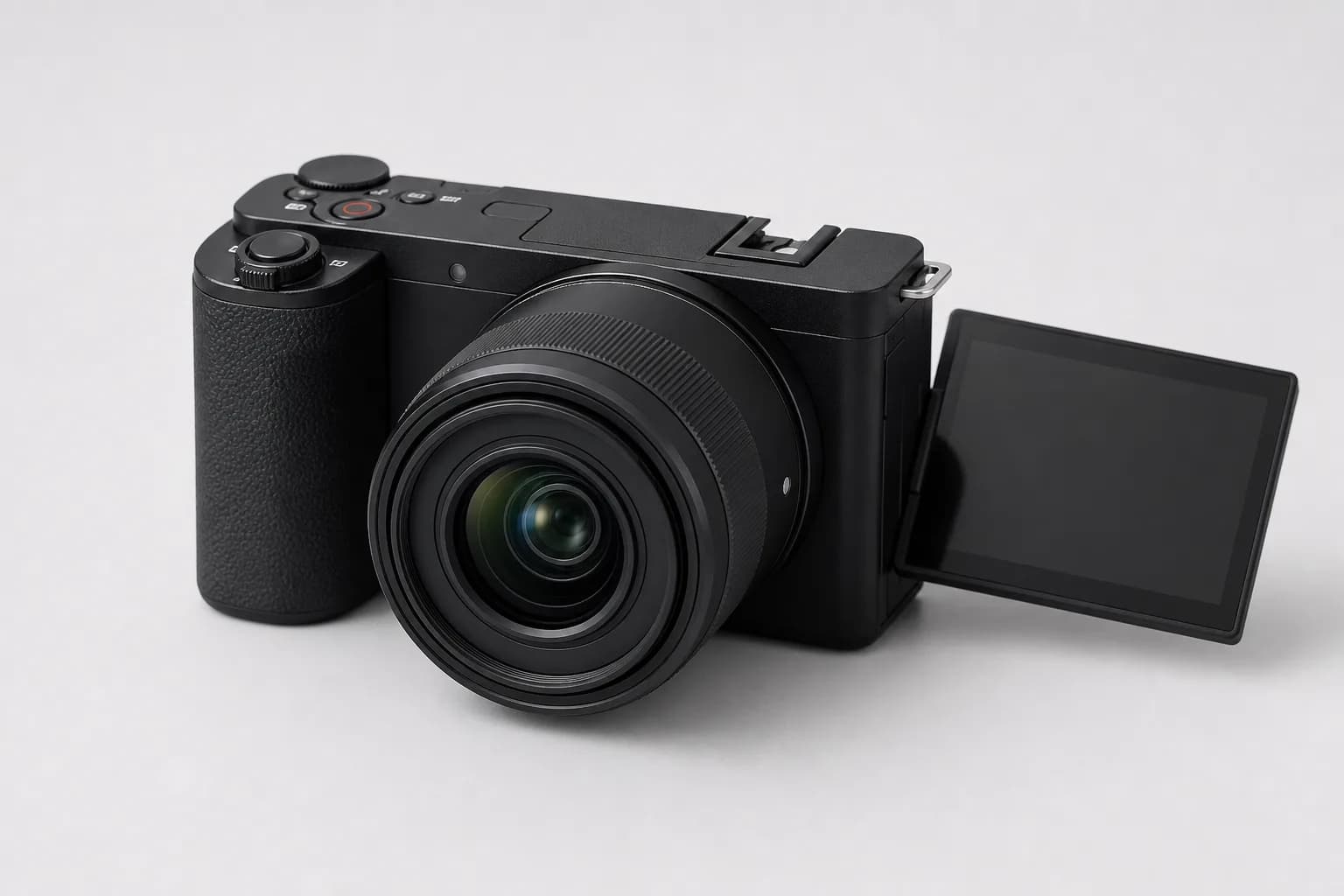
Short version: the A6400 still makes sense in 2026 mainly when you want a viewfinder and need to save hard. Most honestly often used around $550 to $750. New, the body typically sits around $700 to $850. That sounds like a bargain — and for some people it is. But once you put the price next to a new ZV-E10 II or the clearly more modern A6700, the math gets interesting. Buying new doesn’t automatically mean “better value” when the camera is seven years of tech behind.
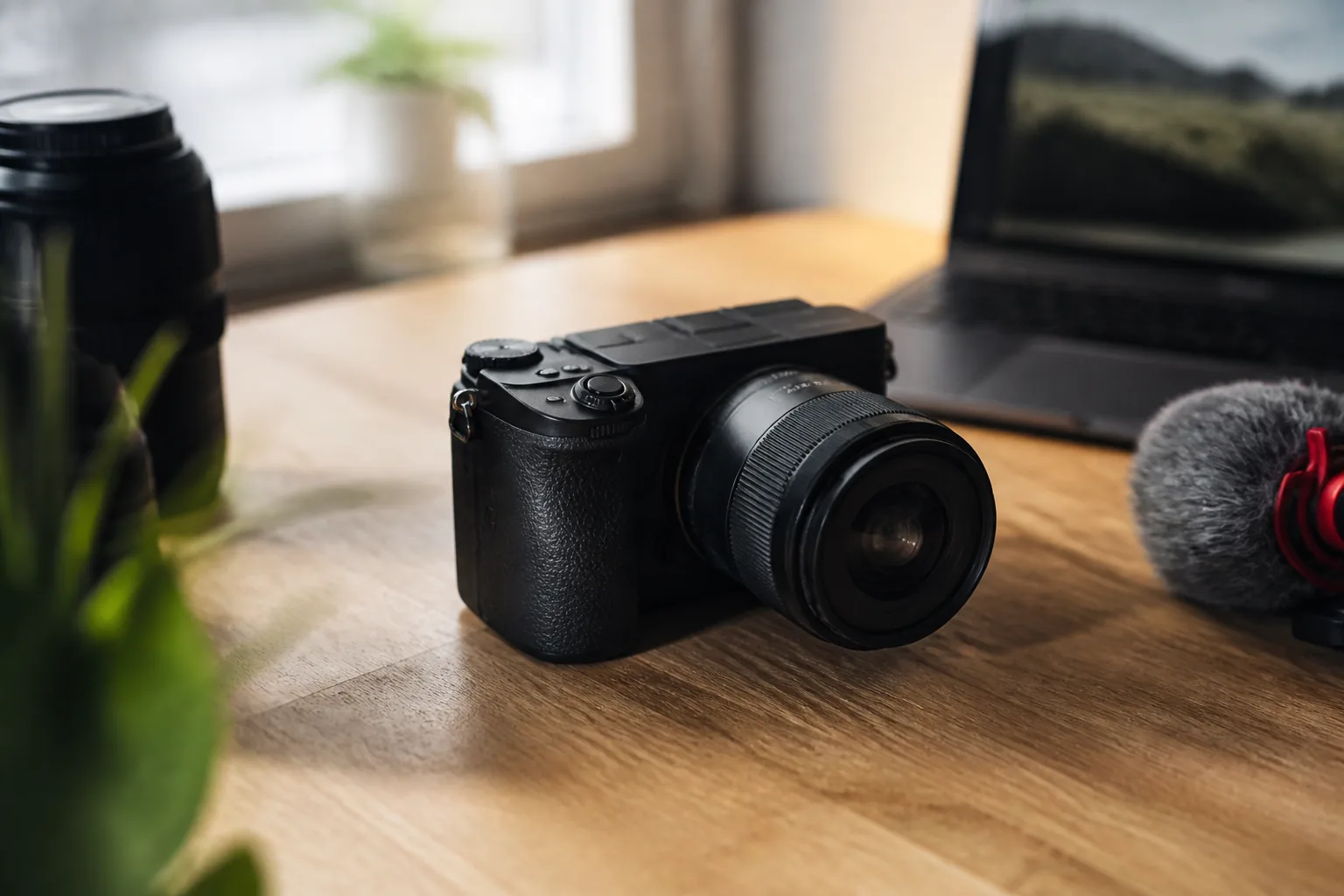
What you actually get: a light mirrorless camera with interchangeable lenses, a viewfinder at your eye, a screen that flips up, and autofocus that still works well for family, street and everyday shooting. You attach a lens, go outside, and the camera locks onto faces and eyes without making you feel like you’re in a class. That was impressive in 2019 — and for many photo jobs in 2026 it’s still enough.
What you don’t get: in-body stabilization, modern video with 4K60, and a large battery. If you film a lot handheld, need long takes, or want steady photos at night without flash, you’ll notice that fairly quickly. Then you’re more relaxed with the A6700 — or, if you mostly talk in front of the lens, with the ZV-E10 II.
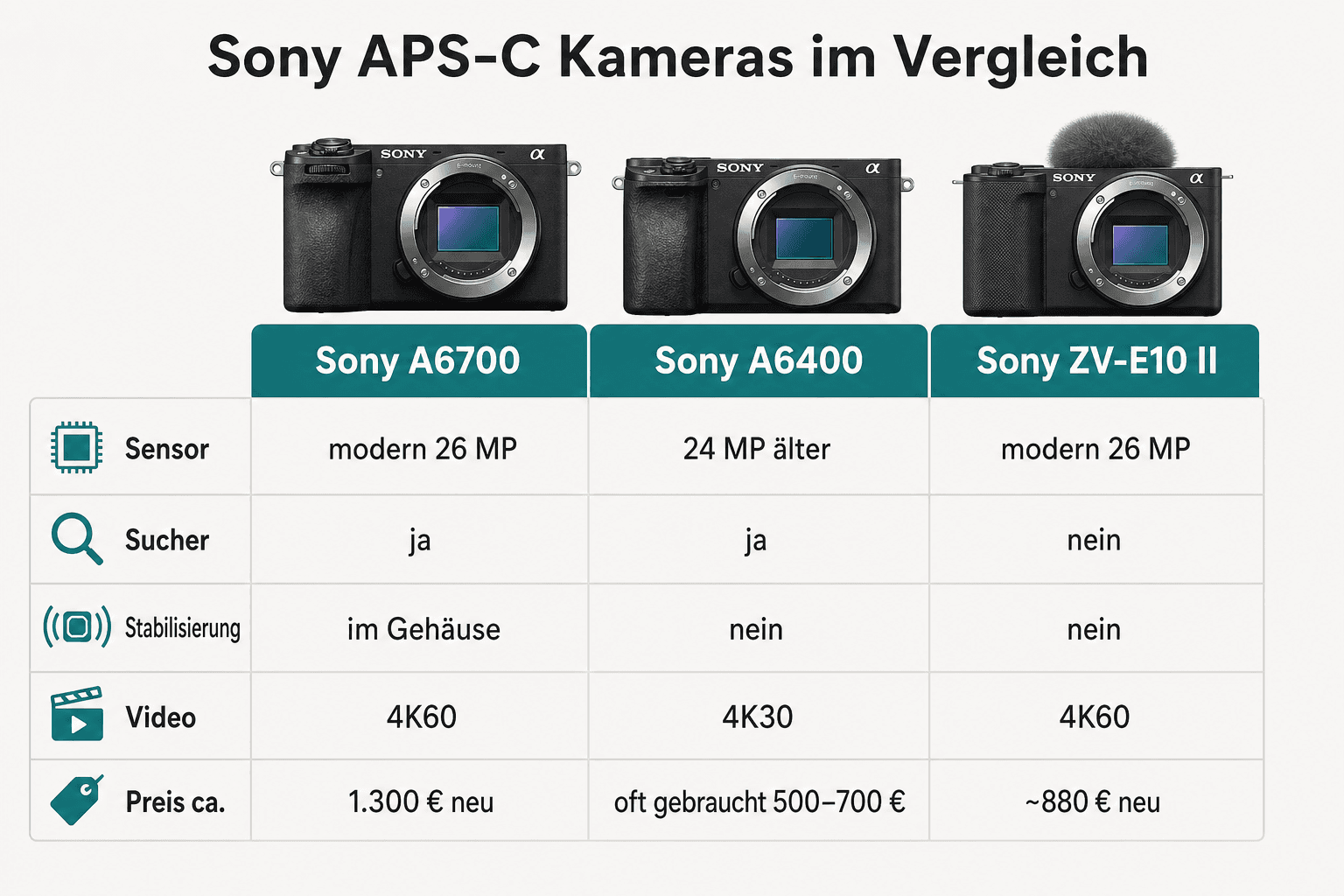
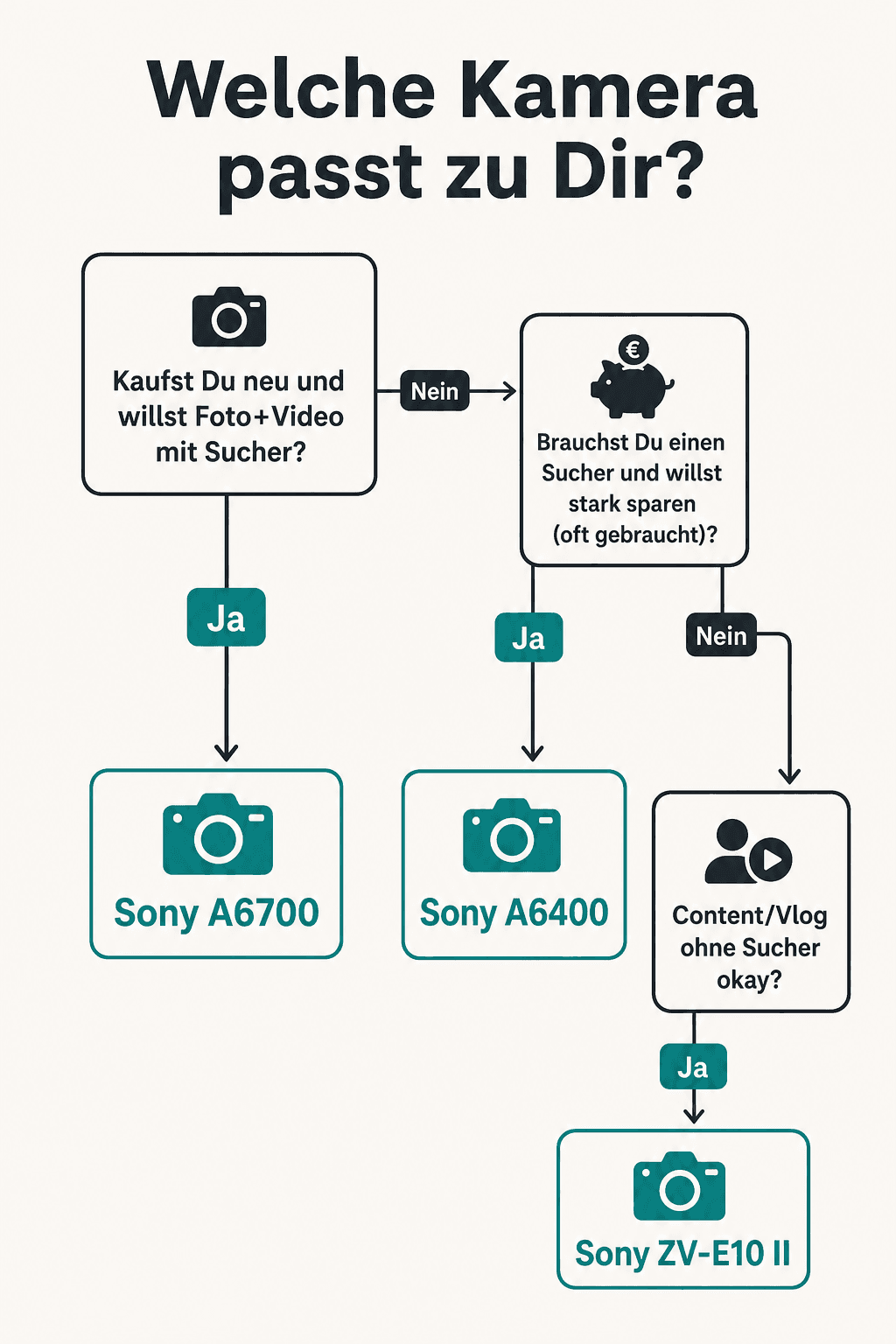
The simple rule: if you buy new and want photo plus video with a viewfinder, take the A6700. If content and vlogging matter and the display is enough, take the ZV-E10 II. If you intentionally start used with a viewfinder and mainly shoot stills, the A6400 remains an honest option.
Top 3
My three recommendations
The Sony A6700 is my recommendation when you buy new and want photo plus video with a viewfinder and stabilization. The Sony A6400 fits when you need to save hard and mostly start used — with a viewfinder, but without in-body stabilization and without modern video. The Sony ZV-E10 II is the pick when content and vlogging matter and you can skip the viewfinder plus stabilization.
| Vergleich | Sony Sony A6700 | Sony Sony A6400 | Sony Sony ZV-E10 II |
|---|
| Bild | | | |
| Empfehlung | Editor’s pick | Value | Alternative |
| Sensor | modern APS-C, 26 MP | APS-C, 24 MP | modern APS-C, 26 MP |
| ISO-Bereich | yes — electronic | yes — electronic | no — display only |
| Autofokus | in-body | no (lens OSS only) | no |
| Detail | 4K60 · 10-Bit | 4K30 · 8-Bit | 4K60 · 10-Bit |
| Stärken | - +Viewfinder + stabilization — the hybrid everyday setup for 2026
- +Clearly stronger video than the A6400
- +Modern autofocus with more subject recognition
- +Larger battery — less stress on a travel day
| - +Real viewfinder at a low price (especially used)
- +Autofocus still strong for everyday, family and street
- +Light and compact
- +E-mount — you can upgrade later
| - +More modern video than the A6400
- +Cheaper and lighter than the A6700
- +Creator features and flip screen
- +Better battery than the older A6400 generation
|
| Schwächen | - −More expensive than a used A6400
- −Only one card slot
- −Heavier than the A6400
- −Lenses cost extra
| - −No in-body stabilizer
- −Video and battery feel older
- −New price often unattractive vs. modern alternatives
- −Long 4K takes can run warm
| - −No viewfinder — often annoying in bright sun
- −No in-body stabilizer
- −Less “photo camera” feel
- −Wrong pick for classic eye-level photography
|
| Geeignet für | New buy for photo and video with a viewfinder — when you want to grow for years, not just save. | Used or tight budget with a viewfinder — photo-first, short clips okay. | YouTube and vlog when you can skip the viewfinder and stabilization. |
| Wo kaufen | | | |
In the rest of this article I’ll walk through the terms and everyday reality calmly — not as a datasheet, but so you understand what the camera does with you and what it doesn’t. By the end you shouldn’t still be guessing whether “24 megapixels” or “no IBIS” is your buying criterion — you should know whether your day-to-day life fits the A6400. Still unsure between beginner cameras: camera for beginners.