
Fujifilm X100VI Review: Fujifilm X100VI for Street and Travel

Is the X100VI worth it in 2026 — and when do the Ricoh GR IIIx or Sony RX100 VII fit better?

Fujifilm X100VI — clear buying guide for street and travel
Martin Kleinheinz
Author
Martin Kleinheinz
Photographer · Content Creator · Hannover
Updated
September 1, 2026

You’re looking for a camera you’ll actually carry — for walks, the city, vacation. Something that feels like a “real camera,” but not like a backpack system. That’s exactly where the Fujifilm X100VI lands. It typically costs around $1,900 to $2,100. That’s a lot of money. So you should understand what you’re actually buying — and what you’re not.

In short: the X100VI has one fixed focal length. You can’t zoom. Instead you step closer or take a step back. In return you get a real viewfinder at your eye, in-body image stabilization (the camera compensates for shake) and images that often come out of the camera looking like what many people chase in post. That’s the deal.

Next to it sit two alternatives that are often cheaper: the Ricoh GR IIIx (around $1,000–1,100) — even smaller, but no viewfinder — and the Sony RX100 VII (often around $1,000–1,200) with zoom. Here I’ll walk you through the decision in plain language. Still considering a used older X100V? The checklist is in the Fujifilm X100V review. This article belongs to the VI.
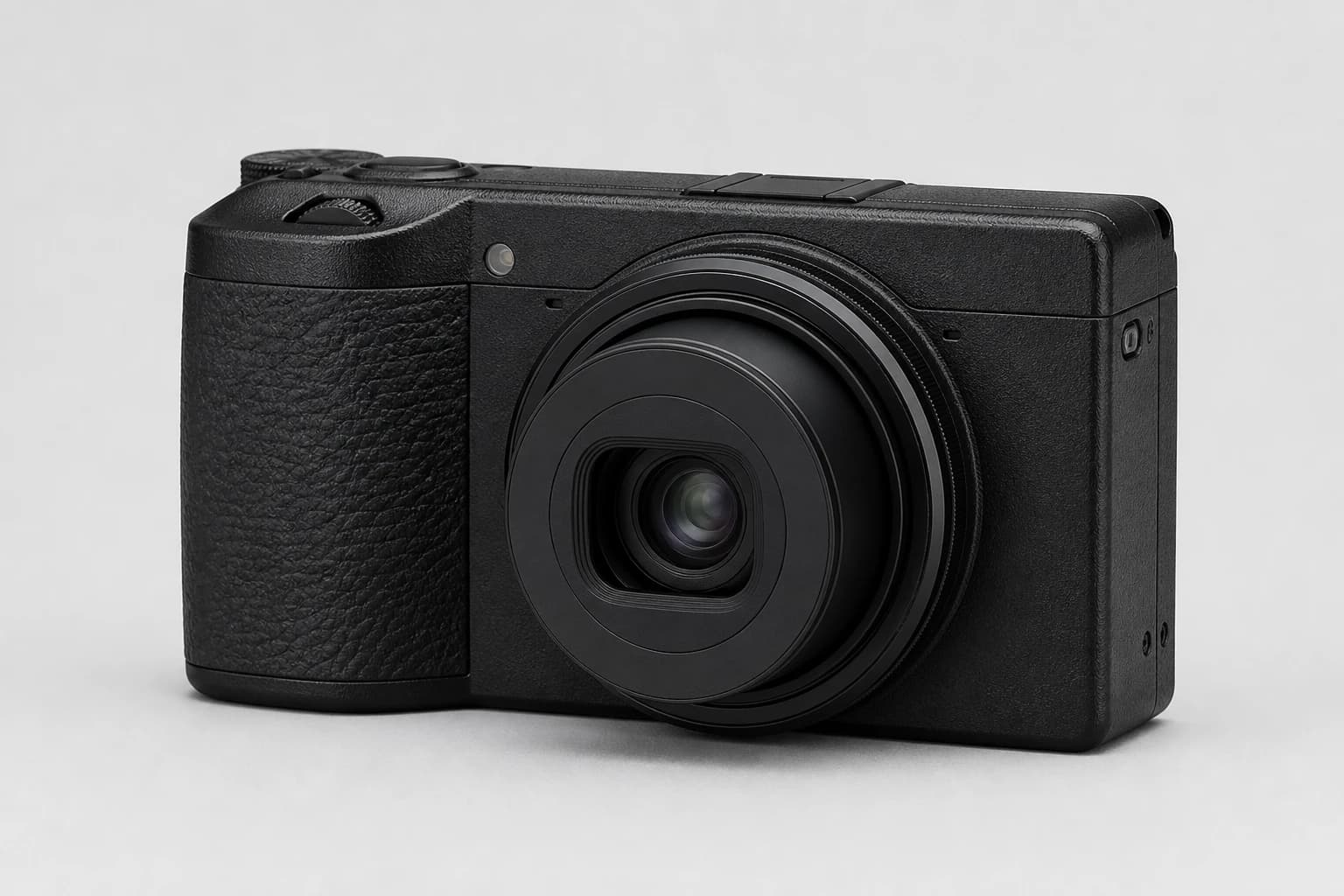
00
Short

Is the Fujifilm X100VI worth it in 2026? The quick verdict

Short version: the X100VI is the camera I’d recommend if you want to shoot street, everyday and travel with one fixed focal length — and for that you want a viewfinder and steadier photos in low light. You’ll typically pay around $1,900 to $2,100. The official list price sits near $1,999 as of September 2026; in shops you’ll often see a bit below or above, depending on stock.

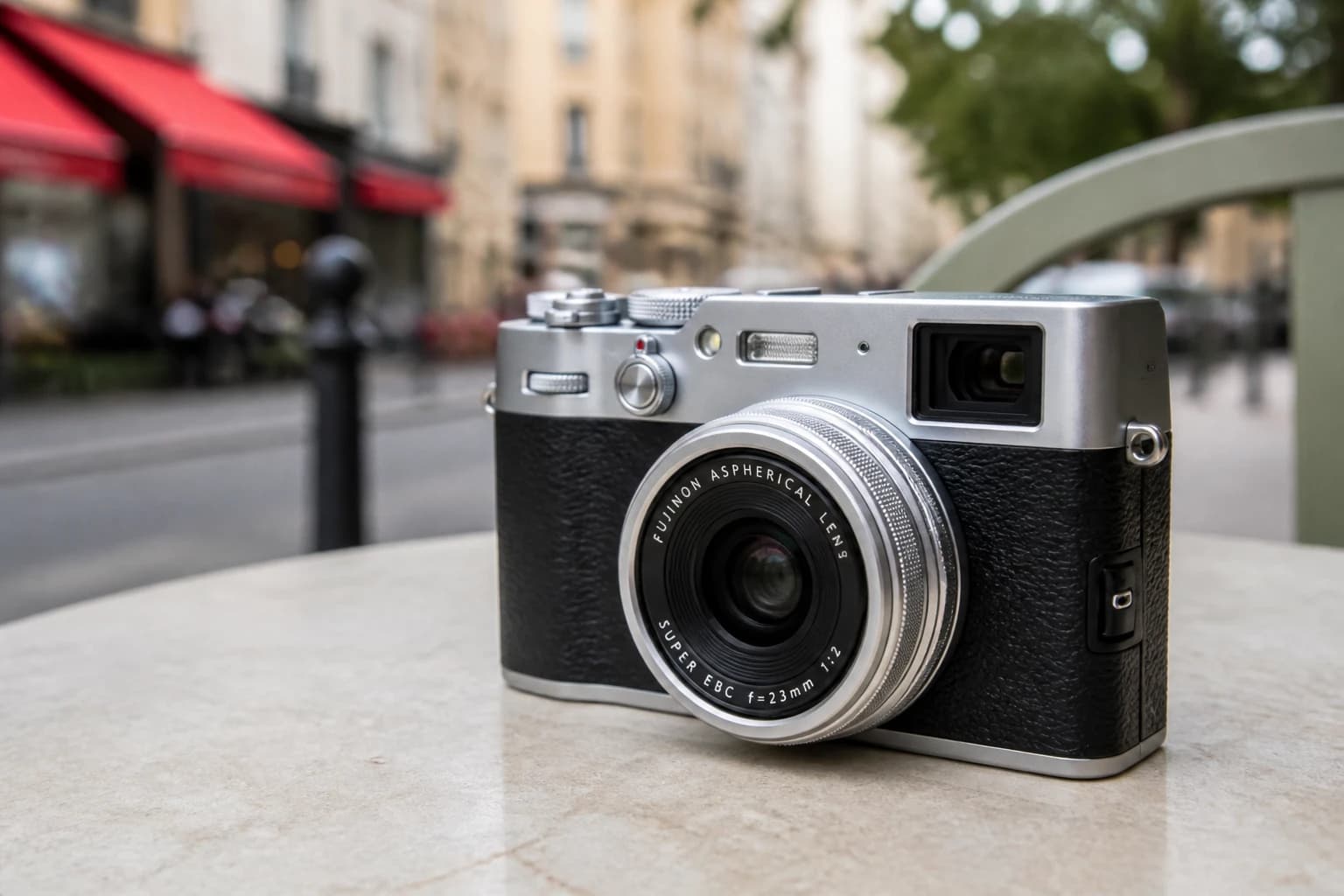
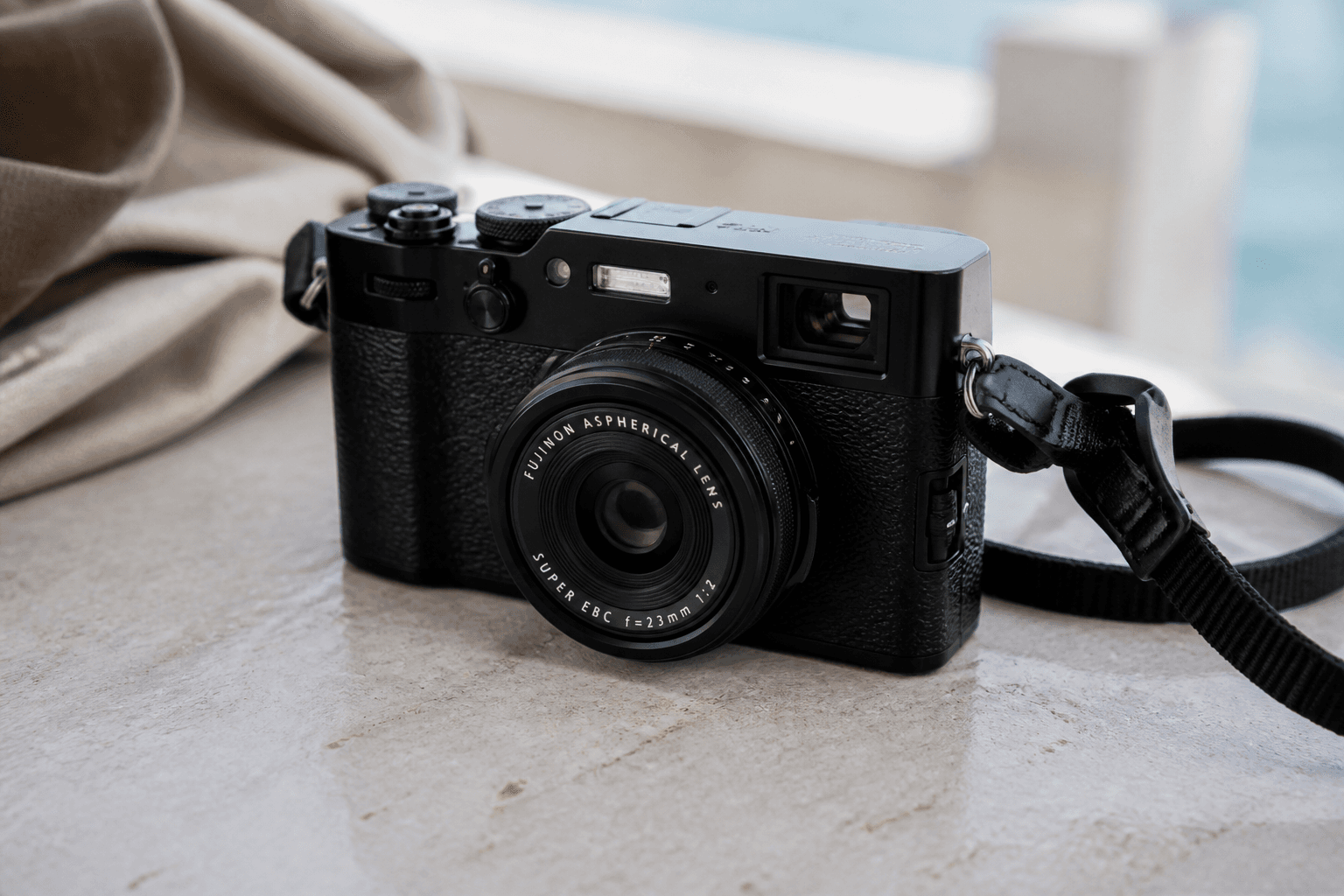
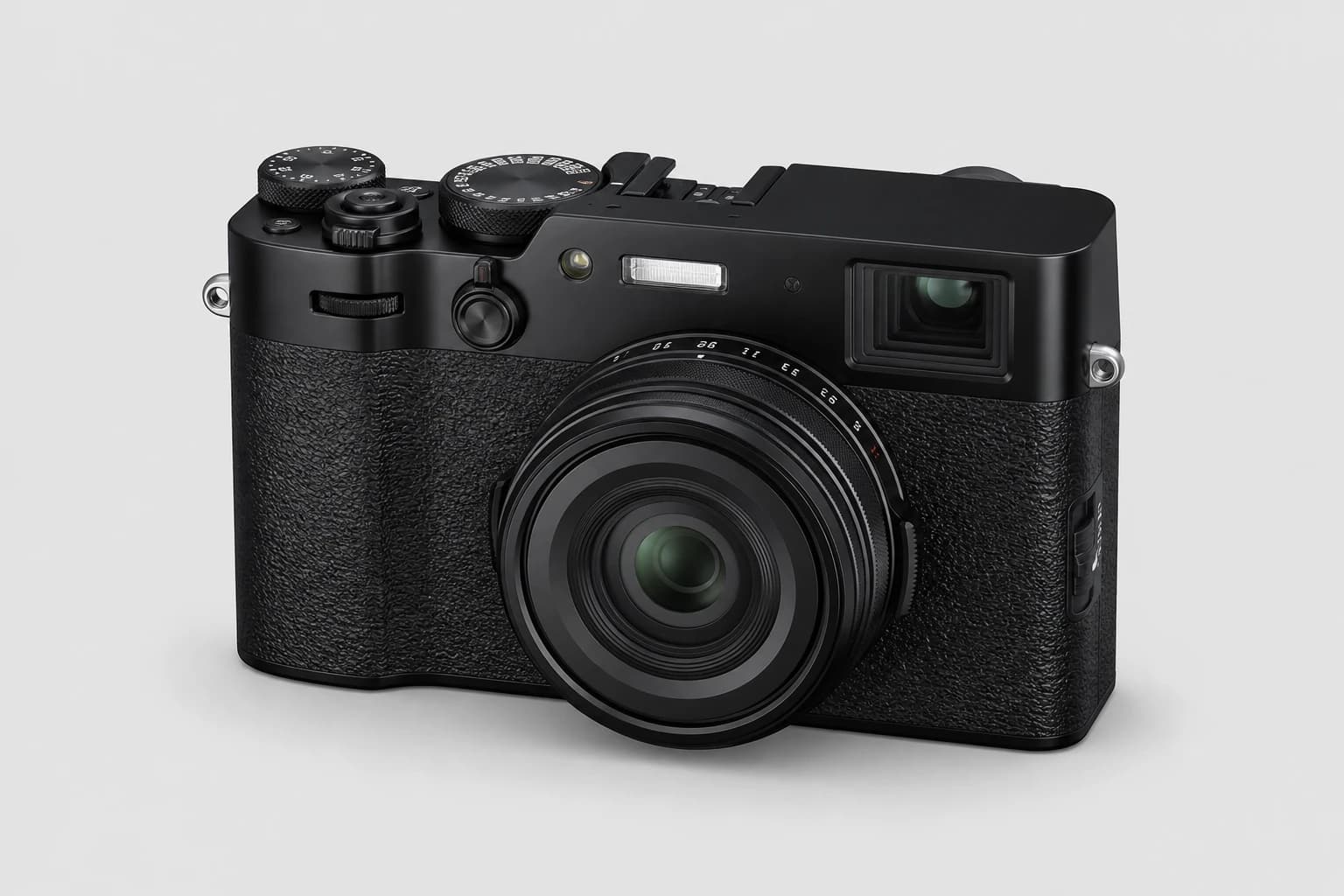
What you actually get: a large sensor in a relatively small camera (APS-C — bigger than in most smartphones and many cheap compacts), a fixed built-in lens at 23mm (roughly like 35mm on classic cameras — a solid everyday field of view), a hybrid viewfinder (you can look through glass or use a small display in the finder) and in-body image stabilization. In plain terms: the camera helps against shake when it’s getting dark or you use a longer exposure.

What you don’t get: zoom. And not sports autofocus like expensive action cameras either. If you mainly want to save money and stay as flat as possible in a pocket, look at the Ricoh GR IIIx. If on trips you often need to go from wide to tele without moving, the Sony RX100 VII is often the more honest choice.

Top 3

My three recommendations

The Fujifilm X100VI is my recommendation when you want a viewfinder, steadier photos in low light and the Fuji look — and you accept the premium price. The Ricoh GR IIIx fits when you want to stay under about $1,100 and keep the camera as compact as possible. The Sony RX100 VII is the pick when zoom matters more than a fixed focal length and Fuji character.

Vergleich
Fujifilm
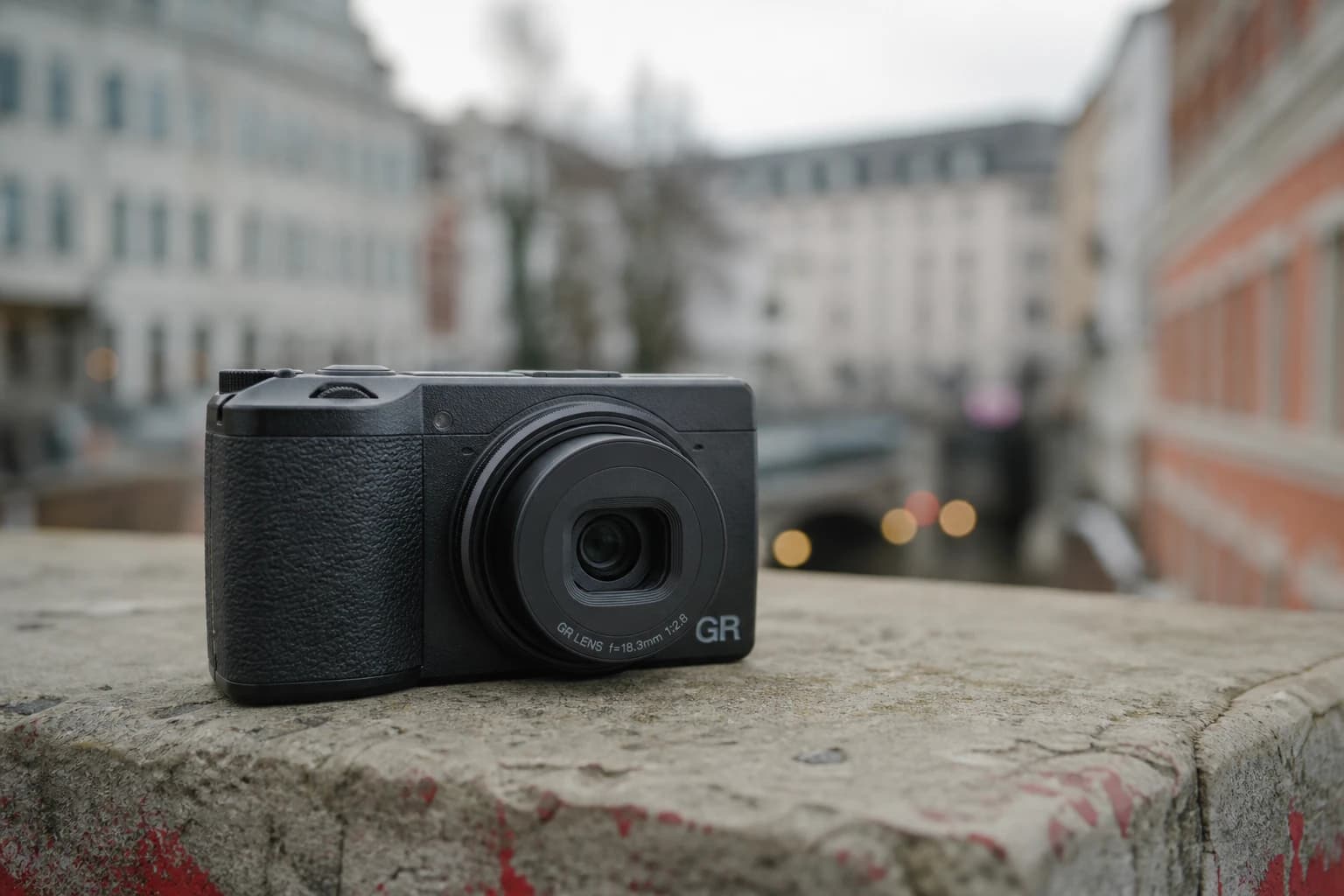
Fujifilm X100VI
Ricoh
Ricoh GR IIIx
Sony
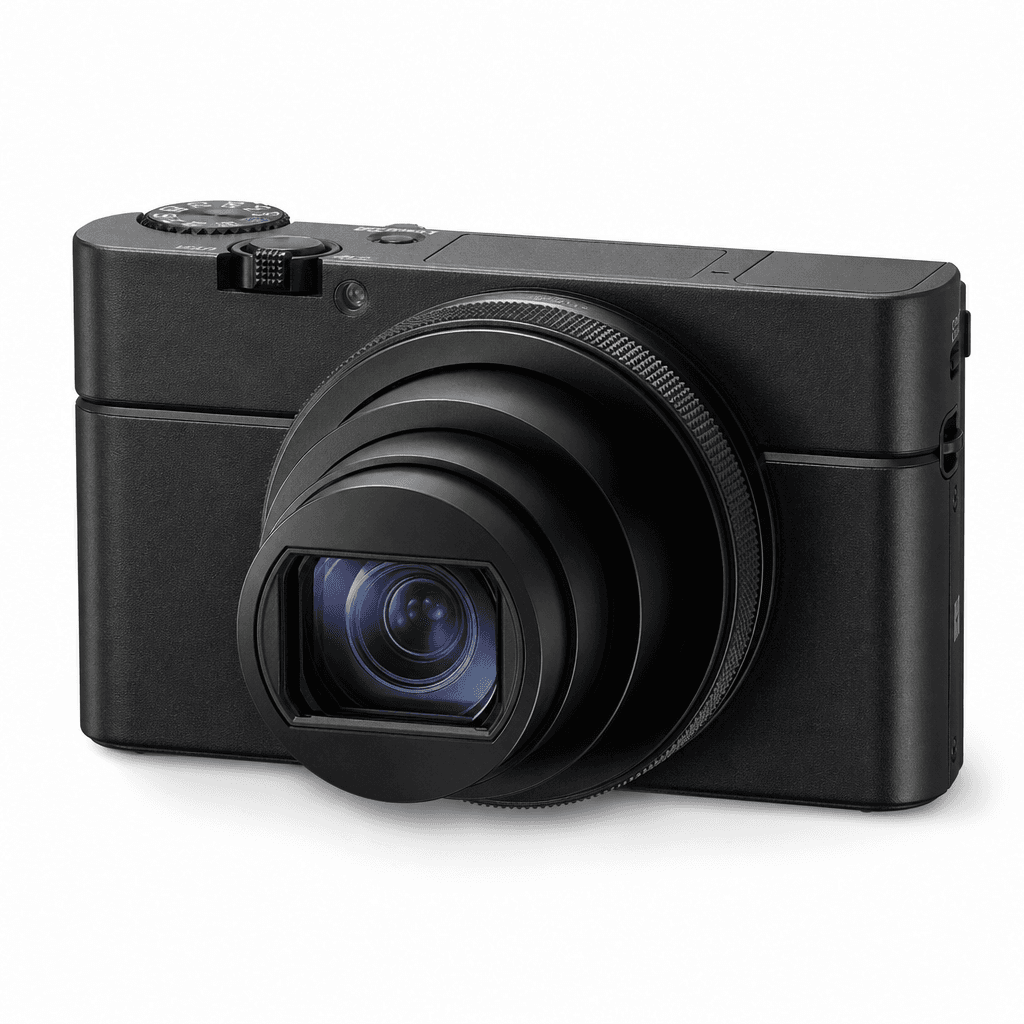
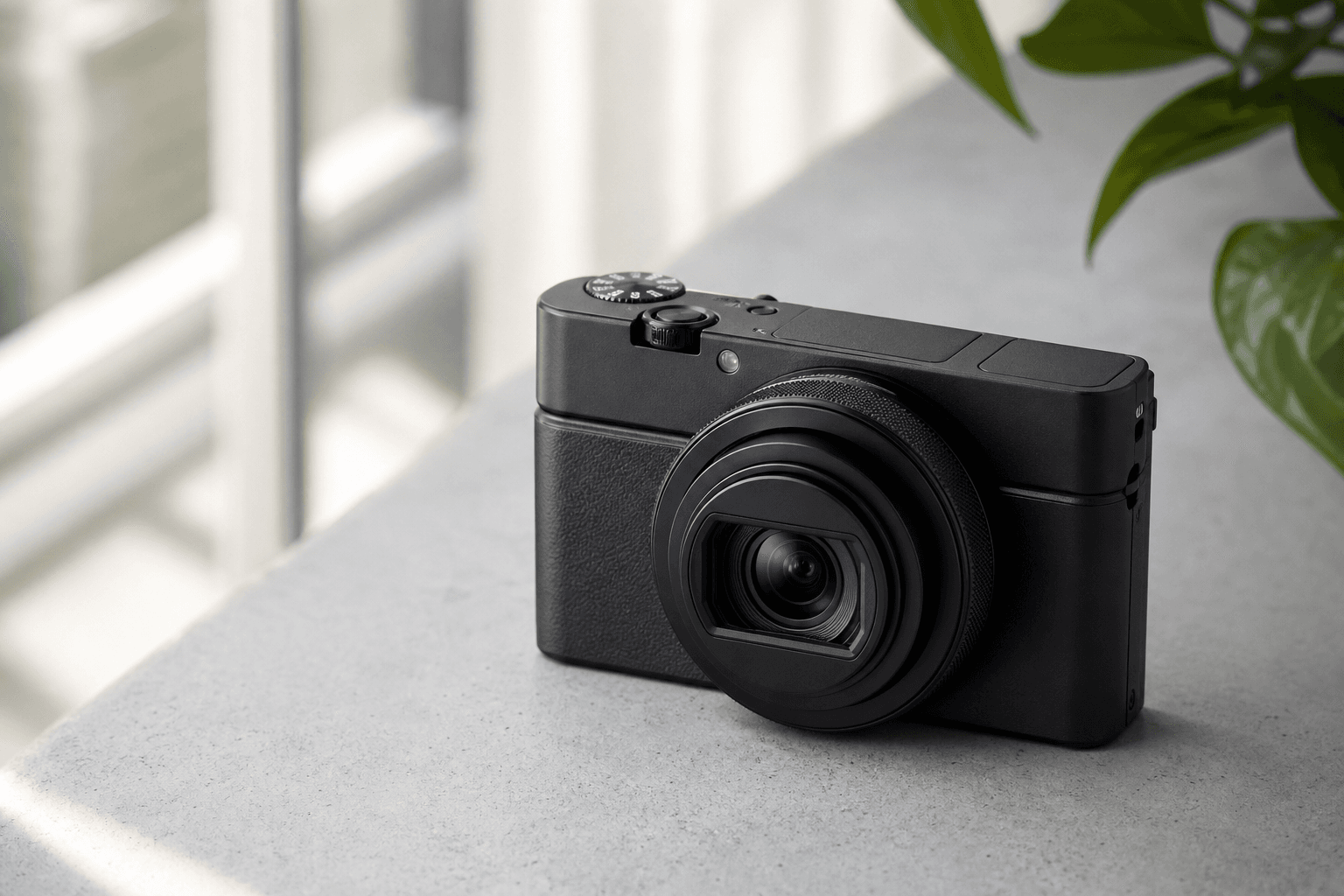
Sony Cyber-shot DSC-RX100 VII
Bild
Fujifilm X100VI
Ricoh GR IIIx
Sony Cyber-shot DSC-RX100 VII
EmpfehlungEditor’s pickValueAlternative
Sensorlarge sensor, 40 MPlarge sensor, 24 MPsmaller sensor, 20 MP
ISO-Bereichfixed, everyday wide (~35mm)fixed, a bit tighter (~40mm)Zoom 24–200mm
Autofokusin-body (against shake)in-bodyin-lens + electronic
Detailhybrid viewfinder + looks from cameraextremely compact · no viewfinderpop-up viewfinder · pocket zoom
Stärken
  • +Viewfinder at your eye — easier than display-only in bright sun
  • +Stabilization helps noticeably in low light
  • +Pleasing colors straight out of camera
  • +Feels like real photography without a backpack
  • +Video works for short clips — as a side role
  • +Clearly cheaper and lighter than the X100VI
  • +Large sensor despite pocket format
  • +Stabilization for street and everyday
  • +Fast “always with me” character
  • +Strong image quality without the premium price
  • +Real zoom to tele — without swapping lenses
  • +Smaller and lighter than the X100VI
  • +Fast autofocus for the class
  • +Cheaper than current X100VI street prices
Schwächen
  • Premium price around $1,900–2,100
  • No zoom — you move toward the subject
  • Not for sports and fast action
  • Weather sealing only properly with a filter setup · spare battery needed
  • No viewfinder — display only
  • Battery won’t cover a full travel day without a spare
  • No Fuji look out of camera
  • Video only Full HD — side role
  • Smaller sensor — different image feel than Fuji/Ricoh
  • Battery is the real weakness
  • No Fuji look
  • Different character — not “the little Fuji”
Geeignet fürStreet, everyday and travel with one fixed focal length — when you want a viewfinder and the Fuji look and accept the price.Street and everyday when size and price matter more than a viewfinder and Fuji feel.Travel and everyday with zoom needs — when a fixed focal length feels too tight.
Wo kaufen

In the rest of this Fujifilm X100VI review I’ll explain the terms and the everyday reality — not as a datasheet, but so you can follow the decision. Still torn between a travel compact and a system camera? Start with best travel camera.

01
Audience

Who the X100VI really fits

Before we talk megapixels: the most important question is whether you can live with a fixed focal length. The X100VI doesn’t zoom. You can’t “pull the subject closer” by turning a ring. Instead you step closer or take a step back. Many find that awkward at first — and then freeing, because the pictures often get clearer and more intentional. Others find it annoying because vacation wants zoo, mountain and architecture detail without constantly changing position.

The camera is discreet and looks more like a “small camera” than a pro backpack. That’s why it suits street, café, city walks and trips where one field of view is enough. It fits poorly if you shoot sports, wildlife or fast action — or if you want to vlog in front of the lens and creator features matter more than a viewfinder and still photos.

Use caseDoes the X100VI fit?Why
Street / everydayExcellentDiscreet, viewfinder at the eye, fast photos without a big setup
Travel (one focal length)ExcellentLittle luggage — if you can live with the field of view
Documentary / light reportageGoodLow-key; many use the colors straight out of camera
Travel with zoom needsWeakNo zoom — then lean RX100 VII
Maximally small / cheaperConditionalThe GR IIIx is flatter, lighter and often ~$800–900 cheaper
Video / vlog in front of the lensConditionalWorks, but no vlog specialist — more ZV-1
Sports / wildlifeNoWrong tool — fixed focal length and a different AF character

Fit from my own practice and user consensus — as of September 2026

If you’re unsure whether a larger sensor (full frame) is even necessary: for street, web and typical travel prints, the X100VI’s sensor is plenty. I explain APS-C vs. full frame here: crop sensor vs. full frame / APS-C. And if you’re more in “which camera at all for travel?” mode: best travel camera.

02
Understand

What the tech means — without datasheet feel

Here come the numbers — but I’ll explain them so you know what they mean for you. The three cameras in this review do different jobs. The X100VI is the “real camera you actually carry” with a viewfinder. The GR IIIx is the even smaller sibling without a viewfinder. The RX100 VII is the zoom travel camera with a smaller sensor.

Sensor: The X100VI has an APS-C sensor with about 40 megapixels. Megapixels roughly mean: how finely the image is resolved. More megapixels don’t automatically mean “prettier photos” — they give you more room to crop later. More important: the sensor is clearly larger than in many compacts and smartphones. That helps with light and the “camera look.”

Lens: Fixed built-in, 23mm f/2. The 23mm number describes the field of view; f/2 means the aperture can open fairly wide — so more light comes in and backgrounds can go a bit softer. Roughly it feels like a classic 35mm everyday lens. The GR IIIx is a bit tighter (more like 40mm). The RX100 zooms from wide to real tele.

Stabilization (IBIS): Inside the body sits a system that counters shake. Practically: in low light you ruin fewer shots with blur. That was often the pain point on older X100 models. The GR has stabilization too, rated a bit weaker. The RX100 stabilizes mainly through the lens and electronically.

TopicFujifilm X100VIRicoh GR IIIxSony RX100 VII
Sensor (plain English)Large sensor, 40 MPLarge sensor, 24 MPSmaller sensor, 20 MP
Field of viewFixed, everyday wide (~35mm)Fixed, a bit tighter (~40mm)Zoom 24–200mm
ViewfinderYes — hybrid (glass + display)No — display onlyYes — pops up
StabilizationIn-body, strongIn-bodyIn-lens + electronic
WeightApprox. 521 gApprox. 262 gApprox. 302 g
Price approx. (US 2026)$1,900–2,100$1,000–1,100$1,000–1,200

Three philosophies at a glance — as of September 2026

If you remember the table, that’s almost enough for the buying call: viewfinder and character → VI. Even smaller and cheaper → GR. Zoom → RX100. How it feels comes next.

03
Everyday

How the X100VI really feels

Datasheets rarely tell you whether you’ll happily carry the camera all day. That’s what decides whether it makes photos — or sits in a drawer.

The X100VI sits in the hand like a small, serious camera: dials for shutter and exposure, aperture on the lens ring. Many like exactly that, because it feels like photography, not a smartphone app. Beginners need a few evenings until the dials click. After that it gets fast.

The hybrid viewfinder is one of the reasons I prefer this series over pure display cameras. You can look through an optical window (like a classic finder camera) or see an electronic image that already hints at brightness and look. In bright sun the rear screen is often hard to read — at your eye you work more relaxed. The GR IIIx has no such viewfinder. The RX100 has one that pops up — useful, but a different feel.

Size and weight
At about 521 g the VI has presence. Jacket pocket yes, tight jeans pocket usually no. The GR and RX100 are clearly lighter. If “must fit jeans” is your main criterion, you’re often wrong with the VI.
Stabilization day to day
Evening city, café, church without flash: stabilization helps you get sharp photos without immediately cranking ISO (light sensitivity) into the sky. You notice it — not as magic, but as more usable frames.
Battery
One battery gets you through a normal afternoon. For a travel day with lots of finder use and chimping, I always plan a second. That applies to many cameras — with the VI you should build it in from day one.
Rain and weather
It’s only properly sealed with an adapter ring and filter in front. Without that it’s not a foul-weather tank. For sustained mountain rain there are more honest tools.

In reviews and user reports I hear the same things again and again: viewfinder, look and stabilization get praised — price, missing zoom and the need for a spare battery get criticized. That matches what I see day to day.

04
Image

How the images look — and why many like the look

Many people buy Fuji not because of a specs line, but because the photos already have character straight out of camera. Fujifilm calls that film simulations: ready-made looks that echo classic film — sometimes neutral, sometimes with more contrast or color. You don’t have to use them. But if you don’t feel like hours of editing, that’s a real advantage.

The 40 megapixels mainly mean: you can crop later without going soft right away. For Instagram and the web that’s luxury. For large prints or when you’re unsure about framing, it helps. In low light physics still applies: eventually it gets noisier. Stabilization won’t save you with subjects that move fast — but for quiet scenes at dusk it often does.

  • Daytime: crisp, colorful — with one or two favorite looks you stay consistent
  • Evening: stabilization helps; very high ISO (sensitivity) still adds noise
  • Close portraits: the open aperture can soften backgrounds — not a classic tele portrait lens
  • Bright sun: a built-in ND filter (like sunglasses for the lens) helps keep wide-open shots from blowing out

Compared with the GR IIIx the VI often feels “softer and more filmic” in JPEG — and you have the viewfinder. Compared with the RX100 the VI wins on sensor feel; the RX100 wins on reach. If you want to understand memory cards and large files: best SD card for camera.

05
Focus

Focusing day to day: good enough — not for sports

Autofocus means: the camera focuses. On the X100VI that usually works reliably for people in a café, street and quiet everyday scenes — especially faces and eyes when there’s enough light. That’s what most buyers need it for.

What it isn’t: a camera for soccer, birds in flight or frantic kid sequences for minutes. There are faster systems for that. The lens and the camera’s character reward watching and timing more. Many X100 users even set a distance ahead of time and wait for the moment — that sounds old-fashioned and is often faster on the street than you’d think.

Street and everyday
Works. The viewfinder helps you read the scene before you press the shutter.
People / portraits
Eye and face detection are everyday-ready. In strong backlight you may still need to help.
Fast action
Wrong category. Then lean a system camera or a compact zoom with more aggressive AF like the RX100 VII.
06
Video

Video: works — but not the reason to buy

Yes, the X100VI can shoot high-resolution video, and stabilization helps handheld. For short vacation clips and Reels that’s often enough. No, it isn’t a camera I’d recommend as a main tool for YouTube in front of the lens. For that there are devices with a better mic workflow and creator controls — for example the Sony ZV-1.

If video is only a side role and you mainly want to photograph: fine. If video is the buying reason: skip the X100VI’s premium price and take an honest creator tool.

07
Decision

X100VI, GR IIIx or RX100 — which question are you asking?

Many people compare cameras as if there were one objectively best. There are three different questions. The X100VI answers: “I want a fixed focal length, a viewfinder and the Fuji look — and I’ll pay for it.” The GR IIIx answers: “I want APS-C as small and cheap as possible.” The RX100 VII answers: “I need zoom in a pocket camera.”

You need …Lean X100VILean GR IIIxLean RX100 VII
Viewfinder at the eyeYesNoYes (pops up)
Maximally small / cheaperLess soYesYes + zoom
Steadier photos in low lightVery strongGoodDifferent (smaller sensor)
Zoom / teleNoNoYes
Budget around ~$1,000NoYesYes

Which question are you really asking? — as of September 2026

If you Google “X100VI” but actually want to stay under $1,100, you’re often better with the GR — not because the VI is bad, but because the price is a different league. If you need zoom, the most expensive Fuji look won’t help you.

08
Comparison

Three cameras and the smartphone at a glance

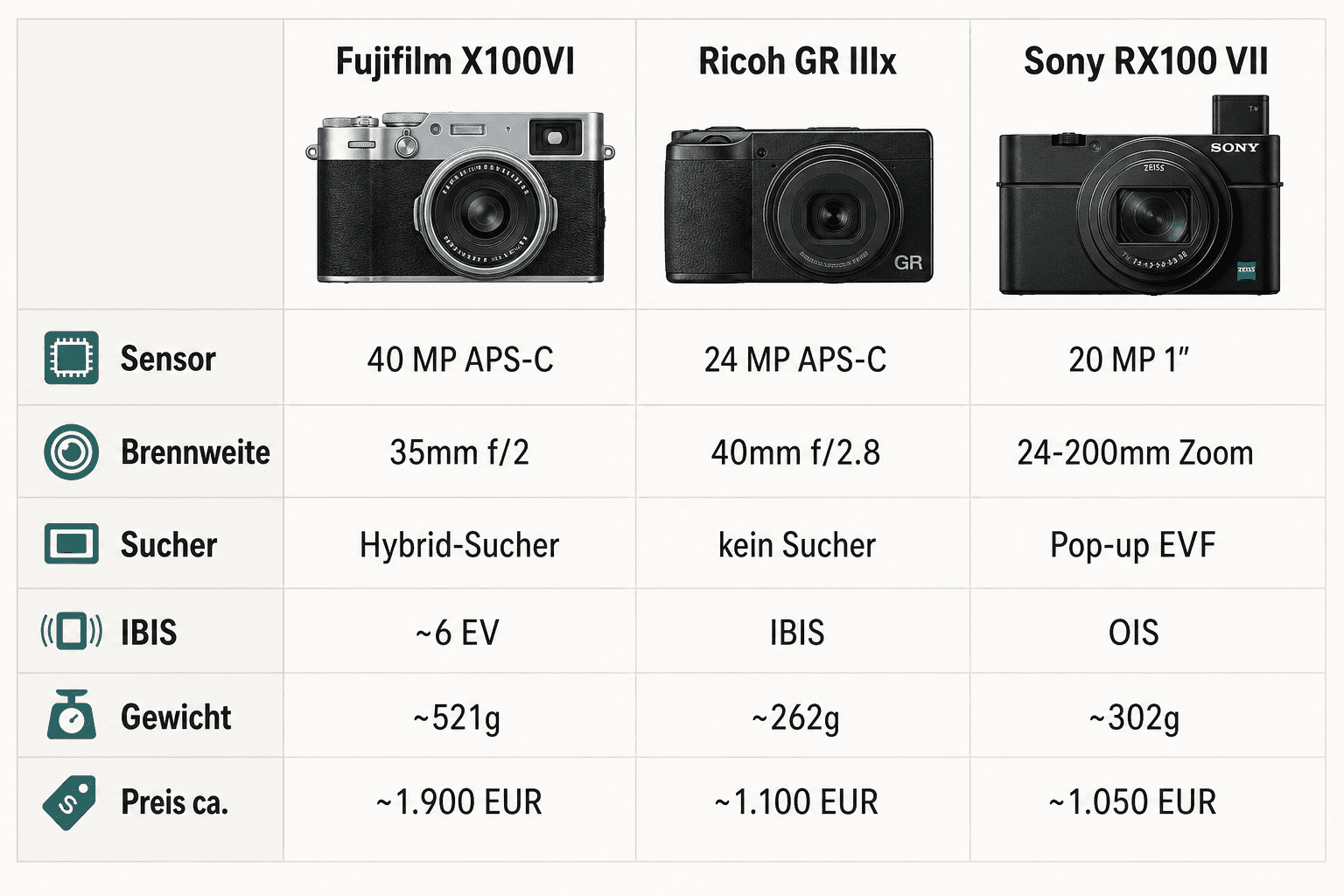
The graphic and the table sum up what you read above. The smartphone sits there as an honest baseline: always with you, strong on software — but without the manual photo character of the three candidates.

Comparison: Fujifilm X100VI, Ricoh GR IIIx and Sony RX100 VII
X100VI vs. GR IIIx vs. RX100 VII — as of September 2026
CriterionX100VIGR IIIxRX100 VIISmartphone
Sensorlarge, 40 MPlarge, 24 MPsmaller, 20 MPsmall
Focal lengthfixed (~35mm)fixed (~40mm)Zoom 24–200mmfixed / multiple cameras
Viewfinderyesnoyes (pop-up)display
Stabilizationin-bodyin-bodylens + electronicvery good (software)
Weightapprox. 521 gapprox. 262 gapprox. 302 galways with you
Price approx.$1,900–2,100$1,000–1,100$1,000–1,200$0–1,500

As of September 2026 — check shop prices

Against the smartphone all three win on manual feel and a clearer photo character. The VI adds the hybrid viewfinder. Against the GR IIIx you pay for viewfinder and feel. Against the RX100 VII you pay for sensor and character — and give up zoom.

09
Decision

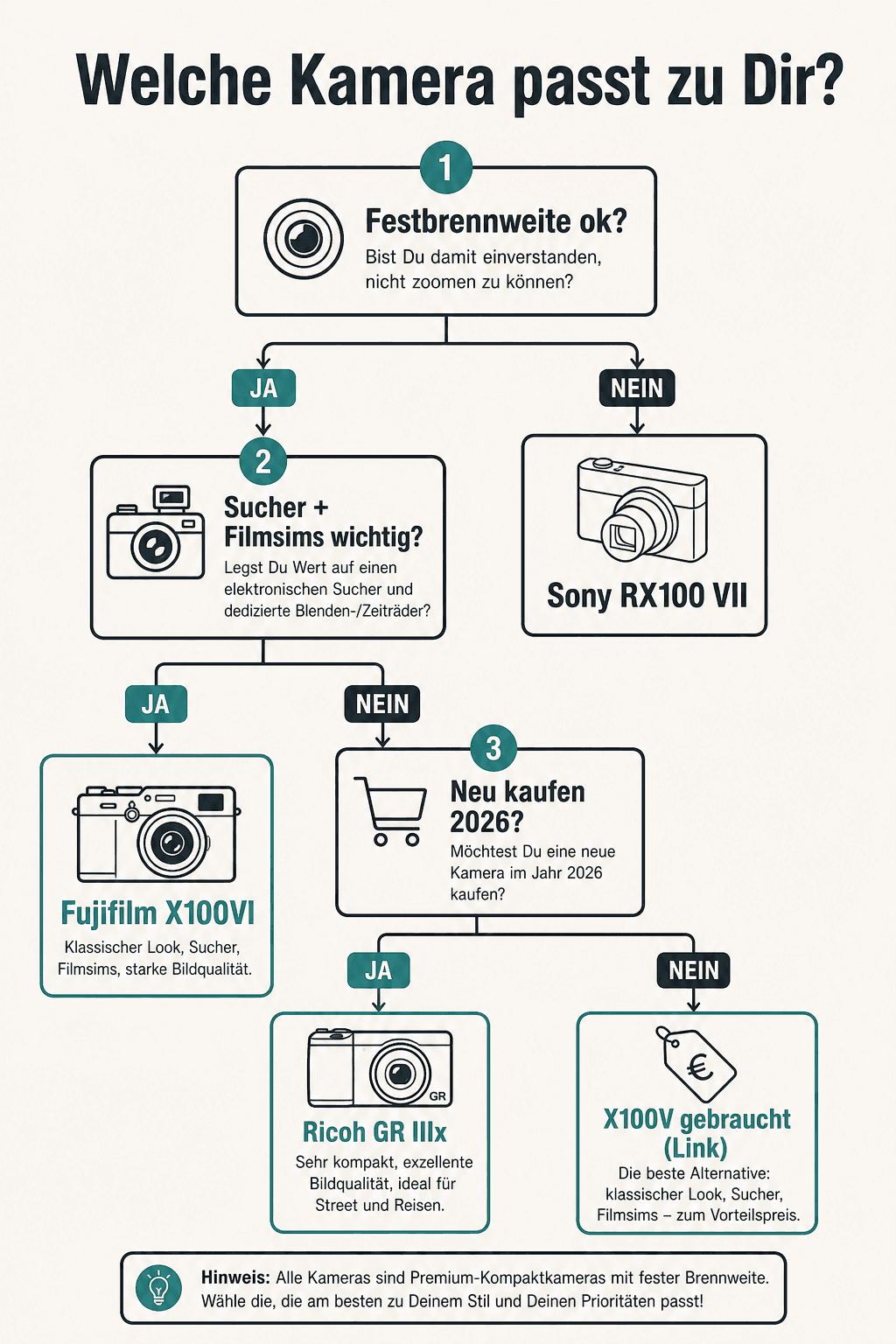
The decision tree: which camera fits you

Work the questions top to bottom. The first honest answer matters more than any specs line.

Decision tree: X100VI, GR IIIx or RX100 VII
From use case to camera — as of September 2026
  • Can you live with one focal length and want viewfinder + look? → Fujifilm X100VI
  • Want smaller and cheaper, display is enough? → [Ricoh GR IIIx](/en/ricoh-gr-iii-review/)
  • Need zoom? → [Sony RX100 VII](/en/sony-rx100-vii-review/)
  • Mostly filming in front of the lens? → lean Sony ZV-1
  • Considering a used older X100V? → X100V review
  • Is your smartphone already enough? → no forced purchase

For most people who consciously want a premium fixed-focal-length camera with a viewfinder and accept the price, the path lands on the X100VI. Unsure between compact and system? Best travel camera.

10
Detail

Fujifilm X100VI: is the premium price worth it?

After all that, the simple balance: the X100VI shines when you want the job “street/travel with one focal length, viewfinder, look, steadier low-light photos.” It frustrates when you expect zoom, want to save as much as possible or shoot action.

What convinces
Viewfinder at the eye, stabilization, colors/looks out of camera, serious photo feel without a backpack. You carry it — and that’s half the win.
What you have to accept
Price around $1,900–2,100. Fixed focal length. Spare battery. No sports wonder. Weather protection only properly with a filter setup.

If that fits you, the VI is the clear new recommendation in the X100 series in 2026. If not, you’re often happier with GR or RX100 — and you save money.

Editor’s pick
Fujifilm X100VI
Bewertung
4.7
/ 5,0
★★★★
Basierend auf 0 verifizierten Bewertungen
Fujifilm

Fujifilm X100VI

My pick for street and travel with a viewfinder

One fixed focal length, a real viewfinder at your eye, and in-body stabilization against shake — typically around $1,900–2,100. For street, everyday and travel when you work intentionally with one field of view and want the Fuji look without long editing sessions.

Was überzeugt
  • +Viewfinder at your eye — easier than display-only in bright sun
  • +Stabilization helps noticeably in low light
  • +Pleasing colors straight out of camera
  • +Feels like real photography without a backpack
  • +Video works for short clips — as a side role
Was Du wissen solltest
  • Premium price around $1,900–2,100
  • No zoom — you move toward the subject
  • Not for sports and fast action
  • Weather sealing only properly with a filter setup · spare battery needed
Editor's Statement

Street and travel with one fixed focal length — when viewfinder and look are worth the price

Verfügbar bei
11
Cheaper

Ricoh GR IIIx: when the cheaper camera is better

The Ricoh GR IIIx often costs around $800–900 less than the X100VI and is clearly lighter. You still get a large sensor and a fixed focal length — a bit tighter than the Fuji, more everyday-portrait feel. What you lose is the hybrid viewfinder: you compose on the display. For many that’s fine. For others that’s exactly the dealbreaker in sun and on the street.

Go GR when budget and size are the priority. Stay with the VI when viewfinder and Fuji look are worth the premium. More detail: Ricoh GR III review.

Value
Ricoh GR IIIx
Bewertung
4.6
/ 5,0
★★★★
Basierend auf 0 verifizierten Bewertungen
Ricoh

Ricoh GR IIIx

Cheaper and lighter — when a display is enough

Even smaller and often around $800–900 cheaper than the X100VI. Large sensor, fixed focal length, jacket-pocket friendly. No viewfinder — you compose on the display. The more honest choice when budget and size come first.

Was überzeugt
  • +Clearly cheaper and lighter than the X100VI
  • +Large sensor despite pocket format
  • +Stabilization for street and everyday
  • +Fast “always with me” character
  • +Strong image quality without the premium price
Was Du wissen solltest
  • No viewfinder — display only
  • Battery won’t cover a full travel day without a spare
  • No Fuji look out of camera
  • Video only Full HD — side role
Editor's Statement

When you want to stay under ~$1,100 and keep things maximally compact

Verfügbar bei
12
Zoom

Sony RX100 VII: when zoom is the better idea

The Sony RX100 VII answers a different question: you want wide to tele in a pocket camera, without swapping lenses. The sensor is smaller than Fuji and Ricoh — but you zoom to a 200mm equivalent. For travel with architecture, details and distance that’s often more practical than any fixed focal length.

Go RX100 when zoom matters more than Fuji character. Stay with the X100VI when you intentionally work with one focal length. Full write-up: Sony RX100 VII review. Vlogging in front of the lens: Sony ZV-1 review.

Alternative
Sony Cyber-shot DSC-RX100 VII
Bewertung
4.6
/ 5,0
★★★★
Basierend auf 0 verifizierten Bewertungen
Sony

Sony Cyber-shot DSC-RX100 VII

When you need zoom instead of a fixed focal length

Small travel camera with zoom from wide to tele — typically around $1,000–1,200. Different job from the X100VI: you pull subjects closer without moving. Smaller sensor, but much more reach.

Was überzeugt
  • +Real zoom to tele — without swapping lenses
  • +Smaller and lighter than the X100VI
  • +Fast autofocus for the class
  • +Cheaper than current X100VI street prices
Was Du wissen solltest
  • Smaller sensor — different image feel than Fuji/Ricoh
  • Battery is the real weakness
  • No Fuji look
  • Different character — not “the little Fuji”
Editor's Statement

When zoom and travel flexibility matter more than a fixed focal length

Verfügbar bei
13
Accessories

What you actually need with it

You don’t need much. But a few things separate “nice camera” from “camera you use every day.”

Second battery
Essential for travel days. Without a spare you’ll get annoyed sooner or later.
Adapter ring + protection filter
Protects the front element and improves the weather claim. Many run this setup permanently.
Strap
The camera is valuable and compact — a good strap prevents the classic drop.
Memory card
A solid, fast SD card is enough for everyday use. Orientation: best SD card for camera.
14
Verdict

The clear buying call

The Fujifilm X100VI is the 2026 camera for people who want street, everyday and travel with one fixed focal length — and are ready to pay around $1,900 to $2,100 for it. You get a viewfinder, stabilization and a look that works without long editing. You don’t get zoom or a sports all-rounder.

Want smaller and cheaper: Ricoh GR IIIx. Need zoom: Sony RX100 VII. Filming in front of the lens: ZV-1. Used older V: X100V review. If your smartphone is enough — then no purchase is needed.

15
FAQ

Common questions about the Fujifilm X100VI

Is the Fujifilm X100VI worth it in 2026?
Yes, if you want street/travel with one fixed focal length, need a viewfinder and accept a price around $1,900–2,100. If you need zoom or want to save hard, the RX100 VII or GR IIIx often fit better.
What does fixed focal length mean?
You can’t zoom. The framing is fixed. You step closer or back. Many find that awkward at first, clearer and more intentional later.
What is IBIS / image stabilization?
A system in the body that counters shake. Practically: fewer blurry photos in low light. Not a substitute for sharp timing with fast subjects.
X100VI or X100V — what should I buy?
New: X100VI. Used older V only with a clear price gap and if you can live without in-body stabilization. Checklist in the X100V review.
X100VI or Ricoh GR IIIx?
X100VI: viewfinder, brighter aperture, Fuji look, more expensive and heavier. GR IIIx: smaller, often ~$800–900 cheaper, no viewfinder. Choose by budget and whether you need a viewfinder.
X100VI or Sony RX100 VII?
X100VI: large sensor area, fixed focal length, hybrid viewfinder. RX100 VII: zoom 24–200mm, smaller sensor. Zoom vs. fixed focal length decides.
Is the X100VI weather sealed?
Only properly with adapter and filter. Without that it’s not a rain tank. For hard foul weather there are sealed system cameras.
Is the autofocus enough for beginners?
For street, family everyday and quiet scenes yes. For sports and fast action no — then a different camera class.
Does it work as a travel camera?
Yes, if you can live with one focal length. If you need flexibility from wide to tele, the RX100 VII is often more practical. Overview: best travel camera.
How good is it for video?
Okay for short clips, especially with stabilization. As a main vlog camera I’d rather take a creator camera like the ZV-1.
Which film simulations first?
Start with one neutral look and one with more character. Better to use two consistently than try all of them.
Do I need a spare battery?
Yes. For travel days and longer rounds plan at least a second battery.
Which memory card do I need?
A solid, fast SD card is enough for everyday use. Details in the SD card for camera guide.
Do I need full frame instead of APS-C?
For street, travel and typical online/print use APS-C is plenty here. Full frame is a different price class and a different system.
Affiliate links marked with * — Amazon product links use partner ID martinkleinhe-20. I earn a small commission if you buy through these links; it costs you nothing extra. Assessments are based on my own practice, manufacturer specs and the consensus from reviews and user reports — no brand sponsored this article.
Newsletter

Stay in the loop.

Camera and photography news, honest gear tests and new articles — in your inbox. Infrequent but relevant. No spam, unsubscribe anytime.

Keep reading

From the journal.

Fotograf, Martin Fernando Mera Kleinheinz · Franz-Bork-Straße 21, 30163 Hannover · 0179 4085297