
Ricoh GR III Review: III vs IIIx in Plain English

GR III or GR IIIx — 28mm or 40mm? And when to lean X100VI, RX100 VII, or the newer GR IV.

Ricoh GR III review 2026 — APS-C pocket camera buying guide
Martin Kleinheinz
Author
Martin Kleinheinz
Photographer · Content Creator · Hannover
Updated
August 28, 2026

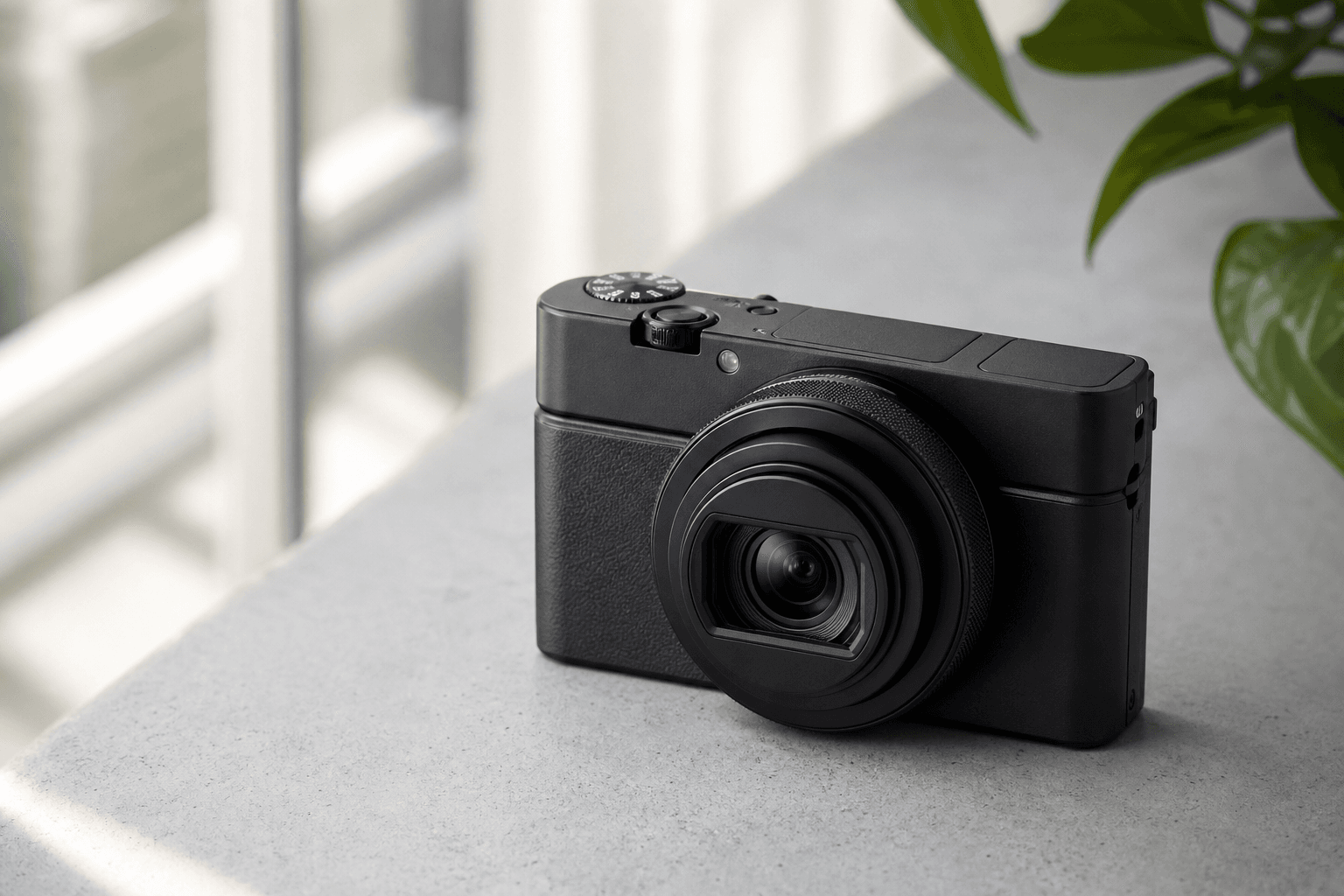
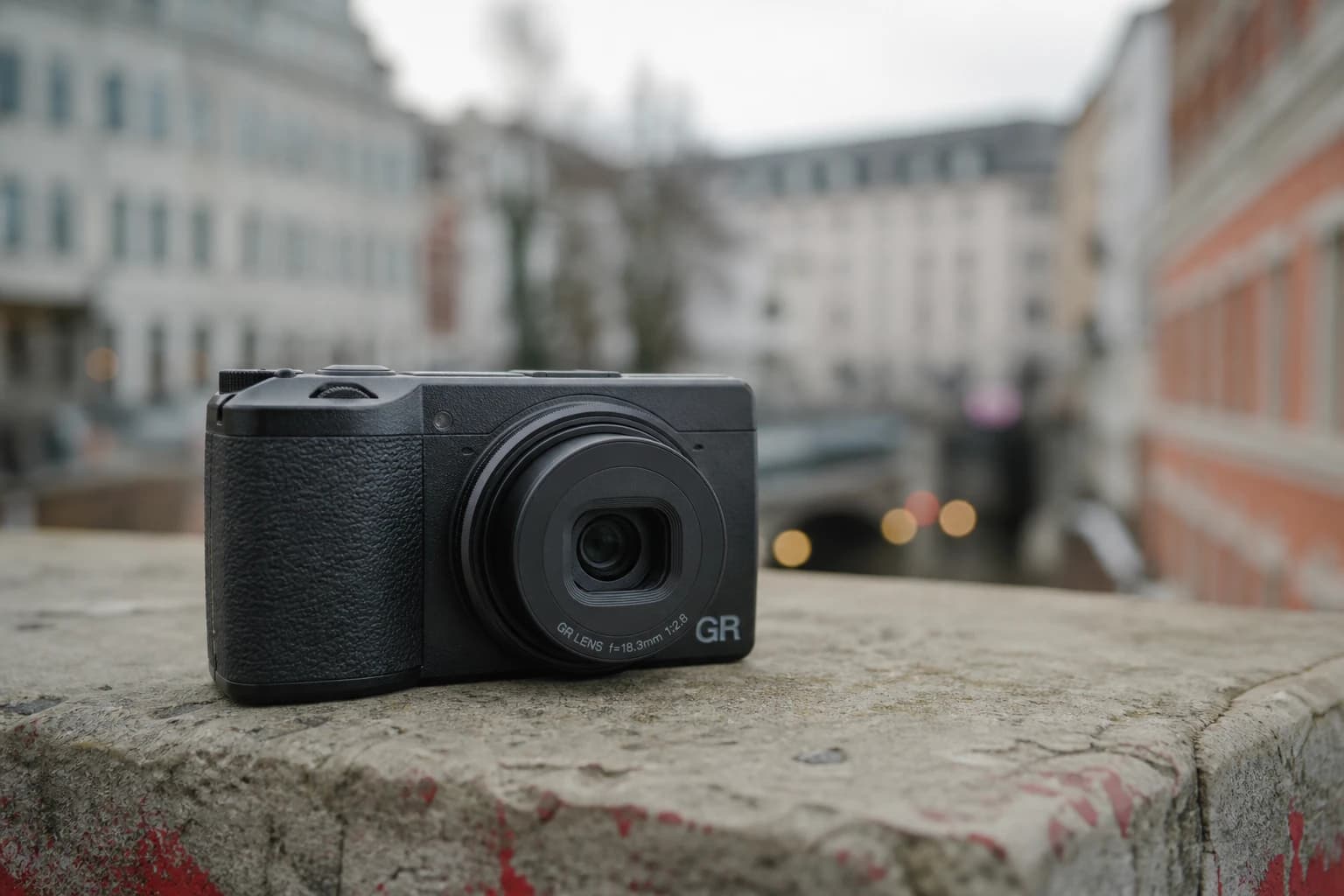
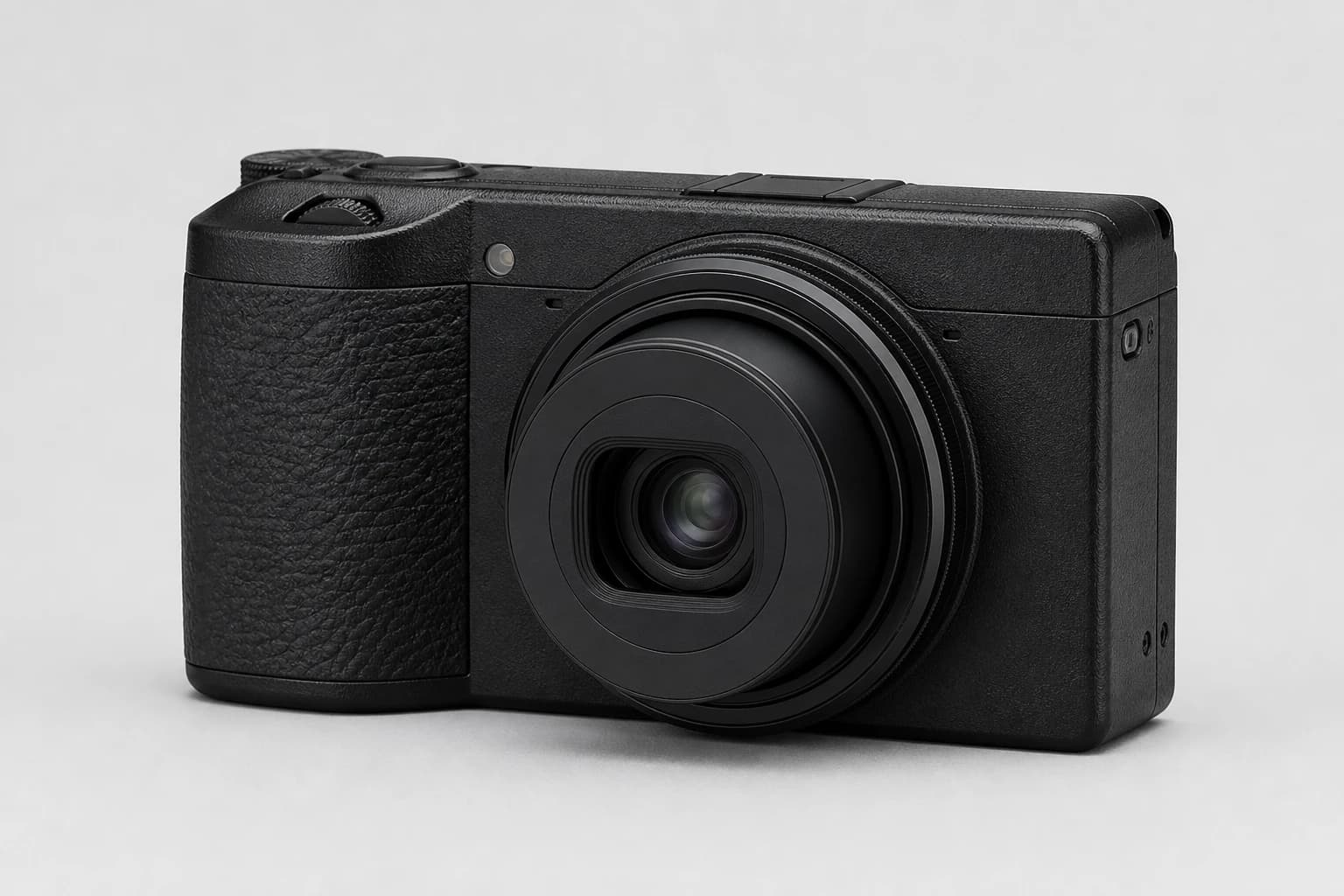
A camera that really fits a pants pocket, brings an APS-C sensor, and forces you to think in one fixed focal length — that’s the promise of the Ricoh GR series. The GR III is the street classic: discreet, Snap Focus, 28mm feel. In 2026 it sits next to the GR IIIx, the HDF variants, and the newer GR IV. That’s exactly where the honest question behind “Ricoh GR III review” starts.

I’ve used the GR logic for street, travel and everyday shooting: always with me, no lens decisions, JPEG look that lands fast — and the known weaknesses forums like to skip until the first dead battery and the first dust spot show up. What specs and hype underplay: you’re not buying the “best pocket camera,” you’re buying a focal-length philosophy. 28mm (GR III) and 40mm (GR IIIx) aren’t siblings with a cosmetic difference — they change how you move through a scene.

You won’t get a datasheet dump or a cult piece here — you’ll get a clear buying call: when the GR IIIx fits better in 2026, when the classic GR III stays the better street pick, what HDF actually does — and when you’re more honest with a Fujifilm X100VI, Sony RX100 VII, or the GR IV.
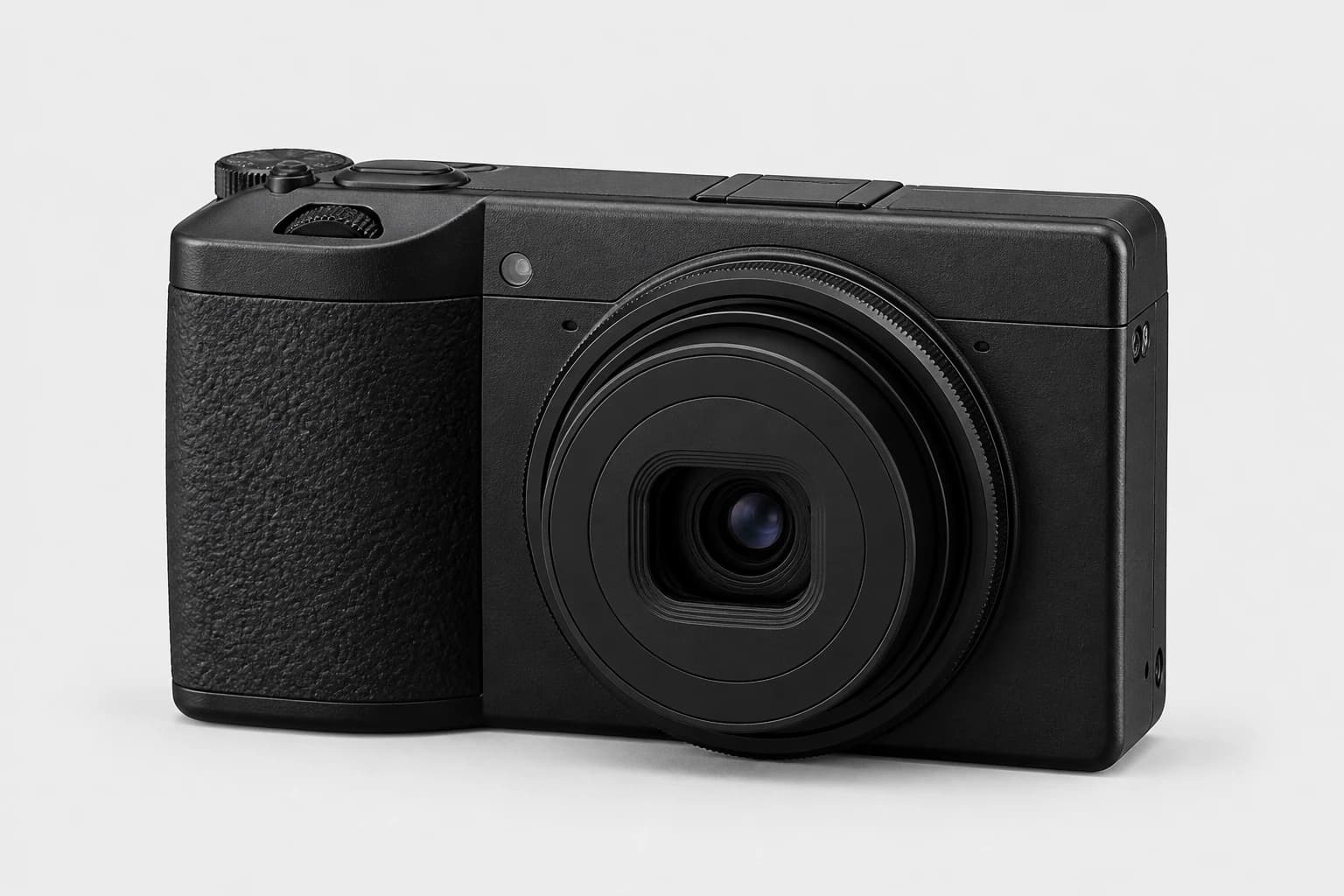
00
Short

Is the Ricoh GR III worth it in 2026? The quick verdict

Short version: the Ricoh GR IIIx is often the better everyday pick in 2026 — about 40mm (full-frame equivalent), typically around $1,000–1,100. The classic GR III with about 28mm (often around $999–1,050) stays right when you deliberately want that wider street feel.

Both share APS-C with 24.2 megapixels, in-body stabilization and Snap Focus — and the same honest limits: battery is tight, no viewfinder, Full HD only, plus sensor-dust risk. HDF is a look filter, not an ND — niche. Newer generation: GR IV. Want a viewfinder and film simulations: Fujifilm X100VI.

Top 3

My three recommendations

**#1 Ricoh GR IIIx** — everyday with a ~40mm feel. **#2 Ricoh GR III** when you want classic 28mm street. **#3 Fujifilm X100VI** when viewfinder and film sims matter more than maximum pants-pocket size.

Vergleich
Ricoh
Ricoh GR IIIx
Ricoh
Ricoh GR III
Fujifilm
Fujifilm X100VI
Bild
Ricoh GR IIIx
Ricoh GR III
Fujifilm X100VI
EmpfehlungEditor’s pickBudgetAlternative
Sensor24.2 MP APS-C CMOS24.2 MP APS-C CMOS40.2 MP APS-C X-Trans 5 HR
ISO-Bereich26.1 mm f/2.8 (≈40 mm FF)18.3 mm f/2.8 (≈28 mm FF)FUJINON 23mm f/2 (≈35 mm)
AutofokusIBIS 3-axis, ~4 EVIBIS 3-axis, ~4 EVIBIS up to ~6 EV
DetailSnap Focus, crop 50/71 mmSnap Focus, crop 35/50 mm, close macroHybrid VF, film sims
Stärken
  • +40mm language feels calmer and more versatile day to day
  • +Real APS-C quality in a jacket-pocket format
  • +IBIS and Snap Focus for a street workflow
  • +DNG + strong JPEG image control
  • +Discreet — no system-camera silhouette
  • +Classic 28mm street perspective
  • +Slightly flatter/lighter than the IIIx
  • +Closer macro than the IIIx
  • +Same APS-C / Snap Focus DNA
  • +Money-keyword model with a big community
  • +Hybrid viewfinder — a big practical gap vs. the GR
  • +Brighter f/2 and strong film simulations
  • +More IBIS and resolution
  • +Premium handling with analog dials
Schwächen
  • Battery won’t last a full day without spares
  • No viewfinder — display only
  • Sensor dust theme from the retracting lens
  • Video is Full HD only — not a reason to buy
  • 28mm stretches near the edges — not for every everyday use
  • Battery and dust like all GR III/IIIx bodies
  • No viewfinder
  • GR IV is the newer 28mm successor — check if budget allows
  • Twice as heavy and more expensive than the GR
  • No true pants-pocket format anymore
  • Hype can distort availability and price
  • Still a fixed prime — no zoom
Geeignet fürEveryday carry and street with a fixed 40mm aesthetic — when you want APS-C without a backpack.Street and documentary with intentional 28mm closeness — when you want the classic GR.Street/everyday with a viewfinder and Fuji look — when the GR feels too “display only.”
Wo kaufen

Why “buy a GR III” is often the right search query in 2026 — but the wrong model choice — is what the rest of this Ricoh GR III review covers: focal length first, specs second. For the broader pocket vs. travel framing, also see the best travel camera and compact mirrorless cameras.

01
Audience

Who the GR series really fits

Before you dig through megapixels and HDF filters: the most important question is whether your use case fits the GR family at all. Fixed focal length, no viewfinder, pocket priority — that’s a statement, not “cover everything.” The table shows where the series is strong and where another camera makes more sense.

Use caseDoes the GR series fit?Why
Street / everyday carryExcellentTruly pocketable, discreet, Snap Focus, APS-C quality
Travel (one focal length)ExcellentMinimal gear — if you can live with 28 or 40mm
Documentary / light reportageGoodLow-key, fast, JPEG workflow without setup
Travel with zoom needsWeakNo zoom — the RX100 VII is often better here
Viewfinder fans / bright sunConditionalNo built-in viewfinder — then lean X100 series
Video / vlog in front of the lensNo / weakFull HD only — more ZV-1 territory
Sports / wildlifeNoFixed prime and AF character aren’t built for action

Fit assessment from my own practice and user consensus — as of August 2026

Street and everyday shooters who want to work intentionally with one fixed focal length and maximum compactness get exactly what many system cameras only imitate with a kit and a backpack: a camera you actually carry. If you’re a beginner and unsure whether APS-C and a fixed prime fit you, check camera for beginners first. Looking for system flexibility: compact mirrorless camera.

02
Data

The specs: GR III vs. GR IIIx at a glance

Before everyday usability: here are the numbers per Ricoh and the common spec consensus. Important for this Ricoh GR III review: III and IIIx share sensor, processor, IBIS and battery — the splitter is focal length. HDF variants replace the ND with a highlight diffusion filter. Every row shows up again in the practical check below.

CategoryRicoh GR IIIRicoh GR IIIx
Sensor24.2 MP APS-C CMOS24.2 MP APS-C CMOS (same class)
Lens18.3mm f/2.8 (≈ 28mm FF equiv.)26.1mm f/2.8 (≈ 40mm FF equiv.)
StabilizationIBIS 3-axis, up to ~4 EVIBIS 3-axis, up to ~4 EV
ViewfinderNo (optional hot-shoe OVF)No (optional hot-shoe OVF)
Display3" touch, fixed3" touch, fixed
ND / HDFBuilt-in ND (~2 stops) or HDF variantBuilt-in ND (~2 stops) or HDF variant
VideoFull HD up to 60p — no 4KFull HD up to 60p — no 4K
BatteryDB-110, ~200 shots (CIPA)DB-110, ~200 shots (CIPA)
Weight~257 g (with battery/card)~262 g (with battery/card)
StandoutSnap Focus, street DNA 28mmSnap Focus, everyday DNA 40mm
Street price US 2026Typ. ~$999–1,050Typ. ~$1,000–1,100

Ricoh GR III vs. GR IIIx — core specs, as of August 2026

On paper, III and IIIx share almost everything except the lens. The everyday splitter is 28 vs. 40mm — not megapixels and not marketing. Whether that justifies your purchase price is what the next section settles.

03
Everyday

Handling, battery and dust — what the datasheet leaves out

Numbers say little about how a GR feels when you carry it in a pants pocket all day. Here’s the everyday check — from my own practice with the series plus consensus from reviews and user reports. Not a lab protocol, but what decides the purchase in real life: battery, display without a viewfinder, dust and controls.

Handling & size
This is the core of the GR: APS-C in a size many premium compacts only claim. About 257–262 g, flat, no grip theater. You bring it because it doesn’t get in the way — not because you have to motivate yourself. Versus the X100 series, the GR clearly wins on pocketability; it loses the hybrid viewfinder.
No viewfinder — display life
Composition runs through the fixed 3" touchscreen. In bright sun you need posture, hand shade or an optional hot-shoe finder. If a viewfinder is a hard buying criterion, you’re in the wrong product family — then lean X100VI or RX100 VII with EVF.
DB-110 battery — the known bottleneck
CIPA around ~200 shots is honestly tight for a day camera. Practice: pack one, better two spare batteries — especially with lots of review, Wi-Fi and colder temperatures. That’s not a dealbreaker if you plan; it is a dealbreaker if you ignore it.
Sensor dust
The collapsing lens and sensor shift are part of the DNA — and the known weak spot: dust on the sensor shows up again and again in user reports and reviews. Cleaning and careful handling come with the territory. If you expect “carefree like a smartphone,” you’ll be disappointed.
Menus & controls
Ricoh-typical: Fn buttons, ADJ lever, Snap Focus, image styles. Beginners need a short learning curve — if you’re coming from a phone, factor that in. In return the camera rewards you with a workflow that feels like street photography, not an app.

In reviews and user reports, compactness, image quality and the Snap workflow often get praise. The criticism repeats: battery life, dust, missing viewfinder, video limit. That matches what I see day to day: clear strengths, clear limits — no universal wonder.

04
Image

Image quality & look: APS-C in a pants pocket

APS-C with 24.2 MP in this size isn’t a marketing buzzword — it’s why many people want a GR at all: real sensor area without a system backpack. The JPEGs are everyday-solid and characterful; RAW (DNG) gives you headroom. The photographic difference between III and IIIx isn’t the sensor — it’s the angle of view.

  • Daylight: crisp, detailed, enough reserve for web, print and light crops
  • ISO in practice: roughly ISO 1600–3200 often everyday-usable; beyond that depends on subject and output
  • f/2.8: solid everyday sharpness, no 85mm portrait monster — closeness and background separation come from distance and focal length
  • 28mm (III): width, context, classic street — you step closer
  • 40mm (IIIx): a bit tighter, everyday portraits and details feel more relaxed — you often stay one step back
  • ND vs. HDF: ND helps wide open in bright light; HDF softens highlights — look, not an ND replacement

The real point is honest: you’re not buying “better megapixels,” you’re buying how close you get to people and scenes. 28mm rewards closeness and width; 40mm rewards everyday shooting and a bit more distance. Anyone developing RAW gets a lot from both; JPEG-first shooters get a fast, recognizable GR look — without Fuji film-sim theater.

If you want broader context on APS-C vs. larger sensors, check travel and system guides like the best travel camera. For storage and burst shooting, see the best SD card for camera guide.

05
AF

Autofocus & Snap Focus: think fast, don’t chase

The GR series isn’t a sports camera. For street, everyday and documentary moments the hybrid AF is usually enough in practice — when light and contrast are there. The real GR superpower is Snap Focus: you set a distance, the camera is instantly “sharp enough” for the moment — without waiting for AF to debate the scene.

Snap Focus
Classic street workflow: preset distance (e.g. 5–8 ft / 1.5–2.5 m), aperture 5.6–8, wait for the moment. That’s how I often shoot street faster than with a big zoom system — timing over tracking.
Everyday autofocus
Touch AF and face detection do the job for portraits and calm scenes. In low light or low contrast you occasionally need a nudge — normal for the class, not miracle AF like stacked 1" sports compacts.
Burst shooting
Fine for short sequences, not an action monster. If you want kids’ sports or wildlife, you’re in the wrong product category — then a system camera or an AF-heavy zoom compact like the RX100 VII.
Manual & hyperfocal
Many GR users work deliberately with zone and Snap. That’s not a step backward — it’s part of the camera culture — and it takes pressure off AF in frantic street moments.

In practice that means: for the typical GR buyer (street, everyday, one focal length) AF isn’t a dealbreaker — Snap Focus is the workflow. For anything that needs tracking on steroids, there are more honest tools.

06
Video

Video: not the reason to buy — and that’s fine

The GR III and GR IIIx deliver Full HD up to 60p — no 4K. Fine for short clips and notes, honestly too weak as a creator main camera. IBIS helps a bit handheld; audio and workflow stay a photo side role. The GR IV also stays in Full HD territory per the spec consensus — if you want video, you’re buying the wrong family.

  • GR III / IIIx: FHD60, IBIS present — a photo camera with a video footnote
  • No 4K: a clear signal in 2026 — the buying reason is stills, not content video
  • Audio: usable onboard for notes, not for interviews
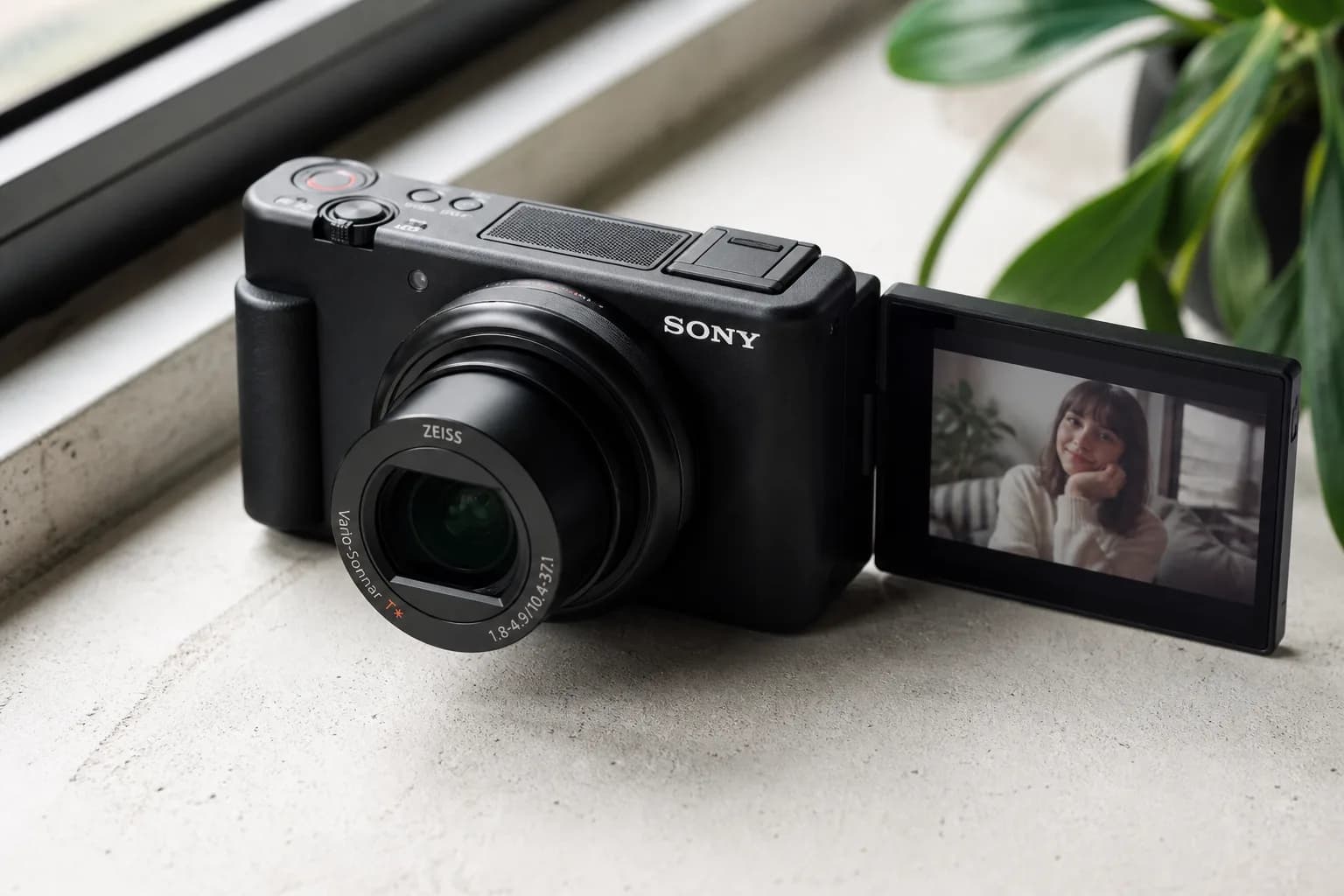
  • Vlog in front of the lens: wrong tool — lean Sony ZV-1

Short version: video works in a pinch. It alone doesn’t justify a premium price — and certainly not a cult surcharge.

07
Decision

GR III vs. GR IIIx vs. HDF: focal length decides

This is the core of this Ricoh GR III review: III and IIIx feel related — same body feel, same Snap workflow, same strengths and weaknesses. They’re still not interchangeable updates. Focal length shifts everyday shooting in a real way. HDF is a third axis — look, not an upgrade.

You need …Lean GR III (28mm)Lean GR IIIx (40mm)
Classic street / width / closenessClearly betterTighter — more crop feel
Everyday / cafe / light portraitsWorks, often too wideClearly more relaxed
Architecture / narrow streetsBetter (more width)Less room to work
People with some distanceYou have to step closerA bit more air in the frame
HDF look (soft highlights)Check HDF variantCheck HDF variant
Price logic 2026Often searched · value street 28mmEveryday with ~40mm

Decision matrix GR III vs. GR IIIx — as of August 2026

Simply put: the IIIx is often the better everyday GR in 2026. The III is the better street 28mm GR. Anyone who Googles “GR III” and then blindly buys the III when they actually want 40mm everyday is optimizing for a keyword — not for usefulness.

What HDF really is — and what it isn’t

HDF (Highlight Diffusion Filter) replaces the built-in ND on HDF models. Instead of cutting light, the filter softens highlights — a look that recalls light diffusion. That’s taste and niche: strong if you want exactly that effect often. Weak if you need ND for shooting wide open in sun. HDF isn’t a “better GR III” — it’s a different tool choice.

08
Comparison

Four options in a direct comparison

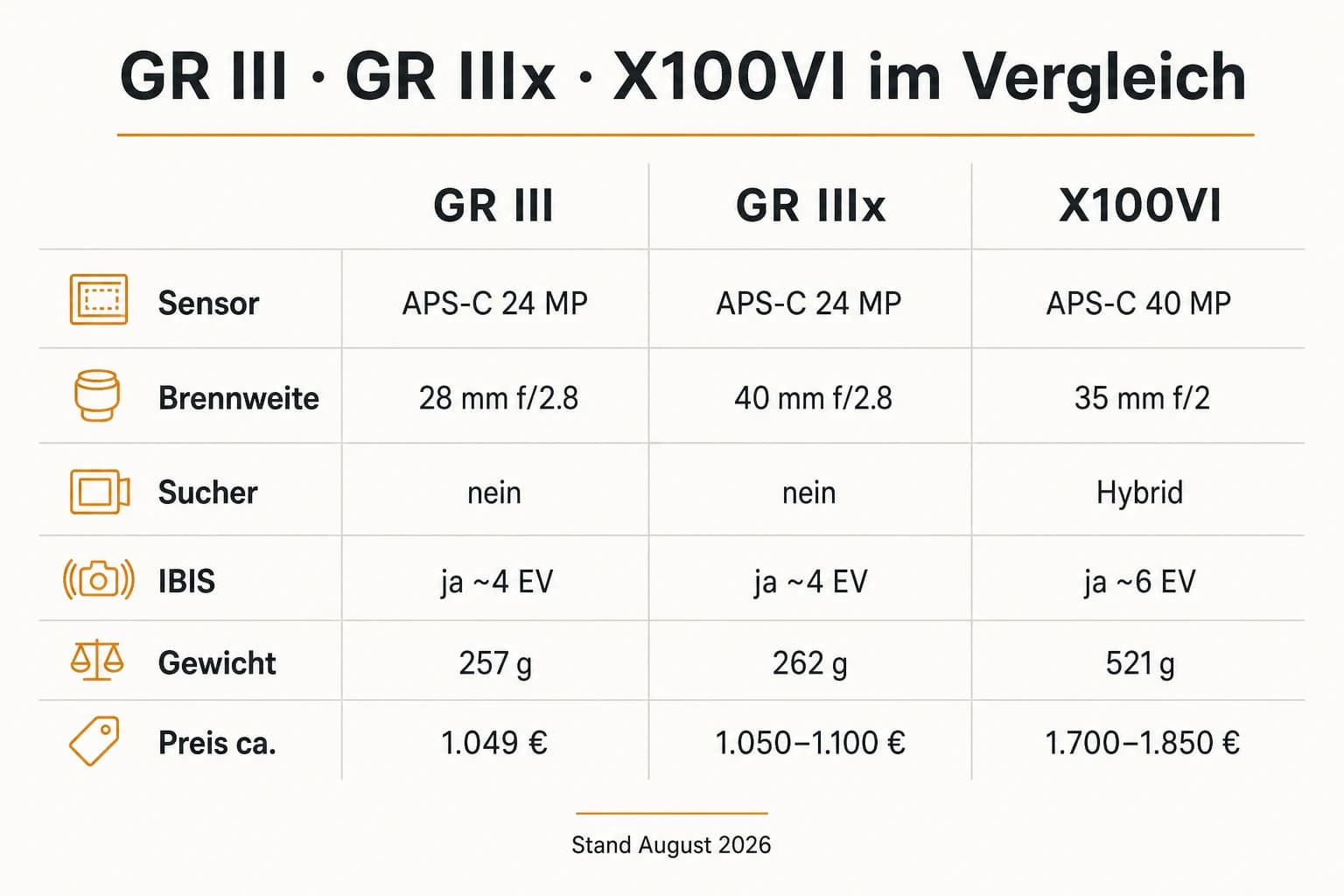
Instead of isolated datasheets, a direct comparison helps. The graphic summarizes the candidates; the table fills in the details — including the X100VI as a viewfinder/film-sim alternative and the RX100 VII as a zoom pocket.

Comparison graphic Ricoh GR IIIx, GR III, Fujifilm X100VI and Sony RX100 VII
GR IIIx vs. GR III vs. X100VI vs. RX100 VII — as of August 2026
CriterionGR IIIxGR IIIX100VIRX100 VII
Sensor24.2 MP APS-C24.2 MP APS-C40.2 MP APS-C20.1 MP 1"
Focal length≈40mm f/2.8 fixed≈28mm f/2.8 fixed≈35mm f/2 fixed24–200mm zoom
StabilizationIBIS ~4 EVIBIS ~4 EVIBIS ~6 EVOIS + electronic
ViewfinderNoNoHybrid OVF/EVFPop-up EVF
Pocket factorVery highVery highJacket, barely pantsVery high + zoom
VideoFHDFHDstrong 4K+/package4K, creator-capable
Weight~262 g~257 g~521 g~302 g
Price approx.$1,000–1,100$999–1,050$1,600–1,800~$1,050

As of August 2026 — check exact prices and availability at the retailer

Versus the X100VI, both GRs win on true pants-pocket size and price; they lose viewfinder, film-sim ecosystem and video ambition. Versus the RX100 VII, they win on APS-C and fixed-prime clarity — lose on zoom and EVF. No option is objectively best; each answers a different pocket philosophy. Travel overview: best travel camera.

09
Decision

The decision tree: which camera fits you

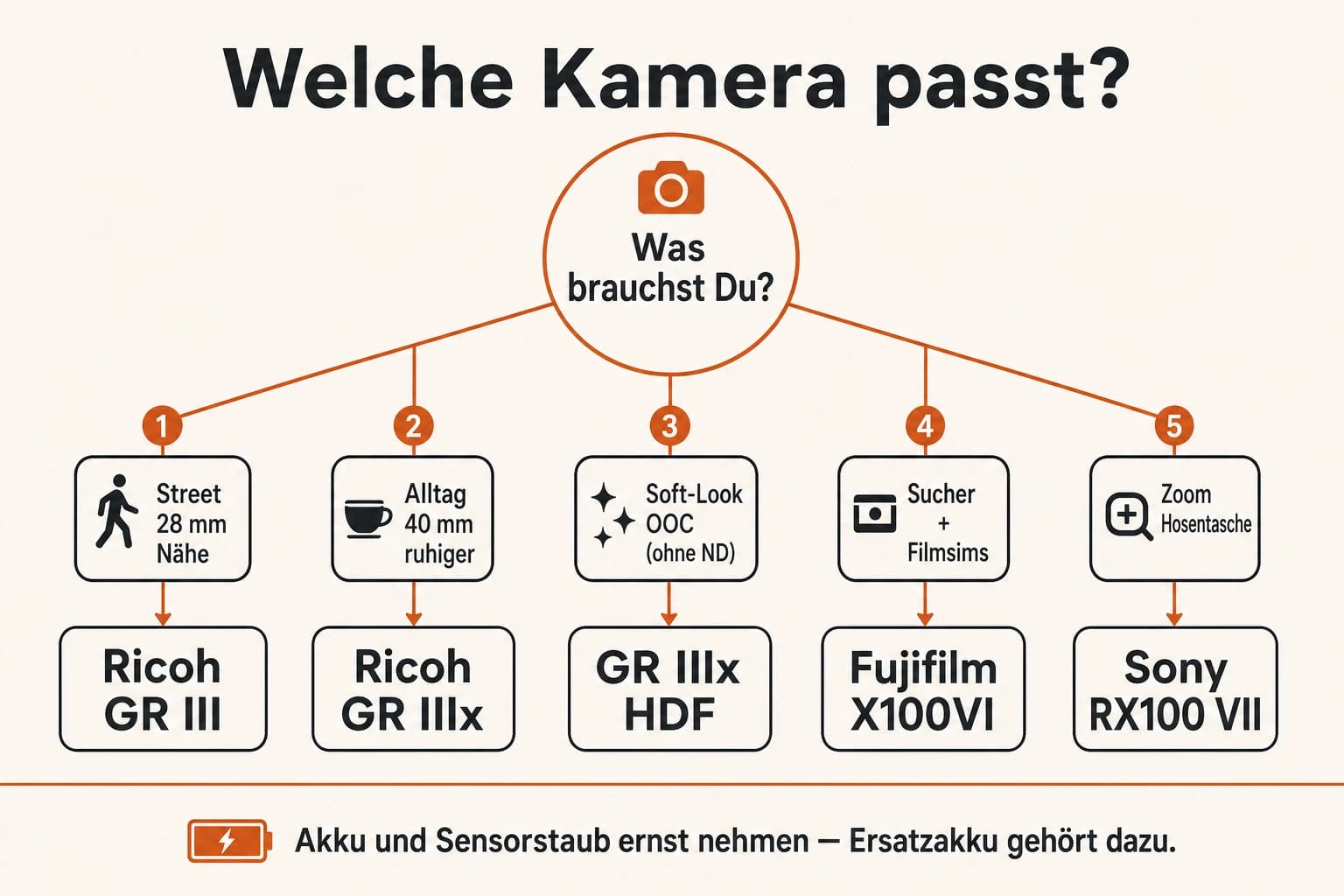
Instead of comparing more specs, walk the tree from top to bottom. The first question decides more about your purchase than any single number from the tables above.

Decision tree: Ricoh GR IIIx, GR III, Fujifilm X100VI, RX100 VII or GR IV
Decision tree — from use case to the right camera, as of August 2026
  • Want everyday with ~40mm and maximum pocketability → Ricoh GR IIIx
  • Want classic 28mm streetRicoh GR III
  • Want viewfinder + film sims and accept more size/price → [Fujifilm X100VI](/en/fujifilm-x100v-review/)
  • Need 24–200mm zoom[Sony RX100 VII](/en/sony-rx100-vii-review/)
  • Want the newest GR (better battery/IBIS/storage, ~$1,400 MSRP) → check GR IV
  • Shoot mostly in front of the lens (vlog) → lean Sony ZV-1, not GR
  • Your phone is enough for everyday snaps → buy none of these options, see FAQ

For most readers who’ve made it this far and want everyday carry with one fixed focal length, the path lands on the GR IIIx — that’s why it’s my recommendation in this review. The GR III stays right when you truly want 28mm — not just because you Googled it. Unsure between pocket and system? Orientation under compact mirrorless cameras and the best travel camera.

10
Detail

Ricoh GR IIIx in detail: my recommendation for 2026

After all the tables, the question remains: on the GR IIIx, does what convinces outweigh what annoys? Here’s the short balance before the verdict card.

Everyday strengths
≈40mm often sits more naturally than 28mm for everyday, cafe, street with a bit of distance and light portraits. Same APS-C quality, same IBIS, same pocket DNA as the III — just with an angle of view that creates less “wide-angle stress” day to day. Many people looking for “one camera for everything everyday” land exactly here.
The compromises
Priced close to the III (typically $1,000–1,100). Still no viewfinder, battery ~200 CIPA, FHD only, sensor-dust topic. Anyone who wants classic 28mm street aesthetics will feel constrained. Anyone who wants zoom is in the wrong place.

On price the IIIx isn’t an undercut bargain vs. the III — it’s the honest answer to the search behind many “GR III” clicks: you want the GR experience in everyday life. In 2026 that often means IIIx, not blindly the 28mm variant.

Editor’s pick
Ricoh GR IIIx
Bewertung
4.6
/ 5,0
★★★★
Basierend auf 0 verifizierten Bewertungen
Ricoh

Ricoh GR IIIx

Editor’s pick — 40mm for everyday and calmer street

APS-C 24.2 MP, fixed 26.1mm lens (≈40mm FF) f/2.8, sensor-shift IBIS (~4 EV), Snap Focus, DNG and strong JPEGs. Typically around $1,000–1,100 — often the more everyday-friendly GR when you don’t need the closeness and edge stretch of 28mm. No viewfinder, battery tight (~200 CIPA), plan spare packs.

Was überzeugt
  • +40mm language feels calmer and more versatile day to day
  • +Real APS-C quality in a jacket-pocket format
  • +IBIS and Snap Focus for a street workflow
  • +DNG + strong JPEG image control
  • +Discreet — no system-camera silhouette
Was Du wissen solltest
  • Battery won’t last a full day without spares
  • No viewfinder — display only
  • Sensor dust theme from the retracting lens
  • Video is Full HD only — not a reason to buy
Editor's Statement

When 40mm is your language — everyday carry with APS-C in a pocket

Verfügbar bei
11
Value

GR III: classic 28mm street with real purpose

The Ricoh GR III remains the model most people find under this search term — and that’s understandable: 28mm is the series’ classic street focal length, Snap Focus, cult status, often around $999–1,050. As a value pick in 2026 it holds when you deliberately want width and closeness — not because the name is better known.

When the III is the right camera: you shoot street with context, architecture cuts, scenes in narrow streets, and you’re ready to get closer to people and situations. When it’s the wrong one: you actually want everyday portraits and cafe distance — then the IIIx is the more honest choice, even if Google says “GR III.”

Under “Ricoh GR III review” the III stays correctly visible: many know the name. As a buying recommendation it holds under the focal-length condition above — otherwise my recommendation deliberately points to the IIIx.

Budget
Ricoh GR III
Bewertung
4.5
/ 5,0
★★★★
Basierend auf 0 verifizierten Bewertungen
Ricoh

Ricoh GR III

Value — classic street 28mm and the money keyword

APS-C 24.2 MP, 18.3mm (≈28mm FF) f/2.8, IBIS, Snap Focus, ~257 g. Typically around $999–1,050 — the classic GR street camera. Same strengths and weaknesses as the IIIx, different focal length. HDF variants swap the ND for a soft filter — only if you want that look.

Was überzeugt
  • +Classic 28mm street perspective
  • +Slightly flatter/lighter than the IIIx
  • +Closer macro than the IIIx
  • +Same APS-C / Snap Focus DNA
  • +Money-keyword model with a big community
Was Du wissen solltest
  • 28mm stretches near the edges — not for every everyday use
  • Battery and dust like all GR III/IIIx bodies
  • No viewfinder
  • GR IV is the newer 28mm successor — check if budget allows
Editor's Statement

Classic 28mm street — closeness, width, documentary

Verfügbar bei
12
Alternative

Alternative: when X100VI, RX100 VII or GR IV fit better

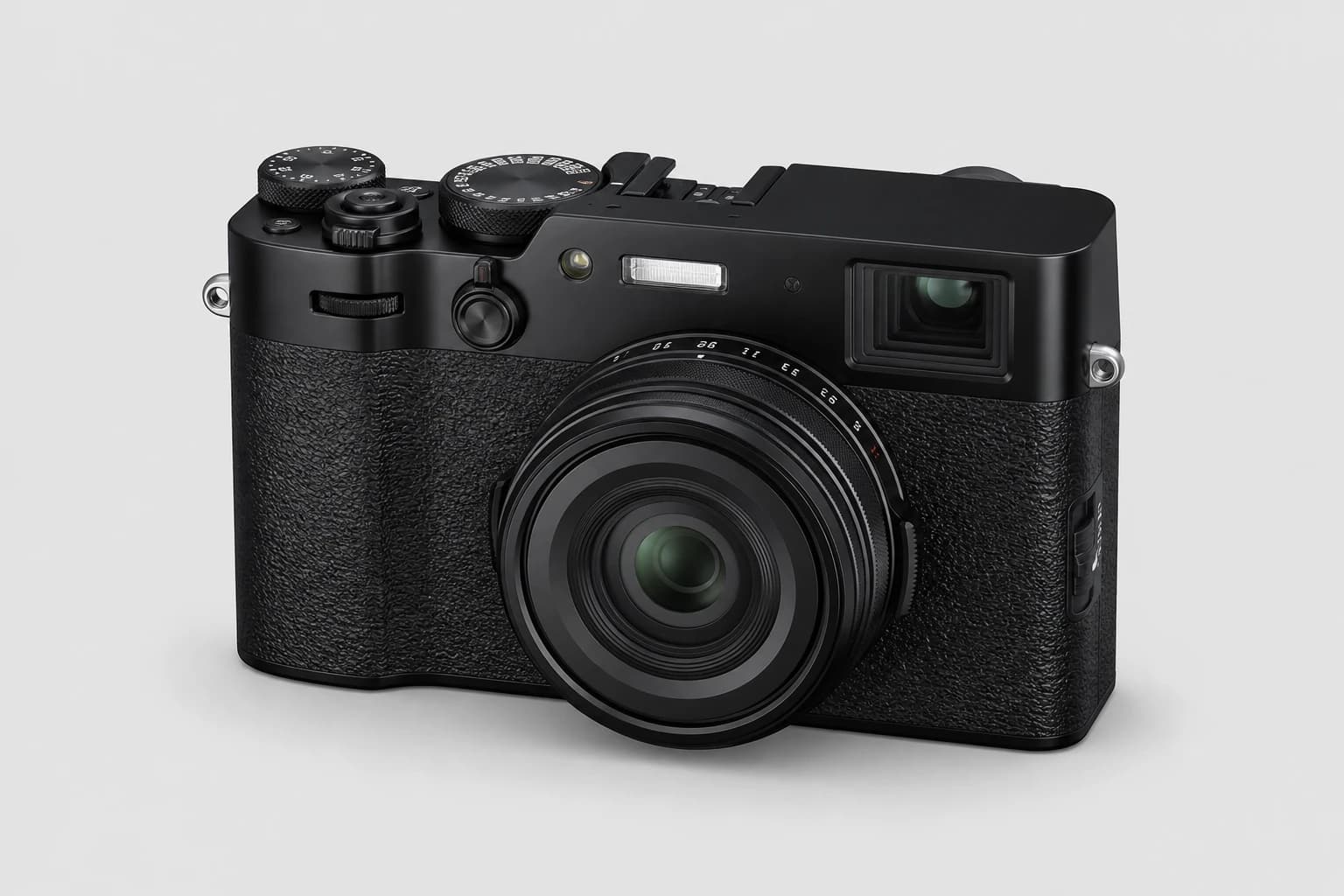
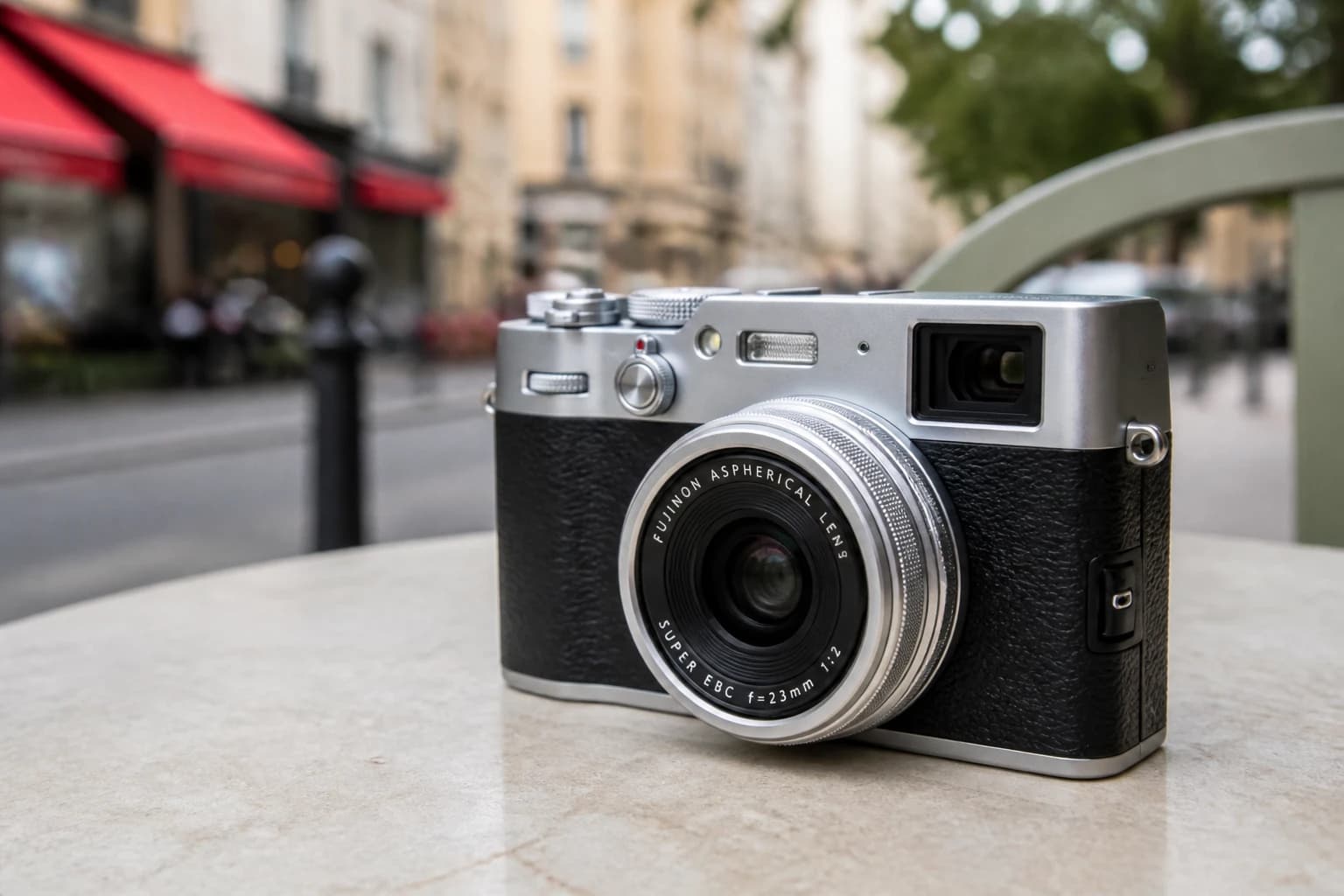
The Fujifilm X100VI answers a related but different question: not “APS-C maximally pocket,” but “premium compact with hybrid viewfinder, film sims and IBIS.” With 23mm f/2 (≈35mm), 40.2 MP and typically $1,600–1,800, it’s larger, pricier and less pants-pocket friendly — in return you get viewfinder feel and a JPEG look many people only chase in post. Details in the Fujifilm X100V/X100VI review.

The Sony RX100 VII answers the zoom question: 24–200mm, EVF, aggressive AF DNA, often around ~$1,050. Less APS-C look, but reach no GR will ever deliver. Reach for the RX100 when architecture and tele without lens swaps are the priority — see the Sony RX100 VII review.

The Ricoh GR IV (2025/26, MSRP often ~$1,400) keeps GR philosophy (28mm-equivalent feel, pocket), improves among other things battery (~250 CIPA), IBIS (5-axis) and internal storage. Skip III for IV if you’re buying new, want the current generation long-term and the premium doesn’t scare you. Stay with III/IIIx if you want a proven GR now, choose focal length clearly and prefer to save ~$300–400 or put it into batteries.

Alternative
Fujifilm X100VI
Bewertung
4.7
/ 5,0
★★★★
Basierend auf 0 verifizierten Bewertungen
Fujifilm

Fujifilm X100VI

Alternative — viewfinder, film sims and 35mm f/2

40.2 MP APS-C, 23mm f/2 (≈35mm), hybrid viewfinder, IBIS ~6 EV, film simulations. Typically around $1,600–1,800 — the right alternative when you like GR pocket feel but prioritize a viewfinder, brighter aperture and Fuji JPEG look. Clearly larger and more expensive than any GR III/IIIx.

Was überzeugt
  • +Hybrid viewfinder — a big practical gap vs. the GR
  • +Brighter f/2 and strong film simulations
  • +More IBIS and resolution
  • +Premium handling with analog dials
Was Du wissen solltest
  • Twice as heavy and more expensive than the GR
  • No true pants-pocket format anymore
  • Hype can distort availability and price
  • Still a fixed prime — no zoom
Editor's Statement

When viewfinder and film sims matter more than maximum compactness

Verfügbar bei
13
Accessories

Accessories: what you really need with a GR

The shopping list is short, but not optional. A few pieces make the difference between “cult camera” and “camera you actually use every day.”

Spare DB-110 battery (better two)
At ~200 CIPA a second battery is mandatory; a third makes sense on travel days. OEM packs are reliable; checked third-party options often work, with some risk on capacity and long-term stability.
Wrist strap / finger strap
The camera is valuable and small — a good strap prevents the classic “out of the pants pocket” moment better than any marketing feature.
Suitable memory card
For everyday RAW/JPEG a solid UHS-I SDXC is enough. Capacity and speed classes are covered in the best SD card for camera guide.
Optional: hot-shoe finder / case
An external OVF helps in bright sun; a slim case protects in the pocket without blocking controls. Not required — taste and use case.
Sensor care in mind
Not classic “gear,” but part of ownership reality: take dust seriously, handle carefully, get professional cleaning when needed — don’t wait until after vacation to regret it.
14
Verdict

The clear buying call

Quick take from this Ricoh GR III review: the GR III is a strong camera — and in 2026 often the right search, but not always the right model. My recommendation frequently is GR IIIx: same pocket APS-C feel, but ≈40mm for everyday. The GR III stays the street pick when you deliberately want 28mm. HDF only on purpose. Newest generation with noticeable battery and IBIS improvements: GR IV — without betraying the series’ stills DNA.

Need viewfinder and film sims: the Fujifilm X100VI is the more honest premium alternative. Need zoom: the Sony RX100 VII. Shoot in front of the lens: look at the ZV-1, not the GR. If your phone is enough for everyday — save the budget and invest in time shooting rather than cult. Travel/system orientation: best travel camera, compact mirrorless camera, camera for beginners.

15
FAQ

Common questions about the Ricoh GR III

Should I still buy a Ricoh GR III in 2026?
Yes, if you deliberately want ≈28mm street and accept the weaknesses (battery, no viewfinder, FHD only, dust). For everyday with a slightly tighter angle of view, the GR IIIx is often the better pick — even if you Googled “GR III.”
What’s the most important difference between GR III and GR IIIx?
Focal length: GR III ≈28mm FF, GR IIIx ≈40mm FF. Sensor, IBIS, battery and body logic are related. Everyday shooting changes through the angle of view — not megapixels.
What is Ricoh GR HDF?
HDF replaces the built-in ND with a highlight diffusion filter: softer highlights, a specific look. Not a general upgrade — only worthwhile if you want exactly that effect often and rarely need ND.
Does the Ricoh GR III have a viewfinder?
No built-in viewfinder. Optional hot-shoe OVFs exist. If a viewfinder is a must, check the Fujifilm X100 series or the Sony RX100 VII.
How long does the GR III battery really last?
CIPA is about 200 shots (DB-110). Practice: plan at least one, better two spare batteries — especially with lots of display review and travel days.
Is the sensor dust thing real?
It’s a known, recurring topic in reviews and user reports — not a myth and not a guaranteed issue on every copy. Plan for it, handle carefully, get professional cleaning when needed.
Can the GR III shoot 4K?
No — Full HD up to 60p. If video is your main reason, the GR is the wrong camera; then lean ZV-1 or a modern hybrid mirrorless.
GR III or Fujifilm X100VI — which is better?
Different jobs. GR: maximally pocket, APS-C prime, no viewfinder, cheaper. X100VI: hybrid viewfinder, film sims, stronger feature package, larger and pricier. Details in the X100 review — choose by philosophy, not hype.
GR III or Sony RX100 VII?
GR: fixed focal length, APS-C, street/everyday. RX100 VII: 24–200mm zoom, EVF, 1" sensor. Details in the RX100 VII review. Zoom vs. prime decides.
When is the Ricoh GR IV worth it over the GR III?
When you’re buying new, want the current generation, and improvements in battery (~250 CIPA), IBIS and storage are worth the premium (~$1,400 MSRP class) to you. If focal length and budget clearly sit with III/IIIx, the III generation remains sensible in 2026.
Is the GR III good for beginners?
Conditionally: the camera rewards photographic thinking (fixed focal length, Snap Focus), but it isn’t an “auto everything” entry. If you’re still orienting fundamentally, camera for beginners helps.
Does the GR work as a travel camera?
Yes, if you can live with one focal length and want minimal weight. If you need zoom flexibility, the RX100 VII or our best travel camera overview is often the better category.
Which SD card fits the Ricoh GR III?
A solid UHS-I SDXC covers photo everyday use in most cases. Capacity and speed class details are in the best SD card for camera guide.
Affiliate links marked with * — Amazon product links use partner ID martinkleinhe-20. I earn a small commission if you buy through these links; it costs you nothing extra. Assessments are based on my own practice, manufacturer specs and the consensus from reviews and user reports — no brand sponsored this article.
Newsletter

Stay in the loop.

Camera and photography news, honest gear tests and new articles — in your inbox. Infrequent but relevant. No spam, unsubscribe anytime.

Keep reading

From the journal.

Fotograf, Martin Fernando Mera Kleinheinz · Franz-Bork-Straße 21, 30163 Hannover · 0179 4085297