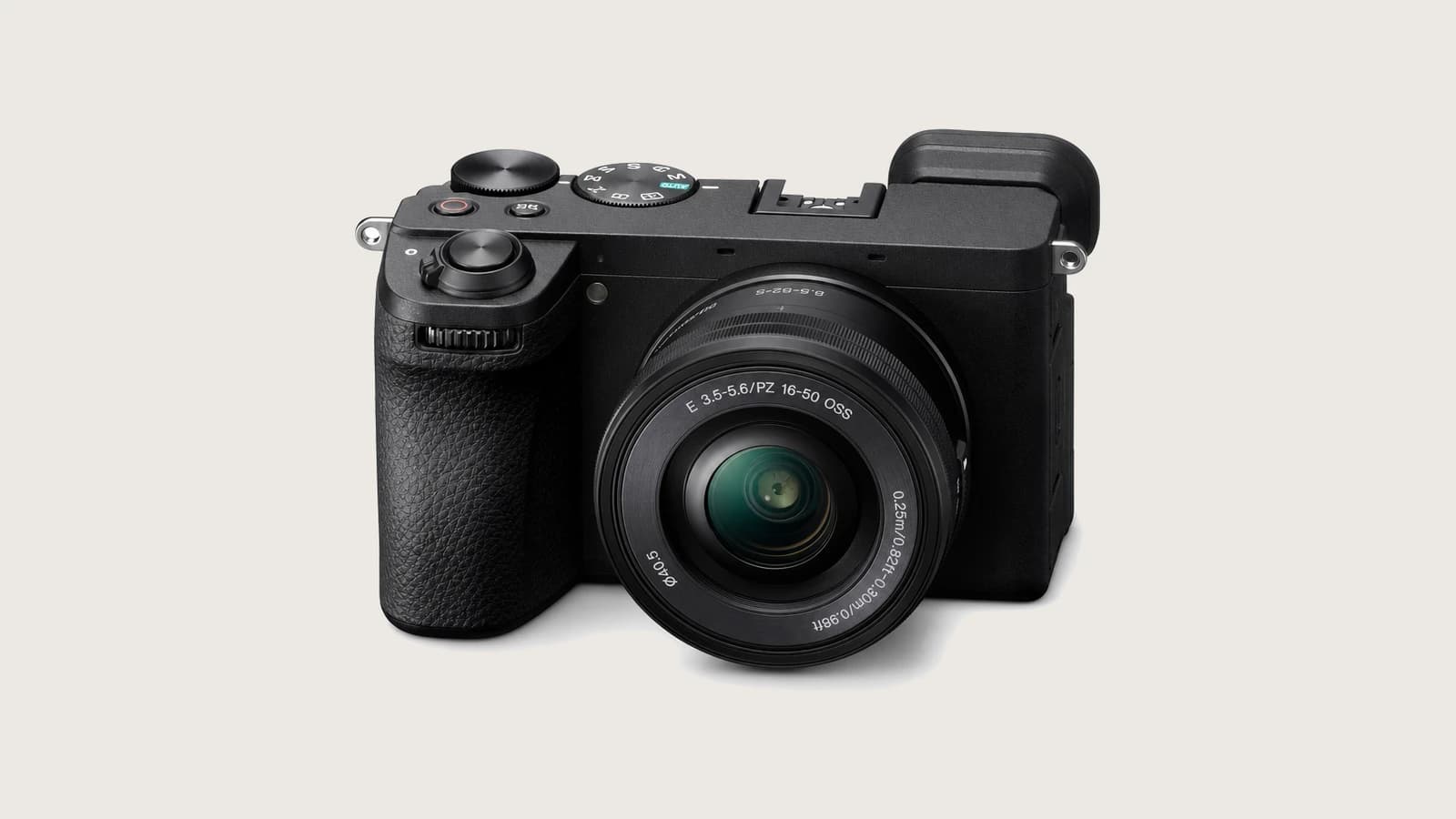
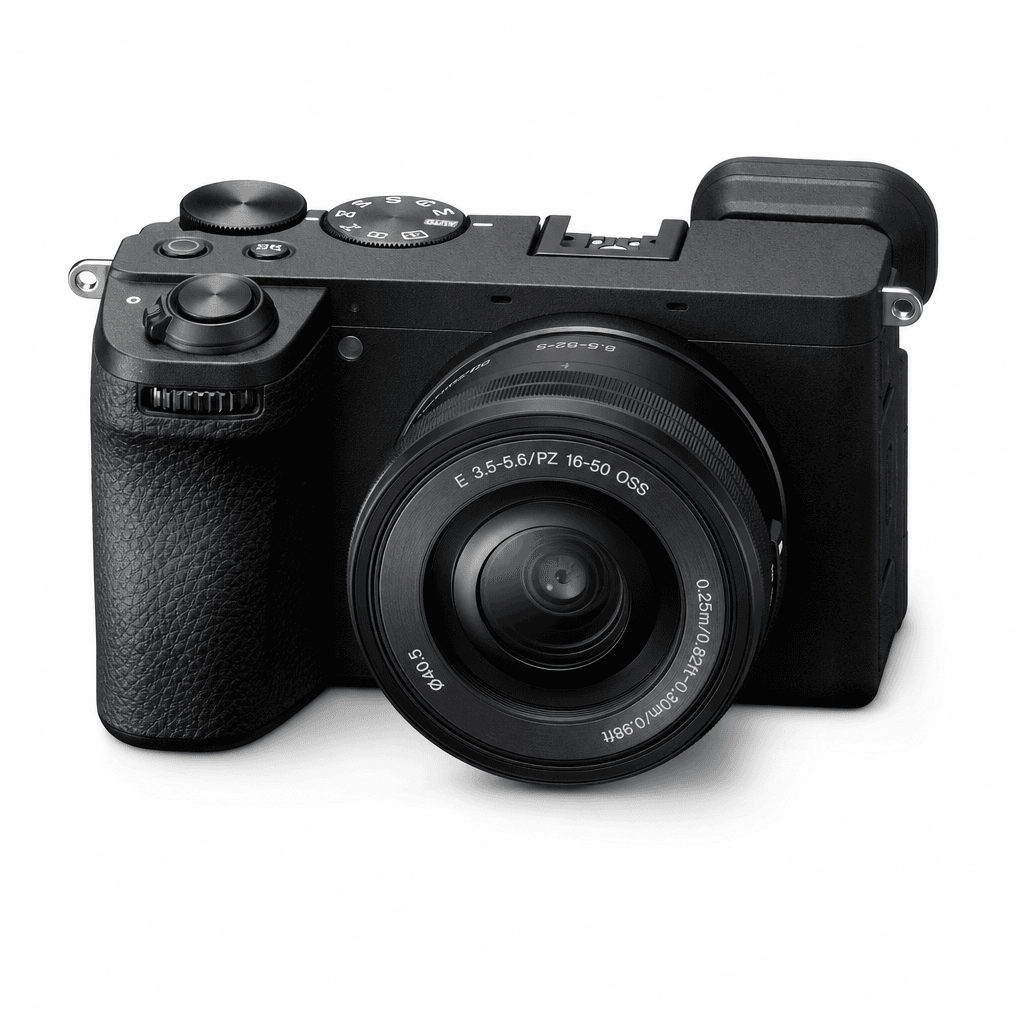
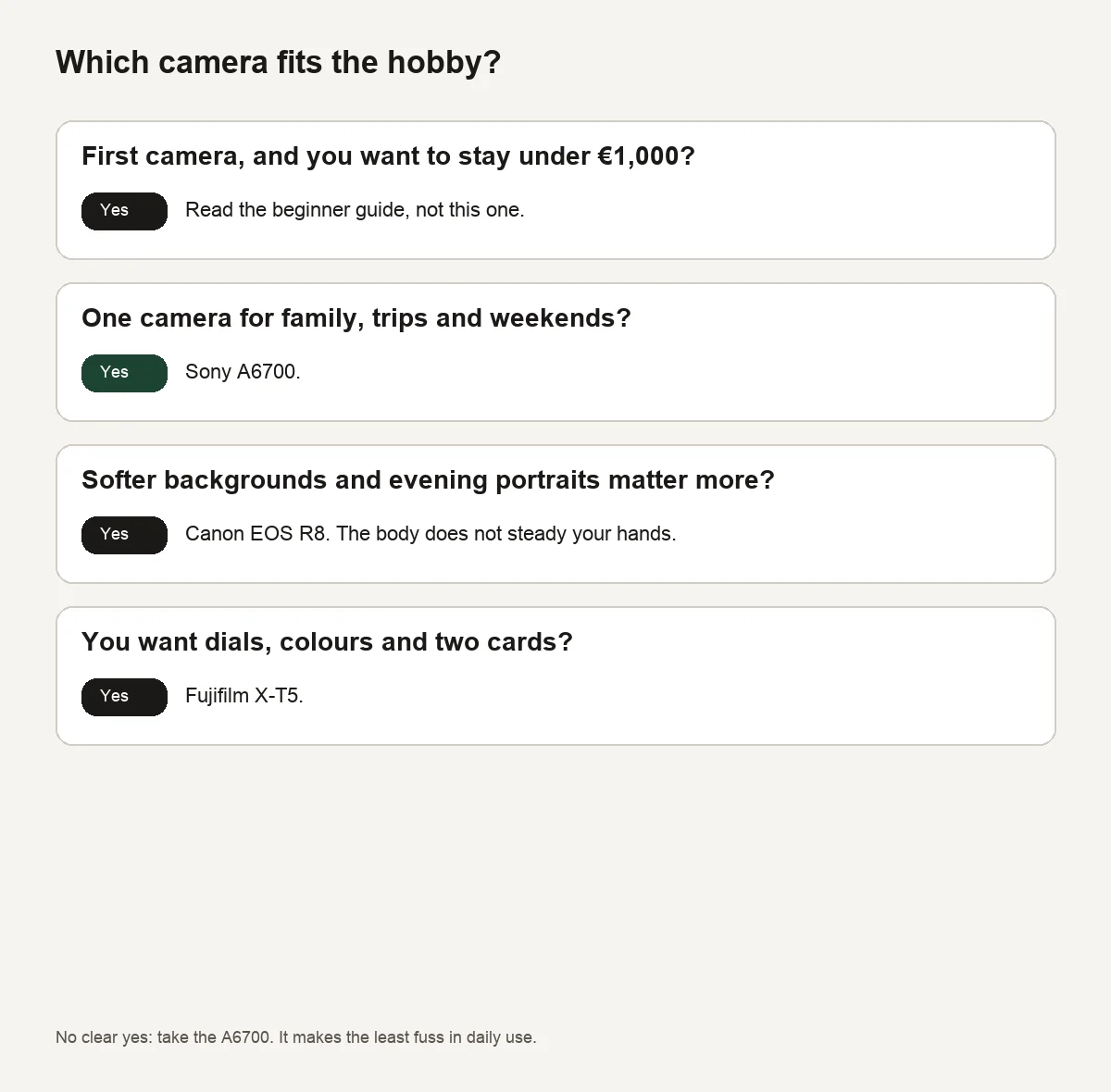
The A6700 is the camera a hobby grows up with, without suddenly looking like a job. You hold it to your eye, the viewfinder stays readable in the sun, and the stabilisation catches the shake that turns phone photos to mush at dusk. Children and dogs stay sharp because the camera recognises the subject instead of hunting a contrast edge. Video is there if the weekend turns into a short clip. It is not a pocket device. With a lens on, you notice it in the bag. That is exactly why you take it: small enough for a day out, serious enough that you do not switch after a year.
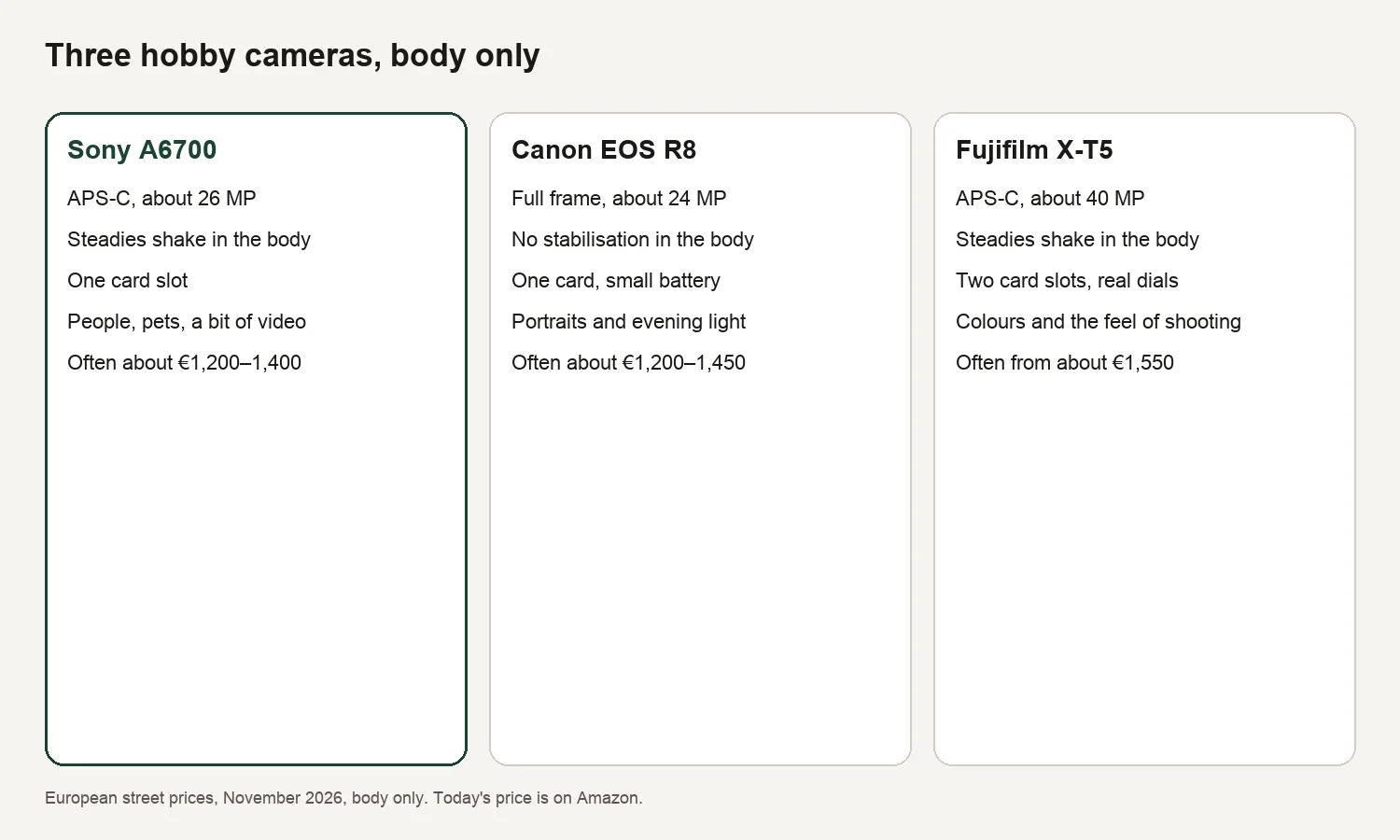
What it is not: a camera with a second card. If the card fails, that day's pictures are gone. For a hobby that is bearable. For a job it is not. The menus are denser on the first evening than you want. After that you set two or three things and leave the rest alone. The long review, including the limits, is the Sony A6700 review. In November 2026 the body often cost about €1,200 to €1,400 in Europe.
Sony
Sony A6700 (body)
The camera most hobby photographers actually take with them
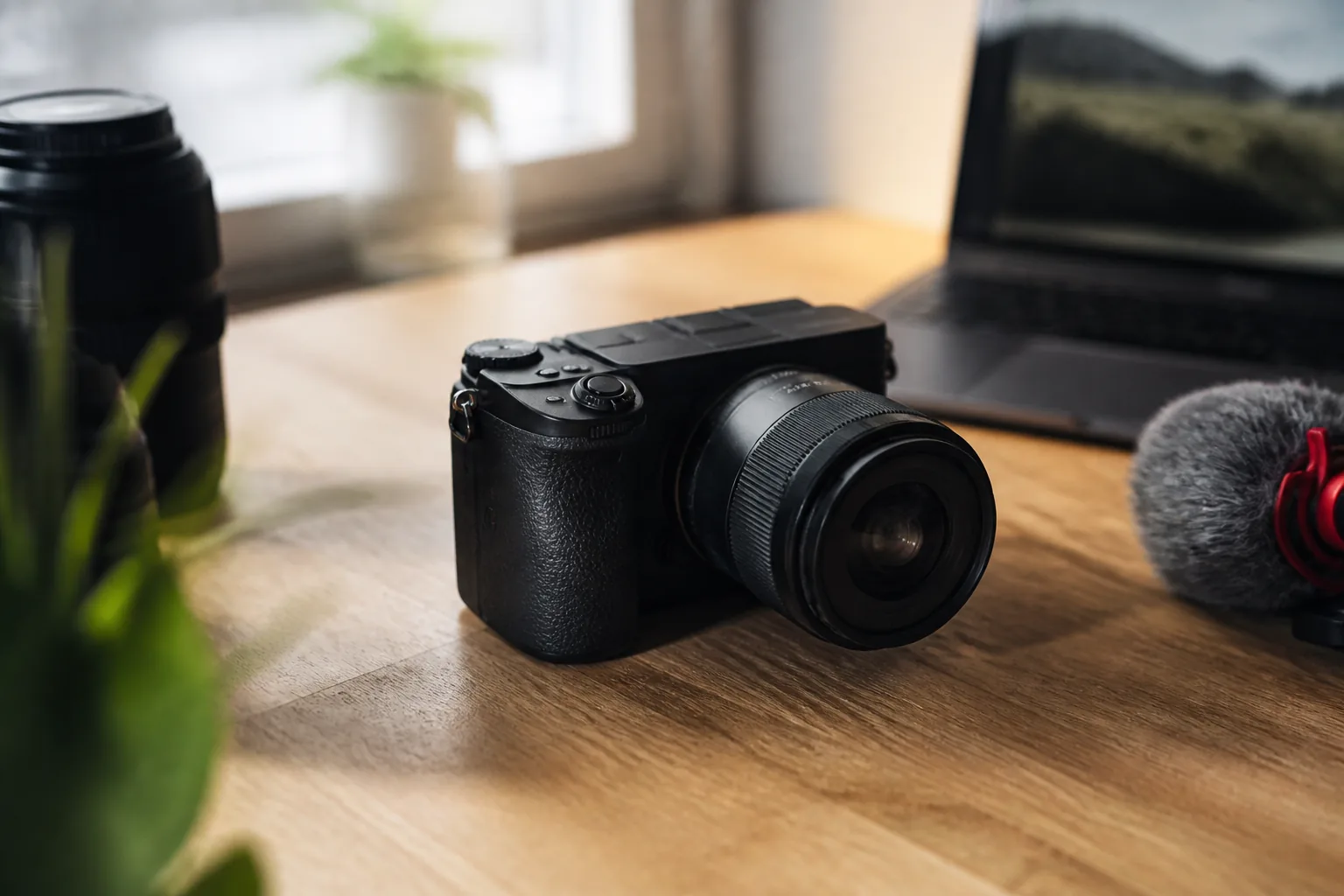
The camera I would hand most hobby photographers. You look through a viewfinder, the body steadies shake, and autofocus finds children, dogs and faces. The sensor is APS-C: bigger than a phone, smaller than full frame. That is enough for prints, trips and weekends. In Europe in November 2026 the body often sat around €1,200 to €1,400. A lens is extra.
Was überzeugt
- +Viewfinder at your eye, even when the sun hits the screen
- +Shake is steadied in the body, not only in the lens
- +Autofocus holds faces and animals
- +Plenty of lenses from Sony, Sigma and Tamron
Was Du wissen solltest
- −One card only. A failure takes the day with it
- −Not a pocket camera once a lens is on
- −The menus need a patient first evening
Editor's Statement
“Default for family, travel, weekends and a bit of video”
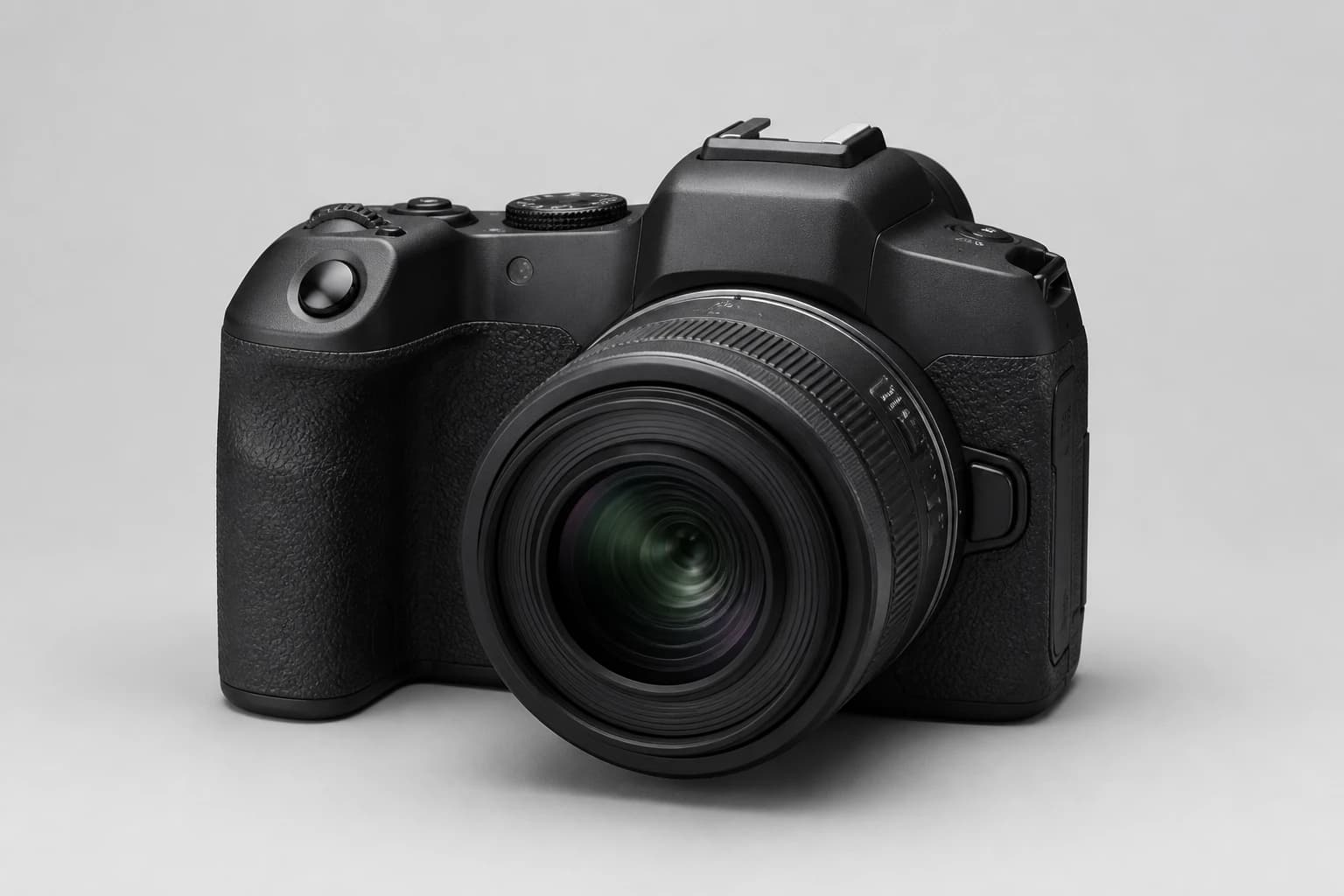
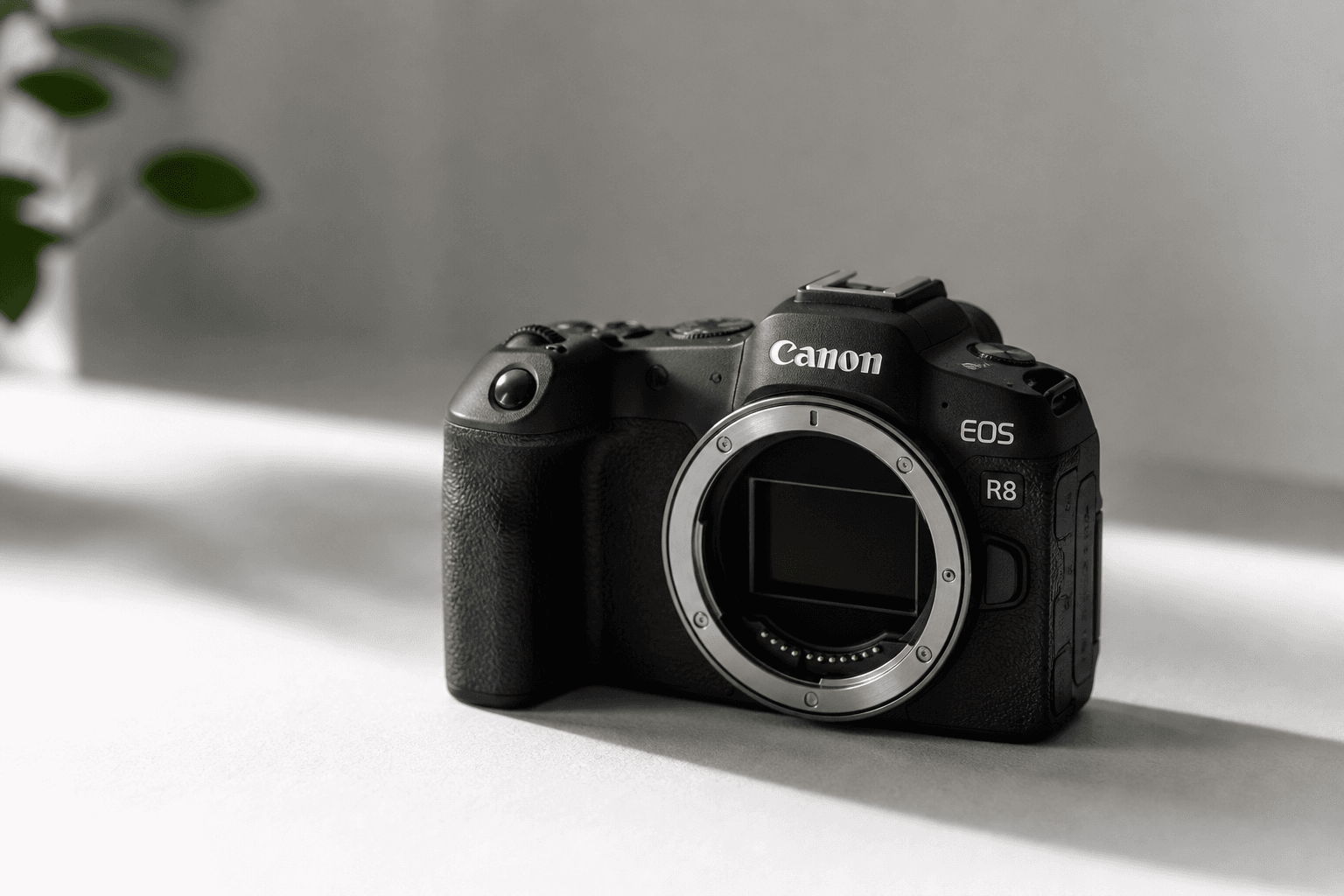
Portraits and evening light are the reason to reach for the R8. And you have to take the missing stabilisation seriously, or you will be annoyed at half past four in November. The larger sensor gives you the soft background, at a wide aperture, that many people mean by an expensive camera. Autofocus finds eyes reliably. The body is light for full frame. You carry it for an afternoon without your shoulder making the decision.
The bill gets honest in two places. First: without stabilisation in the body you need a lens that steadies itself, or a calm hold and a bit more light. Second: the battery is small. On a long day a charged spare sits in the bag, or you are done at four. And the lenses that actually show the full-frame look often cost more than the APS-C equivalent at Sony. If you want full frame and stabilisation in the body together, the Canon R6 Mark II is the more honest camera, and a different budget, often around €1,900 for the body alone. The R8 itself often sat between about €1,200 and €1,450 in November 2026. More in the Canon EOS R8 review.
Canon
Canon EOS R8 (body)
Light full frame for portraits and evening light
A light full-frame camera. The sensor is about the size of an old 35mm negative, so backgrounds go a little softer and you have more room when the light drops. What you have to plan for: there is no stabilisation in the body. If you shake, the lens has to help, or you brace yourself. The battery is smaller than in the larger Canon bodies. In Europe in November 2026 the body often sat around €1,200 to €1,450.
Was überzeugt
- +Softer backgrounds and more room in evening light
- +Autofocus finds eyes reliably
- +A light body for a full-frame camera
- +You stay in Canon and can grow later
Was Du wissen solltest
- −Dusk shots blur faster without a stabilised lens
- −The battery is often done on a long day
- −Bright Canon lenses cost more than the APS-C equivalents
Editor's Statement
“When the full-frame look matters and you can live without stabilisation in the body”
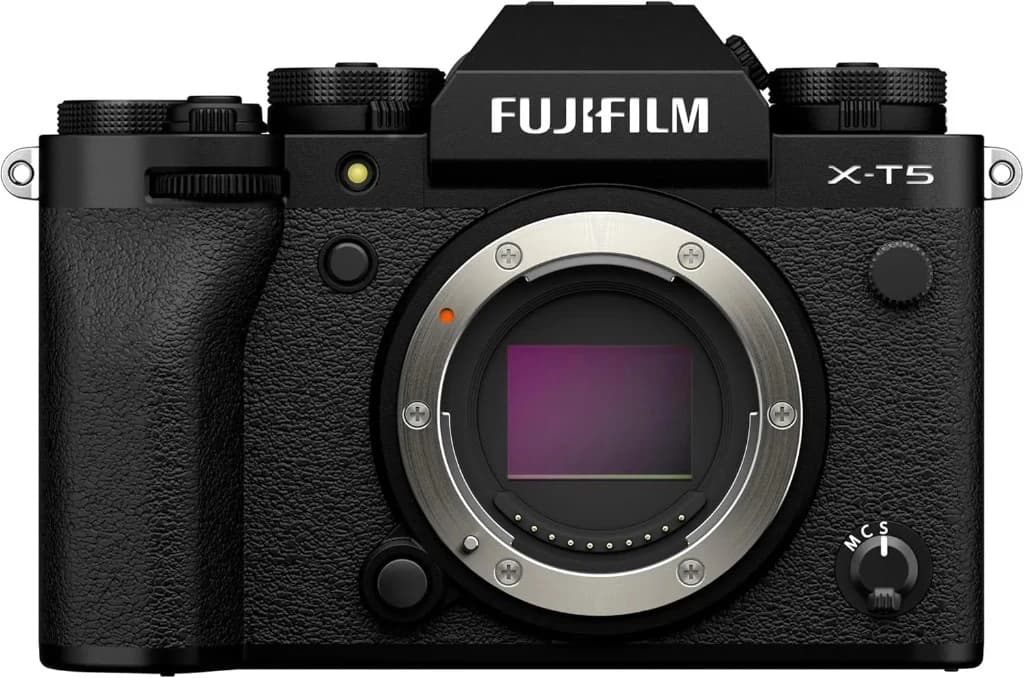
With the X-T5 I notice in workshops that people stop being afraid of the menu. Shutter, aperture and ISO sit on dials. You see what is set before you press the button. The film simulations are colour recipes in the camera. A lot of people who otherwise push every file through editing software leave the JPEGs as they are, because they already look like something. For a hobby that is supposed to be fun, that is worth more than another line on the spec sheet. Two card slots are the quiet serious point: one card can mirror the other. Stabilisation in the body is there. 40 megapixels give you room if you need a crop later.
Autofocus is good for people and an ordinary walk. For sport, and for children running across the frame, I would take the A6700. And the X-T5 is the most expensive of the three. In November 2026 the body often started around €1,550, and many offers sat higher. There is no dedicated review chapter here. In the camera brands overview it is the creative APS-C pick, and that is how I use it here: not as the all-round winner, but as the camera for people who like photographing.
Fujifilm
Fujifilm X-T5 (body)
For people who want the shooting itself to be the fun
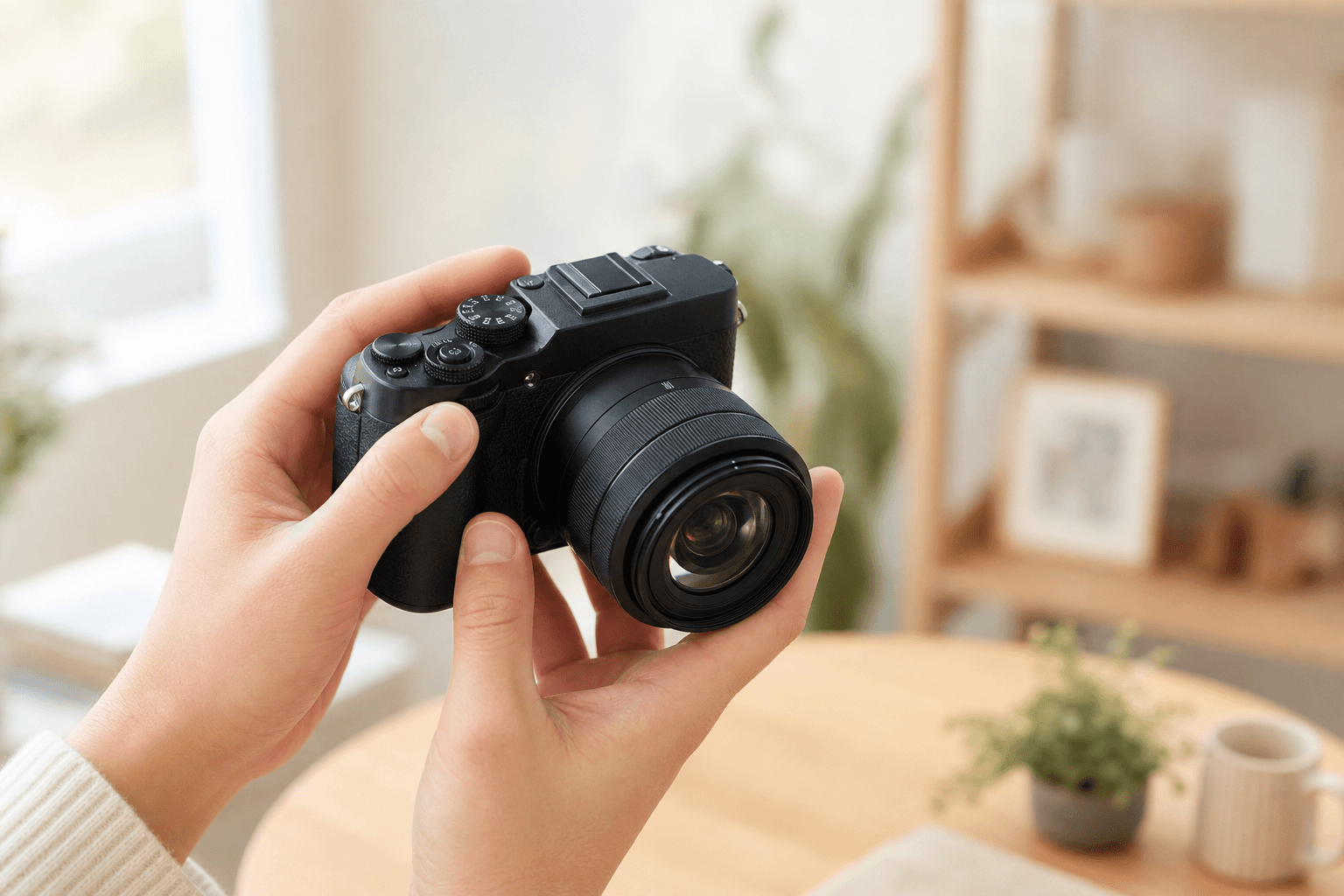
An APS-C camera with real dials for shutter, aperture and ISO. You see the setting before you open a menu. You can push the colours toward film inside the camera, so many people edit less. 40 megapixels are room to crop and to print large, not proof that Instagram will look better. Two cards, and stabilisation in the body. In Europe in November 2026 the body often started around €1,550, and many offers sat higher. The picture shows the body without a lens.
Was überzeugt
- +Fun in the hand. You shoot more deliberately
- +Colours often already look like the picture you wanted
- +Two cards: one can mirror the other
- +Resolution to spare if you crop hard later
Was Du wissen solltest
- −Autofocus sticks less than Sony or Canon when kids or sport run through the frame
- −Pricier than the A6700 and the R8, and a lens is still extra
- −You do not need 40 megapixels for most prints
Editor's Statement
“When the dials, the colours and two card slots carry the hobby”